
Kirjahaku
Etsi kirjoja tekijän nimen, kirjan nimen tai ISBN:n perusteella.
1000 tulosta hakusanalla Charles L Campbell

The post liberal, cultural-linguistic theology of the Yale School has been one of the most important theological developments in the United States during the latter twentieth century. In this unique book, which combines theological analysis and homiletical reflection, Charles Campbell examines post liberal theology as it is embodied in the work of Hans Frei and develops the implications of this theological position for the theory and practice of preaching. Arguing that the trouble with homiletics today is fundamentally theological, Campbell offers Frei's theological position as a means for enriching the Christian pulpit and renewing the church. Charles Campbell has given us a helpful book on preaching and the best study available of Hans Frei's theology. This is a book that anyone interested in Frei's thought needs to read, and it will lead many preachers who begin it with no interest in Frei to discover how much his way thinking about theology can help them in their task. --William C. Placher, Wabash College This book maps out an important intersection between the theology of the so-called Yale School and the life of mainstream Protestant churches. Campbell's book offers both an accessible guide to Hans Frei's theology and an approach to narrative preaching that has promise in addressing the challenge of building Christian community in contemporary Protestantism. --Amy Plantinga Pauw, Louisville Presbyterian Theological Seminary Finally A book that moves us beyond 'storytelling' in preaching. In Preaching Jesus Campbell takes the church's story seriously and discloses the revolutionary potential of preaching in a post liberal age. This is the most honest and helpful appraisal of narrative preaching that I know of. We have been waiting for this book and Campbell's exciting new proposals for many years. --Richard Lischer, Duke Divinity School In a crowded supermarket of junk food and homiletic 'lite' fare, Charles Campbell has brought us a nourishing gift--the solid meat of profound theological reflection on the task of preaching. . . . A rare and welcome book. --Thomas G. Long, Brandy Professor of Preaching at Candler School of Theology Charles L. Campbell is Peter Marshall Professor of Homiletics, Columbia Theological Seminary.
The Word on the Street
Stanley P Saunders; Charles L Campbell; Walter Brueggemann
Wipf Stock Publishers
2006
pokkari
WHAT HAPPENS WHEN TWO SEMINARY PROFESSORS LEAVE their classrooms and spend time among the homeless people and teach on city streets? In this unique collection of essays and sermons, Stanley P Saunders and Charles L. Campbell reflect on their encounters with the homeless folks in Atlanta and seek to discern the way of Jesus on the streets of the city. These passionate, often moving writings demonstrate the power of Scripture to shape the way we see the world, and they explore the significance of social location for exegesis, ethics, worship, and preaching. From the perspective of the street, central Christian practices such as baptism, Eucharist, and preaching come to life in new ways. Scripture takes on fresh meaning too, while ancient insights into the principalities and powers, the practice of scapegoating, and the organization of households become contemporary and immediate. Even theological themes--grace and discipleship, sin and forgiveness, crucifixion and resurrection--look different when take to the street. Accented by six powerful artworks from Christina Bray's exhibit Street Prayers/Spiritual Journeys, this book also sheds light on the problem of homelessness in America and calls the church to action. Through their reflection on personal experiences and their interpretation of biblical texts, Saunders and Campbell provide meaningful theological categories for addressing pressing social issues in the urban context, making The Word on the Street a helpful resource on the realities of poverty, race, and injustice. The Word on the Street? I'm not sure the Word can be proclaimed anywhere else. My response to this account is one of awe--and awe does not lend itself to our frail language. --Will D. Campbell This volume gives us theology that is both responsible and responsive. With inspiration and grace, Saunders and Campbell show us that when faith hits the streets, it takes on unjust systems and transforms human hearts. --Joyce Hollyday Stanley P. Saunders is Associate Professor of New Testament, Columbia Theological Seminary Charles L. Campbell is Peter Marshall Professor of Homiletics, Columbia Theological Seminary.
In this examination of the ethical significance of preaching, Charles Campbell provides both fresh insights into the relationship between preaching and ethics and a challenging moral vision for the contemporary church. Moving beyond a narrow focus on moral decision-making or social-issues sermons, Campbell argues that a particular ethic--nonviolent resistance--is inherent in the practice of preaching and shapes the moral life of the church. In the face of the powers, the fundamental ethical task of preaching involves building up the church as a community of resistance. Employing three dimensions of character ethics--vision, practices, and virtues--Campbell demonstrates the concrete ways in which preachers may undertake this task.
The Scandal of the Gospel
Charles L. Campbell; Willie James Jennings
WESTMINSTER/JOHN KNOX PRESS,U.S.
2021
nidottu
Through its shocking incongruities and transgressive forms, the grotesque offers an intriguing lens for exploring the scandal of the gospel and the challenges of Christian preaching. Drawing on diverse sources—from Swedish crime fiction and contemporary poetry to James Cone, Harriet Beecher Stowe, and Pussy Riot—this book will examine the theological, homiletical, and social implications of a grotesque gospel for contemporary preachers. The book focuses on three aspects of preaching and the grotesque: (1) the ways in which a grotesque gospel unsettles the preacher and challenges the "false patterns" that often shape Christian preaching; (2) the importance and challenges of resisting the weaponized grotesque, which dehumanizes people and furthers the power of dominant groups; (3) the incarnate Word as the carnivalesque, grotesque body of Jesus, which calls the church to become the porous and inclusive body of Christ. The Scandal of the Gospel is the written adaptation of Yale Divinity School's Beecher Lectures, given by Charles Campbell in 2018. The last chapter, "Preaching and the Environmental Grotesque," is a new addition.
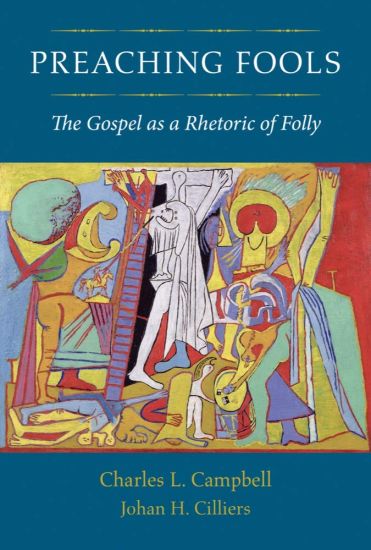
Across national and cultural borders, the archetype of the fool has played a significant role in how communities interpret and ascribe identity. As Charles Campbell and Johan Cilliers remind us, the Christian preacher, tasked with delivering a paradoxical gospel, is a fool. In a delicate exploration with enlightening results, Preaching Fools uses a diverse representation of fools and foolish actions to show how modern preaching is inseparable from the folly of the cross. Campbell and Cilliers walk the fine line between the ugliness and beauty of the gospel and challenge readers toward a deeper engagement with its unsettling message.
These twenty-two sermons from a master interpreter demonstrate how ancient texts can speak to the whole gamut of human experience even now. Included in Walter Brueggemann's preview are keen observations about the timeless issues of human life, both personal and social: the pain we face, often inflicted on each other; the use and abuse of power; the weakness and fragility of life; the redemptive power of faith; and much more.
Scenes From the Agamemnon, Tr. Into Engl. Verse by L. Campbell, Selected and Arranged for the Modern Stage by F. Jenkin
Henry Charles Fleeming Jenkin
Hutson Street Press
2025
sidottu

Scenes From the Agamemnon, Tr. Into Engl. Verse by L. Campbell, Selected and Arranged for the Modern Stage by F. Jenkin
Henry Charles Fleeming Jenkin
Hutson Street Press
2025
pokkari
Johns Hopkins University Studies in Historical and Political Science
Charles Mclean Andrews; R. G. Campbell; S. L. Ware
Kessinger Pub
2009
pokkari
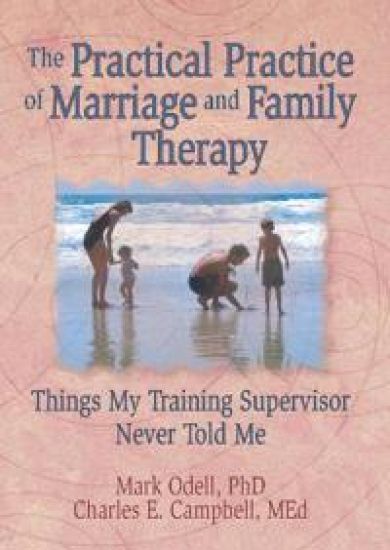
The Practical Practice of Marriage and Family Therapy
Terry S Trepper; Charles E Campbell; Mark O'Dell; Lorna L Hecker
Routledge Member of the Taylor and Francis Group
1998
sidottu
It is a truism among therapists in most mental health disciplines that the most important aspects of clinical practice are learned only after one has left graduate school and entered “the real world.” While many of the basics could be covered in graduate school, supervisors of new therapists often feel that the fundamentals are only addressed in detail after a therapist has been employed. In response to this predicament, Odell and Campbell offer The Practical Practice of Marriage and Family Therapy: Things My Training Supervisor Never Told Me as a useful daily guide for graduate students and beginning marriage and family therapists that will ease the transition from learner to practicing professional in the clinical domain.Written in a refreshing and unpretentious style, much the way a caring seasoned professional would mentor a novice practitioner, The Practical Practice of Marriage and Family Therapy covers the major areas that typical graduate programs don’t have time to address, including how to:integrate theoretical training with pragmatic clinical practice to maximize therapeutic effectiveness face the practical problems involving the financial elements of clinical work become a thoroughly credentialed professional develop an approach to becoming specialized uncover the motivation for being a professional marriage and family therapist increase one’s ability to maintain high-level practice over a lifetime of work by developing coping strategies and methods of safeguarding one’s own mental healthAddressing the unique approach of their book, Odell and Campbell explain, “Whereas most texts are handbooks on the actual theories and techniques used with couples and families, this book is designed to be a guide to the beginning professional as s/he leaves the graduate training environment and enters the mental health field as it exists in contemporary America. Our hope is that this book would be one of those chosen by the novice practicing professional if s/he could only take two or three with them into the field, as it contains material that is most useful for everyday work in clinical settings.”
The Practical Practice of Marriage and Family Therapy
Terry S Trepper; Charles E Campbell; Mark O'Dell; Lorna L Hecker
Routledge Member of the Taylor and Francis Group
1998
nidottu
It is a truism among therapists in most mental health disciplines that the most important aspects of clinical practice are learned only after one has left graduate school and entered “the real world.” While many of the basics could be covered in graduate school, supervisors of new therapists often feel that the fundamentals are only addressed in detail after a therapist has been employed. In response to this predicament, Odell and Campbell offer The Practical Practice of Marriage and Family Therapy: Things My Training Supervisor Never Told Me as a useful daily guide for graduate students and beginning marriage and family therapists that will ease the transition from learner to practicing professional in the clinical domain.Written in a refreshing and unpretentious style, much the way a caring seasoned professional would mentor a novice practitioner, The Practical Practice of Marriage and Family Therapy covers the major areas that typical graduate programs don’t have time to address, including how to:integrate theoretical training with pragmatic clinical practice to maximize therapeutic effectiveness face the practical problems involving the financial elements of clinical work become a thoroughly credentialed professional develop an approach to becoming specialized uncover the motivation for being a professional marriage and family therapist increase one’s ability to maintain high-level practice over a lifetime of work by developing coping strategies and methods of safeguarding one’s own mental healthAddressing the unique approach of their book, Odell and Campbell explain, “Whereas most texts are handbooks on the actual theories and techniques used with couples and families, this book is designed to be a guide to the beginning professional as s/he leaves the graduate training environment and enters the mental health field as it exists in contemporary America. Our hope is that this book would be one of those chosen by the novice practicing professional if s/he could only take two or three with them into the field, as it contains material that is most useful for everyday work in clinical settings.”

Charles L. Tiffany and the House of Tiffany and Company
George Frederic Heydt
Kessinger Pub
2009
pokkari
Selected Addresses Of Charles L. Jewett (1901)
Charles L. Jewett
KESSINGER PUBLISHING, LLC
2009
pokkari

Keep Bangin!: A Year In The Life Of Charles L. Cook
Charles L. Cook
Createspace Independent Publishing Platform
2016
nidottu

Euclid and His Modern Rivals (1885). By: Charles L. Dodgson: SECOND EDITION... Charles Lutwidge Dodgson ( 27 January 1832 - 14 January 1898), better k
Charles L. Dodgson
Createspace Independent Publishing Platform
2018
nidottu
Charles Lutwidge Dodgson ( 27 January 1832 - 14 January 1898), better known by his pen name Lewis Carroll, was an English writer, mathematician, logician, Anglican deacon, and photographer. His most famous writings are Alice's Adventures in Wonderland, its sequel Through the Looking-Glass, which includes the poem "Jabberwocky", and the poem The Hunting of the Snark - all examples of the genre of literary nonsense. He is noted for his facility at word play, logic and fantasy. There are societies in many parts of the world dedicated to the enjoyment and promotion of his works and the investigation of his life. Literature: From a young age, Dodgson wrote poetry and short stories, contributing heavily to the family magazine Mischmasch and later sending them to various magazines, enjoying moderate success. Between 1854 and 1856, his work appeared in the national publications The Comic Times and The Train, as well as smaller magazines such as the Whitby Gazette and the Oxford Critic. Most of this output was humorous, sometimes satirical, but his standards and ambitions were exacting. "I do not think I have yet written anything worthy of real publication (in which I do not include the Whitby Gazette or the Oxonian Advertiser), but I do not despair of doing so some day," he wrote in July 1855. Sometime after 1850, he did write puppet plays for his siblings' entertainment, of which one has survived: La Guida di Bragia. In 1856, he published his first piece of work under the name that would make him famous. A romantic poem called "Solitude" appeared in The Train under the authorship of "Lewis Carroll". This pseudonym was a play on his real name: Lewis was the anglicised form of Ludovicus, which was the Latin for Lutwidge, and Carroll an Irish surname similar to the Latin name Carolus, from which comes the name Charles.The transition went as follows: "Charles Lutwidge" translated into Latin as "Carolus Ludovicus". This was then translated back into English as "Carroll Lewis" and then reversed to make "Lewis Carroll". This pseudonym was chosen by editor Edmund Yates from a list of four submitted by Dodgson, the others being Edgar Cuthwellis, Edgar U. C. Westhill, and Louis Carroll. ALICE BOOKS: In 1856, Dean (i.e., head of the college) Henry Liddell arrived at Christ Church, bringing with him his young family, all of whom would figure largely in Dodgson's life over the following years, and would greatly influence his writing career. Dodgson became close friends with Liddell's wife Lorina and their children, particularly the three sisters Lorina, Edith, and Alice Liddell. He was widely assumed for many years to have derived his own "Alice" from Alice Liddell; the acrostic poem at the end of Through the Looking Glass spells out her name in full, and there are also many superficial references to her hidden in the text of both books. It has been noted that Dodgson himself repeatedly denied in later life that his "little heroine" was based on any real child, and he frequently dedicated his works to girls of his acquaintance, adding their names in acrostic poems at the beginning of the text. Gertrude Chataway's name appears in this form at the beginning of The Hunting of the Snark, and it is not suggested that this means that any of the characters in the narrative are based on her. Information is scarce (Dodgson's diaries for the years 1858-1862 are missing), but it seems clear that his friendship with the Liddell family was an important part of his life in the late 1850s, and he grew into the habit of taking the children on rowing trips (first the boy Harry, and later the three girls) accompanied by an adult friend to nearby Nuneham Courtenay or Godstow.....
Charles L. Tiffany and the house of Tiffany & Co is an unchanged, high-quality reprint of the original edition of 1893. Hansebooks is editor of the literature on different topic areas such as research and science, travel and expeditions, cooking and nutrition, medicine, and other genres. As a publisher we focus on the preservation of historical literature. Many works of historical writers and scientists are available today as antiques only. Hansebooks newly publishes these books and contributes to the preservation of literature which has become rare and historical knowledge for the future.

Pierre Charles L'Enfant
OmniScriptum
2026
pokkari
The Mathematical World of Charles L. Dodgson (Lewis Carroll)
Oxford University Press
2019
sidottu
Charles Lutwidge Dodgson is best known for his 'Alice' books, Alice's Adventures in Wonderland and Through the Looking-Glass, written under his pen name of Lewis Carroll. Yet, whilst lauded for his work in children's fiction and his pioneering work in the world of Victorian photography, his everyday job was a lecturer in Mathematics at Christ Church, Oxford University. The Mathematical World of Charles L. Dodgson (Lewis Carroll) explores the academic background behind this complex individual, outlining his mathematical life, describing his writings in geometry, algebra, logic, the theory of voting, and recreational mathematics, before going on to discuss his mathematical legacy. This is the first academic work that collects the research on Dodgson's wide-ranging mathematical achievements into a single practical volume. Much material appears here for the first time, such as Dodgson's personal letters and drawings, as well as the results of recent investigations into the life and work of Dodgson. Complementing this are many illustrations, both historical and explanatory, as well as a full mathematical bibliography of Dodgson's mathematical publications.