A collection from one of our most influential African American writers An icon of nineteenth-century American fiction, Charles W. Chesnutt, an incisive storyteller of the aftermath of slavery in the South, is widely credited with almost single-handedly inaugurating the African American short story tradition and was the first African American novelist to achieve national critical acclaim. This major addition to Penguin Classics features an ideal sampling of his work: twelve short stories (including conjure tales and protest fiction), three essays, and the novel The Marrow of Tradition. Published here for the 150th anniversary of Chesnutt's birth, The Portable Charles W. Chesnutt will bring to a new audience the genius of a man whose legacy underlies key trends in modern black fiction. For more than seventy years, Penguin has been the leading publisher of classic literature in the English-speaking world. With more than 1,700 titles, Penguin Classics represents a global bookshelf of the best works throughout history and across genres and disciplines. Readers trust the series to provide authoritative texts enhanced by introductions and notes by distinguished scholars and contemporary authors, as well as up-to-date translations by award-winning translators.
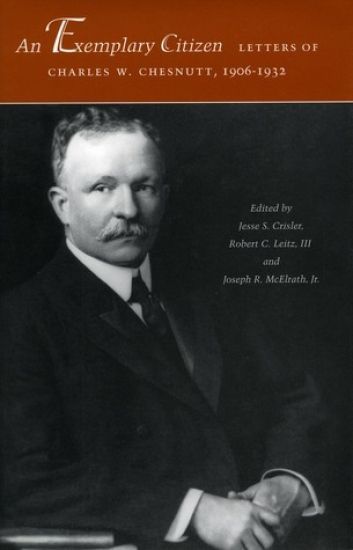
This book collects the letters written between 1906 and 1932 by novelist and civil rights activist Charles W. Chesnutt (1858-1932). Between 1885 and 1905, this pioneer in the African-American literary tradition published three novels, two books of short stories, a biography of Frederick Douglass, and many short stories and essays in prestigious periodicals—at the same time managing a stenography and court reporting firm in Cleveland, Ohio. His works, which featured the experiences of African-Americans in the ante- and post-bellum period, received favorable reviews. But they did not find a large and appreciative audience until many decades later when both the civil rights movement and increased interest in the African-American contribution to American cultural life resulted in the "rediscovering" of Chesnutt's large body of writings. Though he never saw the publication of another of his book-length manuscripts after 1905, Chesnutt continued to write fiction and essays, and to deliver speeches ranging from disenfranchisement to the life and works of Alexandre Dumas, and to act in behalf of the African-American cause through such organizations as the Committee of Twelve and the N.A.A.C.P. A dedicated integrationist opposed to "race-pride" movements of all kinds, Chesnutt in his post-1905 letters includes many references to the unfortunate consequences of racial segregation, addressed to both African-American and white correspondents. These letters also reveal a multi-faceted personality with interests that transcended the issue of race and urged everyone to live life to the fullest. His correspondents included prominent members of the Harlem Renaissance as well as major American political figures Chesnutt sought to influence on behalf of his fellow African-Americans. As a successful businessman enjoying the amenities of upper middle class American life, a family man, and an Episcopalian who worshipped at a "white church," Chesnutt in many respects embodied the realization of the American Dream. He was, as William Dean Howells termed Booker T. Washington, an "exemplary citizen" and a role model for all Americans.
The first African American fiction writer to earn a national reputation, Charles W. Chesnutt remains best known for his depictions of Southern life before and after the Civil War. But he also produced a large body of what might best be called his "Northern" writings, and those works, taken together, describe the intriguing ways in which America was reshaping itself at the turn of the last century. The Northern Stories of Charles W. Chesnutt collects for the first time eighteen Chesnutt stories—several of them first appearing in Northern magazines or newspapers—that portray life in the North in the period between the Civil War and World War I. Living in Ohio from 1883 until his death in 1932, Chesnutt witnessed and wrote about the social, cultural, and racial upheavals taking place in the North during a crucial period of American history. His Northern stories thus reflect his vision of a newly reconstituted America, one recommitted to the ideals of freedom and economic opportunity inherent in our national heritage. The stories, compiled and edited with critical introductions to each by Professor Charles Duncan, offer a new Chesnutt, one fascinated by the evolution of America into an urban, multiracial, economically driven democracy. The Northern Stories of Charles W. Chesnutt presents richly imagined characters, both black and white, working to make better lives for themselves in the turbulent and stimulating universe of the turn-of-the-century North. Indeed, Chesnutt stands virtually alone as the first African American chronicler of Northern culture, anticipating such figures as James Weldon Johnson, Langston Hughes, Ralph Ellison, James Baldwin, and Toni Morrison. This critical edition of The Northern Stories of Charles W. Chesnutt is a significant addition to the body of African American literature.
The first African American fiction writer to earn a national reputation, Charles W. Chesnutt remains best known for his depictions of Southern life before and after the Civil War. But he also produced a large body of what might best be called his "Northern" writings, and those works, taken together, describe the intriguing ways in which America was reshaping itself at the turn of the last century. The Northern Stories of Charles W. Chesnutt collects for the first time eighteen Chesnutt stories—several of them first appearing in Northern magazines or newspapers—that portray life in the North in the period between the Civil War and World War I. Living in Ohio from 1883 until his death in 1932, Chesnutt witnessed and wrote about the social, cultural, and racial upheavals taking place in the North during a crucial period of American history. His Northern stories thus reflect his vision of a newly reconstituted America, one recommitted to the ideals of freedom and economic opportunity inherent in our national heritage. The stories, compiled and edited with critical introductions to each by Professor Charles Duncan, offer a new Chesnutt, one fascinated by the evolution of America into an urban, multiracial, economically driven democracy. The Northern Stories of Charles W. Chesnutt presents richly imagined characters, both black and white, working to make better lives for themselves in the turbulent and stimulating universe of the turn-of-the-century North. Indeed, Chesnutt stands virtually alone as the first African American chronicler of Northern culture, anticipating such figures as James Weldon Johnson, Langston Hughes, Ralph Ellison, James Baldwin, and Toni Morrison. This critical edition of The Northern Stories of Charles W. Chesnutt is a significant addition to the body of African American literature.
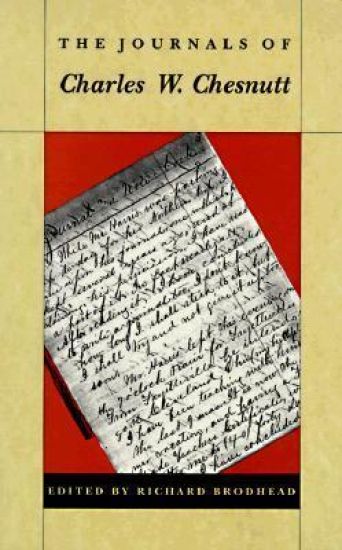
Born on the eve of the Civil War, Charles W. Chesnutt grew up in Fayetteville, North Carolina, a county seat of four or five thousand people, a once-bustling commercial center slipping into postwar decline. Poor, black, and determined to outstrip his modest beginnings and forlorn surroundings, Chesnutt kept a detailed record of his thoughts, observations, and activities from his sixteenth through his twenty-fourth year (1874-1882). These journals, printed here for the first time, are remarkable for their intimate account of a gifted young black man's dawning sense of himself as a writer in the nineteenth century. Though he achieved literary success in his time, Chesnutt has only recently been rediscovered and his contribution to American literature given its due. The only known private diary from a nineteenth-century African American author, these pages offer a fascinating glimpse into Chesnutt's everyday experience as he struggled to win the goods of education in the world of the post-Civil War South. An extraordinary portrait of the self-made man beset by the urgencies and difficulties of self-improvement in a racially discriminatory society, Chesnutt's journals unfold a richly detailed local history of postwar North Carolina. They also show with great force how the world of the postwar South obstructed--and, unexpectedly, assisted--a black man of driving intellectual ambitions.
The House Behind the Cedars is the first novel by American author Charles W. Chesnutt. It was published in 1900 by Houghton, Mifflin and Company. The story occurs in the southern American states of North and South Carolina a few years following the American Civil War. Rena Walden, a young woman of mixed white and black ancestry, leaves home to join her brother, who has migrated to a new city, where he lives as a white man. Following her brother's lead, Rena begins living as a white woman. The secret of her identity leads to conflict when she falls in love with a white aristocrat who learns the truth of her heredity. The ensuing drama emphasizes themes of interracial relations and depicted the intricacies of racial identity in the American south. Chesnutt's autobiography informed the novel's themes. Being of predominantly European ancestry, Chesnutt was light skinned enough to pass as a white man, although he openly identified with his African-American roots.Additionally, his portrayal of interracial romantic relations in The House Behind the Cedars was controversial. Although the novel was critically well received, its controversy contributed to poor financial performance. Plot: The novel opens "a few years after the Civil War" 3] with John Warwick, from Clarence, South Carolina, leaving a hotel in Patesville, North Carolina. He walks around the town in which he used to live, and tries to visit Judge Archibald Straight, but he is not in his office. Warwick's attention is captured by a striking young woman, who he does not recognize as Rena, and follows her to the house behind the cedars. Warwick cautiously approaches the house, worried about being seen, and is invited in by Molly Walden. He says that he has a message for Walden from her son, but she then realizes that Warwick is her son who she has not seen in years. Warwick joyfully reunites with his mother and his sister Rena, and tells them what his life has been like since leaving home. He reveals that he has become a successful lawyer, and that he was married, but his wife died and left him with a baby boy. Warwick asks Rena if she would come live with him and help take care of his son Albert. Molly is reluctant to send off her only daughter and Rena does not want to leave her mother alone, but John ultimately convinces his mother that Rena will have a better life with him. The next morning, Warwick visits Judge Straight, his mentor for whom he used to work as an office-boy under the name John Walden. Straight warns him not to stay in town for too long or else people may start to question his presence. He then contemplates that it would have been better for John to move further away from home than South Carolina "even though the laws were with him."... Charles Waddell Chesnutt (June 20, 1858 - November 15, 1932) was an African-American author, essayist, political activist and lawyer, best known for his novels and short stories exploring complex issues of racial and social identity in the post-Civil War South. Many families of free people of color were formed in the colonial and early Federal period; some attained education and property; in addition there were many mixed-race slaves, who as freedmen after the war were part of the complex society of the South. Two of his books were adapted as silent films in 1926 and 1927 by the African-American director and producer Oscar Micheaux. Following the Civil Rights Movement during the 20th century, interest in the works of Chesnutt were revived. Several of his books were published in new editions, and he received formal recognition. A commemorative stamp was printed in 2008. During the early 20th century in Cleveland, Chesnutt established what became a highly successful court reporting business, which provided his main income. He became active in the National Association for the Advancement of Colored People, writing articles supporting education as well as legal challenges to discriminatory laws.
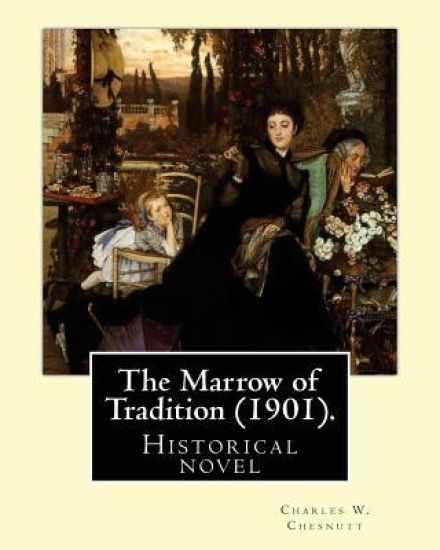
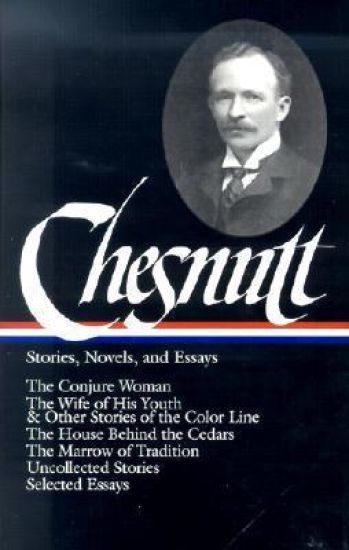
Rejecting his era's genteel hypocrisy about miscegenation, lynching, and passing, Charles W. Chesnutt broke new ground in American literature with his innovative explorations of racial identity and use of African-American speech and folklore. Chesnutt exposed the deformed logic of the Jim Crow system-creating, in the process, the modern African-American novel. Here is the best of Chesnutt's fiction and nonfiction in the largest and most comprehensive edition ever published, featuring a newly researched chronology of the writer's life. The Conjure Woman (1899) introduced Chesnutt to the public as a writer of conjure tales, stories that explore black folklore and supernaturalism. That same year, he published The Wife of His Youth, and Other Stories of the Color Line, stories set in Chesnutt's native North Carolina that dramatize the legacies of slavery and Reconstruction at the turn of the century. His first novel, The House Behind the Cedars (1900), is a study of racial passing. The Marrow of Tradition (1901), Chesnutt's masterpiece, is a powerful and bitter novel about the harsh reassertion of white dominance in a southern town at the end of the Reconstruction era. Nine uncollected short stories round out the volume's fiction, including conjure tales omitted from The Conjure Woman and two stories that are unavailable in any other edition. Eight essays highlight his prescient views on the paradoxes of race relations in America and the definition of race itself. LIBRARY OF AMERICA is an independent nonprofit cultural organization founded in 1979 to preserve our nation's literary heritage by publishing, and keeping permanently in print, America's best and most significant writing. The Library of America series includes more than 300 volumes to date, authoritative editions that average 1,000 pages in length, feature cloth covers, sewn bindings, and ribbon markers, and are printed on premium acid-free paper that will last for centuries.
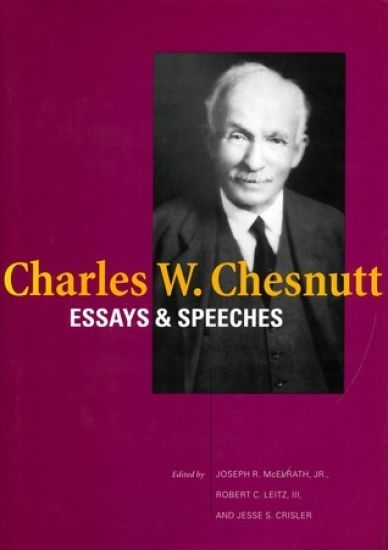
Over the past decade, increasing attention has been paid to the life and work of Charles W. Chesnutt (1858-1932), considered by many the major African-American fiction writer before the Harlem Renaissance by virtue of the three novels and two collections of short stories he published between 1899 and 1905. Less familiar are the essays he wrote for American periodicals from 1899 through 1931, the majority of which are analyses of and protests against white racism. Collected as well in this volume are the addresses he made to both white and black audiences from 1881 through 1931, on topics ranging from race prejudice to the life and literary career of Alexandre Dumas. The 77 works included in this volume comprise all of Chesnutt's known works of nonfiction, 38 of which are reprinted here for the first time. They reveal an ardent and often outraged spokesman for the African American whose militancy increased to such a degree that, by 1903, he had more in common with W. E. B. Du Bois than Booker T. Washington. He was, however, a lifelong integrationist and even an advocate of "race amalgamation," seeing interracial marriage as the ultimate means of solving "the Negro Problem," as it was termed at the end of the century. That he championed the African American during the Jim Crow era while opposing Black Nationalism and other "race pride" movements attests to the way Chesnutt defined himself as a controversial figure, in his time and ours. The essays and speeches in this volume are not, however, limited to polemical writings. An educator, attorney, and man of letters with wide-ranging interests, Chesnutt stands as a humanist addressing subjects of universal interest, including the novels of George Meredith, the accomplishments of Samuel Johnson, and the relationship between literature and life.
Over the past decade, increasing attention has been paid to the life and work of Charles W. Chesnutt (1858-1932), considered by many the major African-American fiction writer before the Harlem Renaissance by virtue of the three novels and two collections of short stories he published between 1899 and 1905. Less familiar are the essays he wrote for American periodicals from 1899 through 1931, the majority of which are analyses of and protests against white racism. Collected as well in this volume are the addresses he made to both white and black audiences from 1881 through 1931, on topics ranging from race prejudice to the life and literary career of Alexandre Dumas. The 77 works included in this volume comprise all of Chesnutt's known works of nonfiction, 38 of which are reprinted here for the first time. They reveal an ardent and often outraged spokesman for the African American whose militancy increased to such a degree that, by 1903, he had more in common with W. E. B. Du Bois than Booker T. Washington. He was, however, a lifelong integrationist and even an advocate of "race amalgamation," seeing interracial marriage as the ultimate means of solving "the Negro Problem," as it was termed at the end of the century. That he championed the African American during the Jim Crow era while opposing Black Nationalism and other "race pride" movements attests to the way Chesnutt defined himself as a controversial figure, in his time and ours. The essays and speeches in this volume are not, however, limited to polemical writings. An educator, attorney, and man of letters with wide-ranging interests, Chesnutt stands as a humanist addressing subjects of universal interest, including the novels of George Meredith, the accomplishments of Samuel Johnson, and the relationship between literature and life.
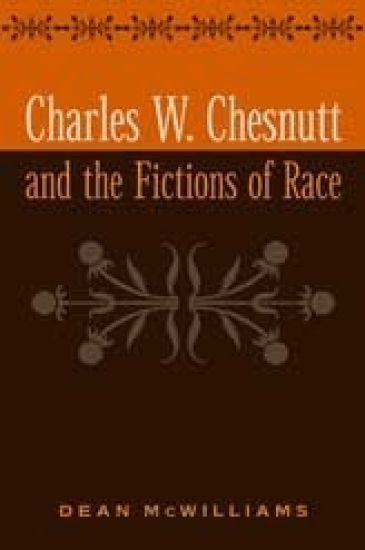
Charles Chesnutt (1858-1932) was the first African American writer of fiction to win the attention and approval of America's literary establishment. Looking anew at Chesnutt's public and private writings, his fiction and nonfiction, and his well-known and recently rediscovered works, Dean McWilliams explores Chesnutt's distinctive contribution to American culture: how his stories and novels challenge our dominant cultural narratives—particularly their underlying assumptions about race.The published canon of Chesnutt's work has doubled in the last decade: three novels completed but unpublished in Chesnutt's life have appeared, as have scholarly editions of Chesnutt's journals, his letters, and his essays. This book is the first to offer chapter-length analyses of each of Chesnutt's six novels. It also devotes three chapters to his short fiction. Previous critics have read Chesnutt's nonfiction as biographical background for his fiction. McWilliams is the first to analyze these nonfiction texts as complex verbal artifacts embodying many of the same tensions and ambiguities found in Chesnutt's stories and novels. The book includes separate chapters on Chesnutt's journal and on his important essay "The Future American." Moreover, Charles W. Chesnutt and the Fictions of Race approaches Chesnutt's writings from the perspective of recent literary theory. To a greater extent than any previous study of Chesnutt, it explores the way his texts interrogate and deconstruct the language and the intellectual constructs we use to organize reality.The full effect of this new study is to show us how much more of a twentieth-century writer Chesnutt is than has been previously acknowledged. This accomplishment can only hasten his reemergence as one of our most important observers of race in American culture.