Kirjojen hintavertailu. Mukana 11 699 587 kirjaa ja 12 kauppaa.

Kirjahaku

Etsi kirjoja tekijän nimen, kirjan nimen tai ISBN:n perusteella.

1000 tulosta hakusanalla Charles de Lardemelle

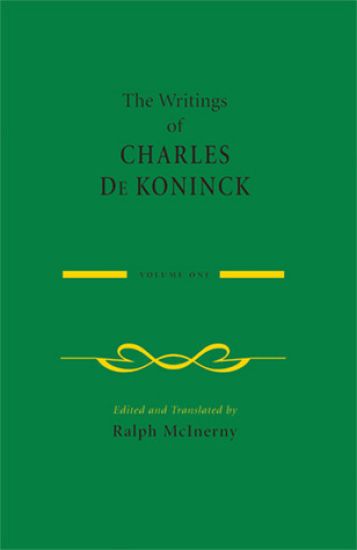
The Writings of Charles De Koninck

The Writings of Charles De Koninck

Charles De Koninck

University of Notre Dame Press
2008
sidottu
The Writings of Charles De Koninck, volumes 1 and 2, present the first English editions of collected works of the Catholic Thomist philosopher Charles De Koninck (1906–1965). Ralph McInerny (1929–2010) was the project editor and prepared the excellent translations. Volume 1 contains writings ranging from De Koninck's 1934 dissertation at the University of Louvain on the philosophy of Sir Arthur Eddington, to two remarkable early essays on indeterminism and the unpublished book The Cosmos. The short essay "Are the Experimental Sciences Distinct from the Philosophy of Nature?" demonstrates for the first time De Koninck's distinctive view on the relation between philosophy of nature and the experimental sciences. Volume 1 also includes a comprehensive introductory essay by Leslie Armour outlining the structure and themes of De Koninck's philosophy, and a biographical essay by De Koninck's son, Thomas.
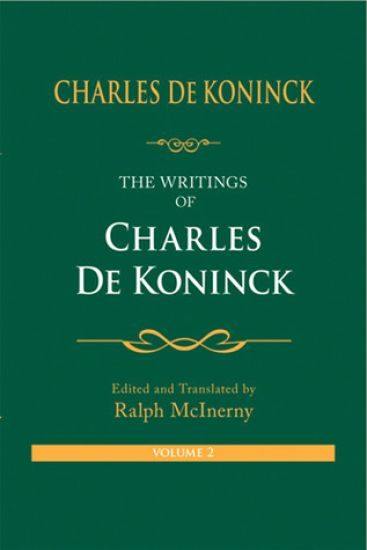
The Writings of Charles De Koninck

The Writings of Charles De Koninck

Charles De Koninck

University of Notre Dame Press
2009
sidottu
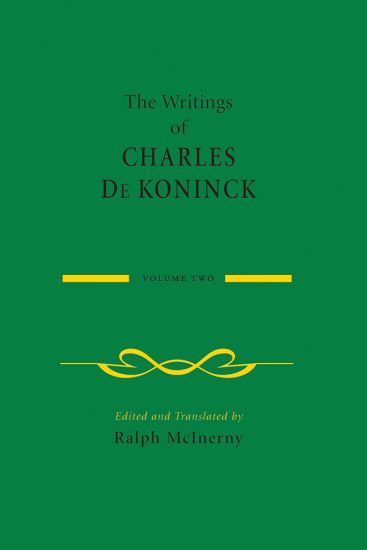
Volume 2 of The Writings of Charles De Koninck carries on the project begun by volume 1 of presenting the first English edition of the collected works of the Catholic Thomist philosopher Charles De Koninck (1906–1965). Ralph McInerny (1929–2010) was the project editor and prepared the excellent translations. This volume begins with two works published in 1943: Ego Sapientia: The Wisdom That Is Mary, De Koninck's first study in Mariology, and The Primacy of the Common Good Against the Personalists (with The Principle of the New Order), which generated a strong critical reaction. Included in this volume are two reviews of The Primacy of the Common Good, by Yves R. Simon and I. Thomas Eschmann, O.P., and De Koninck's substantial response to Eschmann in his lengthy "In Defence of St. Thomas." The volume concludes with a group of short essays: "The Dialectic of Limits as Critique of Reason," "Notes on Marxism," "This Is a Hard Saying," "[Review of] Between Heaven and Earth," and "Concept, Process, and Reality."
The Writings of Charles De Koninck

The Writings of Charles De Koninck

Charles De Koninck

University of Notre Dame Press
2016
nidottu
The Writings of Charles De Koninck, volumes 1 and 2, present the first English editions of collected works of the Catholic Thomist philosopher Charles De Koninck (1906–1965). Ralph McInerny (1929–2010) was the project editor and prepared the excellent translations. Volume 1 contains writings ranging from De Koninck's 1934 dissertation at the University of Louvain on the philosophy of Sir Arthur Eddington, to two remarkable early essays on indeterminism and the unpublished book The Cosmos. The short essay "Are the Experimental Sciences Distinct from the Philosophy of Nature?" demonstrates for the first time De Koninck's distinctive view on the relation between philosophy of nature and the experimental sciences. Volume 1 also includes a comprehensive introductory essay by Leslie Armour outlining the structure and themes of De Koninck's philosophy, and a biographical essay by De Koninck's son, Thomas.
The Writings of Charles De Koninck

The Writings of Charles De Koninck

Charles De Koninck

University of Notre Dame Press
2016
nidottu
Volume 2 of The Writings of Charles De Koninck carries on the project begun by volume 1 of presenting the first English edition of the collected works of the Catholic Thomist philosopher Charles De Koninck (1906–1965). Ralph McInerny (1929–2010) was the project editor and prepared the excellent translations. This volume begins with two works published in 1943: Ego Sapientia: The Wisdom That Is Mary, De Koninck's first study in Mariology, and The Primacy of the Common Good Against the Personalists (with The Principle of the New Order), which generated a strong critical reaction. Included in this volume are two reviews of The Primacy of the Common Good, by Yves R. Simon and I. Thomas Eschmann, O.P., and De Koninck's substantial response to Eschmann in his lengthy "In Defence of St. Thomas." The volume concludes with a group of short essays: "The Dialectic of Limits as Critique of Reason," "Notes on Marxism," "This Is a Hard Saying," "[Review of] Between Heaven and Earth," and "Concept, Process, and Reality."
Charles de Gaulle's Legacy of Ideas
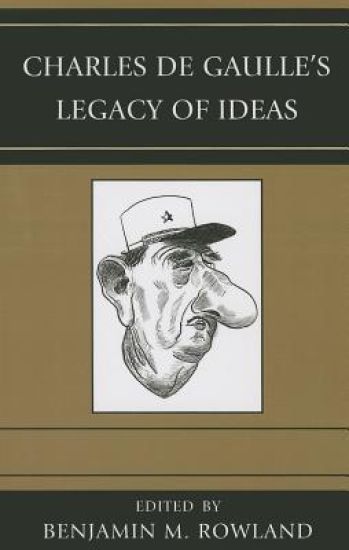
The essays in this volume examine selected national, regional European, and international policies of Charles de Gaulle, giving consideration to their significance in his own time, and today. Not everything de Gaulle did withstands the test of time. Nor, obviously, was everything beyond criticism in his own time. Nonetheless, a main finding, in the words of one essayist, is that de Gaulle had an 'uncanny sense of where history was going' and the skill to position his country accordingly. De Gaulle also stands as a testament to the power of individuals in history, a somewhat unfashionable viewpoint in modern university curriculums. Today, when France's destiny appears increasingly to depend on structures and institutions beyond its national control, including a Europe weakened by the sovereign debt crisis, and a global economic system accountable to no one, it seems timely to reconsider the record of the twentieth century's greatest Frenchman, whose skill at dealing with the problems of his time can inspire today's generation of politicians and statesmen.
Charles de Gaulle's Legacy of Ideas
The essays in this volume examine selected national, regional European, and international policies of Charles de Gaulle, giving consideration to their significance in his own time, and today. Not everything de Gaulle did withstands the test of time. Nor, obviously, was everything beyond criticism in his own time. Nonetheless, a main finding, in the words of one essayist, is that de Gaulle had an 'uncanny sense of where history was going' and the skill to position his country accordingly. De Gaulle also stands as a testament to the power of individuals in history, a somewhat unfashionable viewpoint in modern university curriculums. Today, when France's destiny appears increasingly to depend on structures and institutions beyond its national control, including a Europe weakened by the sovereign debt crisis, and a global economic system accountable to no one, it seems timely to reconsider the record of the twentieth century's greatest Frenchman, whose skill at dealing with the problems of his time can inspire today's generation of politicians and statesmen.
Charles de Gaulle

Charles de Gaulle

Régis Debray

Verso Books
1994
nidottu
In this elegant and original book, Régis Debray argues that for two hundred years the defeats of the left have stemmed from its failure to understand what it likes to call the 'national question', while equally its successes have grown from an unacknowledged liaison with the 'unreal reality' of the nation.According to Debray, Charles de Gaulle was no narrow nationalist. By grounding his actions in a generous philosophy of the nation he was able to wed boldness to insight: on 14 June 1940 he appointed himself leader of the free French, disregarding the overwhelming parliamentary and legal mandate according to Petain. This intuitive action was to be resoundingly vindicated in the resistance and liberation of France.This study of De Gaulle is offered as an indictment of the shallowness of contemporary politics in the West. For Debray, De Gaulle is not only the last statesman in the classic mould, he is also the first to anticipate the politics of the twenty-first century. De Gaulle's aloofness from the media and disdain for the base arts of electioneering have an exemplary quality, Debray believes, reaffirming the vocation of political leadership as something other than adapting to popular preferences or allowing professional communicators and opinion pollsters to set every agenda.
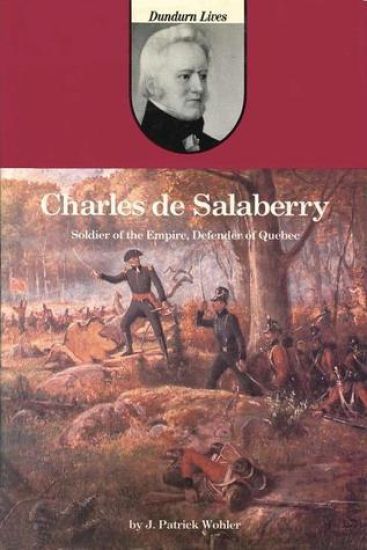
Charles de Salaberry

Charles de Salaberry

J. Patrick Wohler

Dundurn Group Ltd
1996
pokkari
Charles de Salaberry (1778-1829) was a brilliant military figure who played a vital role in the War of 1812. A French-Canadian, he attained both rank and honour in the British army. He was a hero of Chateauguay and instrumental in the formation of the Canadian Voltigeurs and a respected advocate of French-Canadian rights. This book paints a vivid picture of a man whose pride and honour were part of an ancient family tradition, whose accomplishments were unique in the history of Lower Canada.
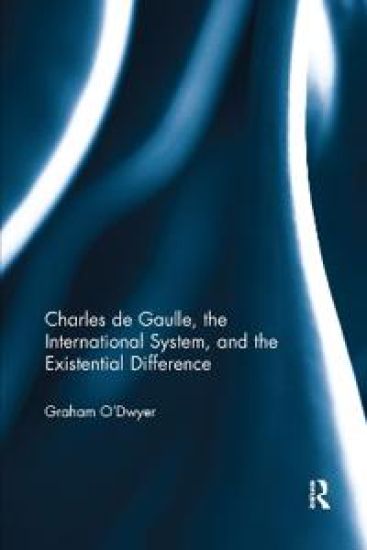
Charles de Gaulle, the International System, and the Existential Difference
This innovative account of Charles de Gaulle as a thinker and writer on nationalism and international relations offers a view of him far beyond that of a traditional nationalist. Centring on the way de Gaulle regarded nations as individuals the author frames his argument by rationalising de Gaulle’s nationalism within the existential movement that flowed as an intellectual undercurrent throughout early and mid-twentieth-century France. Graham O’Dwyer asserts that this existentialism of the nation and ‘the presence of the past’ allowed de Gaulle to separate the ‘nation’ from the ‘state’ when looking at China, Russia, Vietnam, and East European countries, enabling him to understand the idiosyncrasies of specific national characters better than most of his contemporaries. This was especially the case for Russia and China and meant that he read the Cold War world in a way that Washington and London could not, allowing him a unique insight into how they would act as individuals and in relation to other nations.
Charles de Gaulle

Charles de Gaulle

Andrew Knapp

Routledge
2020
sidottu
In this new biography, Andrew Knapp concisely dissects each of the major controversies surrounding General Charles de Gaulle, leader of the Free French during the Second World War and President of France from 1959 to 1969.From the beginning of de Gaulle’s military career in 1909 to an analysis of legacies and myths after his death in 1970, this study examines the path by which the French came to honour him as the greatest Frenchman of all time, and as the twentieth century’s pre-eminent world statesman. In each chapter, Knapp analyses de Gaulle’s participation in key events such as the development of France’s resistance against Nazi Germany, the decolonisation of Algeria, the birth of the French Fifth Republic, and the gigantic upheaval of May 1968. Simultaneously, this study questions de Gaulle’s actions and motives throughout his life. By exploring the justification of the contemporary ‘de Gaulle myth’, Knapp concludes by shedding new light on the influence of de Gaulle in the political culture of twenty-first-century France.Through careful analysis of primary sources as well as recent scholarship, this biography is an invaluable source for scholars and students of modern history, the history of France, political institutions, and international relations.
Charles de Gaulle

Charles de Gaulle

Andrew Knapp

Routledge
2020
nidottu
In this new biography, Andrew Knapp concisely dissects each of the major controversies surrounding General Charles de Gaulle, leader of the Free French during the Second World War and President of France from 1959 to 1969.From the beginning of de Gaulle’s military career in 1909 to an analysis of legacies and myths after his death in 1970, this study examines the path by which the French came to honour him as the greatest Frenchman of all time, and as the twentieth century’s pre-eminent world statesman. In each chapter, Knapp analyses de Gaulle’s participation in key events such as the development of France’s resistance against Nazi Germany, the decolonisation of Algeria, the birth of the French Fifth Republic, and the gigantic upheaval of May 1968. Simultaneously, this study questions de Gaulle’s actions and motives throughout his life. By exploring the justification of the contemporary ‘de Gaulle myth’, Knapp concludes by shedding new light on the influence of de Gaulle in the political culture of twenty-first-century France.Through careful analysis of primary sources as well as recent scholarship, this biography is an invaluable source for scholars and students of modern history, the history of France, political institutions, and international relations.