Kirjojen hintavertailu. Mukana 11 699 587 kirjaa ja 12 kauppaa.

Kirjahaku

Etsi kirjoja tekijän nimen, kirjan nimen tai ISBN:n perusteella.

286 tulosta hakusanalla Charlesworth Michael

Derek Jarman

Derek Jarman

Charlesworth Michael

Reaktion Books
2011
nidottu
Derek Jarman (1942-1994) is most often remembered as one of Europe's most innovative independent film-makers, whose films called into question and re-ordered the nature of film-making itself. But he was also a painter, writer and poet, gardener, set designer for other people's films, ballet, opera and theatre, and influential campaigner for gay rights and other causes. He was also the author of an extraordinary series of journals that offer invaluable insight not only into the nature of the society in which he lived but also into his own creative process. It is remarkable that his art was not confined to one or two of these activities but embraced all of them. This new biography of Jarman discusses the entire range of his works and provides a picture of the whole man, from childhood to his untimely death in 1994. For the first time it properly integrates his paintings and writings with his film, demonstrating the strong connections between his varied areas of artistic production. Author Michael Charlesworth employs and assesses film criticism, art history, garden and nature writing, critical analysis of poetry and the personal opinions of Jarman and his friends. He also shows how Jarman was an invaluable voice for a larger range of people: one who espoused love, friendship and art; one who fearlessly pushed forward intellectual virtues and the value of art in an often hostile and unappreciative political and social atmosphere. Fresh in its conclusions, engaging in style, Derek Jarman is accessible, thought-provoking, radical in its arguments and its tracing of the patterns of Jarman's phenomenal creativity. An invaluable complement to Jarman's works, this book will interest all Jarman fans as well as readers interested in the history of film, the arts and modern British history and culture.
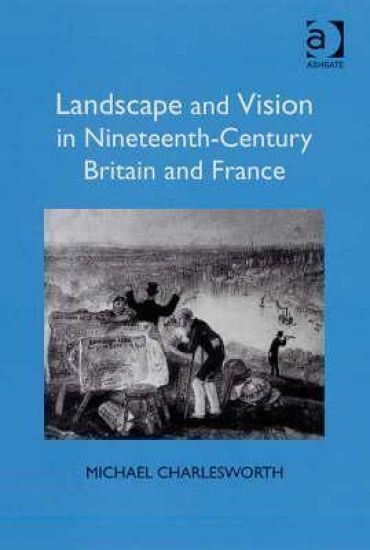
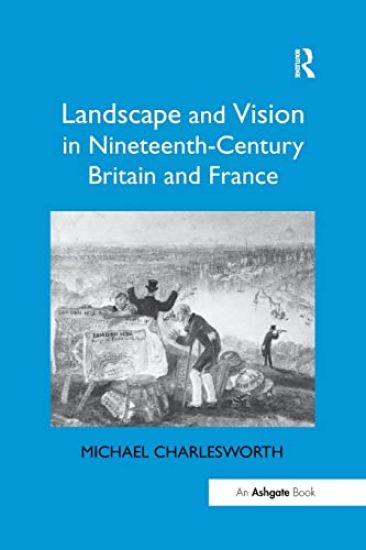
Landscape and Vision in Nineteenth-Century Britain and France

Landscape and Vision in Nineteenth-Century Britain and France

Michael Charlesworth

Ashgate Publishing Limited
2007
sidottu
A study of the ways landscape was perceived in nineteenth-century Britain and France, this book draws on evidence from poetry, landscape gardens, spectacular public entertainments, novels and scientific works as well as paintings in order to develop its basic premise that landscape and the processes of perceiving it cannot be separated. Vision embraces panoramic seeing from high places, but also the seeing of ghosts and spectres when madness and hallucination impinge upon landscape. The rise of geology and the spread of empires upset the existing comfortable orders of comprehension of landscape. Reverie and imagination produced powerful interpretive actions, while landscape in French culture proved central to the rejection of conservative classicism in favour of perceptual questioning of experience. The experience of subjectivity proved central to the perception of landscape while the visual culture of landscape became of paramount importance to modernity during the period in question.
Landscape and Vision in Nineteenth-Century Britain and France
A study of the ways landscape was perceived in nineteenth-century Britain and France, this book draws on evidence from poetry, landscape gardens, spectacular public entertainments, novels and scientific works as well as paintings in order to develop its basic premise that landscape and the processes of perceiving it cannot be separated. Vision embraces panoramic seeing from high places, but also the seeing of ghosts and spectres when madness and hallucination impinge upon landscape. The rise of geology and the spread of empires upset the existing comfortable orders of comprehension of landscape. Reverie and imagination produced powerful interpretive actions, while landscape in French culture proved central to the rejection of conservative classicism in favour of perceptual questioning of experience. The experience of subjectivity proved central to the perception of landscape while the visual culture of landscape became of paramount importance to modernity during the period in question.
Derek Jarman’s Visionary Arts

Derek Jarman’s Visionary Arts

Michael Charlesworth

BLOOMSBURY PUBLISHING PLC
2024
sidottu
Derek Jarman's place in the history of film is assured by virtue of his vibrant, defiant films that experiment with the very process of film-making and create new forms. His paintings, their excitements and their profundity, are less well known. Michael Charlesworth sheds light on the varied ramifications of Jarman's artistic practice from his years at Prospect Cottage, Dungeness, and provides the first book-length study of his interest in depth psychology. He draws on Jarman's paintings, especially his landscapes from the 1960s and 70s, his multiple series such as 'black' and 'broken glass', GBH, Queer and Evil Queen, and his last Ecstatic Landscapes (1991-3). He also showcases Jarman's excellence as a writer with respect to his memoir, Kicking the Pricks. In a novel approach to Jarman's cinema, selecting films such as Journey to Avebury (1973), Caravaggio (1986), The Garden (1990) and Blue (1993), Charlesworth emphasizes themes and artistry rather than narrative. Exploring the ways in which Jungian and post-Jungian psychology were absorbed into Jarman's varied works, Derek Jarman’s Visionary Arts provides a fresh perspective on his painting, film and writing. It celebrates him as one of the major British artists of the late 20th century, engaging with current debates about queer sexualities, environmentalism and climate catastrophe.
Derek Jarman’s Visionary Arts

Derek Jarman’s Visionary Arts

Michael Charlesworth

BLOOMSBURY PUBLISHING PLC
2025
nidottu
Derek Jarman's place in the history of film is assured by virtue of his vibrant, defiant films that experiment with the very process of film-making and create new forms. His paintings, their excitements and their profundity, are less well known. Michael Charlesworth sheds light on the varied ramifications of Jarman's artistic practice from his years at Prospect Cottage, Dungeness, and provides the first book-length study of his interest in depth psychology. He draws on Jarman's paintings, especially his landscapes from the 1960s and 70s, his multiple series such as 'black' and 'broken glass', GBH, Queer and Evil Queen, and his last Ecstatic Landscapes (1991-3). He also showcases Jarman's excellence as a writer with respect to his memoir, Kicking the Pricks. In a novel approach to Jarman's cinema, selecting films such as Journey to Avebury (1973), Caravaggio (1986), The Garden (1990) and Blue (1993), Charlesworth emphasizes themes and artistry rather than narrative. Exploring the ways in which Jungian and post-Jungian psychology were absorbed into Jarman's varied works, Derek Jarman’s Visionary Arts provides a fresh perspective on his painting, film and writing. It celebrates him as one of the major British artists of the late 20th century, engaging with current debates about queer sexualities, environmentalism and climate catastrophe.
The Modern Culture of Reginald Farrer

The Modern Culture of Reginald Farrer

Michael Charlesworth

Legenda
2019
pokkari
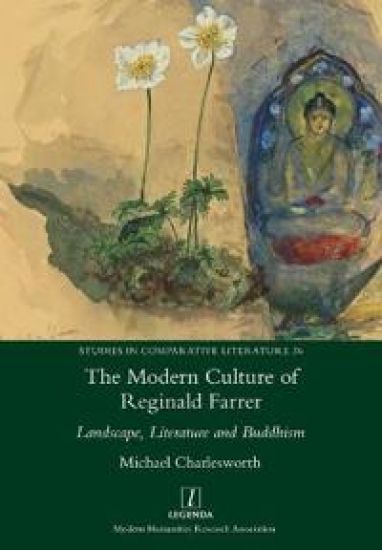
The British plant-collector Reginald Farrer (1880-1920) became a Buddhist in Ceylon, and his published works contain lively and uninhibited critiques of British society and civilisation partly informed by this alternative perspective. He came to love Asia, spending four years in China, Tibet and Burma, and nine months in Japan. A moderniser in the fields of garden design and garden-writing, he made famous plant introductions, also producing novels and travel-writing, paintings and photographs. In 1917 Farrer visited the Great War's Western Front and published a book describing the emotional effect of that experience. He is very much an unknown and unsung hero of twentieth-century culture. Charlesworth explores all Farrer's activities, particularly his involvement with two strong forces within the cultural dynamics of the early twentieth century: modernism and Buddhism.Michael Charlesworth is Professor of Art History at the University of Texas at Austin.
The Modern Culture of Reginald Farrer

The Modern Culture of Reginald Farrer

Michael Charlesworth

Legenda
2018
sidottu
The British plant-collector Reginald Farrer (1880-1920) became a Buddhist in Ceylon, and his published works contain lively and uninhibited critiques of British society and civilisation partly informed by this alternative perspective. He came to love Asia, spending four years in China, Tibet and Burma, and nine months in Japan. A moderniser in the fields of garden design and garden-writing, he made famous plant introductions, also producing novels and travel-writing, paintings and photographs. In 1917 Farrer visited the Great War's Western Front and published a book describing the emotional effect of that experience. He is very much an unknown and unsung hero of twentieth-century culture. Charlesworth explores all Farrer's activities, particularly his involvement with two strong forces within the cultural dynamics of the early twentieth century: modernism and Buddhism.Michael Charlesworth is Professor of Art History at the University of Texas at Austin.
Chapple's Principles of Wound Care and Healing

Chapple's Principles of Wound Care and Healing

Peter Charlesworth; Michael F. Klaassen

Springer International Publishing AG
2024
sidottu
This book is a tribute to Dr Joan Chapple CNZM FRACS, who qualified as New Zealand's first formally trained female plastic surgeon in the late 1950s and practised as a plastic and hand surgeon in Auckland, New Zealand for over 38 years. She was selected for surgical training by the late Sir William Manchester, who started the Middlemore Plastic Surgery Unit in December 1950. Joan was an original thinker and a pioneer in the fields of wound care and healing in her own right. She self-published “The Management of Soft Tissue Injuries: Philosophy, Principles and Practice” in 1994, followed by her definitive “Wound Care and Healing: The Physiological Challenge” in 2003. Dr Chapple developed principles of a practical physiological approach to acute wounds that not only benefited their recovery and healing, but also demonstrably reduced the post-operative pain in her patients. She practised and taught these principles at her Soft Tissue Trauma Clinics, based at the Emergency Department of the then Auckland Public Hospital. She also lectured widely to nurses, medical students, general practitioners and surgeons. Joan Chapple’s primary hypotheses were: 1. Injury initiates a series of coordinated living responses. 2. Living cells need to be nurtured in a moist and non-toxic environment. 3. The speed and quality of recovery and repair after injury depends on the circulation. 4. The body recovers and heals with or without treatment, but never without circulation. This republication of “Chapple's Wound Care and Healing” comes with a modern orientation and includes expert commentaries, many of which confirm that Dr Chapple’s thinking, knowledge and surgical principles were ahead of their time. In addition, it contains a new chapter explaining her extraordinary life and career for a world readership. Joan Chapple remains an important virtual mentor to future generations of surgeons, nurses, emergency specialists and general practitioners.
Chapple's Principles of Wound Care and Healing

Chapple's Principles of Wound Care and Healing

Peter Charlesworth; Michael F. Klaassen

Springer International Publishing AG
2025
nidottu
This book is a tribute to Dr Joan Chapple CNZM FRACS, who qualified as New Zealand's first formally trained female plastic surgeon in the late 1950s and practised as a plastic and hand surgeon in Auckland, New Zealand for over 38 years. She was selected for surgical training by the late Sir William Manchester, who started the Middlemore Plastic Surgery Unit in December 1950. Joan was an original thinker and a pioneer in the fields of wound care and healing in her own right. She self-published "The Management of Soft Tissue Injuries: Philosophy, Principles and Practice" in 1994, followed by her definitive "Wound Care and Healing: The Physiological Challenge" in 2003. Dr Chapple developed principles of a practical physiological approach to acute wounds that not only benefited their recovery and healing, but also demonstrably reduced the post-operative pain in her patients. She practised and taught these principles at her Soft Tissue Trauma Clinics, based at the Emergency Department of the then Auckland Public Hospital. She also lectured widely to nurses, medical students, general practitioners and surgeons. Joan Chapple's primary hypotheses were: 1. Injury initiates a series of coordinated living responses. 2. Living cells need to be nurtured in a moist and non-toxic environment. 3. The speed and quality of recovery and repair after injury depends on the circulation. 4. The body recovers and heals with or without treatment, but never without circulation. This republication of "Chapple's Wound Care and Healing" comes with a modern orientation and includes expert commentaries, many of which confirm that Dr Chapple's thinking, knowledge and surgical principles were ahead of their time. In addition, it contains a new chapter explaining her extraordinary life and career for a world readership. Joan Chapple remains an important virtual mentor to future generations of surgeons, nurses, emergency specialists and general practitioners.
A Scripture Index to Charlesworth's The Old Testament Pseudepigrapha

A Scripture Index to Charlesworth's The Old Testament Pseudepigrapha

Steve Delamarter

Continuum International Publishing Group Ltd.
2003
sidottu
This is a complete index to the nearly 8000 references to the Protestant scriptures in the margins and footnotes of James Charlesworth's 2-volume work, "The Old Testament Pseudepigraphia". The information in the index will assist those studying the influence of the Hebrew bible on the pseudepigrapha and the influence of the pseudepigrapha on the New Testament.
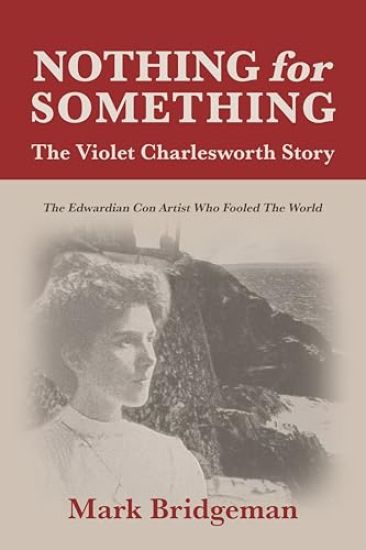
Nothing for Something, The Violet Charlesworth Story
Recounted for the first time and in detail, this is the unbelievable true story of the Edwardian confidence trickster who fooled the world - three times. Violet Charlesworth, the beautiful young heiress to a fortune was briefly the most famous woman in the world, hunted across the globe, pursued by the press, and living the life of royalty. With country estates, fast cars, furs, fabulous jewels, and expensive tastes, she lived life in the fast lane until her lifestyle - and her creditors - finally caught up with her on a lonely, clifftop road in North Wales. Clever, resourceful, cunning, ruthless and beautiful, Violet Charlesworth had it all, until her luxurious motorcar smashed through a low wall on a dangerous bend in a moonlit clifftop road, hurling her into the waves below. As the search for her body continued, the shocking truth about her life finally emerged.In the era of the Suffragettes, Violet found another way to beat male-dominated society at its own game. Setting the bar for all female con artists to follow, she changed women's fashion, her exploits entered the lexicon of the English language, and she rapidly became more famous than the King and the Prime Minister. She even had a racehorse named after her. She ruined lives and reputations, broke promises and shattered dreams but, like all great con artists, left us guessing until the end. And she did it all with style and panache.
Considering Religions, Rights and Bioethics: For Max Charlesworth
This volume engages in conversation with the thinking and work of Max Charlesworth as well as the many questions, tasks and challenges in academic and public life that he posed. It addresses philosophical, religious and cultural issues, ranging from bioethics to Australian Songlines, and from consultation in a liberal society to intentionality. The volume honours Max Charlesworth, a renowned and celebrated Australian public intellectual, who founded the journal Sophia, and trained a number of the present heirs to both Sophia and academic disciplines as they were further developed and enhanced in Australia: Indigenous Australian studies, philosophy of religion, the study of the tension between tradition and modernity, phenomenology and existentialism, hermeneutics, feminist philosophy, and philosophy of science that is responsive to environmental issues.
Considering Religions, Rights and Bioethics: For Max Charlesworth
This volume engages in conversation with the thinking and work of Max Charlesworth as well as the many questions, tasks and challenges in academic and public life that he posed. It addresses philosophical, religious and cultural issues, ranging from bioethics to Australian Songlines, and from consultation in a liberal society to intentionality. The volume honours Max Charlesworth, a renowned and celebrated Australian public intellectual, who founded the journal Sophia, and trained a number of the present heirs to both Sophia and academic disciplines as they were further developed and enhanced in Australia: Indigenous Australian studies, philosophy of religion, the study of the tension between tradition and modernity, phenomenology and existentialism, hermeneutics, feminist philosophy, and philosophy of science that is responsive to environmental issues.
ChemConnections

ChemConnections

Charlesworth Paul; Walczak Mary; Williams Doug; Zarzana Linda

WW Norton Co
2004
nidottu
In this module students explore the science behind these questions and develop informed answers. Case teaching, collaborative laboratory work, and classroom group problems are used to teach redox reactions, acid/base reactions, solubility, and electrochemical equilibria. Teams of students perform their own analysis and hydro-metallurgical processing of an ore sample.