Ah darkness, is it the color of night, the color that conceals all, or is it the color that reminds us to never forget? It surrounds us watching and waiting in dire precision for that exact moment to make itself known. One day my innocence was lost upon realizing that I feared the darkness that hides within us all.
This book argues that post-PhD career planning should ideally begin at the same time as the PhD itself. Drawing from ten years of research and stories of close to 50 individuals, each chapter focuses on the stories of individuals who share common career intentions and how they negotiate these both before, during and after their studies. Each career trajectory is different as individuals planned and made decisions in the face of both expected and unexpected work, personal experiences and responsibilities. The book concludes with resources to help those who are currently planning or reflecting on their own career trajectories.
The book asks how we can make sense of career paths for PhD graduates, something that has rarely been systematically studied. It offers a coherent synthesis of the empirically-based insights that arose from the experiences of 48 early career researchers, who were participants in a 10-year qualitative longitudinal research program. The book has the power to inform other researchers’ conceptual and methodological approaches to the study of post-PhD career trajectories. The authors draw on the conceptual lens of ‘identity-trajectory’, which emerged from their research program, to examine the decision-making processes underpinning the careers of PhD graduates, whether contingent researchers and teachers, assistant professors within the academy or professionals elsewhere. The book highlights the role of personal agency in negotiating academic and non-academic work and careers within broader personal lives. It will be compelling reading for researchers and students working in the areas of Education and Sociology, particularly those with an interest in examining career development and decision-making.
The book asks how we can make sense of career paths for PhD graduates, something that has rarely been systematically studied. It offers a coherent synthesis of the empirically-based insights that arose from the experiences of 48 early career researchers, who were participants in a 10-year qualitative longitudinal research program. The book has the power to inform other researchers’ conceptual and methodological approaches to the study of post-PhD career trajectories. The authors draw on the conceptual lens of ‘identity-trajectory’, which emerged from their research program, to examine the decision-making processes underpinning the careers of PhD graduates, whether contingent researchers and teachers, assistant professors within the academy or professionals elsewhere. The book highlights the role of personal agency in negotiating academic and non-academic work and careers within broader personal lives. It will be compelling reading for researchers and students working in the areas of Education and Sociology, particularly those with an interest in examining career development and decision-making.
When like-minded women come together anything is possible. As the visionaries of this Anthology, we pulled from our own experiences of building a business to encourage other business owners to share their business-building journey. We did this in hope that it would be an inspiration to others who may be hesitant in starting a business or giving up on their dreams. What makes this book worth reading you may ask? You will have the privilege of witnessing how eleven phenomenal co-authors from different business industries utilized one of the main ingredients to complete the recipe for a successful business NETWORKING Don't get confused by the title because it's much more than going to networking events. Inside you will get actionable advice and more insight on how building relationships, making connections, and executing the social game correctly can impact not only your business but your whole life. All of these women invested their time, talents, and resources and gave a new meaning to the terminology of "Networking." Despite one of the most dramatic experiences in history, we overcame all of the obstacles and challenges. The rippling effect of Covid-19 created struggles for everyone personally and professionally causing many to shut the doors to their business but as a result of determination and persistence we are all still standing ... it's our TIME It's our hope that after you read this anthology, no matter what you are going through, you know that you are destined for great things. We all have a roadmap to success; the question is what will you do with it? Now go start that business that you have been wanting to start, create a product or service that will change the world. From the words of a good friend of ours, GO GET THEM
DO YOU WANT TO KNOW? A LIGHTWORKER'S GUIDE TO THE UNIVERSE is many things. It is an easy to understand guide on how to overcome your fears and advance yourself spiritually. It is also a raw, uncensored look into the future. A direct communication from God. It is a results book for those that seek results. Flowery words are fine but if they do not produce results, what's the point? It is a reference book to keep with you as you continue your journey as a human being. It does not matter what your religious background is. For with God, there is no religion. God is love. This book will help you understand how much God loves you. By eliminating fear in your life, you will come to know how to love yourself as a true spiritual light.
While current literature stresses the importance of teaching about the 9/11 attacks on the US, many questions remain as to what teachers are actually teaching in their own classrooms. Few studies address how teachers are using of all of this advice and curriculum, what sorts of activities they are undertaking, and how they go about deciding what they will do. Arguing that the events of 9/11 have become a "chosen trauma" for the US, author Cheryl Duckworth investigates how 9/11 is being taught in classrooms (if at all) and what narrative is being passed on to today’s students about that day.Using quantitative and qualitative data gathered from US middle and high school teachers, this volume reflects on foreign policy developments and trends since September 11th, 2001 and analyzes what this might suggest for future trends in U.S. foreign policy. The understanding that the "post-9/11 generation" has of what happened and what it means is significant to how Americans will view foreign policy in the coming decades (especially in the Islamic World) and whether it is likely to generate war or foster peace.
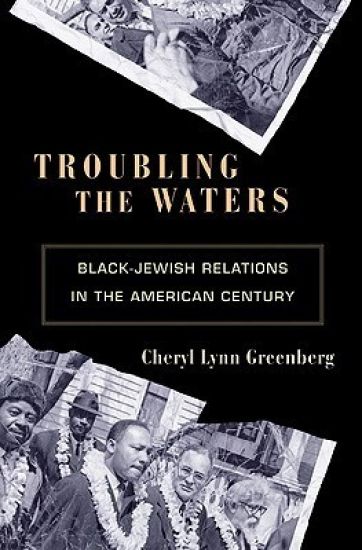
Was there ever really a black-Jewish alliance in twentieth-century America? And if there was, what happened to it? In Troubling the Waters, Cheryl Greenberg answers these questions more definitively than they have ever been answered before, drawing the richest portrait yet of what was less an alliance than a tumultuous political engagement--but one that energized the civil rights revolution, shaped the agenda of liberalism, and affected the course of American politics as a whole. Drawing on extensive new research in the archives of organizations such as the NAACP and the Anti-Defamation League, Greenberg shows that a special black-Jewish political relationship did indeed exist, especially from the 1940s to the mid-1960s--its so-called "golden era"--and that this engagement galvanized and broadened the civil rights movement. But even during this heyday, she demonstrates, the black-Jewish relationship was anything but inevitable or untroubled. Rather, cooperation and conflict coexisted throughout, with tensions caused by economic clashes, ideological disagreements, Jewish racism, and black anti-Semitism, as well as differences in class and the intensity of discrimination faced by each group. These tensions make the rise of the relationship all the more surprising--and its decline easier to understand. Tracing the growth, peak, and deterioration of black-Jewish engagement over the course of the twentieth century, Greenberg shows that the history of this relationship is very much the history of American liberalism--neither as golden in its best years nor as absolute in its collapse as commonly thought.
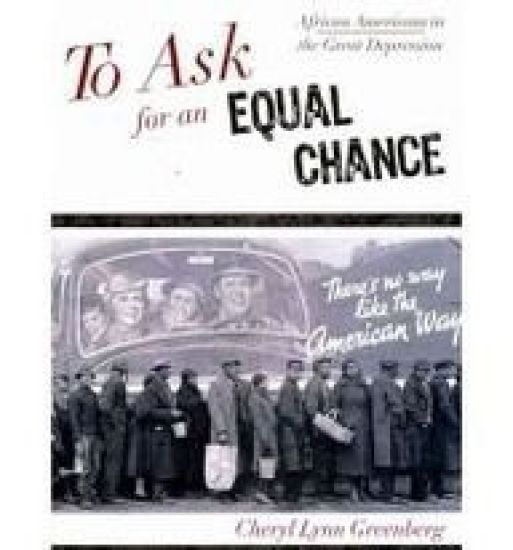
The Great Depression hit Americans hard, but none harder than African Americans and the working poor. To Ask for an Equal Chance explores black experiences during this period and the intertwined challenges posed by race and class. "Last hired, first fired," black workers lost their jobs at twice the rate of whites, and faced greater obstacles in their search for economic security. Black workers, who were generally urban newcomers, impoverished and lacking industrial skills, were already at a disadvantage. These difficulties were intensified by an overt, and in the South legally entrenched, system of racial segregation and discrimination. New federal programs offered hope as they redefined government's responsibility for its citizens, but local implementation often proved racially discriminatory. As Cheryl Lynn Greenberg makes clear, African Americans were not passive victims of economic catastrophe or white racism; they responded to such challenges in a variety of political, social, and communal ways. The book explores both the external realities facing African Americans and individual and communal responses to them. While experiences varied depending on many factors including class, location, gender and community size, there are also unifying and overarching realities that applied universally. To Ask for an Equal Chance straddles the particular, with examinations of specific communities and experiences, and the general, with explorations of the broader effects of racism, discrimination, family, class, and political organizing.
The Great Depression hit Americans hard, but none harder than African Americans and the working poor. To Ask for an Equal Chance explores black experiences during this period and the intertwined challenges posed by race and class. "Last hired, first fired," black workers lost their jobs at twice the rate of whites, and faced greater obstacles in their search for economic security. Black workers, who were generally urban newcomers, impoverished and lacking industrial skills, were already at a disadvantage. These difficulties were intensified by an overt, and in the South legally entrenched, system of racial segregation and discrimination. New federal programs offered hope as they redefined government's responsibility for its citizens, but local implementation often proved racially discriminatory. As Cheryl Lynn Greenberg makes clear, African Americans were not passive victims of economic catastrophe or white racism; they responded to such challenges in a variety of political, social, and communal ways. The book explores both the external realities facing African Americans and individual and communal responses to them. While experiences varied depending on many factors including class, location, gender and community size, there are also unifying and overarching realities that applied universally. To Ask for an Equal Chance straddles the particular, with examinations of specific communities and experiences, and the general, with explorations of the broader effects of racism, discrimination, family, class, and political organizing.
Activists and historians reflect together on the civil rights movement and its meanings, and on the Student Nonviolent Coordinating Committee's place in American history. "The reminiscences and reflections voiced at the SNCC reunion remind us of the remarkable vision and courageous dedication of the civil rights movement of the 1960s. Framed by Cheryl Greenberg's eloquent and probing introduction, the SNCC veterans' comments about the triumphs and limitations of their movement represent a major contribution to the historical literature on race and power in modern America." --Raymond Arsenault, University of South Florida On the occasion of the SNCC's 25th anniversary, more than 500 people gathered at Trinity College in Connecticut to both celebrate and critique its accomplishments. More than 40 SNCC members tell their stories and reflect on the contributions, limits and legacies of the movement in A Circle of Trust. Engaging in spirited debate with each other, with historians of the movement, and with contemporary political culture more broadly, these former and perpetual activists speak of their vision of a just society and what still remains to be done. With increasing racial tension and the continued debate over integration and separatism in America in the 1990s, the content of this conference is more relevant than ever. Cheryl Lynn Greenberg begins with an overview of SNCC and introduces each of the chapters of oral history. Participants explore the origins of SNCC, its early adoption of nonviolent protest, its ultimate renunciation of liberal integration and embrace of militant black radicalism, its refusal to repudiate far-left organizations, and controversies over the roles of women in SNCC and society at large. The result is a thoughtful, moving, sometimes acrimonious, sometimes celebratory account of one of the most significant civil rights organizations and its successes and failures.
While current literature stresses the importance of teaching about the 9/11 attacks on the US, many questions remain as to what teachers are actually teaching in their own classrooms. Few studies address how teachers are using of all of this advice and curriculum, what sorts of activities they are undertaking, and how they go about deciding what they will do. Arguing that the events of 9/11 have become a "chosen trauma" for the US, author Cheryl Duckworth investigates how 9/11 is being taught in classrooms (if at all) and what narrative is being passed on to today’s students about that day.Using quantitative and qualitative data gathered from US middle and high school teachers, this volume reflects on foreign policy developments and trends since September 11th, 2001 and analyzes what this might suggest for future trends in U.S. foreign policy. The understanding that the "post-9/11 generation" has of what happened and what it means is significant to how Americans will view foreign policy in the coming decades (especially in the Islamic World) and whether it is likely to generate war or foster peace.
What does it feel like to run a marathon? To run an ultra-marathon 50 miles through sand, slip rock, and slot canyons? How about 100 marathons? Held in 30 countries and 39 different US States RUNABOUT delivers in-depth race reports with lessons learned from long-distance running adventures around the world. Anyone who is fascinated with running will find this book offers unique insights into the running of multiple marathons and ultra-marathons on a variety of terrain. The author documents road races along with trail races run through the fields, forest and desert, over lava fields, on coastal trails and in National Parks. The book is a combination travelogue and running chronicle offering race reviews through the eyes of a woman in her 50s. This is a refreshingly personal account of a recreational runner's attempt to fulfill her goals while placing those recreational goals in the context of the evolution of the growing world of womens sport.