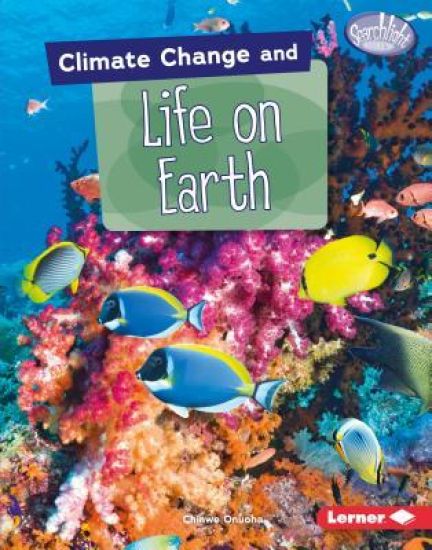
Animals and plants all over the world are struggling to survive. Their food supply is decreasing, and their habitats are shrinking. Is climate change to blame? Discover how climate change affects all Earth's living creatures. Find out what scientists are doing to save plant and animal species, and learn more about how you can help.
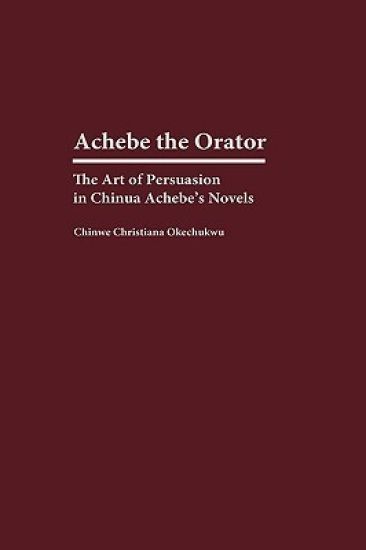
Taken together, Chinua Achebe's five novels--Things Fall Apart (1958), No Longer at Ease (1960), A Man of the People (1966), Arrow of God (1967), and Anthills of the Savannah (1988)--encompass the entire social, historical, and political experiences of Nigeria, from precolonial times to the close of the 20th century. Central to these experiences is the clash of Igbo culture with the ways of the West. The novels show a society that has been fragmented and a people who are striving to reconstruct a world that they lost during their encounter with colonialism. Achebe has stated that his main purpose for writing is to reveal the truth about his people and their culture. This book examines his use of rhetoric to accomplish that objective.Achebe's writings are fraught with rhetorical devices, and he has harnessed the power of oratory to show how his society has responded to the African colonial encounter and its aftermath. He uses oratory and rhetoric to both educate and persuade his readers and to delineate his characters. Because of the central role of language in his novels, his writings illustrate the nature of discourse among the Igbo as well as the larger Nigerian community. This volume presents a broad overview of rhetoric throughout Achebe's works and demonstrates how he uses the novel genre for persuasive purposes.
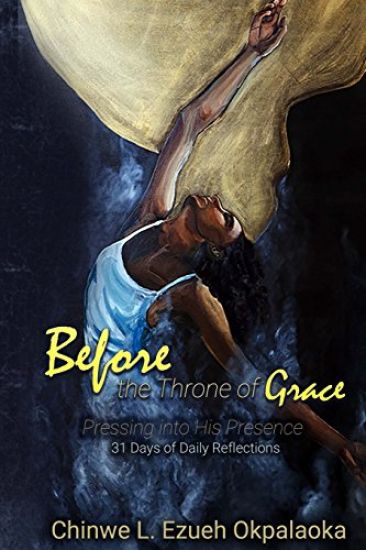
Before the throne of grace: Pressing into His presence, 31 days of daily reflections is Chinwe L. Ezueh Okpalaoka' s first devotional, the outcome of personal notes from her study of God's Word, and her life experiences and observations. The book title describes the posture with which she approaches God and His Word in her private study times. Devotionals like this one encourage the discipline of regular Bible reading and reflection and the author has included opportunities for reflection at the end of each day. The Holy Spirit is your teacher and He will reveal the enduring truth of God's Word as you earnestly seek Him.
What if the traditional narrative about immigrant women--that those who come to the United States will succeed as long as they work hard, stay focused, and have supportive families--is a lie? Of the 73 million women in the US workforce, 11.5 million are foreign-born. The truth is--even in the midst of headlines and political debates about immigration reform and in the wake of MeToo and other female-centric movements--millions of immigrants, especially women, aren’t living their fullest potential.Based on her personal experience and the stories of trailblazing women from around the world and in diverse industries, author Chinwe Esimai shares five indispensable traits that make an ocean of difference between immigrants who live as mere shadows of their truest potential and those who find purpose and fulfillment--what Chinwe refers to as their immigrace:Saying yes to your immigrace, an immigrant woman’s expression of her highest purpose and potentialDaring to play in the big leaguesTransforming failureEmbracing change and blending differencesFinding joy and healingThese five traits are the foundation of the Brilliance Blueprint, a step-by-step guide to help readers achieve to their own extraordinary results and build their own remarkable legacies.
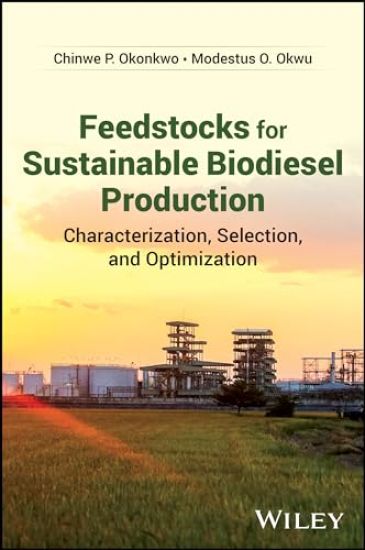
Complete and practical guidance on using biodegradable feedstocks for biodiesel production Feedstocks for Sustainable Biodiesel Production: Characterization, Selection, and Optimization helps readers understand the advantages, challenges, and potential of different biodegradable feedstock options that can be used in biodiesel production, covering methods of feedstock sourcing extraction, environmental concerns, cost-benefit aspects, practical applications, and more. Specific biodegradable feedstocks covered in this text include chrysobalamus icaco, cussonia bateri, elaeis guineensis, waste cooking oils, moringa oleifera, jatropha curcas, chlorophyceae (unicellular green algae), fucus vesiculosus (micro algae), afzelia africana, cucurbita pepo, hura crepitans, cuyperus esculentus, colocynthus vulgaris, and others. This book explores topics such as: Key characteristics of biodiesel, using biodiesel as an alternative to petroleum diesel, and a review of the latest industry standards, practices, and trends Basis of the selection of specific (including nonedible) feedstocks for different applications and the addition of new, innovative feedstocks in recent years Specific sustainability benefits of nonedible feedstocks, which can be grown on abandoned land where they do not compete with food crops Government policies aimed at finding fossil fuel alternatives which will increase biodegradable feedstock adoption Experimental and predictive modeling of biodiesel produced from novel feedstocks using computational intelligence techniques Providing both core foundational knowledge on the subject as well as insight on how to practically transition away from fossil fuels, this book is an essential reference for engineering professionals with a specific interest in biodiesel production, sustainability, renewable energy, and environmental conservation.
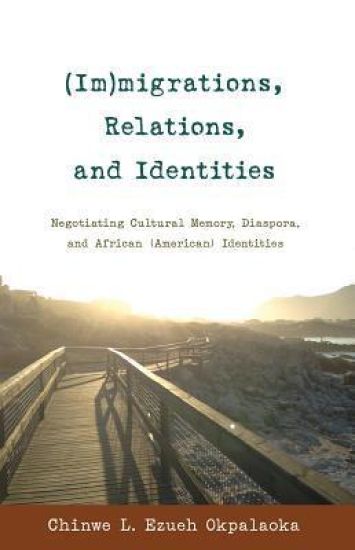
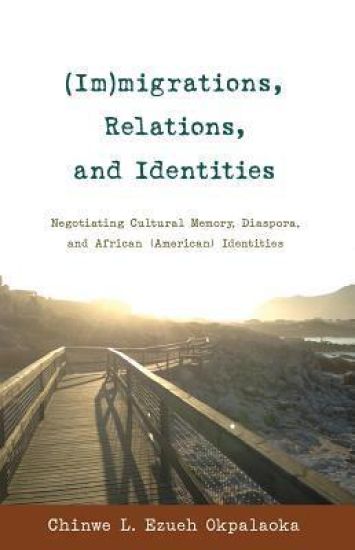
The movement and dispersion of African ascendant peoples around the globe has been historically rooted in struggle and oppression. Whether through slavery, colonialism, or the economic fallout of both, we are always in a state of renegotiating and recreating identities wherever we have found ourselves in the Diaspora. In our displacement, contestations have arisen about which groups have the most legitimate claim to the continent of Africa. The issues that arise include naming (the names we bear and naming the feminist spirit in which Black women do work on behalf of each other), African identities (who is really an African?), cultural memory (how do the ways we remember and the things we remember shape who we are as African ascendant people?), and what methodologies best serve the work we do on behalf of African people. (Im)migrations, Relations, and Identities thoughtfully researches and discusses these issues.
The movement and dispersion of African ascendant peoples around the globe has been historically rooted in struggle and oppression. Whether through slavery, colonialism, or the economic fallout of both, we are always in a state of renegotiating and recreating identities wherever we have found ourselves in the Diaspora. In our displacement, contestations have arisen about which groups have the most legitimate claim to the continent of Africa. The issues that arise include naming (the names we bear and naming the feminist spirit in which Black women do work on behalf of each other), African identities (who is really an African?), cultural memory (how do the ways we remember and the things we remember shape who we are as African ascendant people?), and what methodologies best serve the work we do on behalf of African people. (Im)migrations, Relations, and Identities thoughtfully researches and discusses these issues.
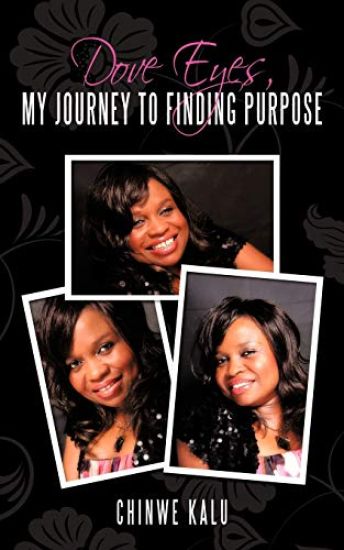
Everyone has a specific purpose for which they were born. However, we don't arrive with a manual telling us what it is or how to go about finding it. We must discover it. The process can be drawn out and sometimes very discouraging. It's like going to school, where you learn, then do a test to confirm that you have actually imbibed what has been taught. There are high and low points in this learning process. There are many unexpected turns along the way. Dove Eyes, My Journey to Finding Purpose is about those high and low moments, about those unexpected turns. They all lead to the place where you discover what you're all about and can then walk in God's plan for your life. Chinwe tells her story to encourage and inspire people through the process. She answers some of the questions that plague people who are in the process. It's an easy to read story that will help people through the process of understanding themselves. Happy reading.