Kirjojen hintavertailu. Mukana 11 244 527 kirjaa ja 12 kauppaa.

Kirjahaku

Etsi kirjoja tekijän nimen, kirjan nimen tai ISBN:n perusteella.

1000 tulosta hakusanalla Chris J Simond

Tap Dancers

Tap Dancers

Chris J Simond

None
2024
pokkari
A City wakes to no water. Not a drop. Panic grips the suburbs. Hospitals, schools, businesses shut down. Fights break out in supermarkets over bottled water. We must now imagine life without nature's precious drop. After a devastating cyber-attack a city's water has been cut off. Terrorists have threatened to poison supply. Millions are terrified, scared to turn on their taps. Award winning photojournalist Mack Grayson returns from overseas war zones to save his crumbling marriage and becomes embroiled in the biggest story of his life. While covering a blazing inferno for his newspaper he fortuitously becomes the fire's star tv reporter. This good fortune launches him on a new career and in pursuit of those holding his city to ransom. But life's not easy for Mack, jealous enemies are trying to thwart his meteoric rise by smearing his reputation and accusing him of murder. It's now a race against time as he tries to clear his name while pursuing the terrorists and presenting informative and entertaining TV updates. The final threat is for the water catchment to be bombed from the air with deadly Anthrax, thousands will die. Mack intervenes in a dramatic car chase, intercepting the plane, crippling it. It still manages to take off. Can he save the city and the lives of five million people? While this is a fictionalised account of how a city is held to ransom when its water utility is under attack from outside forces how far is it from reality. How protected is our planet's liquid gold? How easy is it to seize control of reservoirs and catchments, even poison them? Tap Dancers explores some real possibilities. In recent times the world has witnessed terrorist threats, cyber attacks on corporations, website seizures and ransom demands paralysing communities, cities, even countries. What's next? Water?NB: Tap Dancers is not just about doom laden scenarios its also a story of real life relationships at home and at work and how perseverance against the odds fosters happier outcomes, even love. With room for murder.
Blog Design Solutions

Blog Design Solutions

Richard Rutter; Andy Budd; Simon Collison; Chris J. Davis; Michael Heilemann; Phil Sherry; David Powers; John Oxton

APress
2006
nidottu
Blogging has moved rapidly from being a craze to become a core feature of the Internet - from individuals sharing their thoughts with the world via online diaries, through fans talking about their favorite sports teams or music, right up to serious business minds discussing industry futures. And that includes you, right? If you haven't got a blog already, you want to start one, and want to find out how. If you have already got one, you want to know how to customize it, and make it look cooler than everybody else's. In either case, this is the ideal book for you. In this book, a team of renowned web designers take you through the ins and outs of putting together great blogs. They waste no time harking on about the philosophy of blogs, or the community behind them. Instead, they get straight to the practical details, showing how to set up a basic blog in some of the world's most popular blogging engines - Movable Type, ExpressionEngine, WordPress, and Textpattern. With your blog set up, they then show you how to build great looking, usable layouts for your blog. The last chapter even shows you how to build your very own PHP/MySQL-based blog engine! With this book in hand, you'll have found your way to blog heaven in no time!
A Love Letter to Europe

A Love Letter to Europe

Frank Cottrell Boyce; William Dalrymple; Margaret Drabble; Simon Callow; Tony Robinson; Tracey Emin; J.K. Rowling; Holly Johnson; Pete Townshend; Melvyn Bragg; Jeffrey Boakye; Onjali Rauf; Will Hutton; Prue Leith; Jonathan Meades; Chris Riddell; Philip Ardagh; Mary Beard; Brian Catling; Shami Chakrabarti; Chris Cleave; Peter J Conradi; Lindsey Davis

Coronet Books
2021
pokkari
How are great turning points in history experienced by individuals?As Britain pulls away from Europe great British writers come together to give voice to their innermost feelings. These writers include novelists, writers of books for children, of comic books, humourists, historians, biographers, nature writers, film writers, travel writers, writers young and old and from an extraordinary range of backgrounds. Most are famous perhaps because they have won the Booker or other literary prizes, written bestsellers, changed the face of popular culture or sold millions of records. Others are not yet household names but write with depth of insight and feeling.There is some extraordinary writing in this book. Some of these pieces are expressions of love of particular places in Europe. Some are true stories, some nostalgic, some hopeful. Some are cries of pain. There are hilarious pieces. There are cries of pain and regret. Some pieces are quietly devastating. All are passionate.Conceived as a love letter to Europe, this book may also help reawaken love for Britain. It shows the unique richness and diversity of British cultures, a multitude of voices in harmony.Contributors include:Hugh Aldersey-Williams, Philip Ardagh, Jake Arnott, Patricia Atkinson, Paul Atterbury, Richard Beard, Mary Beard, Don Boyd, Melvyn Bragg, Gyles Brandreth, Kathleen Burke, James Buxton, Philip Carr, Brian Catling, Shami Chakrabarti, Chris Cleave, Mark Cocker, Peter Conradi , Heather Cooper, Frank Cottrell-Boyce, Roger Crowley, David Crystal, William Dalrymple, Lindsey Davies, Margaret Drabble, Mark Ellen, Richard Evans, Michel Faber, Sebastian Faulks, Ranulph Fiennes, Robert Fox, James Fox, Neil Gaiman, Evelyn Glennie, James Hanning, Nick Hayes, Alan Hollinghurst, Gabby Hutchinson-Crouch, Will Hutton, Robert Irwin, Holly Johnson , Liane Jones, Ruth Jones, Sam Jordison, Kapka Kassabova, AL Kennedy, Hermione Lee, Prue Leith, Patrick Lenox, Roger Lewis, David Lindo, Penelope Lively, Beth Lync, Richard Mabey, Sue MacGregor, Ian Martin, Frank McDonough, Jonathan Meades, Andrew Miller, Deborah Moggach, Ben Moor, Alan Moore, Paul Morley, Jackie Morris, Charles Nicholl, Richard Overy, Chris Riddell, Adam Roberts, Tony Robinson, Lee Rourke, Sophie Sabbage, Marcus Sedgwick, Richard Shirreff, Paul Stanford, Isy Suttie, Sandi Toksvig, Colin Tudge, Ed Vulliamy, Anna Whitelock, Kate Williams, Michael Wood, Louisa Young
Self-assessment Cases in Surgical Imaging

Self-assessment Cases in Surgical Imaging

Chris J. Harvey; Hugh R. S. Roberts; Nigel J. Davies; Nicola H. Strickland; John H. Scurr

Oxford University Press
2005
nidottu
Diagnostic radiology plays a vital role in patient management and all clinicians need to be able to recognize the radiological appearances of many medical conditions. Not only are traditional imaging techniques important, but newer techniques such as interventional radiology, computed tomography, magnetic resonance imaging, nuclear medicine, and ultrasound are increasingly important in clinical practice. The interpretation of radiological images is also an integral part of professional examinations within general surgery. This book covers all modalities in radiology, providing a guide to the principles of plain radiographic film interpretation and an understanding of the roles and limitations of more complex imaging across general surgery. The use of contrast agents, radiation dosage, and guidance on the interpretation of some imaging modalities such as the chest and abdominal radiograph, intravenous urogram, and barium studies are included. The material is presented through the discussion of 101 fully-illustrated cases which take a question and full answer format.
European Integration

European Integration

Chris J. Bickerton

Oxford University Press
2012
sidottu
European integration confuses citizens and scholars alike. It appears to transfer power away from national capitals towards Brussels yet a close study of the EU reveals the absence of any real leap towards supranationalism. The EU is dominated by cooperation between national representatives and national officials yet it continually appears to us as something external and separate from national political life. This book takes on these paradoxes by arguing that European integration should no longer be studied as the transcendence of states or as merely an expression of national interests. Rather, we should approach it as a process of state transformation. This transformation is from nation-state to member state. The book explores in detail the concept of member state, arguing that it provides us with the best tool for understanding the European integration process. Member states differ from traditional nation-states. They are not founded on the idea of popular sovereignty or the nation. They rest upon the idea that the governance of domestic societies requires external frameworks of rule that can bind the hands of national politicians. National authority is thus exercised through external rules and norms. Member statehood differs from earlier forms of statehood because it rests upon a presumption of conflict between state and society rather than an identity of interests between ruler and ruled. The book outlines in empirical detail these mysteries and paradoxes of European integration. It then outlines in detail the theory and history of member statehood. It applies the concept of member state to the study of two EU policy areas: macro-economic governance and foreign and security policy.
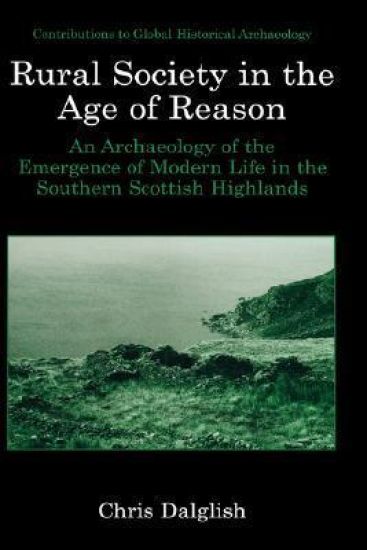
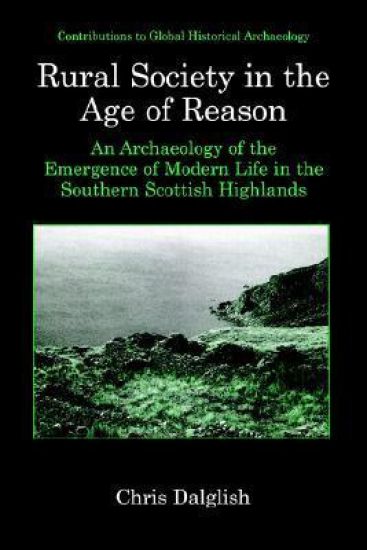
Rural Society in the Age of Reason

Rural Society in the Age of Reason

Chris J. Dalglish

Kluwer Academic/Plenum Publishers
2003
sidottu
My interest in the archaeology of the Scottish Highlands began long before I had any formal training in the subject. Growing up on the eastern fringes of the southern Highlands, close to Loch Lomond, it was not hard stumble across ruined buildings, old field boundaries, and other traces of everyday life in the past. This is especially true if you spend much time, as I have done, climbing the nearby mountains and walking and driving through the various glens that give access into the Highlands. At the time, I had no real understanding of these remains, simply accepting them as being built and old. After studying archaeology for a few years at the University of Glasgow, itself only a short commute from the area where I grew up, I became acutely aware that I still had no real understanding of these - miliar, yet enigmatic, buildings and fields. This and a growing interest in Scotland’s historical archaeology drove me to take several courses on the subject of rural settlement studies. These courses allowed me to place what I now knew to be houses, barns, mills, shieling (transhumance) settlements, rig-and-furrow cultivation, and other related remains in history. Overwhelmingly, they seemed to date from the period of the last 300 years. I also began to understand how they all worked together as component parts of daily rural life in the past.
Rural Society in the Age of Reason

Rural Society in the Age of Reason

Chris J. Dalglish

Kluwer Academic/Plenum Publishers
2003
nidottu
My interest in the archaeology of the Scottish Highlands began long before I had any formal training in the subject. Growing up on the eastern fringes of the southern Highlands, close to Loch Lomond, it was not hard stumble across ruined buildings, old field boundaries, and other traces of everyday life in the past. This is especially true if you spend much time, as I have done, climbing the nearby mountains and walking and driving through the various glens that give access into the Highlands. At the time, I had no real understanding of these remains, simply accepting them as being built and old. After studying archaeology for a few years at the University of Glasgow, itself only a short commute from the area where I grew up, I became acutely aware that I still had no real understanding of these - miliar, yet enigmatic, buildings and fields. This and a growing interest in Scotland’s historical archaeology drove me to take several courses on the subject of rural settlement studies. These courses allowed me to place what I now knew to be houses, barns, mills, shieling (transhumance) settlements, rig-and-furrow cultivation, and other related remains in history. Overwhelmingly, they seemed to date from the period of the last 300 years. I also began to understand how they all worked together as component parts of daily rural life in the past.
Environmental Issues in American History

Environmental Issues in American History

Chris J. Magoc

Greenwood Press
2006
sidottu
Controversy surrounding environmental issues is not a recent development in American history. Since the time of the early settlers, issues concerning the environment have plagued certain groups of Americans. In this exhaustively researched study, primary documents support different sides of various questions, such as the use of water as an energy source, deforestation, gold mining in California, and the emergence of wildlife conservation. High school and college students will not only find this book extremely comprehensive, but will also find its heated discussions exceptionally engaging.Some of the major topics covered include differences between the way Native Americans and early settlers treated the land, The Land Ordinance of 1785, Thomas Jefferson's views about the land, the commercial progress of New England river valleys, establishing the Adirondack Forest Preserve in 1885, Theodore Roosevelt's thoughts on forest conservation, the pros and cons of hydraulic gold mining, the near-extinction of the North American bison, andThe Lacey ActMagoc's book will prove an essential asset for all American history students.
Collaborative Problem Solving

Collaborative Problem Solving

Chris J. Shannon

Routledge
2021
nidottu
Drawing on knowledge from process improvement, organisation theory, human resource management, change management, occupational health and safety, and other fields, the book is a practical, easy-to-read guide to problem solving. Illustrated with a series of short case studies, this book provides an integrated approach to problem solving in the workplace. Collaborative Problem Solving walks through the steps in the problem solving process, introducing dozens of tools, techniques, and concepts to use throughout. Chris J. Shannon describes the behaviours to practice which are most conducive to creating a positive problem solving culture based on curiosity, collaboration, and evidence-based thinking. This book explains why successful problem solving is a collaborative process and provides tools and techniques for responding to other people’s behaviour when designing and implementing solutions. Offering practical advice on problem solving in an easy-to-understand way, this book is aimed at people working in office environments, service industries, and knowledge organisations, enabling them to feel confident in applying the knowledge from the book in their own workplace.