What is the Alexander Technique? Could it help me? How does it work? Is it expensive? Where do I find a teacher? The Alexander Technique is a natural postural and breathing technique devised by an Australian actor called FM Alexander in the 1800s. It can be used in an effective way to ease stress-related disorders and in rehabilitation after illness. This guide to the Alexander Technique concentrates on the method itself, seen from the student's viewpoint. In a straightforward way, it answers all your questions about the Technique and provides background information on its development.
Another summer, another mystery Shawn Gilliam is back - back in school, back in love with his friend...and back in trouble. Aside from trying to keep his grades up and his eyes on the road, Shawn finds that becoming Dexter X can have grave consequences.
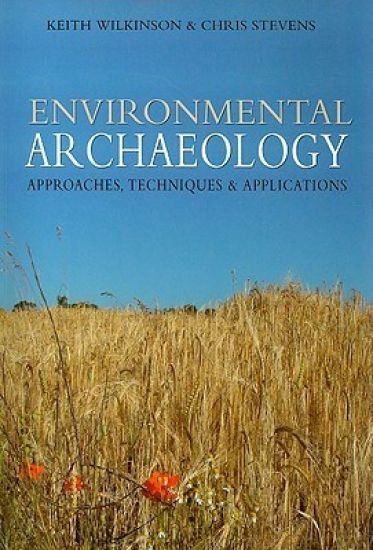
What did the landscape of Stonehenge look like in its Neolithic heyday? How did Ancient Egyptians produce their food? Such questions can be addressed by environmental archaeology - the study of past people from biological remains and geological phenomena. Environmental Archaeology shows the methods used by archaeologists not only to reconstruct landscape settings of archaeological sites, but also to determine what people ate, the raw materials they used and the technology that allowed them to farm, hunt and build. In this revised version of their 2003 book Keith Wilkinson and Chris Stevens explore the environmental archaeology from first principles. They discuss the concepts that underpin the subject, outline the techniques used by environmental archaeologists and explain how biological and geological data are used to illuminate the archaeological past. The book is written for those who have some archaeological knowledge but no background in the natural sciences, or vice versa. It is a pragmatic guide to the subject, taking the reader step-by-step through approaches, methods, theory, and focussing particularly on interpretation/ The authors' intention is to highlight the importance of environmental archaeology in the reconstruction of the interation between life and landscape in the past.
Featuring over 1,000 hikes from across Florida, this comprehensive guide to experiencing the state’s outdoor landscapes is fully updated in a new edition Hiker’s Guide to the Sunshine State is the definitive guide to experiencing the Florida outdoors through hiking. Featuring trails in environments as varied as jungle-like forests with aquamarine springs, longleaf pine savannas, grassy prairies, and coastal sand dunes, this book includes over 1,000 hikes from across the state—including portions of the 1,500-mile Florida National Scenic Trail, the state’s premier hiking destination—tried and tested by the authors, avid hikers Sandra Friend and Chris Stevens. This fully updated second edition contains almost double the number of hikes as the first. Organized by cities within regions of the state, it includes detailed featured hikes the authors find particularly outstanding for each city along with many other recommended hikes, including accessible hikes friendly to wheelchairs and slow walkers. From short interpretive nature trails to day hikes of every length to multi-day backpacking trips, this book details opportunities for discovering the more than 80 natural communities that make up Florida’s incredible habitat diversity. Complete with overview maps, logistical information, and hike descriptions, this guide is a user-friendly trail companion for beginners and experienced hikers alike. A volume in the series Wild Florida, edited by M. Timothy O’Keefe
First Published in 1997. In special education we are, at last, in a good position to offer pupils a broad and balanced curriculum which is relevant to their needs and which is based on the same range of provision enjoyed by all pupils. Such a curriculum can only be planned as a cohesive whole; compartmentalizing aspects of the whole curriculum risks seeing one part as having more merit or worth than another. The whole curriculum in ail schools will vary, depending on local needs and opportunities. In special education it is important that we embrace that whole curriculum, using its diversity and opportunity to plan for breadth, balance and relevance. This book makes a significant contribution to the developments in planning for access to the whole curriculum.
First Published in 1997. In special education we are, at last, in a good position to offer pupils a broad and balanced curriculum which is relevant to their needs and which is based on the same range of provision enjoyed by all pupils. Such a curriculum can only be planned as a cohesive whole; compartmentalizing aspects of the whole curriculum risks seeing one part as having more merit or worth than another. The whole curriculum in ail schools will vary, depending on local needs and opportunities. In special education it is important that we embrace that whole curriculum, using its diversity and opportunity to plan for breadth, balance and relevance. This book makes a significant contribution to the developments in planning for access to the whole curriculum.
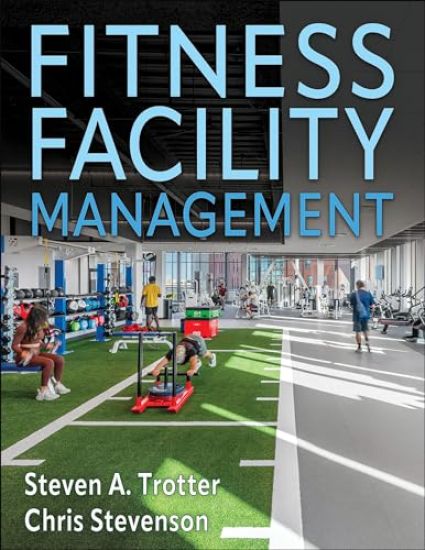
Fitness Facility Management provides an in-depth look at the challenges and rewards of managing contemporary health and fitness facilities. Using real-world expertise garnered from many types of fitness facilities, the authors and their contributors deliver practical insights and advice for the management and operation of health and fitness facilities, programs, and employees. Case studies and examples depict real-world scenarios encountered by modern health and fitness club managers. The latest guidelines and information on the skills needed to provide world-class experiences for members, guests, and clientele of many kinds make Fitness Facility Management the authoritative guide for current professionals as well as students studying for a future career in the industry. Beginning with reflections on how the COVID-19 pandemic changed exercise habits, client behavior, and the fitness industry itself, readers progress to the fundamentals of organization development and business operations. They will learn about staff recruitment, hiring, and retention through employee engagement as well as the skills needed for talent offboarding and creating a positive employee exit experience. Coverage then moves to the operational management functions, such as facility design, standard operating procedures, equipment purchasing and maintenance, and development of member programs. The final section consists of the business practices needed for success, including attracting and retaining members, managing risk and preparing for emergencies, and optimizing profitability through business strategy and marketing plans. Throughout the book, checklists and graphs provide easy-to-understand guidance on concepts. Think It Through elements at the end of each chapter present reflective questions for readers to consider, aiding with retention of key points and practical understanding of how to apply guidance and knowledge within fitness facilities. The applied approach and practical information throughout Fitness Facility Management make this text the most up-to-date guide for current professionals-whether they work in boutique fitness centers, corporate fitness facilities, campus recreation centers, community recreation centers, or franchised fitness clubs-as well as for students preparing for a management career in the health and fitness industry.
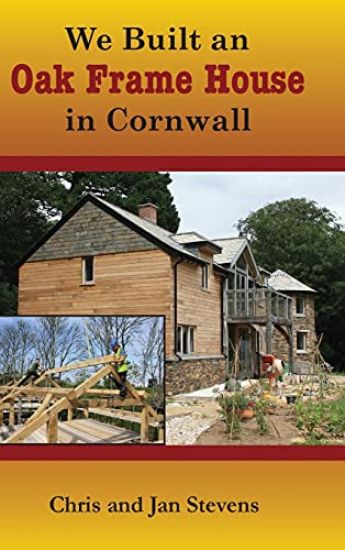
This book describes the challenges and rewards of building an OAK FRAME house in CORNWALL; an honest, often humorous, biographical appraisal of the SELF-BUILD process, containing detailed colour photos, design inspiration along with vivid anecdotal experiences. This is the first of a trilogy detailing various types of self-build, including barn conversions with residential and educational functions, all three initially rejected by either Planning or a Structural Engineer! Can you be inspired and benefit from the amazing build journey described in this first book? ' ....... a well-written, immensely practical guide to building your own house, that also happens to be a fascinating read ........ Simply indispensable David Balment (FRICS)
Set high up on the cliffs in the grounds of a ruined monastery, overlooking the dreary town of Blinkton-on-Sea, is the otherwise unremarkable Blinkton High School. Here resides the enigmatic Inky Stevens - a talented and astute student, better known as "the Great School Detective".
Set up high on the cliffs, in the grounds of a ruined monastery, overlooking the dreary town of Blinkton-on-Sea, is the otherwise unremarkable Blinkton High School. Here resides the enigmatic Inky Stevens – a talented and astute student, better known as “the Great School Detective”. A straight forward investigation into who was responsible for a misdirected but wounding snowball, sets our school sleuth on the trail of a much greater and more menacing crime.
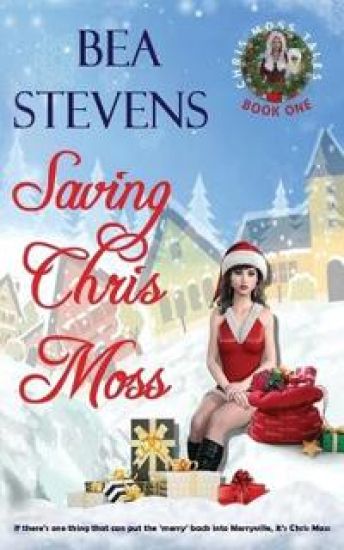
If there's one thing that can put the 'Merry' back into Merryville, it's Chris MossYou just can't have a merry Christmas without a visit to Merryville. Resembling a traditional Christmas card, the whole town is decked in lights and decorations, carollers congregate in the square every day, and the Merryville Christmas Party is legendary. Except for this year.Christina Moss is devastated to return to her hometown to find that Christmas has been cancelled.If she and the handsome Klaus Saint can't get to the bottom of the problem and resolve it in time, Christmas will be gone, and the little town of Merryville will lose its status as THE place to be for the festivities. Tourists are the lifeline of the quaint, English town, and the townsfolk are at its heart. Chris can't let it die.But not everyone is keen to see the town thrive, and when Chris is kidnapped on Christmas Eve with the key to all the children's presents and just her emergency stash of iced mince pies to keep her spirits up, how can they maintain the magic of the season? And who will save Chris Moss?
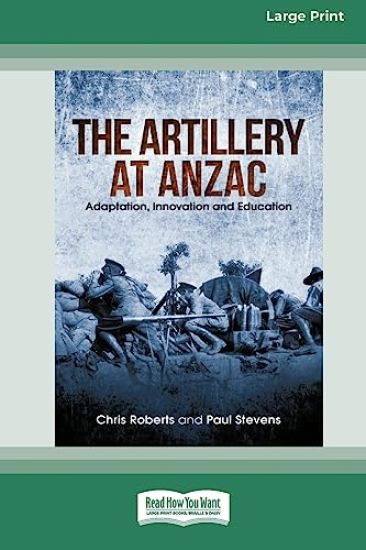
This meticulously researched book provides the first comprehensive study of the employment of artillery and naval gunfire support at Anzac. Faced with huge difficulties on inferior ground the Australian, New Zealand, Indian, and British gunners quickly adapted to a hostile environment, employing innovative techniques to counter superior numbers of Ottoman artillery and provide fire support to their infantry and light horse colleagues. How well they performed is a central theme of The Artillery at Anzac. Using a host of primary sources including official manuals, war diaries, operation orders, letters, and private papers the authors trace the story of this neglected feature of the Gallipoli campaign. Commencing with an evaluation of the nascent pre-war Australian and New Zealand artillery, they take the reader through the testing introduction to the realities of modern warfare, the trials and difficulties the gunners experienced throughout the campaign, to the phased evacuation in December, without alerting the Ottomans to the re-duced number of guns. Along the way, they challenge a long held controversy concerning the light horse charge at the Nek, and evaluate the effectiveness of the fire support provided to the infantry attacks, including that at Lone Pine, the attacks on the Sari Bair Range, and at Hill 60. In doing so, the authors illuminate long-buried information to provide new and penetrating insights into the campaign at Anzac.
In History of the Pauline Corpus in Texts, Transmissions, and Trajectories , Chris S. Stevens examines the Greek manuscripts of the Pauline texts from P46 to Claromontanus. Previous research is often hindered by the lack of a systematic analysis and an indelicate linguistic methodology. This book offers an entirely new analysis of the early life of the Pauline corpus. Departing from traditional approaches, this text-critical work is the first to use Systemic Functional Linguistics, which enables both the comparison and ranking of textual differences across multiple manuscripts. Furthermore, the analysis is synchronically oriented, so it is non-evaluative. The results indicate a highly uniform textual transmission during the early centuries. The systematic analysis challenges previous research regarding text types, Christological scribal alterations, and textual trajectories.
The Routledge Companion to Modern European History since 1763 is a compact and highly accessible work of reference covering the broad sweep of events from the last days of the ancient regime to the ending of the Cold War, and from the reshaping of Eastern Europe to the radical expansion of the European Union in 2004. Within the broad coverage of this outstanding volume, particular attention is given to subjects such as:the era of the Enlightened Despotsthe Revolutionary and Napoleonic era in France, and the revolutions of 1848nationalism and imperialism, and the retreat from Empirethe First World War, the rise of the European dictators, the coming of the Second World War, the Holocaust, and the post-war development of Europethe Cold War, the Soviet Union and its break upthe protest and upheavals of the 1960s, as well as social issues such as the rise of the welfare state, and the changing place of women in society throughout the period.With a fully comprehensive glossary, a biographical section, a thorough bibliography and informative maps, this volume is the indispensable companion for all those who study modern European history.