This first critical examination of informal dispute processing links the institutionalization of alternatives to the court process and the ideology of informalism with the evolution of the American court system. The author connects dispute processing reform to the broader social and political context in which it developed, including the rise of judicial management in the Progressive period and the reconstruction of court unification in the 1970s. Harrington defines legal resources and their distribution in alternative dispute resolution policy before focusing on the institutionalization of this reform in a case study of a federally sponsored Neighborhood Justice Center. In conclusion, Harrington finds that the symbols of informalism and its institutions are a mere shadow of conventional legal practices.
This title covers the development of women's religious professions in the primitive church in St Patrick's era and the development of large women's monasteries such as Kildare, Clonbroney, Cloonburren, and Killeedy. It traces its subject through the heyday of the 7th century.
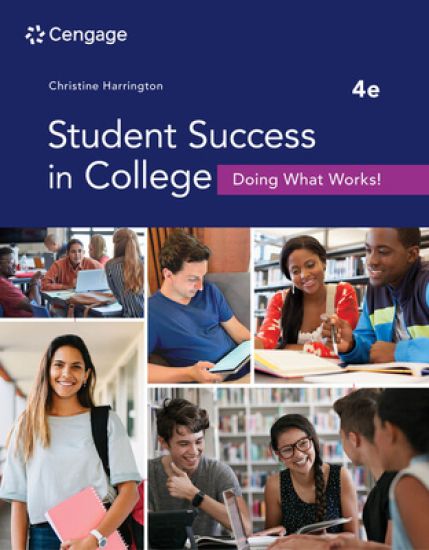
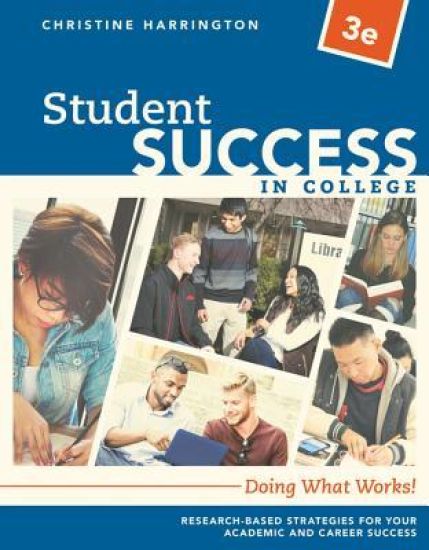
Learn more about your personal identity and strengths, determine your goals and build your career and academic skills with Harrington's STUDENT SUCCESS IN COLLEGE: DOING WHAT WORKS!, 4E. This updated edition explores the keys to academic and career success, beginning with brief, research-driven self-assessments that give you a better understanding of your own unique capabilities. Current content also incorporates the latest research in the field with an emphasis on career skills. You explore career options and learn how to create and strengthen your own professional network so that you are well positioned for career success. You also sharpen proven academic skills as you work with high-level academic sources and online exercises to increase your information literacy and critical-thinking. This edition focuses on the skills that are proven in current research to help you achieve success. MindTap and Infuse digital resources are also available to enhance your learning experience.
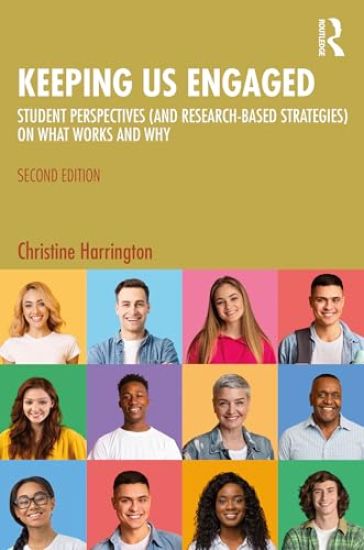
This revised edition of Keeping Us Engaged centers on in-classroom instruction, offering fresh student perspectives on how faculty can maximize engagement when teaching in person.Harrington expertly pairs all new student narratives – a signature feature of this much-loved volume – with easy-to-implement strategies that faculty can use to shift perspectives, strengthen connections with course material, and deepen learning. Topics range from starting positive on the first day of class to developing authentic assignments that push boundaries and giving compassionate, constructive feedback, among other key areas. Each chapter is accompanied by sharply perceptive reflection prompts ideal for individual use or in faculty book groups and professional development workshops.Firmly grounded in active learning principles and enthusiastically endorsed by the learners themselves, this book is an essential resource for all faculty looking to better engage students in traditional face-to-face classroom instruction.
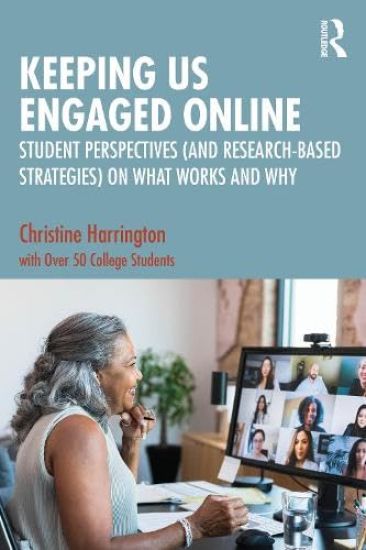
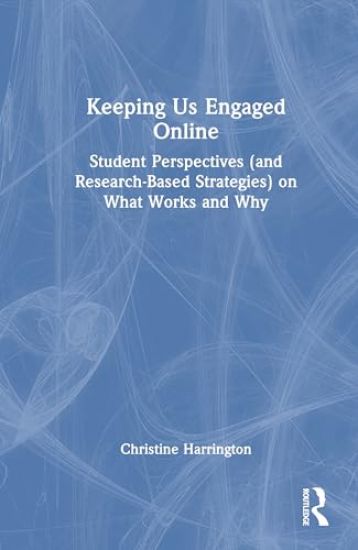
Building from the success of Keeping Us Engaged and dedicated fully to online teaching, this book centers student perspectives on instructional strategies to maximize engagement and increase virtual learning.By pairing stories from 50+ students with the most up-to-date research on online instruction, readers will discover easy-to-implement strategies to help online students develop a sense of belonging, inclusion, and academic confidence. Ranging from topics such as welcome messages and assignment feedback to synchronous and asynchronous discussions, these firsthand student narratives validate and inform faculty practices while inspiring readers to adapt individual techniques to their own online realities. Each chapter is accompanied by insightful reflection prompts ideal for individual use or as discussion points for faculty book groups and professional development workshops.Masterfully founded in student-centered active learning principles and endorsed by the learners themselves, this book is a springboard for all faculty looking to engage students online.
This revised edition of Keeping Us Engaged centers on in-classroom instruction, offering fresh student perspectives on how faculty can maximize engagement when teaching in person.Harrington expertly pairs all new student narratives – a signature feature of this much-loved volume – with easy-to-implement strategies that faculty can use to shift perspectives, strengthen connections with course material, and deepen learning. Topics range from starting positive on the first day of class to developing authentic assignments that push boundaries and giving compassionate, constructive feedback, among other key areas. Each chapter is accompanied by sharply perceptive reflection prompts ideal for individual use or in faculty book groups and professional development workshops.Firmly grounded in active learning principles and enthusiastically endorsed by the learners themselves, this book is an essential resource for all faculty looking to better engage students in traditional face-to-face classroom instruction.
Building from the success of Keeping Us Engaged and dedicated fully to online teaching, this book centers student perspectives on instructional strategies to maximize engagement and increase virtual learning.By pairing stories from 50+ students with the most up-to-date research on online instruction, readers will discover easy-to-implement strategies to help online students develop a sense of belonging, inclusion, and academic confidence. Ranging from topics such as welcome messages and assignment feedback to synchronous and asynchronous discussions, these firsthand student narratives validate and inform faculty practices while inspiring readers to adapt individual techniques to their own online realities. Each chapter is accompanied by insightful reflection prompts ideal for individual use or as discussion points for faculty book groups and professional development workshops.Masterfully founded in student-centered active learning principles and endorsed by the learners themselves, this book is a springboard for all faculty looking to engage students online.
STUDENT SUCCESS IN COLLEGE: DOING WHAT WORKS!, 3rd Edition, is an academically rigorous, yet accessible approach to the first-year seminar. Using a raise-the-bar and raise-the-support framework, STUDENT SUCCESS IN COLLEGE builds key decision-making, information-literacy, and critical-thinking skills; enhances research-based knowledge about what success strategies work best; teaches students how to engage with scholarly sources; and supports students to increase their motivation, self-efficacy and successful experiences through a variety of options, including digital courseware. New for 2021: Empower your students to connect the dots between what they’re learning now and their current or future careers with “How Transferable Are Your Skills?” – a new MindTap activity that challenges students to identify how personal and academic experiences can help them become career-ready.
Why the First-Year Seminar Matters: Helping Students Choose and Stay on a Career Path provides an overview of the Guided Pathways movement and the critical role that the first-year seminar can play in setting the stage for student success. After reviewing the extensive history and research on first-year seminars, Harrington and Orosz suggest that the time is right for colleges and universities to re-imagine the first-year seminar course within the Guided Pathways framework. More specifically, by increasing the focus on career exploration and decision-making and addressing key success skills students need, the first-year seminar can serve as an essential foundational element of Guided Pathways. Readers will find the practical suggestions on how to engage in backward course redesign and the making the case data helpful as they aim to address equity gaps and require this course of all incoming first-year students.
Why the First-Year Seminar Matters: Helping Students Choose and Stay on a Career Path provides an overview of the Guided Pathways movement and the critical role that the first-year seminar can play in setting the stage for student success. After reviewing the extensive history and research on first-year seminars, Harrington and Orosz suggest that the time is right for colleges and universities to re-imagine the first-year seminar course within the Guided Pathways framework. More specifically, by increasing the focus on career exploration and decision-making and addressing key success skills students need, the first-year seminar can serve as an essential foundational element of Guided Pathways. Readers will find the practical suggestions on how to engage in backward course redesign and the making the case data helpful as they aim to address equity gaps and require this course of all incoming first-year students.
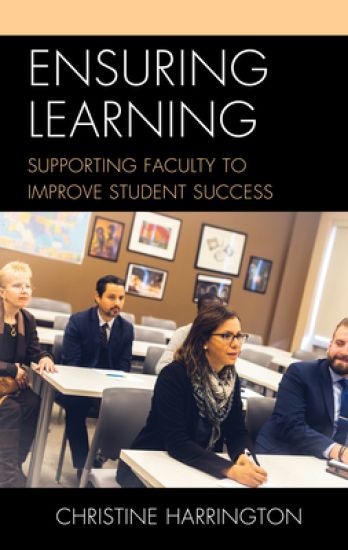
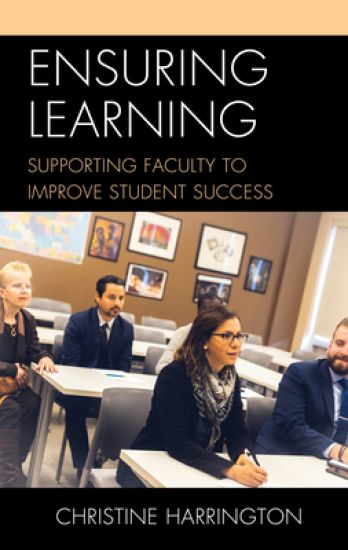
Ensuring Learning: Supporting Faculty to Improve Student Success is the second book in a two-book series. This book highlights the importance of teaching and learning in student success reform and is a deep dive into the fourth pillar, ensuring learning, of Guided Pathways which is a national movement focused on increasing the number of college students who earn a degree or credential. It emphasizes how institutional strategies such as investing in faculty development through Centers for Teaching and Learning and revising reward structures can significantly improve student achievement and completion rates. This book calls for colleges to prioritize teaching and learning and provides college leaders with guidance on how to do so. For example, strategies to develop and enhance Centers for Teaching and Learning and increase professional development programming that provides ongoing, substantial support to faculty are shared. Readers will benefit from numerous practical suggestions on how to help faculty improve teaching and learning practices and ultimately improve student success outcomes.
Ensuring Learning: Supporting Faculty to Improve Student Success is the second book in a two-book series. This book highlights the importance of teaching and learning in student success reform and is a deep dive into the fourth pillar, ensuring learning, of Guided Pathways which is a national movement focused on increasing the number of college students who earn a degree or credential. It emphasizes how institutional strategies such as investing in faculty development through Centers for Teaching and Learning and revising reward structures can significantly improve student achievement and completion rates. This book calls for colleges to prioritize teaching and learning and provides college leaders with guidance on how to do so. For example, strategies to develop and enhance Centers for Teaching and Learning and increase professional development programming that provides ongoing, substantial support to faculty are shared. Readers will benefit from numerous practical suggestions on how to help faculty improve teaching and learning practices and ultimately improve student success outcomes.
Engaging faculty in Guided Pathways: A Practical Resource for College Leaders is the first book in a two-book series. It describes the important role of college faculty in student success reform efforts. In particular, it maps out the faculty role in Guided Pathways, a national movement focused on increasing the number of students who earn a degree or credential. It summarizes the primary tasks associated with the four essential practices of Guided Pathways: determining paths, helping students choose a path, helping students stay on a path, and ensuring learning. This book highlights the need for faculty engagement in all aspects of this work and provides practical suggestions and strategies to engage and empower both full and part-time faculty in this work. Moving the needle on student success outcomes requires high-levels of faculty engagement. Colleges are encouraged to invite full and part-time faculty to the table for important conversations about student success reform and to encourage and support faculty leadership in these institutional efforts. Readers will benefit from numerous practical suggestions, including faculty reflect
Engaging faculty in Guided Pathways: A Practical Resource for College Leaders is the first book in a two-book series. It describes the important role of college faculty in student success reform efforts. In particular, it maps out the faculty role in Guided Pathways, a national movement focused on increasing the number of students who earn a degree or credential. It summarizes the primary tasks associated with the four essential practices of Guided Pathways: determining paths, helping students choose a path, helping students stay on a path, and ensuring learning. This book highlights the need for faculty engagement in all aspects of this work and provides practical suggestions and strategies to engage and empower both full and part-time faculty in this work. Moving the needle on student success outcomes requires high-levels of faculty engagement. Colleges are encouraged to invite full and part-time faculty to the table for important conversations about student success reform and to encourage and support faculty leadership in these institutional efforts. Readers will benefit from numerous practical suggestions, including faculty reflect
Is the lecture an outmoded teaching method that inhibits active learning or is it a potentially powerful tool that is an essential part of every teacher’s repertoire?This book presents up-to-date research on the different types of lecture, on what constitutes effective lecturing, and on the impact of lecturing when done appropriately and well. It fills the void in professional development resources on how to lecture, validating the practice when it’s aligned with the educational mission of creating engaged learning environments.Christine Harrington and Todd Zakrajsek demonstrate that, rather than lecture and active learning being mutually exclusive or either-or propositions, the effectiveness of the former can be greatly enhanced when combined with active learning techniques through what they define as dynamic lecturing; and provide context about the need to balance these approaches to meet the needs of students as they progress from novice to advanced learners.They present a range of strategies that enhance student learning during lectures. They open each chapter with the evidence behind each lecturing strategy they describe, and conclude with practical suggestions for quick application in the classroom. They offer readers the lecture planning and evaluation tools for reworking their lectures in ways that provide high-level engagement and achievement for their students. The opening section of the book explores the benefits of lecturing and describes the different modalities of lecture, with an assessment of the advantages and disadvantages of each. The second section focuses on educational strategies to enhance the lecture, including, among others, activating prior knowledge, emphasizing important points, effectively using multi-media, making concepts meaningful via examples, and the importance of retrieval practice. Each covers the underlying theory and research, and advice on how to align the engagement techniques with instructional goals. The book concludes with guidance on effective planning for lecturing and helping chairs, administrators, or peers engage in effective evaluation of the lecture.This is a dynamic resource for all faculty interested in revitalizing their teaching. The strategies are succinct, easy to incorporate into lectures and, done well, will have immediate impact and increase student mastery of course content.
Is the lecture an outmoded teaching method that inhibits active learning or is it a potentially powerful tool that is an essential part of every teacher’s repertoire?This book presents up-to-date research on the different types of lecture, on what constitutes effective lecturing, and on the impact of lecturing when done appropriately and well. It fills the void in professional development resources on how to lecture, validating the practice when it’s aligned with the educational mission of creating engaged learning environments.Christine Harrington and Todd Zakrajsek demonstrate that, rather than lecture and active learning being mutually exclusive or either-or propositions, the effectiveness of the former can be greatly enhanced when combined with active learning techniques through what they define as dynamic lecturing; and provide context about the need to balance these approaches to meet the needs of students as they progress from novice to advanced learners.They present a range of strategies that enhance student learning during lectures. They open each chapter with the evidence behind each lecturing strategy they describe, and conclude with practical suggestions for quick application in the classroom. They offer readers the lecture planning and evaluation tools for reworking their lectures in ways that provide high-level engagement and achievement for their students. The opening section of the book explores the benefits of lecturing and describes the different modalities of lecture, with an assessment of the advantages and disadvantages of each. The second section focuses on educational strategies to enhance the lecture, including, among others, activating prior knowledge, emphasizing important points, effectively using multi-media, making concepts meaningful via examples, and the importance of retrieval practice. Each covers the underlying theory and research, and advice on how to align the engagement techniques with instructional goals. The book concludes with guidance on effective planning for lecturing and helping chairs, administrators, or peers engage in effective evaluation of the lecture.This is a dynamic resource for all faculty interested in revitalizing their teaching. The strategies are succinct, easy to incorporate into lectures and, done well, will have immediate impact and increase student mastery of course content.
A thoughtfully constructed syllabus can be transformative for your students’ learning, communicating the path they can take to succeed. This book demonstrates how, rather than being a mundane document to convey policies, you can construct your syllabus to be a motivating resource that conveys a clear sense of your course’s learning goals, how students can achieve those goals, and makes evident your teaching philosophy and why you have adopted the teaching strategies you will use, such as discussion or group activities. Developing or revising a syllabus also presents you with a perfect opportunity to review the learning possibilities for the semester. Well-designed, it can help you stay focused on achieving the learning outcomes, as well as determine if the class is on track and whether adjustments to the schedule are needed. The authors show how, by adopting a welcoming tone and clearly stating learning outcomes, your syllabus can engage students by explaining the relevance of your course to their studies, create an all-important positive first impression of you as an instructor, and guide students through the resources you will be using, the assignments ahead, as well as clear guidance on how they will be assessed. Referred to frequently as the course progresses, an effective syllabus will keep students engaged and on task.Christine Harrington and Melissa Thomas lead you through all the elements of a syllabus to help you identify how to present key messages and information about your course, think through the impressions you want to create, and, equally importantly, suggest how you can use layout and elements such as images and charts to make your syllabus visually appealing and easy to navigate.
A thoughtfully constructed syllabus can be transformative for your students’ learning, communicating the path they can take to succeed. This book demonstrates how, rather than being a mundane document to convey policies, you can construct your syllabus to be a motivating resource that conveys a clear sense of your course’s learning goals, how students can achieve those goals, and makes evident your teaching philosophy and why you have adopted the teaching strategies you will use, such as discussion or group activities. Developing or revising a syllabus also presents you with a perfect opportunity to review the learning possibilities for the semester. Well-designed, it can help you stay focused on achieving the learning outcomes, as well as determine if the class is on track and whether adjustments to the schedule are needed. The authors show how, by adopting a welcoming tone and clearly stating learning outcomes, your syllabus can engage students by explaining the relevance of your course to their studies, create an all-important positive first impression of you as an instructor, and guide students through the resources you will be using, the assignments ahead, as well as clear guidance on how they will be assessed. Referred to frequently as the course progresses, an effective syllabus will keep students engaged and on task.Christine Harrington and Melissa Thomas lead you through all the elements of a syllabus to help you identify how to present key messages and information about your course, think through the impressions you want to create, and, equally importantly, suggest how you can use layout and elements such as images and charts to make your syllabus visually appealing and easy to navigate.