Kirjojen hintavertailu. Mukana 11 244 527 kirjaa ja 12 kauppaa.

Kirjahaku

Etsi kirjoja tekijän nimen, kirjan nimen tai ISBN:n perusteella.

1000 tulosta hakusanalla Christina Rossetti

Christina Rossetti

Christina Rossetti

Emma Mason

Oxford University Press
2018
sidottu
Christina Rossetti (1830-94) is regarded as one of the greatest Christian poets to write in English. While Rossetti has firmly secured her place in the canon, her religious poetry was for a long time either overlooked or considered evidence of a melancholic disposition burdened by faith. Recent scholarship has redressed reductive readings of Christian theology as repressive by rethinking it as a form of compassionate politics. This shift has enabled new readings of Rossetti's work, not simply as a body of significant nineteenth-century devotional literature, but also as a marker of religion's relevance to modern concerns through its reflections on science and materialism, as well as spirituality and mysticism. Emma Mason offers a compelling study of Christina Rossetti, arguing that her poetry, diaries, letters, and devotional commentaries are engaged with both contemporary theological debate and an emergent ecological agenda. In chapters on the Catholic Revival, Pre-Raphaelite Brotherhood, contemporary debates on plant and animal being, and the relationship between grace and apocalypse, Mason reads Rossetti's theology as an argument for spiritual materialism and ecological transformation. She ultimately suggests that Rossetti's life and work captures the experience of faith as one of loving intimacy with the minutiae of creation, a divine body in which all things, material and immaterial, human and nonhuman, divine and embodied, are interconnected.
Christina Rossetti

Christina Rossetti

Susan Owens; Nicholas Tromans

Yale University Press
2018
sidottu
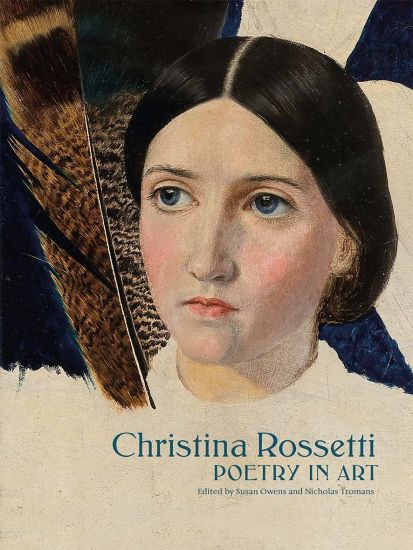
The first art book to explore Rossetti's art and poetry together, including her own artworks, illustrations to her writing, and art inspired by her Christina Rossetti (1830–1894) is among the greatest of English Victorian poets. The intensity of her vision, her colloquial style, and the lyrical quality of her verse still speak powerfully to us today, while her striking imagery has always inspired artists. Rossetti lived in an exceptionally visual environment: her brother, Dante Gabriel Rossetti, was the leading member of the avant-garde Pre-Raphaelite Brotherhood, and she became a favorite model for the group. She sat for the face of Christ in William Holman Hunt’s The Light of the World, while both John Everett Millais and Frederick Sandys illustrated her poetry. Later on, the pioneering photographer Julia Margaret Cameron and the great Belgian Symbolist Fernand Khnopff were inspired by Rossetti’s enigmatic verses. This engaging book explores the full artistic context of Rossetti’s life and poetry: her own complicated attitude to pictures; the many portraits of her by artists, including her brother, John Brett, and Lewis Carroll; her own intriguing and virtually unknown drawings; and the wealth of visual images inspired by her words.Published in association with Watts GalleryExhibition Schedule:Watts Gallery, Guildford, Surrey (11/13/18–03/17/19)
Christina Rossetti
This long-awaited volume in the Critical Heritage series presents the reception of Christina Rossetti’s work by her Victorian readers and integrates their critical responses with the evidence of her literary life and publication history. It presents the responses in unpublished material – especially in correspondence – alongside public responses in periodicals and books, and it covers responses during the composition and publishing of her works in addition to those that follow her appearances in print. The opinions of her readers – including her brother Dante Gabriel Rossetti and her publisher Alexander Macmillan – are integrated with the evidence of Rossetti’s own letters. The volume draws on hundreds of manuscript sources unnoticed in scholarship in order to provide the most accurate available literary biography and publication history of Rossetti, illuminating many aspects of her writing life – including her involvement with the Portfolio society and her relation with Macmillan – which have been misunderstood.Christina Rossetti: The Critical Heritage sets a new foundation for the study of one of the great English poets. It will be an indispensable resource for scholars and students of Christina Rossetti and Victorian literary culture.
Christina Rossetti

Christina Rossetti

Lona Mosk Packer

University of California Press
2022
pokkari
Christina Rossetti, one of the most remarkable poets of the 19th century, remains an enigmatic figure whose life and work continue to captivate readers. While her brother William Michael Rossetti's interpretations have dominated biographies to date, recent studies aim to uncover a deeper and more nuanced understanding of her inner world. Rossetti's poetry, rich with emotional and spiritual intensity, often reveals glimpses of a life shaped by unspoken struggles and profound passions. By examining her work and her connections, including her relationships with figures like William Bell Scott, a fresh perspective emerges, suggesting that her experiences of love and conflict deeply influenced her creative energy and personal growth. This exploration seeks to go beyond the surface of daily events to delve into the "deeper internal currents" of Christina’s life. Her poetry serves as a map to the intricate interplay of emotions and convictions that defined her as an artist and individual. Through meticulous research and a sensitive approach, this narrative reconstructs a portrait of a woman whose life was as richly textured and multifaceted as her verse. In doing so, it not only illuminates Christina Rossetti's enduring legacy but also honors her belief that truth, tempered with tenderness, is the ultimate tribute to a life fully lived. This title is part of UC Press's Voices Revived program, which commemorates University of California Press’s mission to seek out and cultivate the brightest minds and give them voice, reach, and impact. Drawing on a backlist dating to 1893, Voices Revived makes high-quality, peer-reviewed scholarship accessible once again using print-on-demand technology. This title was originally published in 1963.
Christina Rossetti

Christina Rossetti

Lona Mosk Packer

University of California Press
2022
sidottu
Christina Rossetti, one of the most remarkable poets of the 19th century, remains an enigmatic figure whose life and work continue to captivate readers. While her brother William Michael Rossetti's interpretations have dominated biographies to date, recent studies aim to uncover a deeper and more nuanced understanding of her inner world. Rossetti's poetry, rich with emotional and spiritual intensity, often reveals glimpses of a life shaped by unspoken struggles and profound passions. By examining her work and her connections, including her relationships with figures like William Bell Scott, a fresh perspective emerges, suggesting that her experiences of love and conflict deeply influenced her creative energy and personal growth. This exploration seeks to go beyond the surface of daily events to delve into the "deeper internal currents" of Christina’s life. Her poetry serves as a map to the intricate interplay of emotions and convictions that defined her as an artist and individual. Through meticulous research and a sensitive approach, this narrative reconstructs a portrait of a woman whose life was as richly textured and multifaceted as her verse. In doing so, it not only illuminates Christina Rossetti's enduring legacy but also honors her belief that truth, tempered with tenderness, is the ultimate tribute to a life fully lived. This title is part of UC Press's Voices Revived program, which commemorates University of California Press’s mission to seek out and cultivate the brightest minds and give them voice, reach, and impact. Drawing on a backlist dating to 1893, Voices Revived makes high-quality, peer-reviewed scholarship accessible once again using print-on-demand technology. This title was originally published in 1963.
Christina Rossetti

Christina Rossetti

Jan Marsh

Faber Faber
2012
pokkari
'Jan Marsh's book is the best researched and fullest biography of Rossetti we have yet had.' Fiona MacCarthy, New York Review of Books'Although never formally part of the Pre-Raphaelite poetic school, which included her brother Gabriel, William Morris, and Algernon Swinburne, Christina Rossetti has always been linked to it. [Jan Marsh] gives full attention to both the individual and her unique variety of fantastic and devotional poetry... Marsh delineates an appealing person while examining her adolescent nervous breakdown, abortive engagement to a lapsed Catholic painter, frustrated love for an absentminded scholar, and relationships with her devout but hearty sister, Maria, and with her brothers... The author's steady, sympathetic course through Rossetti's divided life enables readers to delve into the intense and original self most fully expressed in her poetry.' Kirkus Review
Christina Rossetti

Christina Rossetti

Kathryn Burlinson

Northcote House Publishers Ltd
1998
pokkari
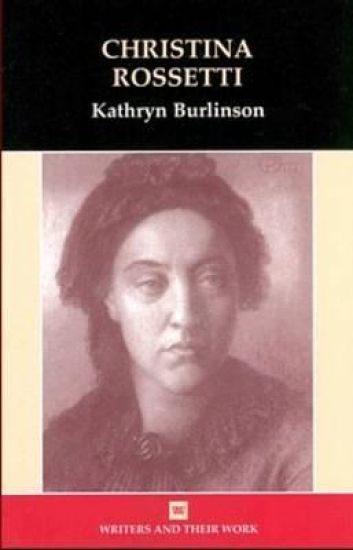
This study builds upon the radical reinterpretations of Christina Rossetti that have emerged in the last two decades. Using contemporary critical and feminist theory Kathryn Burlinson shows how Rossetti was a persistent critic of her culture and how she struggled throughout her life and writings with the gender ideologies of Victorian England. The imaginative range and depth of Rossetti’s work, her fantasy, her fun, mystery and melancholy as well as her startling explorations of feminine identity are emphasised through rhymes, devotional writings, letters and short stories. Rossetti’s familial and literary relations are also explored, showing how the Rossetti household was both inspirational and conditioning, supportive and restrictive for its youngest daughter, who nevertheless forged her own way and found her own voices: sensuous, anguished and always yearning for a better place to be.
The Complete Poems of Christina Rossetti

The Complete Poems of Christina Rossetti

Christina Rossetti

Louisiana State University Press
1980
sidottu
Christina Rossetti is known as the greatest female poet of the Victorian age. By the time of her death in 1898 she had written eleven hundred poems and had published over nine hundred of them. Scholars have long felt the need for a complete collection of her work, yet, until now, there has been none. In this projected three-volume set, R.W. Crump will present all of Rossetti's known poetry.Crump gives the reader a remarkably comprehensive text with notes revealing Rossetti's process of composition and revision and her painstaking concern for the technical details of her work. The variant readings in the notes are taken from extant manuscripts, individual poems as published or privately printed before being incorporated into her published collections, and all the English and American editions of her poems through William Michael Rossetti's The Poetical Works of Christina Georgina Rossetti (1904). A special feature of this variorum edition is its list of holographs and their locations. In the first volume Crump brings together Rossetti's two earliest published collections; in the second will be the individually published poems; and in the third, the unpublished poems.
The Complete Poems of Christina Rossetti

The Complete Poems of Christina Rossetti

Christina Rossetti

Louisiana State University Press
1986
sidottu
Born in 1830, Christina Rossetti began composing verse at the age of eleven and continued to write for the remaining fifty-three years of her life. Her brother Dante Gabriel Rossetti, himself a poet and painter, soon recognised her genius and urged her to publish her poems. By the time of her death in 1894, Christina had written more than eleven hundred poems and had published over nine hundred of them. Although she is regarded as the greatest woman poet of the Victorian period, there has not been until now and authoritative edition of her poetry.In this second volume of the three-volume The Complete Poems of Christina Rossetti, R.W. Crump continues the editorial standards she established n Volume I, published in 1979. She gives the reader a comprehensive text with notes revealing Christina's process of composition and revision and her painstaking concern for the technical details of her work. The variant readings in the notes are taken from extant manuscripts, individual poems as published or privately printed before being incorporated into her published collections, and all the English and American editions of her poems through William Michael Rossetti's The Poetical Works of Christina Georgina Rossetti (1904). A special feature of both Volumes I and II is a complete list of holographs and their locations.Volume II contains Sing-Song: A Nursery Rhyme Book (1872), A Pageant and Other Poems (1881), and Verses (1893), as well as the poems added to these volumes after their original publication. Volume III contains poems Christina published but did not include in any of her collections as well as poems that have not previously appeared in print.
The Complete Poems of Christina Rossetti

The Complete Poems of Christina Rossetti

Christina Rossetti

Louisiana State University Press
1990
sidottu
Born in 1830, Christina Rossetti began composing verse at the age of eleven and continued to write for the remaining fifty-three years of her life. By the time of her death in 1894, Christina had written more than eleven hundred poems and had published over nine hundred of them. Publication of Volume III of The Complete Poems of Christina Rossetti brings to a conclusion the first definitive, variorum edition of the poems of this greatest woman poet of the Victorian Age.R.W. Crump divides the final volume, containing the poems Christina did not include in her published collections of verse, into three main sections. In the first are those poems Christina published separately in anthologies, periodicals, or her own prose works, such as Commonplace, and Other Short Stories. The second group consists of privately printed poems, including, most notably, those from the 1847 Verses: Dedicated to Her Mother. The extant poems that Christina never published make up the third and by far largest section of Volume III. Crump's voluminous textual notes and appendixes give the variant readings and provide additional information on the poems.A special feature of Volume III is the incorporation of the texts of poems in the hitherto unknown 375-page Verses manuscript of 1893, a major discovery made since Volume II was published in 1986. Some of the material in the appendixes updates the first two volumes in light of this discovery.
Christina Rossetti

Christina Rossetti

Diane D'amico

Louisiana State University Press
1999
nidottu
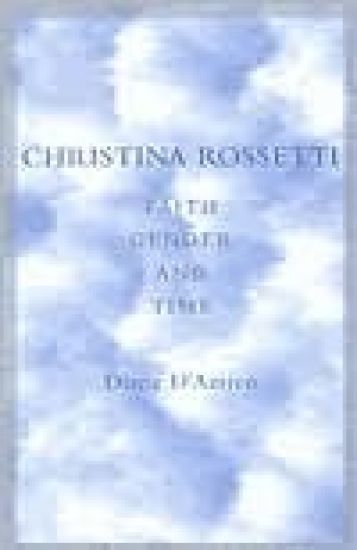
Since Arthur Symons's declaration in 1895 in the Saturday Review that Christina Rossetti was ""among the great poets of the nineteenth century,"" Rossetti's image among critics has undergone permutations as divergent as Victorian culture is from postmodern. Now Diane D'Amico redeems Rossetti from the various one-dimensional castings assigned her across the generations- those of a saint writing poetry for God; of a sexually repressed, neurotic woman of minor talent; and, most recently, of a subversive feminist questioning the patriarchy- and renders a fuller, more intricate understanding of the poet than any to date. With flawless logic, balance, and clarity, D'Amico seals her case that Rossetti's faith, her gender, and the times in which she lived should all be considered to appreciate her poetic voice.According to D'Amico, the image of Rossetti that can best serve as a guide to her more than one thousand poems reflects the centrality of her faith- not as evidence of sexual repression nor necessarily as absolute truth, but as absolute truth for Rossetti. It will then become apparent how Rossetti's commitment to her Christian faith, her experience as a Victorian woman, and her poetic vocation are inextricably interwoven.
Christina Rossetti

Christina Rossetti

Dolores Rosenblum

Southern Illinois University Press
1987
sidottu
Christina Rossetti was considered the ideal female poet of her time. Her poetry was devo­tional, moral, and spoke of frustrated affection.Dolores Rosenblum presents a fresh reading of Rossetti’s works and places them in the con­text of her life. Rosenblum shows that what was ostensibly devotional, moral, and loveless, was actually what Luce Irigaray calls “mimetism,” a subtle parody and subversion of the male tra­dition of literature.Only with the coming of feminist criticism can Rossetti be meaningfully re-evaluated. Rosenblum calls Rossetti’s works the “poetry of endurance,” stating that it is similar, and at times identical, to the female “sentimental” tradition in literature. Rossetti endured the con­straints of the Victorian female artistic spirit by becoming a “watcher.” Within this self-accepted role, Rossetti was able to carefully and deliber­ately choose artistic self-protection. In her reli­gious poetry, Rossetti transcended, by aesthetic renunciation, the alienation and immobilization forced upon her.Rossetti’s poetry is full of paradox; it sings about silence, exposes the poet’s oblivion. From the repining Victorian poet, there emerged a “stone woman.” Rosenblum discusses this pas­sively enduring female figure’s alienation from knowledge and power, and how the myth of self strengthened the lyric voice within her. Because she was a woman, she was denied the male use of the lyric “I.”Rossetti’s work is unified, Rosenblum argues, because she was a deliberate poet, and by accepting the “burden of womanhood,” she played out what men only symbolized as female in their art. By her mimicry and revision of the male tradition of literature, Christina Rossetti engaged the patriarchal tradition in ways that make it usable for the female experience, and that provide a critique of male objectification of women in art.
The Letters of Christina Rossetti v. 1; 1843-73

The Letters of Christina Rossetti v. 1; 1843-73

Christina Rossetti

University of Virginia Press
1997
sidottu
This first volume of letters reveals intimate details about the Rossetti's family life, their illnesses and their accomplishments. It covers a period of 30 years, and over 300 of the letters are to friends and acquaintances, and Christina Rossetti's brothers, William Michael and Dante Gabriel.
The Letters of Christina Rossetti v. 2; 1874-1881

The Letters of Christina Rossetti v. 2; 1874-1881

Christina Rossetti

University of Virginia Press
1999
sidottu
As we have reached the centenary of Christina Rosetti's death, she has become considered as one of the major poets of the Victorian era. Leading critics have demonstrated how studies of Rossetti's work, her daily life, her relationship with the Pre-Raphaelites, and her interactions with other women authors of the period can help the people understand the cultural situation of Victorian women writers. When complete in four volumes, this project will make available all of Rossetti's extant letters. The letters in this second volume ""expose a woman of powerful intellect, complex emotions, unshakeable convictions and loving heart"". Rossetti, 43 years old in 1874, is now an established poet with a strong literary reputation among her contemporaries. But, as Harrison points out in his introduction to the volume, ""two thirds of her life was over, and its losses were mounting"". The marriage of William Michael, the death of her sister, Maria, Dante Gabriel's addiction to chloral and the illness that led to his death in 1882, and the deaths of close personal and family friends overshadow these years. Her own affliction with Graves' disease contributed to her becoming reclusive and a semi-invalid. She nonetheless continued to work and publish.
The Letters of Christina Rossetti v. 3; 1882-1886

The Letters of Christina Rossetti v. 3; 1882-1886

Christina Rossetti

University of Virginia Press
2000
sidottu
In recent years Christina Rossetti's star has soared. Rossetti (1830-1894) has come to be considered one of the major poets - not just one of the major women poets - of the Victorian era, eclipsing her famous brother. Leading critics have demonstrated how studies of Rossetti's work, her daily life, her relationships with the Pre-Raphaelites, and her interactions with other women authors of the period can help us understand the unique cultural situation of Victorian women writers. When complete in four volumes, this project will make available all of Rossetti's extant letters, almost two-thirds of which have never been published. The third volume of the ""Letters"" covers years in which Christina Rossetti lost several important family members, including her mother, her brother Dante, and a young nephew, Michael, and many close friends. Her preoccupation with their illnesses and with memorializing her brother took its toll on her poetic output. In the face of her loss, she turned increasingly to religion and wrote works of devotional prose - ""Time Flies"", ""Letter and Spirit"" - not designed to attract much literary attention. Rossetti herself had been diagnozed with Graves' disease in 1872; by 1874 she had recovered but continued to use her earlier health problems to identify herself as a ""semi-recluse"", which allowed her a degree of freedom she might not have had otherwise. This self-imposed reclusiveness gave rise to a large correspondence, in which her interest and sensibilities were given broad exposure. She devoted more time to favoured causes, including antivivisectionism and the protection of minors, and her letters afford the reader an in-depth perspective on these and other public issues and on the personal values underlying her opinions.
The Letters of Christina Rossetti v. 4; 1887-1894

The Letters of Christina Rossetti v. 4; 1887-1894

Christina Rossetti

University of Virginia Press
2004
sidottu
Christina Rossetti (1830-1894) has come to be considered one of the major poets - not just one of the major women poets - of the Victorian era, eclipsing her famous brother. Leading critics have demonstrated how studies of Rossetti's work, her daily life, her relationships with the Pre-Raphaelites, and her interactions with other women authors of the period can help us understand the unique cultural situation of Victorian women writers. The Letters of Christina Rossetti, four volumes, makes available all of Rossetti's extant letters, almost two-thirds of which have never before been published. These letters come from over one hundred private and institutional collections, scattered from Scotland to Australia. The fourth and final volume of the Letters covers the last eight years of Christina Rossetti's life. In 1887 Rossetti, at the age of fifty-six, was living with her two aged, ailing aunts. In addition to managing the household and nursing her aunts, she published an enlarged edition of her collected poems and, in 1892, wrote her greatest book of devotional prose, The Face of the Deep. She also oversaw the production of a new and enlarged edition of Sing-Song, published in 1893. As a stay-at-home semi-invalid, she maintained a very large correspondence with friends and family members. Her most intimate relationship was with her sole remaining sibling, William Michael Rossetti, but other correspondents include Amelia Bernard Heimann, Caroline Gemmer, Frederic Shields, Rose Donne Hake, Olivia Garnett, Ellen Proctor, Lisa Wilson, Arthur Symons, and Mackenzie Bell, who became her first biographer. In these letters we discover Rossetti's views on subjects as diverse as the artistry of her poems, her health, aging, death, gender roles, money, cats, flowers, games, and her own supposed sinfulness. In May of 1892 Christina Rossetti was diagnosed with breast cancer. The cancer was removed, but she suffered a recurrence in September 1894 and died on December 29th of that year.
Christina Rossetti

Christina Rossetti

Constance W. Hassett

University of Virginia Press
2005
sidottu
Although the cultural and literary influence of Christina Rossetti has recently been widely acknowledged, the belatedness of this critical attention has left wide gaps in our understanding of her poetic contribution. Often focusing solely on her early work and neglecting her later volumes, many critics minimized her relevance by measuring her stature through either her early poems or her relationships with well-known Victorian literary figures. In Christina Rossetti: The Patience of Style, Constance W. Hassett argues against this diminishment by reopening Rossetti's canon, challenging both critics and readers to trade their silent appreciation of her most familiar verse for a patient and active scrutiny of her body of work, which contains some of the finest lyric poetry of the nineteenth century. Keeping her primary focus on the poems themselves, Hassett traces Rossetti's career through her five poetry collections, Goblin Market and Other Poems (1862), The Prince's Progress and Other Poems (1866), Sing-Song: A Nursery Rhyme Book (1872), A Pageant and Other Poems (1881), and Verses (1893). In a comprehensive account of Rossetti's evolving style and genre, Hassett analyzes the strengths and failures of the poetry, its attention to the resources of rhythm and the shifts of diction, its momentum and reserve, and the rationale for its revision. The book also explores Rossetti's innovative poetry for children, her daring reconfiguration of religion and poetry in a late-life commentary on the Apocalypse, and the influences both of female precursors she admired and outgrew and of the male circle of Pre-Raphaelite poets. For art historians of the Pre-Raphaelites, scholars of women's writing and gender studies, students of children's literature, and researchers in religious studies, not to mention readers in Victorian poetry, Christina Rossetti: The Patience of Style will serve as an indispensable and eye-opening guide.