Kirjojen hintavertailu. Mukana 11 244 527 kirjaa ja 12 kauppaa.

Kirjahaku

Etsi kirjoja tekijän nimen, kirjan nimen tai ISBN:n perusteella.

1000 tulosta hakusanalla Christine Gregory

Mrs Paws and the Tumbledown Fairies

Mrs Paws and the Tumbledown Fairies

Christine Gregory

Beaten Track Publishing
2023
pokkari
Down at the bottom of the gardenStands a rambling old oak tree, But shhhhhhh... it's a secret, Between you and me. Find out how Mrs Paws the bear came to be friends with the Tumbledown Fairies and more in this collection of short stories and poems written by Christine Gregory and beautifully illustrated by Patrick McCluskey. Mrs Paws is the creation of Christine Gregory.
Brown Hares in the Derbyshire Dales

Brown Hares in the Derbyshire Dales

Christine Gregory

Vertebrate Graphics Ltd
2012
pokkari
Brown Hares in the Derbyshire Dales by Christine Gregory is a written and photographic celebration of one of the Peak District's most secretive and enigmatic animals. Meticulously researched and beautifully illustrated with over 100 photographs, this book gives an insight into the life, habitat and history of a much loved, yet threatened, species.
Water Vole

Water Vole

Christine Gregory

Vertebrate Graphics Ltd
2016
pokkari
The water vole is one of Britain's most endangered mammals. Popularised as 'Ratty' in The Wind in the Willows, it is a cherished resident of our waterways. But this once ever-present mammal is now in danger. In The Water Vole, Christine Gregory tells the story of the water vole, principally through its history in the waterways of Derbyshire.
Simulation Und Fiktion - Gregory Currie

Simulation Und Fiktion - Gregory Currie

Christine Numrich

Grin Publishing
2010
nidottu
Studienarbeit aus dem Jahr 2008 im Fachbereich Philosophie - Philosophie des 20. Jahrhunderts / Gegenwart, Note: 2,3, Freie Universit t Berlin, Veranstaltung: "Gef hl, Phantasie und Fiktion," Sprache: Deutsch, Abstract: 01) Einleitung Literatur - aus philosophischer Perspektive betrachtet - h lt einige interessante Fragen und Probleme f r uns bereit, zum Beispiel: die Frage nach unserer emotionalen Partizipation an Fiktionen. Was bedeutet es, wenn wir Gef hle empfinden f r ein Geschehen, von dem wir im Grunde die ganze Zeit ber wissen, dass es nicht real ist? Wie k nnen wir Mitleid oder Hass empfinden f r jemanden, der gar nicht existiert? Und wenn wir Angst aufgrund einer Gruselgeschichte haben - wovor genau haben wir dann Angst? Was ist das Objekt dieser Angst? Was ist das Objekt all dieser intentional gerichteter Empfindungen? Und wie unterscheiden sich diese Emotionen von den Emotionen, die man hat, wenn das Objekt nicht fiktiv ist? Die Liste der Fragen, die sich hieraus ergeben, k nnte beliebig fortgesetzt werden. Wenn Menschen auf Fiktionen genauso emotional reagieren wie auf reale Geschehnisse, dann liegt jedoch kaum eine Verwechslung von Realit t und Phantasie vor - sie wissen ganz genau, dass der Held, f r den sie gerade Bewunderung empfinden, nicht wirklich existiert. Dennoch geschehen diese Emotionen ganz spontan, beinah reflexartig, ganz genauso, wie sie es auch in realen Situationen t ten. Des Weiteren k nnen wir auch ber Vorstellungen Gef hle in uns wecken, wir k nnen mittels unserer Gedanken am Innenleben irrealer Charaktere partizipieren. Genau diese emotionale Partizipation, so war lange die g ngige Annahme, sei nur m glich, wenn wir daran glauben, dass das, was uns bewegt, auch wirklich existiert. "Fiktionsparadoxon" wird dieses Problem in der philosophischen sthetik genannt: Wir erkennen die Geschehnisse in Fiktionen, aber dar ber hinaus reagieren wir auch auf sie mit unseren allt glichen Gef hlen (Mitleid, Hass, Sympathie, Bewunderung, Angs
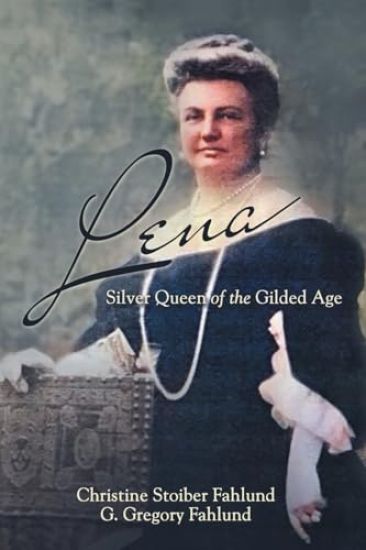
Lena

Lena

Christine Stoiber Fahlund; G Gregory Fahlund

Archway Publishing
2025
pokkari
Lena Allen Webster Stoiber Rood Ellis, was one of the American West's most colorful and compelling women. She was born in Minnesota during the Civil War, died in Mussolini's Italy on the eve of WWII, and played a larger-than-life role in many of the seminal events in between. By grit and ambition, she found her way from a boardinghouse in Minneapolis to mansions in the San Juan Mountains and Denver, a magnificent apartment on the Champs lys es, and a beautiful villa on Lake Maggiore. Lena's first husband deserted her in a rough town in western Colorado when she was only a teenager. With her second husband, she owned and operated one of the country's most successful silver mines. Her third husband was a creosote baron who went down with the Titanic. Her fourth was the hero of one of the worst cases of sabotage on American soil. If she had so chosen, she could have been the Queen of Serbia. Equal parts Molly Brown, Auntie Mame, and Scarlet O'Hara, Lena was tough and often profane, gracious and generous. She was "Captain Jack," who rounded up miners from local saloons to haul them back to work, and "the gentle wife of Halifax" who placed flowers on the caskets of the victims of the Titanic. With only nine years of formal education, she was the second woman elected to the American Institute of Mining Engineers, a founder of Mesa Verde National Park, and a leader in the General Federation of Women's Clubs. When a fortune teller told her that in another life, she had been Helen of Troy, she replied, "No. I was Alexander the Great."
Multilingualism and Intercultural Communication

Multilingualism and Intercultural Communication

Anthonissen Christine; Bassey E Antia; Barris Ken; Rebecca Domingo; Jeanne du Toit; Regine Fourie; Nompumelelo Frans; Wanga Gambushe; Ivala Eunice; Joseph Michael; Gregory Kamwendo; Kaschula Russell; Hleze Kunju; Noleen Leach; Linda Manashe; Moropa Koliswa; Andre M Mostert; Nobuhle Ndimande-Hlongwa; Nkomo Dion; Anneke Potgieter; Monwabisi Ralarala; Esther Ramani; Justus C. Roux; Feziwe Shoba; Zakhile Somlata; Weber Undine S.; Wolff H. Ekkehard; Nogwaja S. Zulu

Wits University Press
2017
nidottu
To date, there has been no published textbook which takes into account changing sociolinguistic dynamics that have influenced South African society. Multilingualism and Intercultural Communication breaks new ground in this arena. Its scope ranges from macro-sociolinguistic questions pertaining to language policies and their implementation (or non-implementation), to microsociolinguistic observations of actual language use in verbal interaction, mainly in multilingual contexts of Higher Education (HE). There is a gradual move for the study of language and culture to be taught in the context of (professional) disciplines in which they would be used. This book caters for this growing market. Because of its multilingual nature, it caters to English and Afrikaans language speakers, as well as the Sotho and Nguni language groups. It brings together various interlinked disciplines such as Sociolinguistics and Applied Language Studies, Media Studies and Journalism, History and Education, Social and Natural Sciences, Law, Human Language Technology, Music, Intercultural Communication and Literary Studies. The unique crosscutting disciplinary features of the book will make it a must-have for twenty-first century South African students and scholars and those interested in applied language issues.
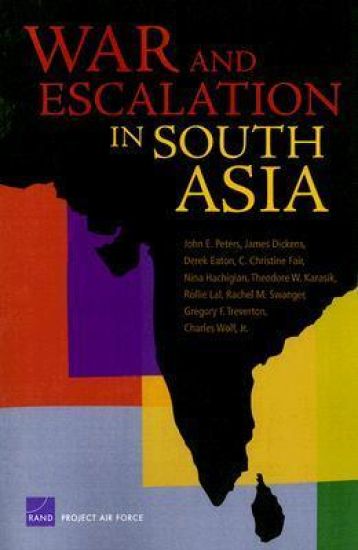
War and Escalation in South Asia

War and Escalation in South Asia

John E. Peters; James Dickens; Derek Eaton; Christine Fair; Nina Hachigian; Theodore W. Karasik; Rollie Lal; Rachel Swanger; Gregory F. Treverton; Charles Wolf

RAND
2005
pokkari
Highlights key factors in South Asia imperiling U.S. interests, and suggests how and where the U.S. military might play an expanded, influential role. It suggests steps the military might take to better advance and defend U.S. interests in the area. This monograph highlights key factors in South Asia imperiling U.S. interests, and suggests how and where the U.S. military might play an expanded, influential role. It suggests seven steps the military might take to better advance and defend U.S. interests in South Asia, the Middle East, and Asia at large. Washington should intensify involvement in South Asia and become more influential with the governments there. Given the area's potential for violence, it should also shape part of the U.S. military to meet potential crises.
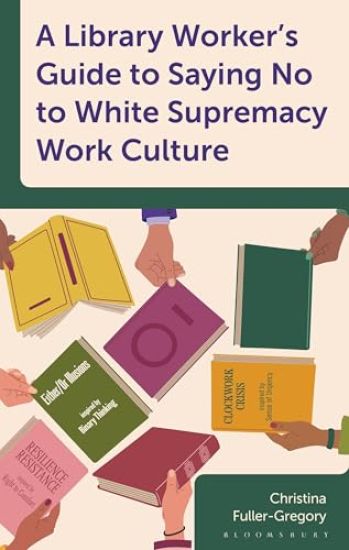
A Library Worker's Guide to Saying No to White Supremacy Work Culture

A Library Worker's Guide to Saying No to White Supremacy Work Culture

Christina Fuller-Gregory

BLOOMSBURY PUBLISHING PLC
2025
sidottu
A call to action to dismantle the white supremacy work culture in libraries, and create an environment where EDI is not only talked about but realized.Are the standards of professionalism that your organization has set still serving you? Or might libraries and library workers challenge our long-held beliefs about what our work culture is or should be? A Library Worker’s Guide to Saying No to White Supremacy Work Culture interrogates the historical foundations and present day consequences of a library work culture that is rooted in white supremacy. These white supremacy work culture habits show up in every aspect of library service, from programming, policy development, hiring practices, strategic planning, and even our ways of communicating and engaging. Even as libraries and library workers have been intentional in introducing and developing practices that center equity, diversity, and inclusion, the quiet intersectionality of white supremacy work culture coupled with our professional standards of librarianship have informed our internal work practices, shaping our perspectives and perceptions around what it means to be a ‘good librarian.’Library workers and libraries are already having authentic and challenging conversations about the impacts of equity, diversity, and inclusion on library services. However, these conversations are often external in nature, guided by a solidly patron-centric focus. This book challenges libraries and librarians to turn inward to examine the oppressive internal systems that libraries have developed, sustained, and promoted.Using Tema Okun’s seminal research on white supremacy culture as inspiration A Library Worker’s Guide to Saying No to White Supremacy Work Culture will reimagine the reader as an active participant in both discovering and addressing how the aspects of white supremacy culture inform our library work.
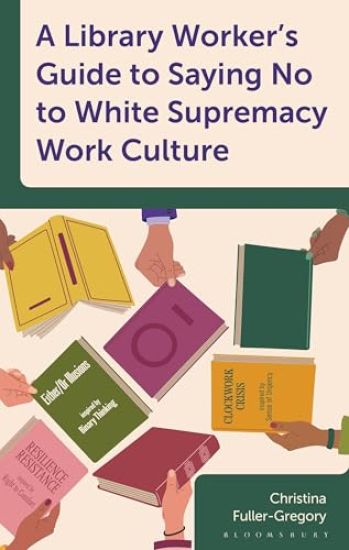
A Library Worker's Guide to Saying No to White Supremacy Work Culture

A Library Worker's Guide to Saying No to White Supremacy Work Culture

Christina Fuller-Gregory

BLOOMSBURY PUBLISHING PLC
2025
nidottu
A call to action to dismantle the white supremacy work culture in libraries, and create an environment where EDI is not only talked about but realized.Are the standards of professionalism that your organization has set still serving you? Or might libraries and library workers challenge our long-held beliefs about what our work culture is or should be? A Library Worker’s Guide to Saying No to White Supremacy Work Culture interrogates the historical foundations and present day consequences of a library work culture that is rooted in white supremacy. These white supremacy work culture habits show up in every aspect of library service, from programming, policy development, hiring practices, strategic planning, and even our ways of communicating and engaging. Even as libraries and library workers have been intentional in introducing and developing practices that center equity, diversity, and inclusion, the quiet intersectionality of white supremacy work culture coupled with our professional standards of librarianship have informed our internal work practices, shaping our perspectives and perceptions around what it means to be a ‘good librarian.’Library workers and libraries are already having authentic and challenging conversations about the impacts of equity, diversity, and inclusion on library services. However, these conversations are often external in nature, guided by a solidly patron-centric focus. This book challenges libraries and librarians to turn inward to examine the oppressive internal systems that libraries have developed, sustained, and promoted.Using Tema Okun’s seminal research on white supremacy culture as inspiration A Library Worker’s Guide to Saying No to White Supremacy Work Culture will reimagine the reader as an active participant in both discovering and addressing how the aspects of white supremacy culture inform our library work.
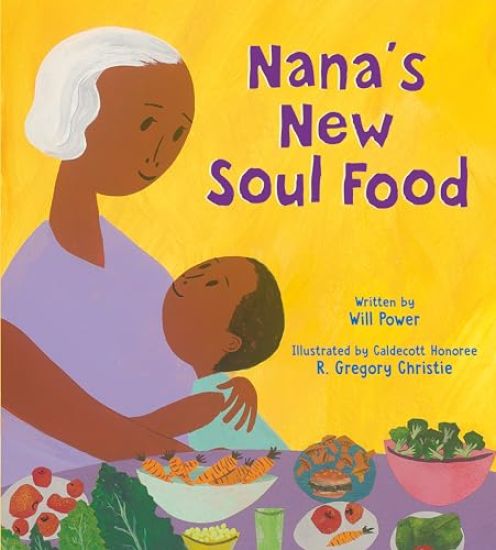
Nana's New Soul Food

Nana's New Soul Food

Will Power; R. Gregory Christie

RANDOM HOUSE USA INC
2024
sidottu
Theater pioneer Will Power inspires families to connect through healthy eating choices, vegan soul food, and community in this heartwarming story of a boy's love for his grandmother--and good food Includes a vegan recipe Can healthy food be delicious food, too? A young boy helps us discover that yes, it can Nana's New Soul Food follows this energetic boy on an adventure with his mom to find healthy food in his neighborhood. Motivated by his love for his nana, who has to change the way she eats because of her health, the boy rediscovers his neighborhood while finding tasty vegan soul food. Award-winning playwright, pioneer of hip-hop theater, and performer Will Power injects masterful rhythm into this uplifting story of family and community, which teaches us that healthy food can be a joy. The pages are graced with beautiful, vibrant illustrations from Coretta Scott King Award Honor and Caldecott Honor illustrator R. Gregory Christie, who captures the loving relationships within a family as they connect through their mission to make better eating choices. Back matter includes a fun recipe for Mango-Coconut-Lime Ice Pops courtesy of Chef Bryant Terry, along with a letter from Will Power.
Sweet Justice

Sweet Justice

Mara Rockliff; R. Gregory Christie

ALFRED A. KNOPF
2022
sidottu
An inspiring picture-book biography about the woman whose cooking helped feed and fund the Montgomery bus boycott of 1956, from an award-winning illustrator. Georgia Gilmore was cooking when she heard the news Mrs. Rosa Parks had been arrested--pulled off a city bus and thrown in jail all because she wouldn't let a white man take her seat. To protest, the radio urged everyone to stay off city buses for one day: December 5, 1955. Throughout the boycott--at Holt Street Baptist Church meetings led by a young minister named Martin Luther King, Jr.--and throughout the struggle for justice, Georgia served up her mouth-watering fried chicken, her spicy collard greens, and her sweet potato pie, eventually selling them to raise money to help the cause. Here is the vibrant true story of a hidden figure of the civil rights movement, told in flavorful language by a picture-book master, and stunningly illustrated by a Caldecott Honor recipient and seven-time Coretta Scott King award-winning artist.
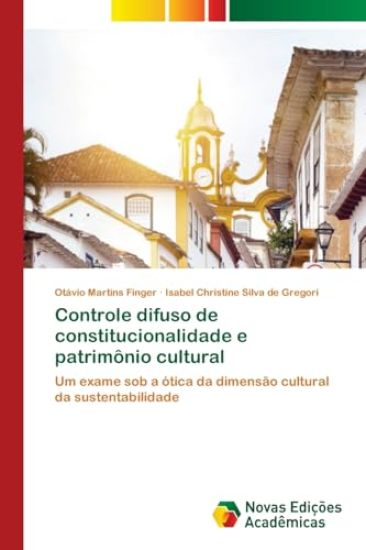
Controle difuso de constitucionalidade e patrimônio cultural

Controle difuso de constitucionalidade e patrimônio cultural

Otávio Martins Finger; Isabel Christine Silva de Gregori

Novas Edicoes Academicas
2024
pokkari
Nesta obra busca-se relacionar as tem ticas de controle difuso de constitucionalidade, um importante elemento da jurisdi o constitucional, e patrim nio cultural brasileiro, direito fundamental difuso das coletividades, de assento na Constitui o Federal de 1988, considerando-se o vi s da sustentabilidade cultural. O objeto principal esclarecer se o controle difuso pode funcionar como mecanismo de prote o do patrim nio cultural no Brasil.Nesse sentido, opta-se por examinar casos julgados por cortes judici rias envolvendo o controle incidental e o patrim nio cultural. Ao todo, s o selecionados 12 casos de sete tribunais brasileiros, com jurisdi o em todas as regi es do pa s. Em todos os julgados, s o discutidas quest es atinentes ao controle de constitucionalidade, em paralelo a discuss es sobre a tutela do direito ao patrim nio cultural, luz do preceito constitucional e incluindo as mais variadas formas de patrim nio material e imaterial.
Diffuse control of constitutionality and cultural heritage

Diffuse control of constitutionality and cultural heritage

Otávio Martins Finger; Isabel Christine Silva de Gregori

Our Knowledge Publishing
2024
pokkari
This work seeks to relate the themes of diffuse control of constitutionality, an important element of constitutional jurisdiction, and Brazilian cultural heritage, a diffuse fundamental right of collectivities, based on the 1988 Federal Constitution, considering the bias of cultural sustainability. The main objective is to clarify whether diffuse control can function as a mechanism for protecting cultural heritage in Brazil.To this end, we chose to examine cases judged by the courts involving incidental control and cultural heritage. A total of 12 cases were selected from seven Brazilian courts, with jurisdiction in all regions of the country. In all the judgments, issues relating to the control of constitutionality are discussed, in parallel with discussions on the protection of the right to cultural heritage, in the light of the constitutional precept and including the most varied forms of material and immaterial heritage.
Diffuse Kontrolle der Verfassungsmäßigkeit und des kulturellen Erbes

Diffuse Kontrolle der Verfassungsmäßigkeit und des kulturellen Erbes

Otávio Martins Finger; Isabel Christine Silva de Gregori

Verlag Unser Wissen
2024
pokkari
In dieser Arbeit wird versucht, die Themen der diffusen Kontrolle der Verfassungsm igkeit, ein wichtiges Element der Verfassungsgerichtsbarkeit, und das brasilianische Kulturerbe, ein diffuses Grundrecht der Kollektive, das in der Bundesverfassung von 1988 verankert ist, unter dem Gesichtspunkt der kulturellen Nachhaltigkeit miteinander zu verbinden. Das Hauptziel besteht darin, zu kl ren, ob die diffuse Kontrolle als Mechanismus zum Schutz des kulturellen Erbes in Brasilien funktionieren kann.Zu diesem Zweck haben wir uns f r die Untersuchung von F llen entschieden, die von den Gerichten im Zusammenhang mit zuf lliger Kontrolle und kulturellem Erbe entschieden wurden. Es wurden insgesamt 12 F lle aus sieben brasilianischen Gerichten ausgew hlt, die in allen Regionen des Landes zust ndig sind. In allen Urteilen werden Fragen der Kontrolle der Verfassungsm igkeit sowie des Schutzes des Rechts auf kulturelles Erbe im Lichte des Verfassungsgebots und unter Einbeziehung der verschiedensten Formen des materiellen und immateriellen Erbes er rtert.
Contrôle diffus de la constitutionnalité et du patrimoine culturel

Contrôle diffus de la constitutionnalité et du patrimoine culturel

Otávio Martins Finger; Isabel Christine Silva de Gregori

Editions Notre Savoir
2024
pokkari
Ce travail cherche relier les th mes du contr le diffus de la constitutionnalit , un l ment important de la juridiction constitutionnelle, et le patrimoine culturel br silien, un droit fondamental diffus des collectivit s, qui est inscrit dans la Constitution f d rale de 1988, en tenant compte du parti pris de la durabilit culturelle. L'objectif principal est de clarifier si le contr le diffus peut fonctionner comme un m canisme de protection du patrimoine culturel au Br sil. cette fin, nous avons choisi d'examiner les affaires jug es par les tribunaux concernant le contr le diffus et le patrimoine culturel. Au total, 12 affaires ont t s lectionn es dans sept tribunaux br siliens, comp tents dans toutes les r gions du pays. Tous les jugements abordent des questions relatives au contr le de constitutionnalit , parall lement des discussions sur la protection du droit au patrimoine culturel, la lumi re du pr cepte constitutionnel et en incluant les formes les plus vari es de patrimoine mat riel et immat riel.
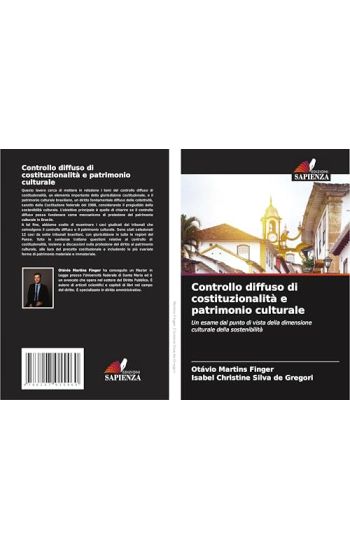
Controllo diffuso di costituzionalità e patrimonio culturale

Controllo diffuso di costituzionalità e patrimonio culturale

Otávio Martins Finger; Isabel Christine Silva de Gregori

Edizioni Sapienza
2024
pokkari
Questo lavoro cerca di mettere in relazione i temi del controllo diffuso di costituzionalit , un elemento importante della giurisdizione costituzionale, e il patrimonio culturale brasiliano, un diritto fondamentale diffuso delle collettivit , sancito dalla Costituzione federale del 1988, considerando il pregiudizio della sostenibilit culturale. L'obiettivo principale quello di chiarire se il controllo diffuso possa funzionare come meccanismo di protezione del patrimonio culturale in Brasile.A tal fine, abbiamo scelto di esaminare i casi giudicati dai tribunali che coinvolgono il controllo diffuso e il patrimonio culturale. Sono stati selezionati 12 casi da sette tribunali brasiliani, con giurisdizione in tutte le regioni del Paese. Tutte le sentenze trattano questioni relative al controllo di costituzionalit , insieme a discussioni sulla protezione del diritto al patrimonio culturale, alla luce del precetto costituzionale e includendo le pi svariate forme di patrimonio materiale e immateriale.