Christine Pagnoulle's commentary provides a detailed study of eight among David Jones's more accessible poems: those pieces in fact which he reluctantly detached from his work-in-progress and released for publication between 1955 and his death in 1974. It elucidates difficult passages, relates them to his other works, whether poems, essays, or drawings, and shows how David Jones's vision of the world in the middle of our century bears on our present concerns. While developing orignal interpretations this commentary also integrates previous critical approaches into a comprehensive overview. It will thus be welcome reading for specialists of David Jones's poetry, and will also be of interest to those readers who are discovering or still have to discover his work.
When Laura Curtis Bullard wrote the novel Christine in 1856, she created one of antebellum America's most radical heroines: a woman's rights leader. Addressing the major social, political, and cultural issues surrounding women from within an unusually overt feminist framework for its time, Christine openly challenges a social and legal system that denies women full and equal rights. Christine defies her family, rejects marriage, and leaves a job as a teacher to embark on her career, rewriting the script for a successful nineteenth-century heroine. Along the way, she recreates domesticity on her own terms, helping other young women gain economic independence so that they, too, have the autonomy to make their own choices in love and life. One of the triumphs of the novel is the author's ability to create a sympathetic heroine and a fast-paced plot that intertwines vivid scenes of suicide, destitution, and an insane asylum with theoretical and political discussions—so skillfully that the novel successfully appealed to otherwise hesitant middle-class readers.
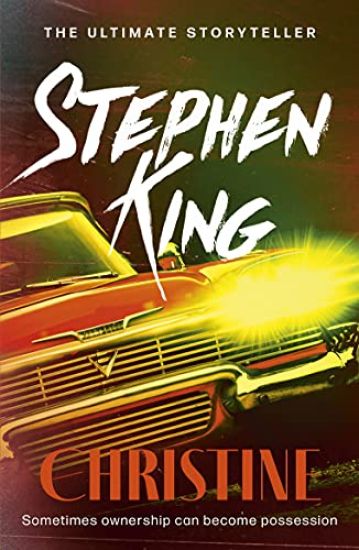
With a stunning new cover look, King's bestselling supernatural tale about a boy, his girlfriend and a possessed '58 Plymouth Fury called Christine.This is the story of a lover's triangle . . . It was bad from the start. And it got worse in a hurry.Christine is eating into his mind, burrowing into his unconscious.Christine, blood-red, fat, and finned, is twenty. Her promise lies all in her past. Greedy and big, she is Arnie's obsession, a '58 Plymouth Fury. Broken down but not finished.There is still power in her - a frightening power that leaks like sump oil, staining and corrupting. A malign power that corrodes the mind and turns ownership into Possession.
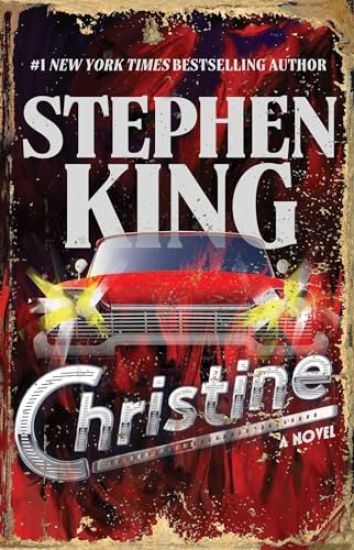
#1 New York Times bestselling author and master storyteller Stephen King's classic tale of an evil car that brings hellish terror to its new owner. It's love at first sight for high school student Arnie Cunningham when he and his best friend Dennis Guilder spot the dilapidated 1958 red-and-white Plymouth Fury for sale--dubbed "Christine" by its original cantankerous owner--rusting away on a front lawn of their suburban Pennsylvania neighborhood. Dennis knows that Arnie's never had much luck in the popularity department, or really taken an interest in owning a car...but Christine quickly changes all that. Arnie suddenly has the newfound confidence to stick up for himself, going as far as dating the most beautiful girl at Libertyville High--transfer student Leigh Cabot--even as a mysteriously restored Christine systematically and terrifyingly consumes every aspect of Arnie's life. Dennis and Leigh soon realize that they must uncover the awful truth behind a car with a horrifying and murderous history. Hell hath no fury like a woman scorned, and heaven help anyone who gets in Christine's way...
Elizabeth von Arnim (1866 - 1941), born Mary Annette Beauchamp, was an Australian-born British novelist. By marriage she became Gr fin (Countess) von Arnim-Schlagenthin, and by a second marriage, Countess Russell. Although known in her early life as Mary, after the publication of her first book, she was known to her readers, eventually to her friends, and finally even to her family as Elizabeth and she is now invariably referred to as Elizabeth von Arnim. She also wrote under the pen name Alice Cholmondeley. Writing was her refuge from what turned out to be an incompatible marriage. Arnim's husband had increasing debts and was eventually sent to prison for fraud. This was when she created her pen name "Elizabeth" and launched her career as a writer by publishing her semi-autobiographical, brooding, yet satirical Elizabeth and her German Garden (1898). It was such a success that it was reprinted twenty times in its first year. A bitter-sweet memoir and companion to it was The Solitary Summer (1899). Other works, such as the The Benefactress (1902), Vera (1921), and Love (1925), were also semi-autobiographical. Other titles dealing with feminist protest and witty observations of life in provincial Germany were to follow, including The Princess Priscilla's Fortnight (1905) and Fraulein Schmidt and Mr Anstruther (1907). She would sign her next twenty or so books simply as written, "by the author of Elizabeth and Her German Garden" and later simply "By Elizabeth". In 1908 Arnim left Nassenheide to return to London.
#1 New York Times bestselling author and master storyteller Stephen King's classic tale of an evil car that brings hellish terror to its new owner. It's love at first sight for high school student Arnie Cunningham when he and his best friend Dennis Guilder spot the dilapidated 1958 red-and-white Plymouth Fury for sale--dubbed "Christine" by its original cantankerous owner--rusting away on a front lawn of their suburban Pennsylvania neighborhood. Dennis knows that Arnie's never had much luck in the popularity department, or really taken an interest in owning a car...but Christine quickly changes all that. Arnie suddenly has the newfound confidence to stick up for himself, going as far as dating the most beautiful girl at Libertyville High--transfer student Leigh Cabot--even as a mysteriously restored Christine systematically and terrifyingly consumes every aspect of Arnie's life. Dennis and Leigh soon realize that they must uncover the awful truth behind a car with a horrifying and murderous history. Hell hath no fury like a woman scorned, and heaven help anyone who gets in Christine's way...
#1 New York Times bestselling author and master storyteller Stephen King's classic tale of an evil car that brings hellish terror to its new owner--now featuring a stunning vintage cover It's love at first sight for high school student Arnie Cunningham when he and his best friend Dennis Guilder spot the dilapidated 1958 red-and-white Plymouth Fury for sale--dubbed "Christine" by its original cantankerous owner--rusting away on a front lawn of their suburban Pennsylvania neighborhood. Dennis knows that Arnie's never had much luck in the popularity department, or really taken an interest in owning a car...but Christine quickly changes all that. Arnie suddenly has the newfound confidence to stick up for himself, going as far as dating the most beautiful girl at Libertyville High--transfer student Leigh Cabot--even as a mysteriously restored Christine systematically and terrifyingly consumes every aspect of Arnie's life. Dennis and Leigh soon realize that they must uncover the awful truth behind a car with a horrifying and murderous history. Hell hath no fury like a woman scorned, and heaven help anyone who gets in Christine's way...