Kirjahaku
Etsi kirjoja tekijän nimen, kirjan nimen tai ISBN:n perusteella.
1000 tulosta hakusanalla Christopher Castiglia; Christopher Reed
The AIDS epidemic soured the memory of the sexual revolution and gay liberation of the 1970s, and prominent politicians, commentators, and academics instructed gay men to forget the sexual cultures of the 1970s in order to ensure a healthy future. But without memory there can be no future, argue Christopher Castiglia and Christopher Reed in this exploration of the struggle over gay memory that marked the decades following the onset of AIDS.Challenging many of the assumptions behind first-wave queer theory, If Memory Serves offers a new perspective on the emergence of contemporary queer culture from the suppression and repression of gay memory. Drawing on a rich archive of videos, films, television shows, novels, monuments, paintings, and sculptures created in the wake of the epidemic, the authors reveal a resistance among critics to valuing-even recognizing-the inscription of gay memory in art, literature, popular culture, and the built environment. Castiglia and Reed explore such topics as the unacknowledged ways in which the popular sitcom Will and Grace circulated gay subcultural references to awaken a desire for belonging among young viewers; the post-traumatic (un)rememberings of queer theory; and the generation of “ideality politics” in the art of FÉlix GonzÁlez-Torres, the film Chuck & Buck, and the independent video Video Remains. Inspired by Alasdair MacIntyre’s insight that “the possession of a historical identity and the possession of a social identity coincide,” Castiglia and Reed demonstrate that memory is crafted in response to inadequacies in the present-and therefore a constructive relation to the past is essential to the imagining of a new future.
With Great Power
Ron Athey; Paul Castiglia; Michael Ciccolini; Kelly Edwards; John A. Gleckler; Joshua T. Hall; Dan Johnson; Brian K. Morris; Zac Pensol; Brian Reaves; Tyrone Tony Reed Jr.; Christopher Brockow; Fred A. Hartley III; Rick L. Phillips
Lulu.com
2014
sidottu
This book has a series of fictional short stories as it follows one particular issue of Amazing Fantasy #15, that has the very first story to star the Amazing Spider-Man, from the time it is purchased in 1962 to the present. It shows how the story influenced the people that come in contact with it and the adventures they have because of its influence. A group of celebrated writers and up and coming authors have joined together to share those stories in this book. Now follow this classic comic book on its journey from one person to another as it makes its trip through time.
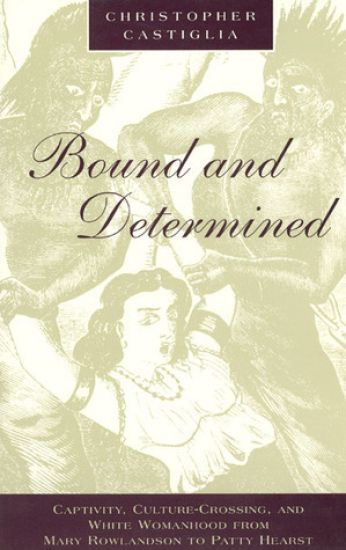
This work provides an analysis of a tradition of American women's captivity narrative that ranges across three centuries, from Puritan colonist Mary Rowlandson's abduction by Narragansett Indians to Patty Hearst's kidnapping by the Symbionese Liberation Army. Examining more than 60 accounts by women captives, as well as novels ranging from Susanna Rowson's 18th-century classic "Rueben and Rachel" to modern mass-market romances, the author investigates paradoxes central to the genre. In captivity, women often find freedom from stereotypical roles as helpless, dependent, sexually vulnerable and xenophobic. In their condemnations of their non-white captors, they defy assumptions about race that undergird their own societies. Castiglia questions critical conceptions of captivity stories as primarily an appeal to racism and misogyny, and instead finds in them an appeal of a much different nature: as all-too-rare stories of imaginative challenges to rigid gender roles and racial ideologies. Whether the women of these stories resist or escape captivity, endure until they are released, or eventually choose to live among their captors, they end up with the power to be critical of both cultures. Castiglia shows that these compelling narratives, with their boundary crossings and persistent explorations of cultural divisions and differences, have significant implications for current critical investigations into the construction of gender, race and nation.
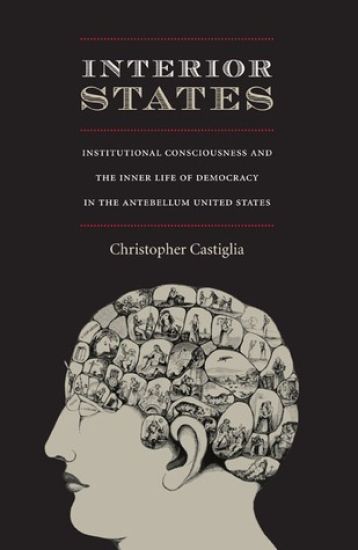
In Interior States Christopher Castiglia focuses on U.S. citizens’ democratic impulse: their ability to work with others to imagine genuinely democratic publics while taking divergent views into account. Castiglia contends that citizens of the early United States were encouraged to locate this social impulse not in associations with others but in the turbulent and conflicted interiors of their own bodies. He describes how the human interior-with its battles between appetite and restraint, desire and deferral-became a displacement of the divided sociality of nineteenth-century America’s public sphere and contributed to the vanishing of that sphere in the twentieth century and the twenty-first. Drawing insightful connections between political structures, social relations, and cultural forms, he explains that as the interior came to reflect the ideological conflicts of the social world, citizens were encouraged to (mis)understand vigilant self-scrutiny and self-management as effective democratic action. In the late eighteenth century and early nineteenth, as discourses of interiority gained prominence, so did powerful counter-narratives. Castiglia reveals the flamboyant pages of antebellum popular fiction to be an archive of unruly democratic aspirations. Through close readings of works by Maria Monk and George Lippard, Walt Whitman and Timothy Shay Arthur, Hannah Webster Foster and Hannah Crafts, and Nathaniel Hawthorne and Herman Melville, Castiglia highlights a refusal to be reformed or self-contained. In antebellum authors’ representations of nervousness, desire, appetite, fantasy, and imagination, he finds democratic strivings that refused to disappear. Taking inspiration from those writers and turning to the present, Castiglia advocates a humanism-without-humans that, denied the adjudicative power of interiority, promises to release democracy from its inner life and to return it to the public sphere where U.S. citizens may yet create unprecedented possibilities for social action.
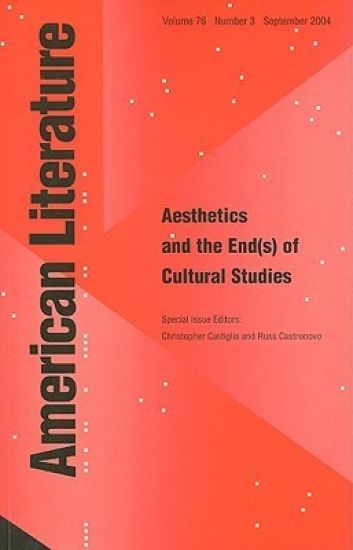
Aesthetics and the End(s) of American Cultural Studies
Christopher Castiglia
Duke University Press
2004
pokkari
Reclaiming the aesthetic, emphasizing the "literary" in literary studies, conceptualizing a new formalism: such recent appeals represent the latest turn in ongoing debates about art and aesthetic ideology. Intervening in these debates-often characterized by predictable oppositions that set art against social action, structure against cultural practice, and the so-called imaginaries of affect against the putative reality of politics-this special issue of American Literature asks, what's new about the "new aesthetics," and what implications does this shifting ideology have for social and cultural thinking?
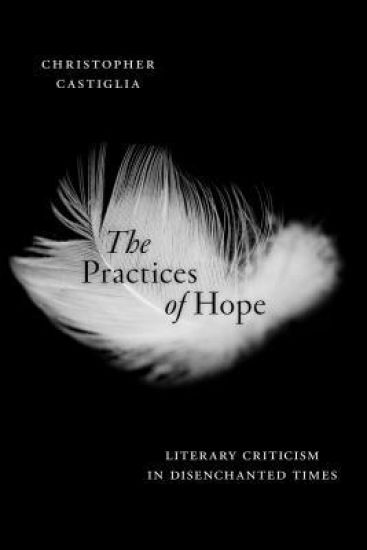
Offers a positive approach to literary criticism At a moment when the "hermeneutics of suspicion" is under fire in literary studies, The Practices of Hope encourages an alternative approach that, rather than abandoning critique altogether, relinquishes its commitment to disenchantment. As an alternative, Castiglia offers hopeful reading, a combination of idealism and imagination that retains its analytic edge yet moves beyond nay-saying to articulate the values that shape our scholarship and creates the possible worlds that animate genuine social critique. Drawing on a variety of critics from the Great Depression to the Vietnam War, from Granville Hicks and Constance Rourke to Lewis Mumford, C.L.R. James, Charles Feidelson, and Richard Poirier, Castiglia demonstrates that their criticism simultaneously denounced the social conditions of the Cold War United States and proposed ideal worlds as more democratic alternatives. Organized around a series of terms that have become anathema to critics—nation, liberalism, humanism, symbolism—The Practices of Hope shows how they were employed in criticism's "usable past" to generate an alternative critique, a practice of hope.
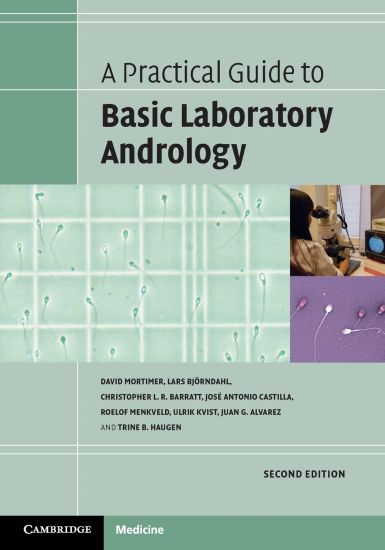
A Practical Guide to Basic Laboratory Andrology
David Mortimer; Lars Björndahl; Christopher L. R. Barratt; José Antonio Castilla; Roelof Menkveld; Ulrik Kvist; Juan G. Alvarez; Trine B. Haugen
Cambridge University Press
2022
pokkari
This practical, extensively illustrated handbook covers the procedures that are undertaken in andrology and ART laboratories to analyse and assess male-factor infertility, and to prepare spermatozoa for use in assisted conception therapy. The content is presented as brief, authoritative overviews of the relevant biological background for each area, plus detailed, step-by-step descriptions of the relevant analytical procedures. Each technical section includes quality control considerations and the optimum presentation of results. In addition to the comprehensive 'basic' semen analysis, incorporating careful analysis of sperm morphology, the handbook provides established techniques for the use of computer-aided sperm analysis and sperm functional assessment. The interpretation of laboratory results in the clinical context is highlighted throughout, and safe laboratory practice is emphasized. Fully revised, incorporating the new ISO TS 23162 on basic human semen analysis throughout, this is an invaluable resource to all scientists and technicians who perform diagnostic testing for male-factor infertility.
College rule (also known as medium ruled paper) is the most common lined paper in use in the United States. It is generally used in middle school through to college and is also popular with adults. This is a good choice for teen or adult notebooks and composition books (known as exercise books outside the US).
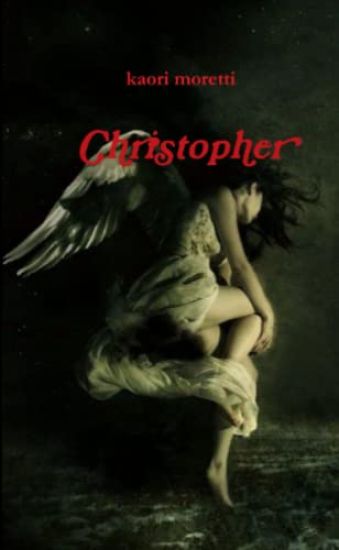
Il primo capitolo della saga di Christopher, una storia di vampiri, lupi, streghe, angeli, bambini indaco.
Chris Neil--or Christopher, as his mother, Bonnie, called him--grew up with the ambition and desire to be an NHL hockey player. Through grit and determination, he achieved his goal and left an indelible mark on the Ottawa Senators franchise. Christopher spent many hours as a youngster in Ron and Cathy Pegg's home, providing the author with personal, first-hand knowledge of Neil the hockey player and the man. That friendship continues to this day. In this engaging biography, you'll meet the Neil family and the personalities from the world of hockey that guided and formed Chris Neil throughout his life--a life of athletics, community involvement, and faith. Christopher played over a thousand games in the NHL, all as a member of the Ottawa Senators. He became one of just over fifty players in the history of the league to play a thousand games with one team. The one thousandth game was played in Los Angeles, with his wife, Cait, and all the members of the Pegg family present. Christopher is not the final word on Neil's career, as he continues to serve the hockey community off the ice, but it does tell the tale of a life well lived so far and will inspire hockey fans and people of faith alike.
How long can you hide from your mate?Chris is a newcomer to Green Hill. His family has settled in, even his brother, who made the mistake of trying to take the alpha position from the Green Hill pride alpha, but not Chris. He feels like he doesn't belong, and he doesn't know how to fix it.Meeting his mate might help.Drake is in love with love, but love doesn't work for him. Every time he's in a relationship, he gets dumped because of his personality-he's too needy, he talks too much or expects too much from his boyfriend. He hasn't given up, but when he meets his mate, he decides that something needs to change before he sends Chris running, too.That something is him.While Chris does his best to get to know the real Drake, Drake does his best to hide his personality from Chris. The push and pull is maddening for both of them and can't continue forever, but who will win?
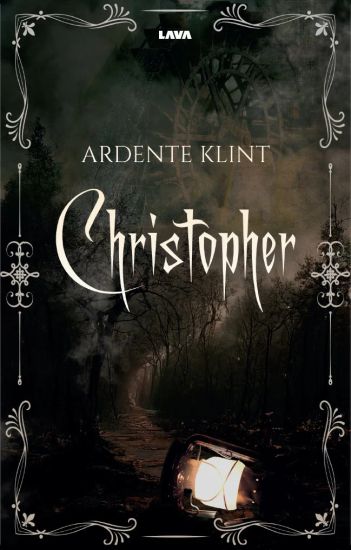
I det moderna samhällets framväxt krockar vetenskap och vidskepelse när det sker märkliga mord i en liten engelsk by på 1880-talet. Ateisten Christopher följer motvilligt med när hans far prosten skickas av kyrkan för att undersöka om dödsfallen har en övernaturlig orsak.Christopher är säker på att det finns en rationell förklaring och startar egna efterforskningar. Mötet med en mystisk man leder in Christopher i en relation som överstiger vänskap. En relation som riskerar att avslöja hans innersta hemlighet. En hemlighet som kan rasera hela Christophers liv. Samtidigt fortsätter mördaren sin framfart.Ardentes utbildning till legitimerad djursjukskötare kom väl till pass inför de morbida efterforskningar som krävdes för Christopher. Blod, ben och bukinnehåll var Ardentes vardag tills hon 2019 diagnosticerades med myalgisk encefalomyelit (ME/CFS).Ardente gillar att skriva om det queera och det makabra. Gotisk estetik, religion och utforskandet av människors syn på sexualitet återkommer i hennes verk.Ardente utkom 2015 med erotiknovellen Bunden av lust. 2019 publicerades en av hennes erotiska grafiska noveller i Fantasi & Nymfomani – En antologi. Christopher är hennes debutroman.Ardente bor i Huddinge tillsammans med sin partner, hunden Lara och katten Illidan.Instagram: @tinybatonapumpkinHemsida: www.ardenteklint.se
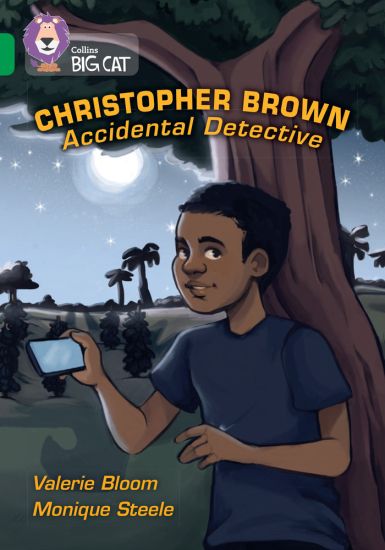
Collins Big Cat supports every primary child on their reading journey from phonics to fluency. Top authors and illustrators have created fiction and non-fiction books that children love to read. Book banded for guided and independent reading, there are reading notes in the back, comprehensive teaching and assessment support and ebooks available. Christopher Brown loves drawing. When he enters the local art competition he doesn’t realise that his photo research will lead him to becoming a detective and solving the village crimes! Emerald/Band 15 books provide a widening range of genres including science fiction and biography, prompting more ways to respond to texts. Ideas for reading in the back of the book provide practical support and stimulating activities.