

Kirjahaku
Etsi kirjoja tekijän nimen, kirjan nimen tai ISBN:n perusteella.
1000 tulosta hakusanalla Christopher E Smith
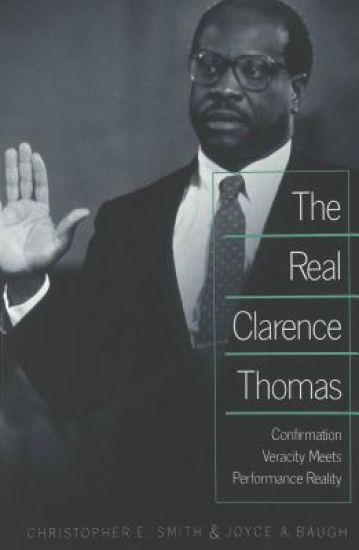
The Real Clarence Thomas
Smith Christopher E.; Baugh Joyce A.
PETER LANG PUBLISHING INC
2000
nidottu
Justice Clarence Thomas is a controversial figure on the U.S. Supreme Court because of sexual harassment allegations raised against him during his 1991 Senate confirmation hearings. This study avoids unanswerable questions about Thomas's past by making a straightforward comparison of his confirmation testimony about his judicial philosophy against his subsequent judicial opinions. This comparison raises serious questions about Thomas's truthfulness during his sworn testimony before the Senate Judiciary Committee. Because the legitimacy of the courts depends on the integrity of the judges, the authors argue for increased consideration of impeachment if significant evidence indicates that judicial nominees intentionally deceived the Senate and the public about their views on law and public policy.

Evolving Constitutional Rights
Christopher E. Smith; Michael A. McCall; Madhavi M. McCall
SOUTHERN ILLINOIS UNIVERSITY PRESS
2025
nidottu
Illuminating continuity and change in Supreme Court decisions Evolving Constitutional Rights: The Roberts Court and Criminal Justice offers a compelling and in-depth analysis of how the U.S. Supreme Court has reshaped constitutional protections under Chief Justice John Roberts. Authors Christopher E. Smith, Michael A. McCall, and Madhavi M. McCall examine the Court’s significant decisions from 2005 to Justice Breyer’s retirement in 2022, revealing a complex judicial landscape where traditional doctrines are revised and fundamental rights are redefined. The Roberts Court played a decisive role in some of the most contentious issues in American law. Due to several justices’ application of originalist interpretations, its rulings have reconfigured key constitutional protections—often in ways that expand the authority of law enforcement while constraining legislative power over criminal statutes. The trajectory of the Court’s conservative supermajority raises pressing questions about the future of constitutional rights. Taking a rigorous yet accessible approach, Evolving Constitutional Rights breaks down the Court’s influence across the full spectrum of criminal justice issues, from sentencing and trial rights to search-and-seizure protections, Miranda warnings, and corrections policies. Using both legal and empirical analysis, the authors track patterns in judicial ideology, uncovering how the Roberts Court has not only reinforced conservative principles but also unexpectedly broadened rights in areas such as digital privacy and defense counsel obligations. This timely and insightful book goes beyond historical rulings to offer a forward-looking perspective on the Supreme Court’s role in shaping public safety, legal precedent, and the balance of power in American government. Essential reading for legal scholars, policymakers, and anyone concerned with the future of constitutional rights, this new volume provides a clear and authoritative examination of the Roberts Court’s lasting impact on American law.
Evolving Constitutional Rights
Christopher E. Smith; Michael A. McCall; Madhavi M. McCall
SOUTHERN ILLINOIS UNIVERSITY PRESS
2025
sidottu
First Published in 1997. Organised in a easily readable format this book on the Supreme Court and punishment takes the reader through the sentencing and incarceration issues that have been so controversial and yet, so relatively unchanged over the years.
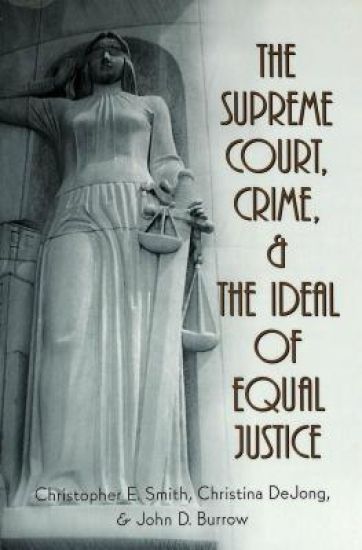
The Supreme Court, Crime, and the Ideal of Equal Justice
Christopher E. Smith; Christina DeJong; John D. Burrow
Peter Lang Publishing Inc
2003
nidottu
The words -equal justice under law- are literally etched in stone and prominently displayed above the entrance to the United States Supreme Court. These words stand as an enduring proclamation of a paramount objective of the courts and the Constitution. Although judges are the guardians of the Constitution's principles, this book examines how their decisions both advance and impede the ideal of equal justice. By analyzing interpretations of -equal protection- and other rights affecting discrimination and disadvantages linked to race, gender, and social status, Smith, DeJong, and Burrow illustrate how constitutional law often facilitates the denial of equal justice for people drawn into the criminal justice system."
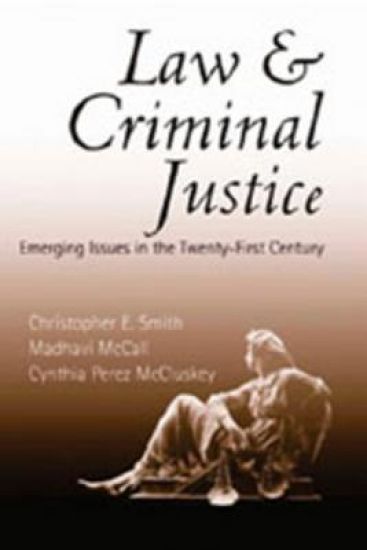
Law and Criminal Justice
Christopher E. Smith; Madhavi M. McCall; Cynthia Perez Mccluskey
Peter Lang Publishing Inc
2005
nidottu
Law changes as new developments affect society. The dawn of a new century provides a marking point for the evaluation of trends in law and policy. This book examines emerging issues that will shape society's rules and legal processes in the twenty-first century. By identifying developments affecting technology, demography, and politics, the authors evaluate impacts on law and criminal justice. Many of the issues discussed, including the expanding Latino population, new technologies for investigations, weapons, and executions, health crises in prisons, DNA testing, and the « war on terrorism, will have profound effects on the fates of individuals drawn into the justice system.
This book illuminates the decision-making processes of the US Supreme court through an examination of several prisoners' rights cases. In 1964, the Supreme Court declined to hear prisoners’ claims about religious freedom. In 2014, the Supreme Court heard a case that led to the justices’ unanimous endorsement of a Muslim prisoner’s religious right to grow a beard despite objections from prison officials. In the fifty-year span between those two events, the Supreme Court developed the law concerning rights for imprisoned offenders. As demonstrated in this book, the factors that shape Supreme Court decision making are well-illustrated by prisoners’ rights cases. This area of law illuminates competing approaches to constitutional interpretation, behind-the-scenes interactions among the justices, and the manipulation of legal precedents. External actors also affect the Supreme Court and its decisions when the president appoints new justices and Congress targets the judiciary with legislative enactments. Because of the controversial nature of prisoners’ rights issues, these cases serve to illuminate the full array of influences over Supreme Court decision making.
First Published in 1997. Organised in a easily readable format this book on the Supreme Court and punishment takes the reader through the sentencing and incarceration issues that have been so controversial and yet, so relatively unchanged over the years.
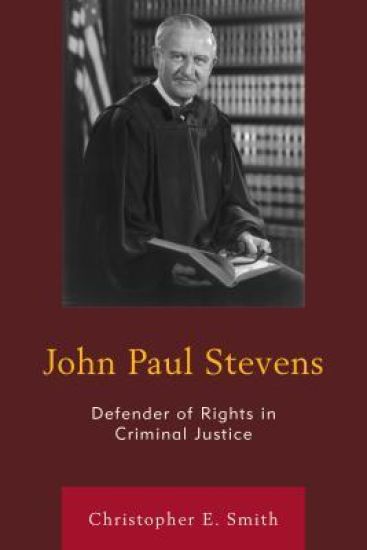
This book examines the judicial opinions and criminal justice policy impact of Justice John Paul Stevens, the U.S. Supreme Court’s most prolific opinion author during his 35-year career on the nation’s highest court. Although Justice Stevens, a Republican appointee of President Gerald Ford, had a professional reputation as a corporate antitrust law attorney, he immediately asserted himself as the Court’s foremost advocate of prisoners’ rights and Miranda rights when he arrived at the Court in 1975. In examining Justice Stevens’s opinions on these topics as well as others, including capital punishment and right to counsel, the chapters of the book connect his prior experiences with the development of his views on rights in criminal justice. In particular, the book examines his relevant experiences as a law clerk to Justice Wiley Rutledge in the Supreme Court’s 1947 term, a volunteer attorney handling criminal cases in Illinois, and a judge on the U.S. court of appeals to explore how these experiences shaped his understanding of the importance of rights in criminal justice. For many issues, such as those affecting imprisoned offenders, Justice Stevens was a strong defender of rights throughout his career. For other issues, such as capital punishment, there is evidence that he became increasingly protective of rights over the course of his Supreme Court career. The book also examines how Justice Stevens became increasingly important as a leading dissenter against the diminution of rights in criminal justice as the Supreme Court’s composition became increasingly conservative in the 1980s and thereafter. Because of the nature and complexity of Justice Stevens’s numerous and varied opinions over the course of his lengthy career, scholars find it difficult to characterize his judicial philosophy and impact with simple labels. Yet in the realm of criminal justice, close examination of his work reveals that he earned a reputation and an enduring legacy as an exceptionally important defender of constitutional rights.
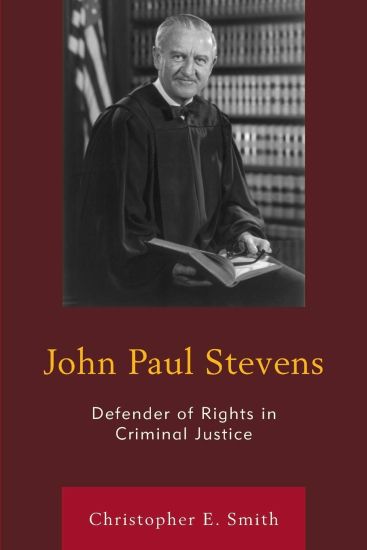
This book examines the judicial opinions and criminal justice policy impact of Justice John Paul Stevens, the U.S. Supreme Court’s most prolific opinion author during his 35-year career on the nation’s highest court. Although Justice Stevens, a Republican appointee of President Gerald Ford, had a professional reputation as a corporate antitrust law attorney, he immediately asserted himself as the Court’s foremost advocate of prisoners’ rights and Miranda rights when he arrived at the Court in 1975. In examining Justice Stevens’s opinions on these topics as well as others, including capital punishment and right to counsel, the chapters of the book connect his prior experiences with the development of his views on rights in criminal justice. In particular, the book examines his relevant experiences as a law clerk to Justice Wiley Rutledge in the Supreme Court’s 1947 term, a volunteer attorney handling criminal cases in Illinois, and a judge on the U.S. court of appeals to explore how these experiences shaped his understanding of the importance of rights in criminal justice. For many issues, such as those affecting imprisoned offenders, Justice Stevens was a strong defender of rights throughout his career. For other issues, such as capital punishment, there is evidence that he became increasingly protective of rights over the course of his Supreme Court career. The book also examines how Justice Stevens became increasingly important as a leading dissenter against the diminution of rights in criminal justice as the Supreme Court’s composition became increasingly conservative in the 1980s and thereafter. Because of the nature and complexity of Justice Stevens’s numerous and varied opinions over the course of his lengthy career, scholars find it difficult to characterize his judicial philosophy and impact with simple labels. Yet in the realm of criminal justice, close examination of his work reveals that he earned a reputation and an enduring legacy as an exceptionally important defender of constitutional rights.
The Jurisprudential Vision of Justice Antonin Scalia
David A. Schultz; Christopher E. Smith
Rowman Littlefield
1996
nidottu
When Antonin Scalia was appointed to the Supreme Court in 1986, conservatives hoped he would become the intellectual leader of President Reagan's judicial counter-revolution. In this first book-length analysis of Scalia's jurisprudence, David A. Schultz and Christopher E. Smith argue that Scalia's impact has been neither what conservatives hoped nor what liberals feared. The authors examine Scalia's political and judicial philosophy and they outline the areas of the law that Scalia has most profoundly affected, particularly constitutional protections for property rights. Citing Scalia's use of judicial review to check legislative power and his attempts to limit several types of individual rights developed during the Warren and Burger Courts, the authors conclude that Scalia's decisions reflect an effort to create a post-Carolene Products jurisprudence and to form a new pattern of assumptions regarding the role of the Supreme Court in American society. This is essential reading for students, scholars, and anyone interested in the Supreme Court and constitutional law.
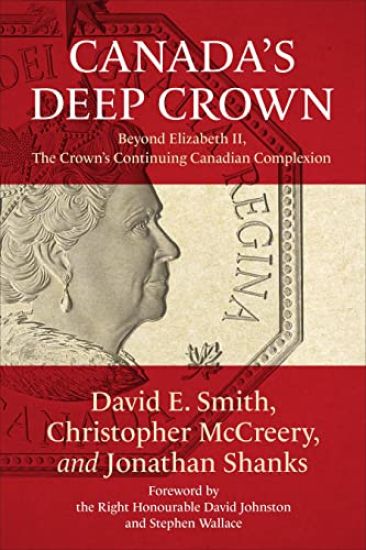
Canada's Deep Crown
David E. Smith; Christopher McCreery; Jonathan Shanks
University of Toronto Press
2021
pokkari
The Crown in Canada has had a profound influence in shaping a country and a constitution that embraces the promotion of political moderation, societal accommodation, adaptable constitutional structures, and pluralistic governing practices. While none of these features themselves originated through legislative or constitutional action, David E. Smith, Christopher McCreery, and Jonathan Shanks propose that all reflect the presence and actions of the Crown. Examining how a constitutional monarchy functions, Canada’s Deep Crown discusses how the legal and institutional abstractions of the Crown vary depending on the circumstances and the context in which it is found. The Crown presents differently depending on who is observing it, who is representing it, and what role it is performing. With a focus on the changes that have taken place over the last fifty years, this book addresses the role of the Crown in dispersing power throughout Canada’s system of government, the function the sovereign, governor general, and lieutenant governors play, and how the demise of the Crown and transition to a new sovereign is likely to unfold.

Organizational Behaviour
Paul E. Smith; Wendy Yellowley; Christopher J. McLachlan
Routledge
2020
sidottu
Clear, concise, and written by experts currently lecturing in the field, Organizational Behaviour focuses exclusively on what you need to know for success in your business course and today’s global economy.The text brings together a vast range of ideas, models, and concepts on organizational behaviour from an array of fields, such as psychology, sociology, history, economics, and politics. This information is presented in bite-sized, digestible pieces to create an accessible and engaging style that makes it the perfect text for introductory courses covering organizations.Key features include:a clear and thought-provoking introduction to organizational behaviourrelevant, cutting-edge case studies with global focus hot topics such as eOrganizations, ethics, and diversity, keeping you up-to-date with current business thinkingfurther reading, summaries, activities, key theme boxes, and review questions to help reinforce your understandingThis textbook will be a valuable resource for students of business and management studies, organization studies, psychology, and sociology.

Organizational Behaviour
Paul E. Smith; Wendy Yellowley; Christopher J. McLachlan
Routledge
2020
nidottu
Clear, concise, and written by experts currently lecturing in the field, Organizational Behaviour focuses exclusively on what you need to know for success in your business course and today’s global economy.The text brings together a vast range of ideas, models, and concepts on organizational behaviour from an array of fields, such as psychology, sociology, history, economics, and politics. This information is presented in bite-sized, digestible pieces to create an accessible and engaging style that makes it the perfect text for introductory courses covering organizations.Key features include:a clear and thought-provoking introduction to organizational behaviourrelevant, cutting-edge case studies with global focus hot topics such as eOrganizations, ethics, and diversity, keeping you up-to-date with current business thinkingfurther reading, summaries, activities, key theme boxes, and review questions to help reinforce your understandingThis textbook will be a valuable resource for students of business and management studies, organization studies, psychology, and sociology.

The Army's Local Economic Effects
Christopher M. Schnaubelt; Craig A. Bond; Frank Camm; Joshua Klimas; Beth E. Lachman; Laurie L. McDonald; Judith D. Mele; Paul Ng; Meagan Smith; Cole Sutera; Christopher Skeels
RAND
2016
pokkari
This report presents findings on the economic activity supported by total Army spending in each of the 435 congressional districts for fiscal years 2012-2014. Using input/output models, researchers estimated that in FY 2014, the Army directly spent approximately $121 million in the median congressional district (in 2012 dollars), translating into about 4,200 jobs and contributing to $375 million of economic output.
The Army's Local Economic Effects
Christopher M. Schnaubelt; Craig A. Bond; Frank Camm; Joshua Klimas; Beth E. Lachman; Laurie L. McDonald; Judith D. Mele; Paul Ng; Meagan Smith; Cole Sutera; Christopher Skeels
RAND
2016
pokkari
The Army's Local Economic Effects
Christopher M. Schnaubelt; Craig A. Bond; Frank Camm; Joshua Klimas; Beth E. Lachman; Laurie L. McDonald; Judith D. Mele; Paul Ng; Meagan Smith; Cole Sutera; Christopher Skeels
RAND
2016
pokkari

Seeing and Knowing
Blundell Geoffrey; Christopher Chippindale; Clottes Jean; Conkey Margaret W.; Edward B. Eastwood; Francis Julie E.; Helskog Knut; Imogene L. Lim; Loendorf Lawrence L.; Johannes Loubser; David Morris; Sven Ouzman; Neil Price; Saetersdal Tore; Benjamin Smith; Patricia Vinnicombe; Eva Walderhaug; Walker Nick; Whitley David S.
Wits University Press
2010
nidottu
This collection focuses on David Lewis-Williams and the extent of his personal impact on the field of rock art research. It is largely through his work that San rock art has come to be understood so well, as a complex symbolic and metaphoric representation of San religious beliefs and practices. The purpose of this volume is to demonstrate the depth and wide geographical impact of Lewis-Williams' contribution, with particular emphasis on the use of theory and methodology drawn from ethnography that he has used with inspirational effect in understanding the meaning and context of rock art in various parts of the world. Seeing and Knowing explores how best archaeologists study rock art when there exist ethnographic or ethno - historic bases of insight, and how they study rock art when there do not appear to exist ethnographic or ethnohistoric bases of insight - in short, how to understand and learn from rock art with and without ethnography. Because many of the chapters are based on solid fieldwork and ethnographic research, they offer a new body of work that provides the evidence for differentiation between knowing and simply seeing.
Called to Community
Eberhard Arnold; Dietrich Bonhoeffer; Joan Chittister; Dorothy Day; Fyodor Dostoyevsky; Richard J. Foster; Jonathan Wilson-Hartgrove; David Janzen; Søren Kierkegaard; C. S. Lewis; Chiara Lubich; Thomas Merton; Henri J. M. Nouwen; John M. Perkins; Eugene H. Peterson; Christine D. Pohl; Howard A. Snyder; Mother Teresa; Saint Benedict; Jeremiah Barker; Amy Carmichael; Hans Denck; Andreas Ehrenpreis; Thomas R Kelly; Penelope Lawson; Juan Mateos; Kathleen Norris; Thomas E Powers; Peter Riedemann; Christopher C Smith; Ulrich Stadler
PLOUGH PUBLISHING HOUSE
2024
pokkari
Fifty-two readings on living in intentional Christian community to spark group discussion.Gold Medal Winner, 2017 Illumination Book Awards, Christian LivingSilver Medal Winner, 2017 Benjamin Franklin Award in Religion, Independent Book Publishers AssociationWhy, in an age of connectivity, are our lives more isolated and fragmented than ever? And what can be done about it? The answer lies in the hands of God’s people. Increasingly, today’s Christians want to be the church, to follow Christ together in daily life. From every corner of society, they are daring to step away from the status quo and respond to Christ’s call to share their lives more fully with one another and with others. As they take the plunge, they are discovering the rich, meaningful life that Jesus has in mind for all people, and pointing the church back to its original calling: to be a gathered, united community that demonstrates the transforming love of God.Of course, such a life together with others isn’t easy. The selections in this volume are, by and large, written by practitioners—people who have pioneered life in intentional community and have discovered in the nitty-gritty of daily life what it takes to establish, nurture, and sustain a Christian community over the long haul.Whether you have just begun thinking about communal living, are already embarking on sharing life with others, or have been part of a community for many years, the pieces in this collection will encourage, challenge, and strengthen you. The book’s fifty-two chapters can be read one a week to ignite meaningful group discussion.Contributors include: John F. Alexander, Eberhard Arnold, J. Heinrich Arnold, Johann Christoph Arnold, Alden Bass, Benedict of Nursia, Christoph Friedrich Blumhardt, Leonardo Boff, Dietrich Bonhoeffer, Joan Chittister, Stephen B. Clark, Andy Crouch, Dorothy Day, Anthony de Mello, Elizabeth Dede, Catherine de Hueck Doherty, Fyodor Dostoyevsky, Jenny Duckworth, Friedrich Foerster, Richard J. Foster, Jodi Garbison, Arthur G. Gish, Helmut Gollwitzer, Adele J Gonzalez, Stanley Hauerwas, Joseph H. Hellerman, Roy Hession, David Janzen, Rufus Jones, Emmanuel Katongole, Arthur Katz, Søren Kierkegaard, C. Norman Kraus, C.S. Lewis, Gerhard Lohfink, Ed Loring, Chiara Lubich, George MacDonald, Thomas Merton, Hal Miller, José P. Miranda, Jürgen Moltmann, Charles E. Moore, Henri J. M. Nouwen, Elizabeth O’Connor, John M. Perkins, Eugene H.Peterson, Christine D. Pohl, Chris Rice, Basilea Schlink, Howard A. Snyder, Mother Teresa, Thomas à Kempis, Elton Trueblood, and Jonathan Wilson-Hartgrove.