Kirjojen hintavertailu. Mukana 11 244 527 kirjaa ja 12 kauppaa.

Kirjahaku

Etsi kirjoja tekijän nimen, kirjan nimen tai ISBN:n perusteella.

1000 tulosta hakusanalla Christopher Marlowe

The Complete Works of Christopher Marlowe: Volume III: Edward II
Marlowe's highly controversial Edward II concerns the conflicting claims of love and politics, the urgency of homoerotic desire, and the cruelty with which unscrupulous authority can exert control. The boldness with which the work confronts these issues makes it unique in the period, yet this is the first critical edition of the play with full scholarly apparatus for twenty-five years. Richard Rowland's edition presents an old-spelling text which adheres more closely to the first quarto of 1594 than any edition hitherto. The present volume is the third in the Oxford English Texts Complete Works of Christopher Marlowe. A full commentary and introduction contextualize the play and give an entirely original account of the relationship betweeen the play, Marlowe's own age, and events which immediately followed it. By re-examining textual cruces, new interpretative possibilities are opened up, and the play is related to the language and ideas of Marlowe's contemporaries. A generous selection from Holinshed, Marlowe's principal source, is also included. As critics and historians continue to debate attitudes to love, sexuality, and politics during the English Renaissance, this edition of Edward II extends that debate, offering a new understanding of the eroticism and violence of the play.
The Complete Works of Christopher Marlowe: Volume II: Dr Faustus
Despite the modern fascination with Marlowe, and in particular with Dr Faustus, there has been no edition of his works which offers original spelling, full textual apparatus, and a detailed commentary. The Oxford English Texts Complete Works of Christopher Marlowe, edited in three volumes, supplies the need for a fully annotated scholarly treatment of the works. The present volume is devoted to Dr Faustus, which is now edited from the edition of 1604. A new theory of this text and its transmission is presented in an introductory essay, `Dr Faustus, the Textual Problem'; the play is critically discussed in another essay, `Dr Faustus, the Real Problem'. Differing theories of the text are outlined in an appendix, and another appendix selects the substantial passages which make the 1616 edition of the play unlike the 1604 version. Extracts from The English Faustbook, the main source of Marlowe's play, are also appended, and there is a full commentary.
The Complete Works of Christopher Marlowe: Volume IV: The Jew of Malta
Of English Renaissance dramatists, Christopher Marlowe arguably stands second only to Shakespeare in the minds of students, directors, and theatre-goers. Yet despite this fascination with the man and his works, until the present Oxford English Texts edition there has been no complete edition of the works that not only gives them in their original spelling - with full textual apparatus - but also supplies a detailed commentary. Marlow's Jew of Malta - a very popular play in its day, as entries in Henslowe's Diary testify - ranks as one of the most imaginative creations of Elizabethan drama, having no known antecedents for the main events of the plot, and no known counterpart for its protagonist. Here it is presented in a text derived from the 1633 Quarto, with an apparatus of emendations and a full commentary on sources, allusions, and the meaning of difficult passages.
The Complete Works of Christopher Marlowe: Volume V: Tamburlaine the Great, Parts 1 and 2, and The Massacre at Paris with the Death of the Duke of Guise
This volume, which completes the Oxford English Texts edition of The Complete Works of Christopher Marlowe, contains the two parts of Tamburlaine the Great, edited by David Fuller, and The Massacre at Paris, edited by Edward J. Esche. It is the first time that either text has been presented in an old-spelling edition with a full critical commentary and textual annotation. The introduction to Tamburlaine gives a detailed account of the plays' sources, stage history, and text. The critical discussion considers the fundamental clashes which Marlowe dramatizes; the differing interpretations - often involved with opposing views of the Renaissance - to which these have given rise; and how new critical methodologies, and recent research into occult traditions in the Renaissance, might affect our reading of Marlowe. The commentary brings together the extensive modern scholarship on the plays, offers some new suggestions about their probable stage action, and cites new material from the period to contextualize Marlowe's treatment of war, medicine, religious controversy, and many other subjects. It also draws on scholarship on Elizabethan pronunciation to clarify Marlowe's poetic rhythms, and uses the revised edition of OED to investigate more fully than has previously been possible the originality and inventiveness of Marlowe's language. The Massacre at Paris survives only in a severely mangled version, which bears many of the signs of a `reported text'; nevertheless, it provides us with the unique example of Marlowe using contemporary French history as his subject matter. The play has been edited from the copy of the Octavo once belonging to Edmund Malone, now held in the Bodleian Library. The edition also presents the single extant leaf of Massacre (Folger MS. J.b.8) in an authoritative form with apparatus, and argues for its legitimacy as a genuine playhouse document, although not Marlowe's autograph.
Christopher Marlowe

Christopher Marlowe

Park Honan

Oxford University Press
2005
sidottu
Christopher Marlowe: Poet & Spy is the most thorough and detailed life of Marlowe since John Bakeless's in 1942. It has new material on Marlowe in relation to Canterbury, also on his home life, schooling, and six and a half years at Corpus Christi College, Cambridge, and includes fresh data on his reading, teachers, and early achievements, including a new letter with a new date for the famous 'putative portrait' of Marlowe at Cambridge. The biography uses for the first time the Latin writings of his friend Thomas Watson to illuminate Marlowe's life in London and his career as a spy (that is, as a courier and agent for the Elizabethan Privy Council). There are new accounts of him on the continent, particularly at Flushing or Vlissingen, where he was arrested. The book also more fully explains Marlowe's relations with his chief patron, Thomas Walsingham, than ever before. This is also the first biography to explore in detail Marlowe's relations with fellow playwrights such as Kyd and Shakespeare, and to show how Marlowe's relations with Shakespeare evolved from 1590 to 1593. With closer views of him in relation to the Elizabethan stage than have appeared in any biography, the book examines in detail his aims, mind, and techniques as exhibited in all of his plays, from Dido, the Tamburlaine dramas, and Doctor Faustus through to The Jew of Malta and Edward II. It offers new treatments of his evolving versions of 'The Passionate Shepherd', and displays circumstances, influences, and the bearings of Shakespeare's 'Venus and Adonis' in relation to Marlowe's 'Hero and Leander' Throughout, there is a strong emphasis on Marlowe's friendships and so-called 'homosexuality'. Fresh information is brought to bear on his seductive use of blasphemy, his street fights, his methods of preparing himself for writing, and his atheism and religious interests. The book also explores his attraction to scientists and mathematicians such as Thomas Harriot and others in the Ralegh-Northumberland set of thinkers and experimenters. Finally, there is new data on spies and business agents such as Robert Poley, Nicholas Skeres, and Ingram Frizer, and a more exact account of the circumstances that led up to Marlowe's murder.
Christopher Marlowe

Christopher Marlowe

Park Honan

Oxford University Press
2007
nidottu
Christopher Marlowe: Poet & Spy is the most thorough and detailed life of Marlowe since John Bakeless's in 1942. It has new material on Marlowe in relation to Canterbury, also on his home life, schooling, and six and a half years at Corpus Christi College, Cambridge, and includes fresh data on his reading, teachers, and early achievements, including a new letter with a new date for the famous 'putative portrait' of Marlowe at Cambridge. The biography uses for the first time the Latin writings of his friend Thomas Watson to illuminate Marlowe's life in London and his career as a spy (that is, as a courier and agent for the Elizabethan Privy Council). There are new accounts of him on the continent, particularly at Flushing or Vlissingen, where he was arrested. The book also more fully explains Marlowe's relations with his chief patron, Thomas Walsingham, than ever before. This is also the first biography to explore in detail Marlowe's relations with fellow playwrights such as Kyd and Shakespeare, and to show how Marlowe's relations with Shakespeare evolved from 1590 to 1593. With closer views of him in relation to the Elizabethan stage than have appeared in any biography, the book examines in detail his aims, mind, and techniques as exhibited in all of his plays, from Dido, the Tamburlaine dramas, and Doctor Faustus through to The Jew of Malta and Edward II. It offers new treatments of his evolving versions of 'The Passionate Shepherd', and displays circumstances, influences, and the bearings of Shakespeare's 'Venus and Adonis' in relation to Marlowe's 'Hero and Leander'. Throughout, there is a strong emphasis on Marlowe's friendships and so-called 'homosexuality'. Fresh information is brought to bear on his seductive use of blasphemy, his street fights, his methods of preparing himself for writing, and his atheism and religious interests. The book also explores his attraction to scientists and mathematicians such as Thomas Harriot and others in the Ralegh-Northumberland set of thinkers and experimenters. Finally, there is new data on spies and business agents such as Robert Poley, Nicholas Skeres, and Ingram Frizer, and a more exact account of the circumstances that led up to Marlowe's murder.
Christopher Marlowe

Christopher Marlowe

L. Hopkins

Palgrave Macmillan
2000
sidottu
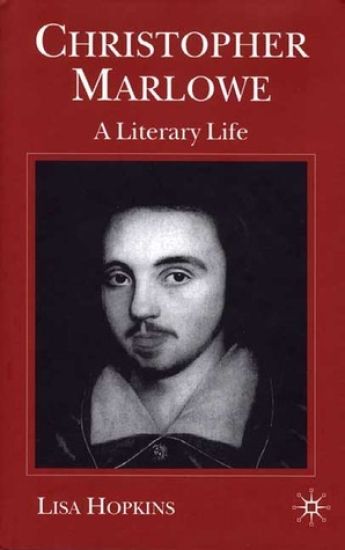
Christopher Marlowe: A Literary Life situates the individual works of Marlowe within the context of his overall literary career. Areas covered include Marlowe's preference for foreign settings and his unusually accurate depictions of them, the importance of his scholarly background, his consistent portrayal of family groups as fissured and troubled, the challenge that his works posed to contemporary orthodoxies about religion, sexuality, and government, and the long and sometimes spectacular afterlife of his works and of his literary reputation as a whole.
Christopher Marlowe

Christopher Marlowe

L. Hopkins

Palgrave Macmillan
2000
nidottu
Christopher Marlowe: A Literary Life situates the individual works of Marlowe within the context of his overall literary career. Areas covered include Marlowe's preference for foreign settings and his unusually accurate depictions of them, the importance of his scholarly background, his consistent portrayal of family groups as fissured and troubled, the challenge that his works posed to contemporary orthodoxies about religion, sexuality, and government, and the long and sometimes spectacular afterlife of his works and of his literary reputation as a whole.
Christopher Marlowe

Christopher Marlowe

Vivien Thomas; Prof William Tydeman; William Tydeman

Routledge
1994
sidottu
This major work brings together, for the first time in a single volume, all the recognized sources of Marlowe's dramatic work. Many of the forty-two texts presented here are of outstanding interest in their own right. Together they illuminate the cultural milieu which fostered Marlowe's talent, and deepen our appreciation of his dramatic methods. * Each of the texts is accessibly presented for the modern reader and is fully annotated. * Works in Latin or foreign vernaculars are translated, many for the first time, and modern spelling and punctuation are used throughout. * The sources for each play are examined individually and are thoroughly edited. Few libraries provide the range of sources contained in this one volume. The editors include texts of works such as the English Faust-Book from which Marlowe borrowed heavily, and provide substantial extracts from other books with which he was no doubt familiar. This book is an invaluable resource for all those interested in Marlowe and the development of Elizabethan theatre.
Christopher Marlowe
This book begins with the malignant taunts of Robert Greene and the adulatory remarks of Christopher Marlowe's friends and literary associates, and ends with the abrasive comments of the younger G. B. Shaw and the rhapsodies of Swinburne.
Christopher Marlowe

Christopher Marlowe

Vivien Thomas; Prof William Tydeman; William Tydeman

Routledge
2011
nidottu
This major work brings together, for the first time in a single volume, all the recognized sources of Marlowe's dramatic work. Many of the forty-two texts presented here are of outstanding interest in their own right. Together they illuminate the cultural milieu which fostered Marlowe's talent, and deepen our appreciation of his dramatic methods. * Each of the texts is accessibly presented for the modern reader and is fully annotated. * Works in Latin or foreign vernaculars are translated, many for the first time, and modern spelling and punctuation are used throughout. * The sources for each play are examined individually and are thoroughly edited. Few libraries provide the range of sources contained in this one volume. The editors include texts of works such as the English Faust-Book from which Marlowe borrowed heavily, and provide substantial extracts from other books with which he was no doubt familiar. This book is an invaluable resource for all those interested in Marlowe and the development of Elizabethan theatre.
Christopher Marlowe
This book begins with the malignant taunts of Robert Greene and the adulatory remarks of Christopher Marlowe's friends and literary associates, and ends with the abrasive comments of the younger G. B. Shaw and the rhapsodies of Swinburne.
Christopher Marlowe

Christopher Marlowe

Judith Weil

Cambridge University Press
2008
pokkari
Mrs Weil challenges two widely accepted views of Marlowe. He is not the poet and dramatist of heroic energy, 'daring God out of heaven' with his outrageous heroes. Nor is he a dogmatic moralist. Instead, he belongs to Merlin's race, as his contemporary Robert Greene suggested. An ironic writer of riddling plays, he does not endorse his characters, but cunningly manipulates our responses to them. Like Erasmus or Rabelais, he uses the knowledge of his audience in a variety of surprising ways. This approach is carefully argued for each play. The reader – perhaps initially sceptical – will find himself confronted with many features of the drama and the poetry not adequately accounted for in the conventional views, but persuasively explained here. The book may well permanently modify our attitudes toward Marlowe.
Christopher Marlowe

Christopher Marlowe

Philip Henderson

LIVERPOOL UNIVERSITY PRESS
1972
nidottu
Christopher Marlowe is a writer of energy and extravagance. Plays such as Doctor Faustus, Edward the Second, The Jew of Malta, and Tamburlaine continue to challenge and startle modern readers as much as they did the Elizabethan world. Marlowe's writing in both style and substance questions received norms, transgresses safe boundaries, proposes new possibilities about the conditions under which humanity lives. This is the first study for some time which explores the whole range of Marlowe's writing. Using recent ideas about the relations between literature and history, popular and elite culture and the nature of the Elizabethan theatre, the book reassesses the significance of Marlowe. Adopting the advantages offered by recent theoretical perspectives, the book demystifies many of the traditional myths about both writings and writer. Written with clarity and without obfuscating jargon, this book is an ideal introduction to one of the most exciting and innovative writers in English. It provides assessm
Christopher Marlowe

Christopher Marlowe

Richard Wilson

Routledge
1999
nidottu
Christopher Marlowe has provoked some of the most radical criticism of recent years. There is an elective affinity, it seems, between this pre-modern dramatist and the post-modern critics whose best work has been inspired by his plays. The reason suggested by this collection of essays is that Marlowe shares the post-modern preoccupation with the language of power - and the power of language itself. As Richard Wilson shows in his introduction, it is no accident that the founding essays of New Historicism were on Marlowe; nor that current Queer Theorists focus so much on his images of gender and homosexuality. Marlowe staged both the birth of the modern author and the origin of modern sexual desire, and it is this unique conjunction that makes his drama a key to contemporary debates about the state and the self: from pornography to gays in the military.Gay Studies, Cultural Materialism, New Historicism and Reader Response Criticism are all represented in this selection, which the introduction places in the light not only of theorists like Althusser, Bataille and Bakhtin, but also of artists and writers such as Jean Genet and Robert Mapplethorpe. Many of the essays take off from Marlowe's extreme dramatisations of arson, cruelty and aggression, suggesting why it is that the thinker who has been most convincingly applied to his theatre is the philosopher of punishment and pain, Michel Foucault. Others explore the exclusiveness of this all-male universe, and reveal why it remains so offensive and impenetrable to feminism. For what they all make disturbingly clear is Marlowe's violent, untamed difference from the cliches and correctness of normative society.
Christopher Marlowe

Christopher Marlowe

Ashgate Publishing Limited
2011
sidottu
In uncovering the origin of the designation 'University Wits', Bob Logan examines the characteristics of the Wits and their influence on the course of Elizabethan drama. For the first time, Christopher Marlowe is placed in the context of the six University Wits, where his reputation stands out as the most prominent, and the impact of his university education on his works is clarified. The essays selected for reprinting assess the most significant scholarship written about Marlowe, including biographical studies, challenges to familiar assumptions about the poet/playwright and his works, compositions on groupings of his works, on individual works, and on subjects particular to Marlowe. Unique in its perspective and in the collection of essays, this book will interest all students and scholars of Renaissance poetry, drama, and specialized cultural contexts.
Christopher Marlowe

Christopher Marlowe

Kuriyama Constance Brown

CORNELL UNIVERSITY PRESS
2002
sidottu
Christopher Marlowe (1564–1593) emerges in most accounts of his life by biographers and critics as a mysterious and sensational action figure, a hapless pawn of circumstance, or a pseudonymous cipher. Constance Brown Kuriyama's new biography reconstructs the eventful life of a radically innovative playwright who flourished briefly and died violently more than four hundred years ago, yet persists in the romantic imagination even today.Many discoveries about Marlowe's life have emerged over the past hundred years. The author here supplements these findings with new material, placing the dramatist and poet more precisely in his historical milieu. Kuriyama interprets Marlowe's acts of violence—inexplicable though they may seem—as logical consequences of the circumstances he faced. Experience and temperament both accounted for the characteristically brash way he moved through the world.The stringent constraints of Elizabethan society, which encouraged intense political and religious conflicts, had a great influence on Marlowe's thinking, while his ambitions were stirred by the period's unprecedented opportunities for talented individuals to rise in society. The documentary evidence assembled by Kuriyama—and made available to readers—allows her to show how Marlowe was able to take advantage of Elizabethan social mobility. In the context of Elizabethan education, society, and culture, Marlowe becomes a fully human, three-dimensional figure.