

Kirjahaku
Etsi kirjoja tekijän nimen, kirjan nimen tai ISBN:n perusteella.
1000 tulosta hakusanalla Christopher W. Stubbs
National Labor Relations Board, Petitioner, V. F. W. Woolworth Co. U.S. Supreme Court Transcript of Record with Supporting Pleadings
Theophil C Kammholz; Christopher W Hoey
Gale Ecco, U.S. Supreme Court Records
2011
pokkari

Long 'on' the Tooth: Dental Evidence of Diet addresses human dental macroscopic and microscopic wear, as well as dental disease, as indicators of diet. The book focuses primarily on 350 pre-contact humans from North America dating from approximately 5,500 to 600 years ago. These populations had subsistence strategies ranging from terrestrial foraging to intensive maize agriculture. The study makes intra- and intergroup comparisons to elucidate dietary nuances that are largely beyond the reach of other means of dietary reconstruction. Finally, the book discusses the importance of using multiple dietary indicators in unison in order to provide paleodietary insights.

In his first novel, British scholar Christopher W.E. Bigsby provides a prequel to The Scarlet Letter, introducing readers to a younger Hester Prynne. He tells of her attempts to flee an oppressive marriage to Roger Chillingworth, her love affair with Arthur Dimmesdale, and her life in the New World. In the process, Bigsby condemns the obstacles and prejudices that strong, intelligent women faced in the 17th century, providing a powerful narrative reframing of a compelling literary character.

Self-Cultivation Philosophies in Ancient India, Greece, and China
Christopher W. Gowans
Oxford University Press Inc
2021
sidottu
Philosophies in several ancient traditions aimed to alleviate people's anxieties and improve their lives. In contrast to the contemporay world, in which philosophy is mostly an academic subject and personal concerns are commonly addressed by psychological therapies, philosophy in these traditions often played a central role in programs that aspired to enable people to achieve a good life. In this volume, Christopher W. Gowans argues that the idea of self-cultivation philosophy provides a valuable approach for comprehending and reflecting on several philosophies in ancient India, Greece and China. Self-cultivation philosophies put forward a program of development for ameliorating the lives of human beings. On the basis of an account of human nature and the place of human beings in the world, they claim that our lives can be substantially transformed from what is thought to be a problematic condition into what purports to be an ideal state of being. Self-cultivation philosophies are preeminently practical in their aspirations: their purpose is to change human life in fundamental ways. Yet, in pursuing these practical ends, these philosophies typically make significant theoretical as well as empirical claims about human nature and the world. The book shows how the concept of self-cultivation philosophy provides an interpretive framework for understanding, comparing, assessing and learning from several philosophical outlooks in India, the Greco-Roman world, and China. The self-cultivation philosophies in India are those expressed in: the Bhagavad Gita; the Samkhya and Yoga philosophies of Isvarakrsna and Patanjali; and the teaching of the Buddha and his followers Buddhaghosa and Santideva. The philosophies originating in Greece, with subsequent development in the Roman world, are the most prominent Hellenistic approaches: the Epicureanism of Epicurus, Lucretius, and Philodemus; the Stoicism of Chrysippus, Epictetus, and Seneca; and Pyrrho and the Pyrrhonism of Sextus Empiricus. The self-cultivation philosophies from China are the early Confucian outlooks of Confucius, Mencius, and Xunzi; the classical Daoist perspectives of the Daodejing and the Zhuangzi; and the Chan tradition of Bodhidharma, Huineng and Linji. Though these philosophies developed in very different traditions, Gowans shows the connections between them in this compelling work of comparative philosophy.
Our lives are such that moral wrongdoing is sometimes inescapable for us. We have moral responsibilities to persons which may conflict and which it is wrong to violate even when they do conflict. Christopher W. Gowans argues that we must accept this conclusion if we are to make sense of our moral experience and the way in which persons are valuable to us. In defending this position, he critically examines the recent moral dilemmas debate. He maintains that what is important in this debate is not whether there are irresolvable moral conflicts, but whether there are moral conflicts in which wrongdoing is unavoidable. Though it would be incoherent to conclude moral deliberation by deciding to perform incompatible actions, he argues that there is nothing incoherent in supposing that we have conflicting moral responsibilities. In this way, he shows that it is possible to capture the intuitions of those who have defended the idea of moral dilemmas while meeting the objections of those who have rejected this idea. Gowans carefully evaluates utilitarian and Kantian analyses of moral dilemmas. He argues that these approaches eliminate genuine moral conflict only by displacing persons as direct objects of moral concern. As an alternative, he develops a more concrete account in which moral responsibilities to persons are central. The book also includes discussions of Melville's Billy Budd, methodology in moral philosophy, moral pluralism, moral tragedy, and `dirty hands' in politics.

Christopher Stephens focuses on canon law as the starting point for a new interpretation of divisions between East and West in the Church after the death of Constantine the Great. He challenges the common assumption that bishops split between 'Nicenes' and 'non-Nicenes', 'Arians' or 'Eusebians'. Instead, he argues that questions of doctrine took second place to disputes about the status of individual bishops and broader issues of the role of ecclesiastical councils, the nature of episcopal authority, and in particular the supremacy of the bishop of Rome. Canon law allows the author to offer a fresh understanding of the purposes of councils in the East after 337 particularly the famed Dedication Council of 341 and the western meeting of the council of Serdica and the canon law written there, which elevated the bishop of Rome to an authority above all other bishops. Investigating the laws they wrote, the author describes the power struggles taking place in the years following 337 as bishops sought to elevate their status and grasp the opportunity for the absolute form of leadership Constantine had embodied. Combining a close study of the laws and events of this period with broader reflections on the nature of power and authority in the Church and the increasingly important role of canon law, the book offers a fresh narrative of one of the most significant periods in the development of the Church as an institution and of the bishop as a leader.

On February 1, 1960, four African American college students entered the Woolworth department store in Greensboro, North Carolina, and sat down at the lunch counter. This lunch counter, like most in the American South, refused to serve black customers. The four students remained in their seats until the store closed. In the following days, they returned, joined by growing numbers of fellow students. These "sit-in" demonstrations soon spread to other southern cities, drawing in thousands of students and coalescing into a protest movement that would transform the struggle for racial inequality. The Sit-Ins tells the story of the student lunch counter protests and the national debate they sparked over the meaning of the constitutional right of all Americans to equal protection of the law. Christopher W. Schmidt describes how behind the now-iconic scenes of African American college students sitting in quiet defiance at "whites only" lunch counters lies a series of underappreciated legal dilemmas--about the meaning of the Constitution, the capacity of legal institutions to remedy different forms of injustice, and the relationship between legal reform and social change. The students' actions initiated a national conversation over whether the Constitution's equal protection clause extended to the activities of private businesses that served the general public. The courts, the traditional focal point for accounts of constitutional disputes, played an important but ultimately secondary role in this story. The great victory of the sit-in movement came not in the Supreme Court, but in Congress, with the passage of the Civil Rights Act of 1964, landmark legislation that recognized the right African American students had claimed for themselves four years earlier. The Sit-Ins invites a broader understanding of how Americans contest and construct the meaning of their Constitution.

On February 1, 1960, four African American college students entered the Woolworth department store in Greensboro, North Carolina, and sat down at the lunch counter. This lunch counter, like most in the American South, refused to serve black customers. The four students remained in their seats until the store closed. In the following days, they returned, joined by growing numbers of fellow students. These "sit-in" demonstrations soon spread to other southern cities, drawing in thousands of students and coalescing into a protest movement that would transform the struggle for racial inequality. The Sit-Ins tells the story of the student lunch counter protests and the national debate they sparked over the meaning of the constitutional right of all Americans to equal protection of the law. Christopher W. Schmidt describes how behind the now-iconic scenes of African American college students sitting in quiet defiance at "whites only" lunch counters lies a series of underappreciated legal dilemmas--about the meaning of the Constitution, the capacity of legal institutions to remedy different forms of injustice, and the relationship between legal reform and social change. The students' actions initiated a national conversation over whether the Constitution's equal protection clause extended to the activities of private businesses that served the general public. The courts, the traditional focal point for accounts of constitutional disputes, played an important but ultimately secondary role in this story. The great victory of the sit-in movement came not in the Supreme Court, but in Congress, with the passage of the Civil Rights Act of 1964, landmark legislation that recognized the right African American students had claimed for themselves four years earlier. The Sit-Ins invites a broader understanding of how Americans contest and construct the meaning of their Constitution.
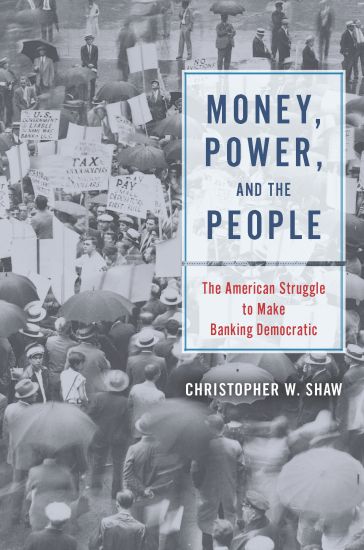
Banks and bankers are hardly the most beloved people and institutions in this country. With its corruptive influence on politics and stranglehold on the American economy, Wall Street is not held in high regard by many outside the financial sector. But the pitchforks raised against this behemoth are largely rhetorical: we rarely see riots in the streets or public demands for an equitable and democratic banking system that result in serious national changes. Yet the situation was vastly different a century ago, as Christopher W. Shaw shows in Money, Power, and the People. His book upends the conventional thinking that financial policy in the early twentieth century was set primarily by the needs and demands of bankers. Shaw shows that banking and politics were directly shaped by the literal and symbolic investments of the grassroots. This engagement remade financial institutions and the national economy, through populist pressure and the establishment of federal regulatory programs and agencies like the Farm Credit System and the Federal Deposit Insurance Corporation. Shaw reveals the surprising groundswell behind such seemingly arcane legislation as the Emergency Currency Act of 1908, as well as the power of the people to demand serious political repercussions for the banks that caused the Great Depression. One result of this sustained interest and pressure was legislation and regulation that brought on a long period of relative financial stability, with a reduced frequency of economic booms and busts. Ironically, though, this stability led to the current decline of the very banking politics that enabled it. Giving voice to a broad swath of American figures, including workers, farmers, politicians, and bankers alike, Money, Power, and the People recasts our understanding of what might be possible in balancing the needs of the people with those of their financial institutions.

For most people in the United States, going almost anywhere begins with reaching for the car keys. This is true, Christopher Wells argues, because the United States is Car Country—a nation dominated by landscapes that are difficult, inconvenient, and often unsafe to navigate by those who are not sitting behind the wheel of a car.The prevalence of car-dependent landscapes seems perfectly natural to us today, but it is, in fact, a relatively new historical development. In Car Country, Wells rejects the idea that the nation's automotive status quo can be explained as a simple byproduct of an ardent love affair with the automobile. Instead, he takes readers on a tour of the evolving American landscape, charting the ways that transportation policies and land-use practices have combined to reshape nearly every element of the built environment around the easy movement of automobiles. Wells untangles the complicated relationships between automobiles and the environment, allowing readers to see the everyday world in a completely new way. The result is a history that is essential for understanding American transportation and land-use issues today.Watch the book trailer: http://www.youtube.com/watch?v=48LTKOxxrXQ

Volumes in New Word Biblical Themes: New Testament series offer short, accessible studies of the key themes of each book of the New Testament.Each volume offers an introduction to the book, a brief exposition of the text with its basic background and a survey of its contents, an overview of its themes, and a deeper look at 3-5 key themes for understanding the book and for preaching and teaching.The Gospel of Mark provided the church with its first written narrative of Jesus's life and ministry. While often overlooked by early commentators in favor of the Gospels of Matthew and John, Mark's seemingly understated account contains a remarkably organized literary structure with a distinctive vision of Jesus's identity and mission, the in-breaking of God's Kingdom, and a theology of discipleship.In this volume, Skinner raises historical and literary questions with a view to elucidating some of Mark's important themes and his unique contributions to our understanding of Jesus of Nazareth. In the process of outlining the valuable contributions of the gospel, Skinner attempts to provide a coherent reading of Mark's themes in their broader literary context. This volume explores themes related to Jesus's mission to the Jewish and Roman worlds and his role in inaugurating of God's Kingdom, while demonstrating that Mark's understanding of Jesus Christ was foundational to what became the written gospel tradition.
The Subject of Human Being presents a sweeping account of the nature of human existence. As a work of philosophical anthropology, the analysis ranges from the basic powers emerging from the mind, to our extraordinary psychological capacities, to the shared sociocultural worlds we inhabit. The book integrates different perspectives on social ontology from a selection of philosophers and theorists, whose advances toward understanding the relationship between individuals and society ought to revolutionize social theory as understood and practiced in the social sciences and humanities. Although grounded in critical realist philosophy of Roy Bhaskar and the social theory of Margaret Archer, the book also draws from philosophy of mind, phenomenology of consciousness, psychoanalytic theory, virtue ethics, and personalism to support and extend its arguments. Four elements of human existence are examined: the nature of consciousness, agency, subjectivity, and the social world. Thus, it addresses related issues of power, the agent-structure problem, the formation of beliefs and desires, human universals, and human rights. Portraying a unified social theory that is materialist, realist, dialectical, and centered on emergence, and offering a comprehensive and progressive theory of human being, this book is essential reading for students and scholars of critical realism, philosophy, and the social sciences.

This innovative text reinvigorates argumentation studies by exploring the experience of argument across cultures, introducing an anthropological perspective into the domains of rhetoric, communication, and philosophy. The Anthropology of Argument fills an important gap in contemporary argumentation theory by shifting the focus away from the purely propositional element of arguments and onto how they emerge from the experiences of peoples with diverse backgrounds, demonstrating how argumentation can be understood as a means of expression and a gathering place of ideas and styles. Confronting the limitations of the Western tradition of logic and searching out the argumentative roles of place, orality, myth, narrative, and audience, it examines the nature of multi-modal argumentation. Tindale analyzes the impacts of colonialism on the field and addresses both optimistic and cynical assessments of contextual differences. The results have implications for our understanding of contemporary argumentative discourse in areas marked by deep disagreement, like politics, law, and social policy. The book will interest scholars and upper-level students in communication, philosophy, argumentation theory, anthropology, rhetoric, linguistics, and cultural studies.

This innovative text reinvigorates argumentation studies by exploring the experience of argument across cultures, introducing an anthropological perspective into the domains of rhetoric, communication, and philosophy. The Anthropology of Argument fills an important gap in contemporary argumentation theory by shifting the focus away from the purely propositional element of arguments and onto how they emerge from the experiences of peoples with diverse backgrounds, demonstrating how argumentation can be understood as a means of expression and a gathering place of ideas and styles. Confronting the limitations of the Western tradition of logic and searching out the argumentative roles of place, orality, myth, narrative, and audience, it examines the nature of multi-modal argumentation. Tindale analyzes the impacts of colonialism on the field and addresses both optimistic and cynical assessments of contextual differences. The results have implications for our understanding of contemporary argumentative discourse in areas marked by deep disagreement, like politics, law, and social policy. The book will interest scholars and upper-level students in communication, philosophy, argumentation theory, anthropology, rhetoric, linguistics, and cultural studies.

Is Japan re-emerging as a normal, or even a great, military power in regional and global security affairs? This Adelphi Paper assesses the overall trajectory of Japan’s security policy over the last decade, and the impact of a changing Japanese military posture on the stability of East Asia.The paper examines Japan’s evolving security debate, set against the background of a shifting international environment and domestic policymaking system; the status of Japan’s national military capabilities and constitutional prohibitions; post-Cold War developments in the US Japan alliance; and Japan’s role in multilateral regional security dialogue, UN PKO, and US-led coalitions of the willing. It concludes that Japan is undoubtedly moving along the trajectory of becoming a more assertive military power, and that this trend has been accelerated post-9/11. Japan is unlikely, though, to channel its military power through greatly different frameworks than at present. Japan will opt for the enhanced, and probably inextricable, integration of its military capabilities into the US Japan alliance, rather than pursuing options for greater autonomy or multilateralism. Japan’s strengthened role as the defensive shield for the offensive sword of US power projection will only serve to bolster US military hegemony in East Asia and globally.

Is Japan on a path towards assuming a greater military role internationally, or has the recent military normalisation ground to a halt since the premiership of Junichiro Koizumi? In this book, Christopher W. Hughes assesses developments in defence expenditure, civil–military relations, domestic and international military–industrial complexes, Japan’s procurement of regional and global power-projection capabilities, the expansion of US–Japan cooperation, and attitudes towards nuclear weapons, constitutional revision and the use of military force. In all of these areas, dynamic and long-term changes outweigh Japan’s short-term political logjam over security policy. Hughes argues that many post-war constraints on Japan’s military role are still eroding, and that Tokyo is moving towards a more assertive military role and strengthened US–Japan cooperation. Japan’s remilitarisation will boost its international security role and the dominance of the US–Japan alliance in regional and global security affairs, but will need to be carefully managed if it is not to become a source of destabilising tensions.
The first book of its kind, Buddhist Moral Philosophy: An Introduction introduces the reader to contemporary philosophical interpretations and analyses of Buddhist ethics. It begins with a survey of traditional Buddhist ethical thought and practice, mainly in the Pali Canon and early Mahayana schools, and an account of the emergence of Buddhist moral philosophy as a distinct discipline in the modern world. It then examines recent debates about karma, rebirth and nirvana, well-being, normative ethics, moral objectivity, moral psychology, and the issue of freedom, responsibility and determinism. The book also introduces the reader to philosophical discussions of topics in socially engaged Buddhism such as human rights, war and peace, and environmental ethics.
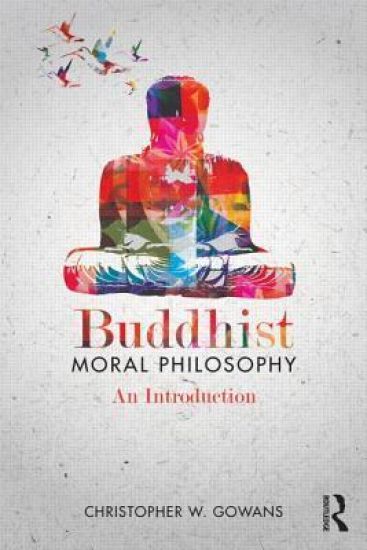
The first book of its kind, Buddhist Moral Philosophy: An Introduction introduces the reader to contemporary philosophical interpretations and analyses of Buddhist ethics. It begins with a survey of traditional Buddhist ethical thought and practice, mainly in the Pali Canon and early Mahayana schools, and an account of the emergence of Buddhist moral philosophy as a distinct discipline in the modern world. It then examines recent debates about karma, rebirth and nirvana, well-being, normative ethics, moral objectivity, moral psychology, and the issue of freedom, responsibility and determinism. The book also introduces the reader to philosophical discussions of topics in socially engaged Buddhism such as human rights, war and peace, and environmental ethics.
If you use rheological measurements to characterize new materials, analyze non-Newtonian flow problems, or design plastic parts, or if you would like to use rheology to overcome a particular problem, this pragmatic volume will prove invaluable to your research. Rheology: Principles, Measurements, and Applications presents an extremly practical, timely, and accessible three-dimensional account of this subject. It has been specifically designed to enable researchers to understand and apply information from the latest rheological literature to their own applications. Divided into three sections, the book covers the essential criteria for selecting the best test types for various applications, for accurately interpreting results, and for determining other areas where rheology and rheological phenomena may be useful in your work.This book will be of greatest interest to polymer scientists and mechanical engineers, as well as students in these and related fields.