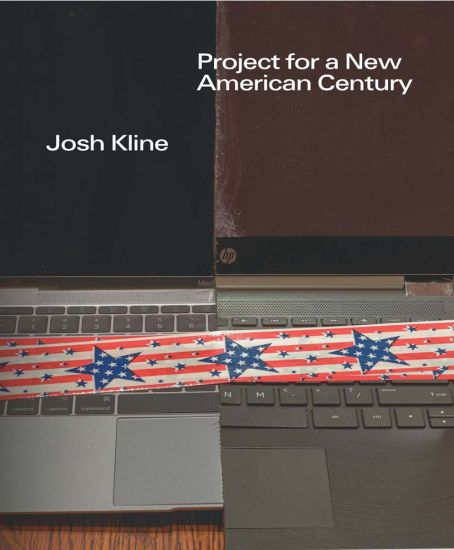
A deep look at a contemporary artist whose work highlights how the rise of technology and corporate capitalism have disrupted our lives and polarized society One of the most thought-provoking artists of his generation, Josh Kline (b. 1979) creates installations, sculptures, videos, and photographs that address the ways new technologies affect how people live and work. Engaging with a range of concerns that impact the entire labor force, from essential workers to the creative class, Kline demonstrates how climate change, automation, disease, and politics have shaped our identities. At a time when so many aspects of life are under threat, Kline takes an unflinching look at how we got here and boldly imagines a more equitable and empathetic future. Kline’s art demonstrates the ways technology has widened and reinforced the gap of inequity in America, while also carrying the potential to make a fairer world. “As an artist who’s thinking about the consequences of technological innovation,” Kline has said, “I think there’s an obligation to raise questions about who benefits.” His ongoing cycle of installations (Freedom, 2014–16; Unemployment, 2015–16, Civil War, 2016–19; Climate Change, 2019– ) that imagine the next hundred years of society are featured in this book, along with his earlier bodies of work, Creative Labor (2009– ) and Blue Collars (2014– ) and production images and concept sketches for his newest works that are published here for the first time. Distributed for the Whitney Museum of American ArtExhibition Schedule:Whitney Museum of American Art, New York (April 19–August 13, 2023)
Christopher was born into this world with difficulties caused by cerebral palsy. Raising Christopher hasn't been easy for Auralee, the single mother of Christopher and his younger sister, Grace.Share in Christopher's journey through his miraculous 33 years of life and witness the angel take Christopher's hand to guide him along the way.
Christopher was born into this world with difficulties caused by cerebral palsy. Raising Christopher hasn't been easy for Auralee, the single mother of Christopher and his younger sister, Grace.Share in Christopher's journey through his miraculous 33 years of life and witness the angel take Christopher's hand to guide him along the way.
For critics and listeners, the reception of the 1950s jazz-classical hybrid Third Stream music has long been fraught. In John Lewis and the Challenge of “Real” Black Music, Christopher Coady explores the work of one of the form’s most vital practitioners, following Lewis from his role as an arranger for Miles Davis’s Birth of the Cool sessions to his leadership of the Modern Jazz Quartet, his tours of Europe, and his stewardship of the Lenox School of Jazz. Along the way Coady shows how Lewis’s fusion works helped shore up a failing jazz industry in the wake of the 1940s big band decline, forging a new sound grounded in middle-class African American musical traditions. By taking into account the sociocultural milieu of the 1950s, Coady provides a wider context for understanding the music Lewis wrote for the Modern Jazz Quartet and sets up new ways of thinking about Cool Jazz and Third Stream music more broadly.
For critics and listeners, the reception of the 1950s jazz-classical hybrid Third Stream music has long been fraught. In John Lewis and the Challenge of “Real” Black Music, Christopher Coady explores the work of one of the form’s most vital practitioners, following Lewis from his role as an arranger for Miles Davis’s Birth of the Cool sessions to his leadership of the Modern Jazz Quartet, his tours of Europe, and his stewardship of the Lenox School of Jazz. Along the way Coady shows how Lewis’s fusion works helped shore up a failing jazz industry in the wake of the 1940s big band decline, forging a new sound grounded in middle-class African American musical traditions. By taking into account the sociocultural milieu of the 1950s, Coady provides a wider context for understanding the music Lewis wrote for the Modern Jazz Quartet and sets up new ways of thinking about Cool Jazz and Third Stream music more broadly.
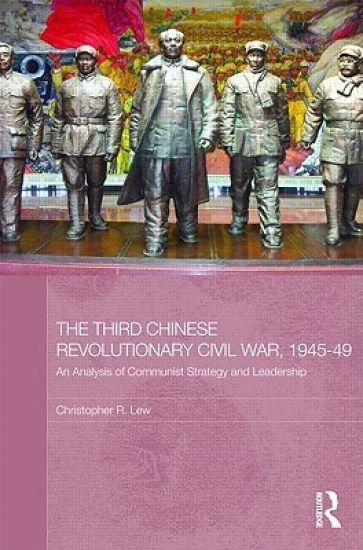
This book examines the Third Chinese Revolutionary Civil War of 1945–1949, which resulted in the victory of the Chinese Communist Party (CCP) over Chiang Kaishek and the Guomindang (GMD) and the founding of The People’s Republic of China in 1949. It provides a military and strategic history of how the CCP waged and ultimately won the war, the transformation its armed forces and how the Communist leadership interacted with each other. Whereas most explanations of the CCP’s eventual victory focus on the Sino-Japanese War of 1937–45, when the revolution was supposedly won as a result of the communists’ invention of "peasant nationalism", this book shows that the outcome of the revolution was not a foregone conclusion in 1945. It explains how the eventual victory of the communists resulted from important strategic decisions taken on both sides, in particular the remarkable transformation of the communist army from an insurgent / guerrilla force into a conventional army. The book also explores how the hierarchy of The People’s Republic of China developed during the war. It shows how Mao’s power was based as much on his military acumen as his political thought, above all his role in formulating and implementing a successful military strategy in the war of 1945–49. It also describes how other important figures, such as Lin Biao, Deng Xiaoping, Nie Rongzhen, Liu Shaoqi and Chen Yi, made their reputations during the conflict; and reveals the inner workings of the first political-military elite of the PRC. Overall, this book is an important resource for anyone seeking to understand the origins and early history of The People’s Republic of China, the Chinese Communist Party and the People’s Liberation Army.
This book examines the Third Chinese Revolutionary Civil War of 1945–1949, which resulted in the victory of the Chinese Communist Party (CCP) over Chiang Kaishek and the Guomindang (GMD) and the founding of The People’s Republic of China in 1949. It provides a military and strategic history of how the CCP waged and ultimately won the war, the transformation its armed forces and how the Communist leadership interacted with each other. Whereas most explanations of the CCP’s eventual victory focus on the Sino-Japanese War of 1937–45, when the revolution was supposedly won as a result of the communists’ invention of "peasant nationalism", this book shows that the outcome of the revolution was not a foregone conclusion in 1945. It explains how the eventual victory of the communists resulted from important strategic decisions taken on both sides, in particular the remarkable transformation of the communist army from an insurgent / guerrilla force into a conventional army. The book also explores how the hierarchy of The People’s Republic of China developed during the war. It shows how Mao’s power was based as much on his military acumen as his political thought, above all his role in formulating and implementing a successful military strategy in the war of 1945–49. It also describes how other important figures, such as Lin Biao, Deng Xiaoping, Nie Rongzhen, Liu Shaoqi and Chen Yi, made their reputations during the conflict; and reveals the inner workings of the first political-military elite of the PRC. Overall, this book is an important resource for anyone seeking to understand the origins and early history of The People’s Republic of China, the Chinese Communist Party and the People’s Liberation Army.
The Chinese Civil War, which lasted several years or several decades, depending on how you define it, was one of the most momentous wars of the 20th century for it determined the fate of the world’s most populous country, and was bitterly fought with millions of combatants involved and hundreds of millions of civilians affected. More to the point, it was won by the Chinese Communist Party under Mao Zedong, who imposed Communist rule, while the Nationalists retreated to Taiwan. It also heated up the Cold War for quite some time, as the Communists were supported by the Soviet Union and the Nationalists by the United States. This second edition of the Historical Dictionary of the Chinese Civil War studies the longer, broader war and its chronology carefully tracks the major events. The introduction then provides a broad overview, describing the contending forces, and showing how the Communists come out on top. The details, and these are crucial, are laid out in over 200 cross-referenced dictionary entries dealing with the opposing forces and parties, the major campaigns and battles, the Long March, and of course the leadership on both sides. This book, one of few such in English, provides a very solid basis for study, but that can be accomplished more effectively by consulting the titles listed in an extensive bibliography.
Originally, the author attempted to write an autobiography covering his career in the oil industry. This spanned a period of 34 years from its commencement in 1960 until 1994, although he is still employed occasionally as a consultant.The story starts when major discoveries were still being made, many at reasonable cost, the Seven Sisters still controlled the marketing and distribution of oil, concessions were awarded rather than production-sharing contracts and the rents were very reasonable. The whole corporate structure was much simpler - no one would dream of calling Exploration, a Business Generating Unit - the pace of activity much gentler and company loyalties sacrosanct.The author's aim, on joining, was to achieve various levels in exploration management over a spread of countries in which the company operated and to retire between 60 and 65, as a Regional Geologist in Head Office. He would be like one of those wise sages who interviewed him when he joined, with a wealth of experience behind him and possessing the geological skills necessary to pass judgment on come-what-may.As it happened, he was to experience several exciting years where he was closely associated with such giant discoveries as the Sarir Field in Libya, and Prudhoe Bay, Kuparuk River and Endicott in North Alaska. He wishes immediately to point out that he does not claim any responsibility for finding these fields. He defies anyone to do that. The discoveries were mostly due to luck, and, if anyone should be commended, it would be those individuals who were aggressive enough to ensure the company was in the right place at the right time. That, coupled with a judgement that was geologically sound, recognizing that most geologically feasible prospects are dry or unproductive.After this exciting interlude during which he was extremely fortunate to enjoy eight summers of field geology in Alaska, turmoil set in in the Industry. This was marked by mergers and acquisitions, incessant reorganizations and massive lay-offs. Economics and planning much of it unnecessary and fictional, played an even greater role in the business. The quick return on investment, so hostile to the exploration environment, was the order of the day.Thus, the latter part of his career marked the commencement of the decline of the major oil company. It was a period of continuous adjustment to changing circumstances as these companies were faced with ever-dwindling reserves and increasingly heavy rents, both from the countries where their resources lay and in those where they tried to sell them.This latter period has not been as happy a time as that of his earlier years. Obviously, there are few large discoveries about which to comment, but there also seem to be fewer characters around. Apparently, the pressure of today's business environment does not allow them to breed. There are probably more rogues and charlatans around who thrive on the uncertainties related to Exploration. With their glib tongues you can never prove them wrong and there is little to distinguish them superficially from the genuine and dedicated oil-finder.Two things postponed my effort to write an autobiography. I had to write the whole thing at once using a consistent style which did not easily allow for the many changes of mood. He would probably have passed over some of the many characters who contributed so much to his memories.
What was the last endeavor you made at getting thinner of late? Perhaps you took up a serious eating routine program that included just fluids and natural product. Then again you could have picked to do only practice in your neighborhood rec center for a considerable length of time. How did you feel toward the end of this weight reduction administration? Did you figure out how to accomplish the shape you were planning? On the other hand did the eating regimen wind up sounding preferred in principle over practically speaking? The Ketogenic diet has been changing the lives of every one of the individuals who have chosen to make this idea of eating a piece of their day by day sustenance. Through a novel methodology of high fats, medium protein and low level of starches in your nourishment, the Ketogenic diet demonstrates to you how you can utilize savvy eating with a base measure of activity keeping in mind the end goal to accomplish the weight and state you wellbeing you were searching for. Might you want to know the key to this executioner diet methodology? What are you sitting tight for? Let's get you started with some fun and quick recipes
Energy Driven Agile Transformation Workbook is different than most books on agile and scrum because it facilitates the exponential transformation by creating a foundation for coaching. This workbook is for organizations that are seeking an applied lean business transformation and are implementing agile to improve on mastering scrum and mastering product quality for their customers.During an agile transformation it is common for individuals to be unsure how their current roles may change, especially implementing agile for managers. This workbook focuses on an individual's thoughts and feelings and how these thoughts and feelings lead to their actions. Not being hypersensitive, the questions about feelings are utilized as a gateway to create an action plan. This allows individuals within an organization to move from discussion to action items, to achieve personal and business goals during the agile process.Coaching for agile success, whether an agile coach, scrum master, or manager new to agile, Energy Driven Agile Transformation Workbook is a great way to start and facilitate coaching relationships. It allows individuals to come to coaching conversations with topics within the workbook or topics inspired by the workbook. The Energy Leadership Index assessment option that the workbook offers is also a great way to facilitate the coaching relationship by the ability to track an individual's "progress" or attitude during the agile coaching process.This workbook is beneficial for all agile system designs within organizations. Whether leading an HR transformation, making change management agile, improving salesforce project management, leading scrum teams to maturity, or coaching an agile product owner this workbook is a great support guide.
Christopher Lewis is more experienced than any other petroleum geologist on Alaska. He first set foot in the United States in Kodiak, Alaska to participate in a four month geological survey of the Peninsula. He returned to Alaska in 1964 and participated in four further surveys in the Brooks Range and three more in southern Alaska. He also worked closely with BP geophysicists to construct geological sections across the North Slope. These geophysicists were really the first to recognize the impact of the permafrost on the interpretation of the seismic records and for that, the company was awarded the prestigious MacRobert prize. Lewis was the well site geologist on the Colville #1 well and later staked Ugnu #1 which was the discovery well for the Kuparuk River Field. He was present on the site when the discovery was made. Later he was exploration manager when the Endicott Field was discovered. He organized the industry sponsored, Reindeer Island stratigraphic test. He was instrumental in having two wells in the area on the outer northern limits of the Point Thompson Field. While exploration manager he evaluated acreage that was open for leasing in the Beaufort, Chukchi and Bering Seas and in the Lower Cook Inlet and Gulf of Alaska. He was a consultant for Total in 1990 to 1992 and it was at that time that he wrote the present book.
Why do we pick up pebbles on the beach? What is it we see in them, and why do we take them home to display on our shelves? Is it their inherent beauty, their infinite variation, or simply their associations with a happy time and place? In this book – part social history and part practical guide – writer and pebble collector Christopher Stocks unearths the sometimes surprising story of our love-affair with pebbles, and considers how the way we see them today has been influenced over the years by artists, authors and even archaeologists. Printmaker Angie Lewin is widely admired for her alluringly stylish images of the natural world. She celebrates the experience of walking and sketching along the British coastline, often incorporating pebbles in her limited edition prints and paintings. Many of these feature in the book alongside a series of new images.