Kirjahaku
Etsi kirjoja tekijän nimen, kirjan nimen tai ISBN:n perusteella.
1000 tulosta hakusanalla Christos P. Ioannides
Provides an original account of U.S.-Iranian relations during their latest and most dramatic phase, the Shah's fall and the hostage crisis. The author shows that the hostage crisis was brought about by the convergence of two major developments: President Carter's contradictory policies toward revolutionary Iran, and a power struggle between moderates and extremists in Tehran.
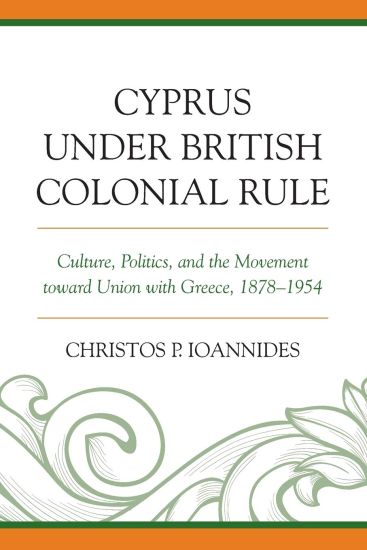
This is a unique book that combines a political narrative with poetry to examine the role of culture and the fusion of religion and politics during the struggle against colonialism. The context is Britain’s geopolitical interests in the Middle East. The author utilizes a vital cultural source echoing the authentic voice of the people, Cypriot folk poems, which has remained virtually unknown to the English reader until now. Translated into English, they are interwoven into the book’s narrative to reflect the yearning for social justice and the political sentiments of the vast majority of the population, the peasants, in a rural society. Lawrence Durrell’s literary masterpiece, Bitter Lemons, his politico-cultural chronicle on British-ruled Cyprus, is also discussed critically. The Greek Orthodox Church led the anti-colonial movement revolving around union with Greece. Through his intimate knowledge of Greek Orthodox practices, the author elucidates how religious customs and rituals were intertwined with the nationalist ideology to lead to political mobilization. In the process, culture, with its religious underpinnings, shaped politics. This dynamic has been the case from the Middle East, Turkey and North Africa, to Eurasia and South East Asia. Prime examples are the Iranian revolution and the more recent Arab Spring, both of which caught the West by surprise. In Cyprus, the British, with their sense of superiority, remained alien to the local culture and discounted popular sentiment. The two rebellions that ensued caught Britain totally by surprise. This is a valuable case study on the convergence of religion and politics. Academics, students and non-specialists will find a captivating narrative on Britain’s colonial encounter in an idyllic but strategic island in the Eastern Mediterranean.
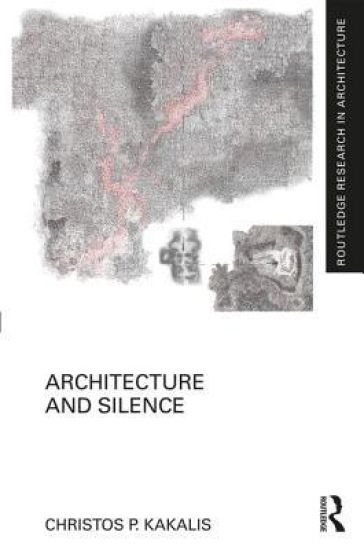
This book explores the role of silence in how we design, present and experi-ence architecture. Grounded in phenomenological theory, the book builds on historical, theoretical and practical approaches to examine silence as a methodological tool of architectural research and unravel the experiential qualities of the design process.Distinct from an entirely soundless experience, silence is proposed as a material condition organically incorporated into the built and natural landscape. Kakalis argues that, either human or atmospheric, silence is a condition of waiting for a sound to be born or a new spatio-temporal event to emerge. In silence, therefore, we are attentive and attuned to the atmos-phere of a place. The book unpacks a series of stories of silence in religious topographies, urban landscapes, film and theatre productions and architec-tural education with contributed chapters and interviews with Jeff Malpas and Alberto Pérez-Gómez.Aimed at postgraduate students, scholars and researchers in architectural theory, it shows how performative and atmospheric qualities of silence can build a new understanding of architectural experience.
Despeckle Filtering for Ultrasound Imaging and Video, Volume I
Christos P. Loizou; Constantinos S. Pattichis
Springer International Publishing AG
2015
nidottu
It is well known that speckle is a multiplicative noise that degrades image and video quality and the visual expert's evaluation in ultrasound imaging and video. This necessitates the need for robust despeckling image and video techniques for both routine clinical practice and tele-consultation. The goal for this book (book 1 of 2 books) is to introduce the problem of speckle occurring in ultrasound image and video as well as the theoretical background (equations), the algorithmic steps, and the MATLABTM code for the following group of despeckle filters: linear filtering, nonlinear filtering, anisotropic diffusion filtering, and wavelet filtering. This book proposes a comparative evaluation framework of these despeckle filters based on texture analysis, image quality evaluation metrics, and visual evaluation by medical experts. Despeckle noise reduction through the application of these filters will improve the visual observation quality or it may be used as a pre-processing step for further automated analysis, such as image and video segmentation, and texture characterization in ultrasound cardiovascular imaging, as well as in bandwidth reduction in ultrasound video transmission for telemedicine applications. The aforementioned topics will be covered in detail in the companion book to this one. Furthermore, in order to facilitate further applications we have developed in MATLABTM two different toolboxes that integrate image (IDF) and video (VDF) despeckle filtering, texture analysis, and image and video quality evaluation metrics. The code for these toolsets is open source and these are available to download complementary to the two books. Table of Contents: Preface / Acknowledgments / List of Symbols / List of Abbreviations / Introduction to Speckle Noise in Ultrasound Imaging and Video / Basics of Evaluation Methodology / Linear Despeckle Filtering / Nonlinear Despeckle Filtering / Diffusion Despeckle Filtering / Wavelet Despeckle Filtering / Evaluation of Despeckle Filtering / Summary and Future Directions / References / Authors' Biographies
Despeckle Filtering for Ultrasound Imaging and Video, Volume II
Christos P. Loizou; Constantinos S. Pattichis
Springer International Publishing AG
2015
nidottu
In ultrasound imaging and video visual perception is hindered by speckle multiplicative noise that degrades the quality. Noise reduction is therefore essential for improving the visual observation quality or as a pre-processing step for further automated analysis, such as image/video segmentation, texture analysis and encoding in ultrasound imaging and video. The goal of the first book (book 1 of 2 books) was to introduce the problem of speckle in ultrasound image and video as well as the theoretical background, algorithmic steps, and the MatlabTM for the following group of despeckle filters: linear despeckle filtering, non-linear despeckle filtering, diffusion despeckle filtering, and wavelet despeckle filtering. The goal of this book (book 2 of 2 books) is to demonstrate the use of a comparative evaluation framework based on these despeckle filters (introduced on book 1) on cardiovascular ultrasound image and video processing and analysis. More specifically, the despeckle filtering evaluation framework is based on texture analysis, image quality evaluation metrics, and visual evaluation by experts. This framework is applied in cardiovascular ultrasound image/video processing on the tasks of segmentation and structural measurements, texture analysis for differentiating between two classes (i.e. normal vs disease) and for efficient encoding for mobile applications. It is shown that despeckle noise reduction improved segmentation and measurement (of tissue structure investigated), increased the texture feature distance between normal and abnormal tissue, improved image/video quality evaluation and perception and produced significantly lower bitrates in video encoding. Furthermore, in order to facilitate further applications we have developed in MATLABTM two different toolboxes that integrate image (IDF) and video (VDF) despeckle filtering, texture analysis, and image and video quality evaluation metrics. The code for these toolsets is open source and these are available to download complementary to the two monographs.
Optimal Experimental Design for Non-Linear Models
Christos P. Kitsos
Springer-Verlag Berlin and Heidelberg GmbH Co. K
2014
nidottu
This book tackles the Optimal Non-Linear Experimental Design problem from an applications perspective. At the same time it offers extensive mathematical background material that avoids technicalities, making it accessible to non-mathematicians: Biologists, Medical Statisticians, Sociologists, Engineers, Chemists and Physicists will find new approaches to conducting their experiments. The book is recommended for Graduate Students and Researchers.
Optimal Calibration Procedure for Calibrating the pH meters
Christos P Kitsos; Konstantinos G Kolovos
LAP Lambert Academic Publishing
2010
pokkari
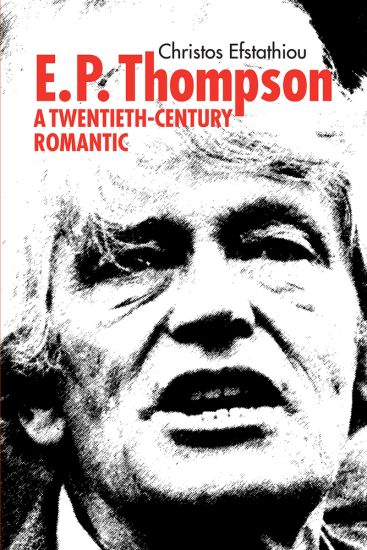
This study presents and probes the political motivations and interests of EP Thompson (1924-1993). Thompson began his political life, as a member of the Communist Party, when the Party was making its greatest electoral impact. After the events in Hungary in 1956 he came into conflict with others in the New Left over issues of theory, orthodoxy and politics. He was at the forefront of the movement opposing nuclear weapons in the United Kingdom in the 1980s, becoming an extremely well known political figure. He supported the efforts of Soviet and American dissenters seeking an end to the Cold War through the European Nuclear Disarmament campaign. He helped redirect the focus of historical study; through his classic: The Making of the English Working Class, and was a pioneer in the field of social history Throughout much of his life he focussed on the promotion of a Popular Front agenda.He saw the re-emergence of national radical culture and the first non-aligned movements in the late '70s as the first signs of opposition to the Cold War and a rehabilitation of the Popular Front spirit: 'In a sense that insurgent, popular-front-type political moment reached its peak between '43 and '46. It was destroyed by both British and American reaction and inwardly destroyed by Stalinism. One of the things that makes me feel excited is that, in a curious kind of way, I think Europe is beginning cautiously to resume a kind of advance that was interrupted by the cold war.'
Glioblastoma Multiforme e outros tumores cerebrais
Karla Rona Da Silva; Paulo P Christo; Renata T Simões
Novas Edicoes Academicas
2018
pokkari
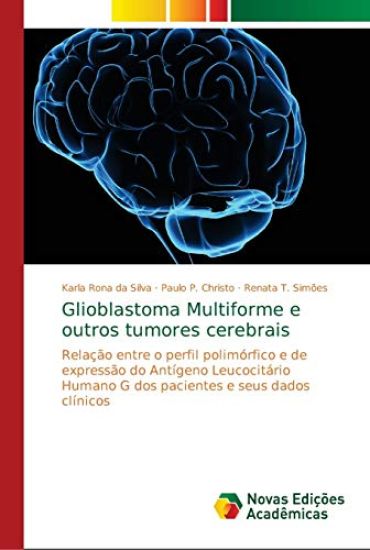
O Glioblastoma Multiforme (GBM) o c ncer mais agressivo do sistema nervoso central, o qual envolve altera es gen ticas e/ou epigen ticas em sua g nese. Dentre os fatores gen ticos envolvidos no c ncer, a mol cula imunomoduladora do Ant geno Leucocit rio Humano G (HLA-G) parece estar diretamente relacionada com pior progn stico e a menor sobrevida de pacientes com c ncer, incluindo o GBM. Com isso, este estudo objetivou avaliar os polimorfismos 14pb In/Del e +3142C/G da regi o 3' n o traduzida (3'NT) e a express o de HLA-G sol vel (HLA-Gs) em pacientes portadores de tumores cerebrais e compar -los com seus dados cl nicos. O polimorfismo g nico e a express o de HLA-G foram analisados em pacientes com diagn stico cl nico e cir rgico de gliomas malignos e tumores benignos. Tamb m, avaliamos o perfil cl nico dos pacientes, bem como o uso da Dexametasona (DEXA) no pr -operat rio.
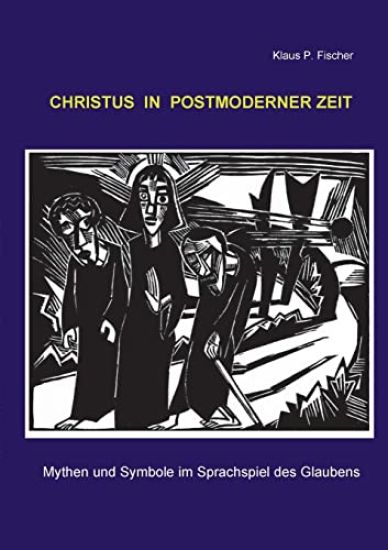
Das Christentum - meinen viele - komme aus einem l ngst vergangenen mythischen Weltbild und k nne dem Menschen einer naturwissenschaftlich-technischen Welt nichts G ltiges mehr sagen. Allenfalls brauchbar seien Impulse seiner Ethik, aber ohne den 'ideologischen berbau'. Diese Denkart spiegelt eine u erst verk rzte Sehweise, der die Vielschichtigkeit und Hintergr ndigkeit der Welt entgeht, welche aber von Dichtung, Musik, Bildender Kunst und Religion wahrgenommen und dargestellt wird. Die mythisch-symbolische Sprechweise der Bibel, des christlichen Glaubens verwahrt Erkenntnisse und Einsichten von gr erer Bedeutung f r die menschliche Existenz; diese w re ohne die archaische Form quasi unaussprechlich und nicht mitteilbar. Dieses Buch m chte Suchende anleiten, sich der Tiefgr ndigkeit von Glaube und Welt mutig zu n hern.
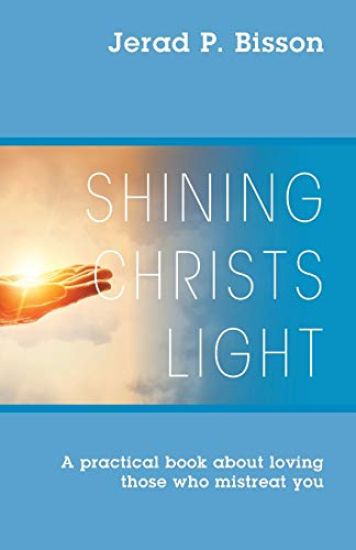
All of us have people in our lives that we feel are impossible to deal with. They just won't be nice to us or respect us in anyway no matter how kind we are to them. whether it be a family member, a coworker, someone you go to school with or even someone whom you have just met. For some reason they just don't care about you. Jesus calls us all, to love all people, especially our enemies. How then can we love those who are always putting us down? Jesus teaches us that there is no credit in only loving those who love you back (luke 6:32 KJV). The merit is received when we love the ones who don't love us at all. How then can we love someone that wants to hurt us? Christ has given us his teaching that we should all love our enemies, bless those who curse us, do good to those that hate us, and pray for those who despitefully use us, and persecute us. This seems somewhat impossible, but anything is possible with God. When we rely on all that Christ has taught us and fall back on his love for us, we can do anything, we can change the world. This book contains nine practical principles on how to love your enemies. It is by applying these principles in our daily life, that our lives will get better and we will learn how to deal with those people who hate us and those who just down right ruin our day. Each of these principles has been derived from Christs teachings of how we should love our enemies. These nine principles are a fundamental approach to a Christ centered life, that makes you Christs light in the world. By applying these nine principles in your daily life. You will find that most of the people who don't care about you, will start to care about you more and those who continue to treat you badly wont bother you at all. It is through Christ That we are saved and through Christs teachings that we learn how to live a life that is worthy of Heaven. So, let's use a practical approach to this issue and ask Jesus for his grace, to learn these new behaviors. So t
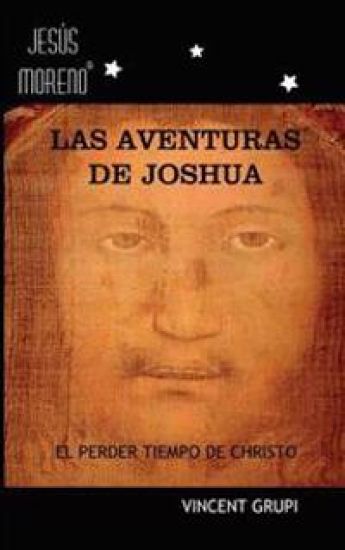
Las Aventuras de Joshua: El Perder Tiempo de Christo
Vincent P. Grupi
Createspace Independent Publishing Platform
2012
nidottu
De los muchos misterios que rodean la vida de Cristo, uno de los m s grandes es lo que sucedi durante los a os que faltan de doce a treinta. Qu ocurre en la vida de un ni o jud o a los trece a os? Un rabino calculan que un cierto chico de Nazaret fue perdonado de Herodes la Noche de los inocentes? Leer este poco ortodoxo que hablan de los a os perdidos, que no ha perdido en absoluto, pero lleno de descubrimiento y de amor.
Claves Ocultas de la Vida de Jesús - Una Mirada Gnóstica al Mito de Jesus + Christo
Gabriel P Naude
Lulu.com
2014
pokkari
Jes s el Christos nace en el coraz n del hombre que alberga en si mismo el oro, el incienso y la mirra, preludiando esa Natividad en la que se manifestar n como sin nimo de LVX, de calor, de fuerza, de amor. Ayudando a la naturaleza, el Arte vuelve el cuerpo f sico m s celeste que terrestre. En el silencio vivo del alma, los invito a recorrer estas p ginas impregnadas de filosof a en la noble y profunda acepci n de la palabra - verbo: amor al conocimiento.
Die Therapie des praktischen Arztes
G. v. Bergmann; A. Bittorf; Georg Boenninghaus; Wilhelm Danielesen; P. Esch; Guido Fischer; E. Frank; W. Fürnrohr; W. Grüter; Christof Harms; H. Hübner; M Jamerker; G. Katsch; L. Kirchheim; F. Kirstein
Springer-Verlag Berlin and Heidelberg GmbH Co. K
1920
nidottu
Dieser Buchtitel ist Teil des Digitalisierungsprojekts Springer Book Archives mit Publikationen, die seit den Anfängen des Verlags von 1842 erschienen sind. Der Verlag stellt mit diesem Archiv Quellen für die historische wie auch die disziplingeschichtliche Forschung zur Verfügung, die jeweils im historischen Kontext betrachtet werden müssen. Dieser Titel erschien in der Zeit vor 1945 und wird daher in seiner zeittypischen politisch-ideologischen Ausrichtung vom Verlag nicht beworben.
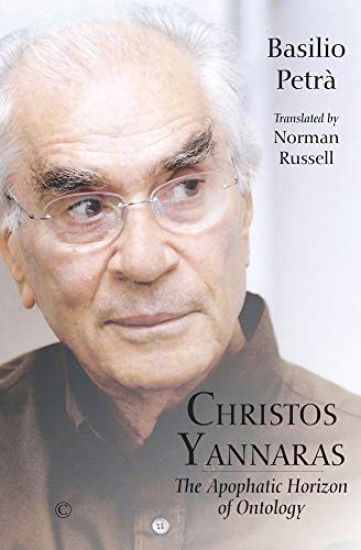
Basilio Petrà sees Christos Yannaras (b. 1935) as a philosopher and theologian whose refiguring, on the one hand, of Heidegger's refusal to define being in ontic terms and, on the other, of Wittgenstein's willingness to admit the inexpressible character of the mystical has led him to articulate a powerful vision of true human existence. This bold interpretation outlines the passage from an ontic 'mode of nature' governed by necessity to a 'mode of self-transcendence and self-offering' beyond the limitations of decay and death. In his native Greece, Yannaras revolutionised the way theology had been done for much of the twentieth century. This book examines the trajectory of Yannaras' thought from his initial encounter with Heidegger's philosophy to his formulation (via the tradition of the Greek Fathers) of a modern critical ontology. It is for both advanced students of philosophy and the growing scholarly audience interested in Yannaras' work. Written in accessible language that does not compromise intellectual rigour, it is the only survey of the development of Yannaras' philosophical thought as a whole.
Christos Yannaras
Routledge
2020
nidottu
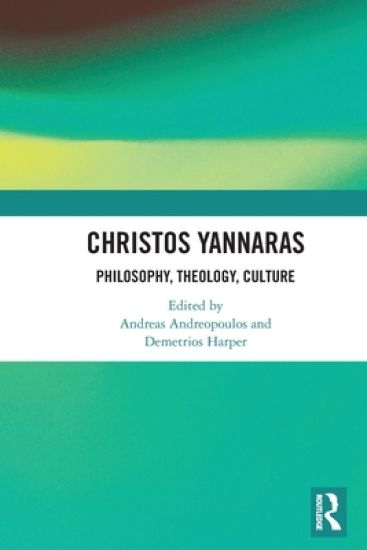
Christos Yannaras is one of the most significant Orthodox theologians of recent times. The work of Yannaras is virtually synonymous with a turn or renaissance of Orthodox philosophy and theology, initially within Greece, but as the present volume confirms, well beyond it. His work engages not only with issues of philosophy and theology, but also takes in wider questions of culture and politics. With contributions from established and new scholars, the book is divided into three sections, which correspond to the main directions that Christos Yannaras has followed – philosophy, theology, and culture – and reflects on the ways in which Yannaras has engaged and influenced thought across these fields, in addition to themes including ecclesiology, tradition, identity, and ethics. This volume facilitates the dialogue between the thought of Yannaras, which is expressed locally yet is relevant globally, and Western Christian thinkers. It will be of great interest to scholars of Orthodox and Eastern Christian theology and philosophy, as well as theology more widely.