Kirjojen hintavertailu. Mukana 11 244 527 kirjaa ja 12 kauppaa.

Kirjahaku

Etsi kirjoja tekijän nimen, kirjan nimen tai ISBN:n perusteella.

992 tulosta hakusanalla Ciaran O'Scea

Surviving Kinsale

Surviving Kinsale

Ciaran O'Scea

Manchester University Press
2015
sidottu
In the aftermath of the Battle of Kinsale in 1601 as many as 10,000 Irish emigrated from Ireland to Galicia in the north-west of Spain. Between 1601 and 1608 the brunt of this immigration fell on the city of La Coruña, which became a virtual encampment of starving homeless Irish nobles, soldiers, women, children, elderly and poor. This is the story of that community and how its members adapted to their new circumstances, and how they themselves, their social structures and beliefs were transformed by their immigrant experience. Through an examination of the community across a broad range of social cultural aspects such as family, literacy, material culture, the acquisition of honours, religious sentiment, and social ascent, important new insights into Irish socio-cultural history have been uncovered.
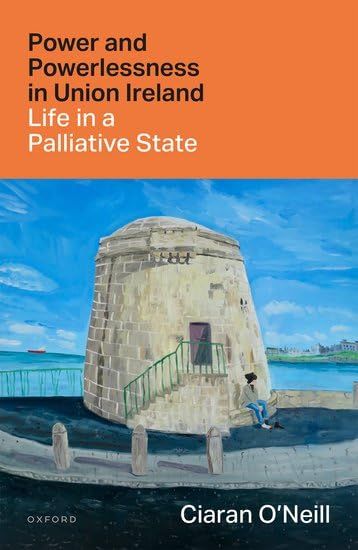
Power and Powerlessness in Union Ireland

Power and Powerlessness in Union Ireland

Ciaran O'Neill

Oxford University Press
2024
sidottu
The history of Union Ireland is typically told through its best-known historical events and leaders - from the 1798 Rising, the Great Famine, and the Irish Revolution, to Parnell and De Valera -- and as moments of sectarian division and high parliamentary politics. Instead, Ciaran O'Neill here makes the case for a broader, more inclusive, and decentred approach that emphasizes transnational phenomena, a settler-colonial diaspora, and minority groups on the island. Through the lenses of 'power' and 'powerlessness', he demonstrates that the received historiographical wisdoms suffer from several misconceptions: on the one hand they misconstrue the nature of power and the powerful, perpetuating historical myths about the 'ungovernability' of Ireland. After securing the Union, the British state proceeded to govern Ireland with less and less certainty of ever persuading its citizens of its legitimacy. Despite all reforms and investment, there was a widespread sense that Ireland would never recover and be a willing partner in the Union. And on the other hand they take at face value the nature of the so-called 'powerless', ignoring the myriad ways in which marginalized and diasporic groups negotiated and asserted their agency during the Union period, influencing and transforming the powerful centre in the process. The result is an untraditional and thought-provoking reappraisal of Union Ireland that raises important questions about colonialism and resistance - of what it means to govern and be governed, and the long-lasting legacies of the spaces in between.
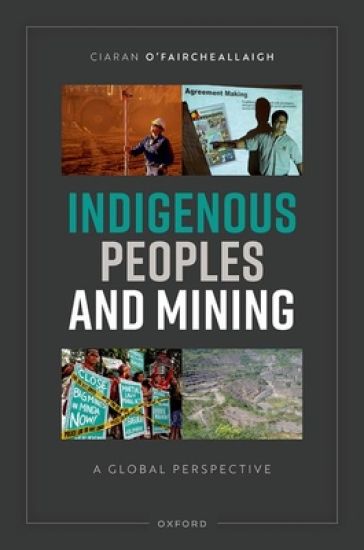
Indigenous Peoples and Mining

Indigenous Peoples and Mining

Ciaran O'Faircheallaigh

Oxford University Press
2023
sidottu
Indigenous peoples have occupied their territories for thousands of years, territories that are increasingly being mined by an industry applying the most modern extractive, marketing, and transport technologies on a scale that can be difficult to comprehend. Mining reshapes landscapes, literally moving mountains and diverting rivers; the Indigenous owners of these landscapes often believe them to have been originally shaped by ancestor beings who still reside at mining locations. This book seeks to understand the political, social, economic, and cultural dynamic that is created by the relentless expansion of mining into Indigenous territories. Contributing to such an understanding involves a task of global significance: Indigenous peoples embody a large part of the world's linguistic and cultural diversity; their lands cover an estimated 25 per cent of the world's land surface, intersect with about 40 per cent of all ecologically intact landscapes, and contain a large proportion of the world's mineral resources. Must interaction between Indigenous peoples and mining involve the destruction of Indigenous peoples, territories, and cultures? Can the remarkable resilience that has allowed Indigenous peoples to survive for millennia enable them not only to survive, but to capitalize on the development opportunities offered by mining? What role are governments, international organizations, and civil society playing in shaping relations between mining and Indigenous peoples? Ciaran O'Faircheallaigh addresses these and other questions by drawing on his own 30 years of experience working with Indigenous communities as they deal with mining projects, and on the experiences of Indigenous peoples in some 15 countries from different regions of the globe.
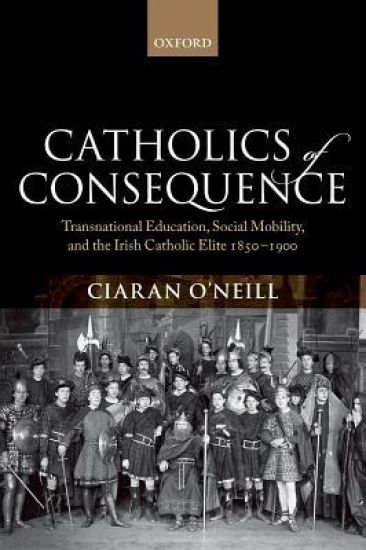
Catholics of Consequence

Catholics of Consequence

Ciaran O'Neill

Oxford University Press
2014
sidottu
For as far back as school registers can take us, the most prestigious education available to any Irish child was to be found outside Ireland. Catholics of Consequence traces, for the first time, the transnational education, careers, and lives of more than two thousand Irish boys and girls who attended Catholic schools in England, France, Belgium, and elsewhere in the second half of the nineteenth century. There was a long tradition of Irish Anglicans and Catholics sending their children abroad for the majority of their formative years. However, as the cultural nationalism of the Irish revival at the end of the nineteenth century took root, Irish Catholics who sent their children to school in Britain were accused of a pro-Britishness that crystallized into still recognisable terms of insult such as West Briton, Castle Catholic, Squireen, and Seoinin. This concept has an enduring resonance in Ireland, but very few publications have ever interrogated it. Catholics of Consequence marks the first ever attempt to analyse the education and subsequent lives of the Irish children that received this type of transnational education. It also tells the story of elite education in Ireland, where schools such as Clongowes Wood and Castleknock College were rooted in the continental Catholic tradition, but also looked to public schools in England as exemplars. Taken together it tells the story of an Irish Catholic elite at once integrated and segregated within what was then the most powerful state in the world.
Catholics of Consequence

Catholics of Consequence

Ciaran O'Neill

Oxford University Press
2016
nidottu
For as far back as school registers can take us, the most prestigious education available to any Irish child was to be found outside Ireland. Catholics of Consequence traces, for the first time, the transnational education, careers, and lives of more than two thousand Irish boys and girls who attended Catholic schools in England, France, Belgium, and elsewhere in the second half of the nineteenth century. There was a long tradition of Irish Anglicans, Protestants, and Catholics sending their children abroad for the majority of their formative years. However, as the cultural nationalism of the Irish revival took root at the end of the nineteenth century, Irish Catholics who sent their children to school in Britain were accused of a pro-Britishness that crystallized into still recognisable terms of insult such as West Briton, Castle Catholic, Squireen, and Seoinin. This concept has an enduring resonance in Ireland, but very few publications have ever interrogated it. Catholics of Consequence endeavours to analyse the education and subsequent lives of the Irish children that received this type of transnational education. It also tells the story of elite education in Ireland, where schools such as Clongowes Wood College and Castleknock College were rooted in the continental Catholic tradition, but also looked to public schools in England as exemplars. Taken together the book tells the story of an Irish Catholic elite at once integrated and segregated within what was then the most powerful state in the world.
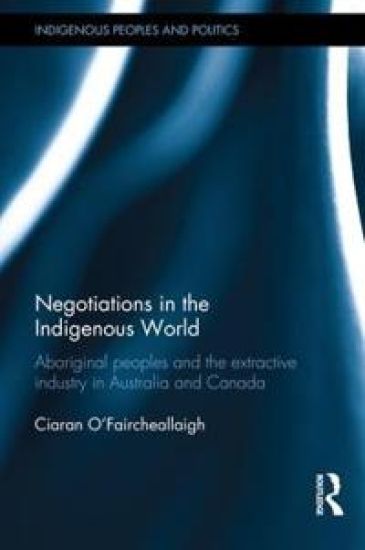
Negotiations in the Indigenous World

Negotiations in the Indigenous World

Ciaran O'Faircheallaigh

CRC Press Inc
2018
nidottu
Negotiated agreements play a critical role in setting the conditions under which resource development occurs on Indigenous land. Our understanding of what determines the outcomes of negotiations between Indigenous peoples and commercial interests is very limited.With over two decades experience with Indigenous organisations and communities, Ciaran O’Faircheallaigh's book offers the first systematic analysis of agreement outcomes and the factors that shape them, based on evaluative criteria developed especially for this study; on an analysis of 45 negotiations between Aboriginal peoples and mining companies across all of Australia’s major resource-producing regions; and on detailed case studies of four negotiations in Australia and Canada.
Mining and Development

Mining and Development

Ciaran O'Faircheallaigh

Routledge
2017
sidottu
This book, first published in 1984, examines the economics and political issues raised by foreign investment in mineral development. It is an attempt to identify, as far as possible, what occurs in and between countries when foreign investments are made in mineral development, concentrating on two main themes: on the nature of the transactions which constitute the process of foreign investment on the physical level – money and instruments of credit, objects, information and people as they cross national boundaries – and on the nature of the relationships which are created between foreign investors and governments in the countries where the investments are made. The author argues that the nature of physical transactions plays a crucial role in determining the character of host country-foreign investor relations, and the policies and attitudes adopted by host country authorities exercise an important influence, in turn, on the physical effects of foreign investments. As such, the book constitutes a comprehensive overview of the economic and political factors involved in mining and its development.
Mining and Development

Mining and Development

Ciaran O'Faircheallaigh

Routledge
2019
nidottu
This book, first published in 1984, examines the economics and political issues raised by foreign investment in mineral development. It is an attempt to identify, as far as possible, what occurs in and between countries when foreign investments are made in mineral development, concentrating on two main themes: on the nature of the transactions which constitute the process of foreign investment on the physical level – money and instruments of credit, objects, information and people as they cross national boundaries – and on the nature of the relationships which are created between foreign investors and governments in the countries where the investments are made. The author argues that the nature of physical transactions plays a crucial role in determining the character of host country-foreign investor relations, and the policies and attitudes adopted by host country authorities exercise an important influence, in turn, on the physical effects of foreign investments. As such, the book constitutes a comprehensive overview of the economic and political factors involved in mining and its development.
Negotiations in the Indigenous World

Negotiations in the Indigenous World

Ciaran O'Faircheallaigh

Routledge
2015
sidottu
Negotiated agreements play a critical role in setting the conditions under which resource development occurs on Indigenous land. Our understanding of what determines the outcomes of negotiations between Indigenous peoples and commercial interests is very limited.With over two decades experience with Indigenous organisations and communities, Ciaran O’Faircheallaigh's book offers the first systematic analysis of agreement outcomes and the factors that shape them, based on evaluative criteria developed especially for this study; on an analysis of 45 negotiations between Aboriginal peoples and mining companies across all of Australia’s major resource-producing regions; and on detailed case studies of four negotiations in Australia and Canada.
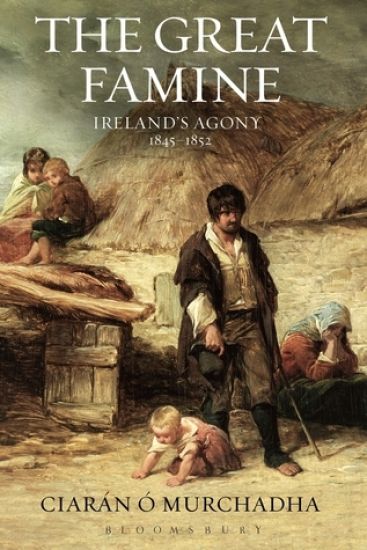
The Great Famine

The Great Famine

Ciarán Ó Murchadha

Bloomsbury Academic
2013
nidottu
The Great Famine: Ireland’s Agony examines this enormous human calamity anew. Beginning with the coming of the potato blight in 1845 and the resulting harvest failures that left the country’s impoverished population numb with shock as well as foodless, it explores government relief measures that so often failed to meet the needs of the poor, leading in fact to many more deaths.The book charts the horrific realities of Ireland’s pauper-crammed workhouses, the mass clearances of the later Famine period and the great waves of panic-driven emigration that in a few short years combined to empty the country of its once teeming population.Drawing on eyewitness accounts, official reports, newspapers and private diaries, the focus of the book rests on the experiences of those who suffered and died during the Famine, and on those who suffered and survived.This is an important book for anyone who wants to understand Europe’s greatest nineteenth century population disaster and its long term consequences.
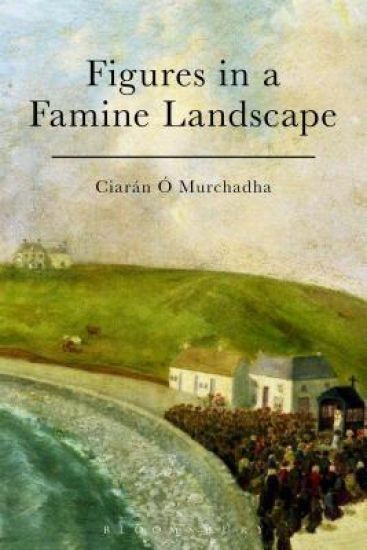
Figures in a Famine Landscape

Figures in a Famine Landscape

Ciarán Ó Murchadha

Bloomsbury Academic
2016
nidottu
Figures in a Famine Landscape is a ground-breaking study that follows a number of individuals involved in different public capacities in a particularly afflicted district of Ireland during the Great Famine. The thinking and actions of each had a major effect on the existences - and the survival - of scores of thousands of the destitute poor in Ireland at a crucial point in the country's history. Among these figures are an outspoken newspaper editor; two clergymen (one Catholic, one Protestant); two highly qualified and busy physicians; two landlords and an exterminating agent; a Board of Works official and a Poor Law inspector. Taking an exhaustive approach to source material that includes private diaries, letters, official reports and correspondence, police files, parliamentary papers and a wealth of newspapers, in this enthralling study the author builds up an in-depth, almost microscopic picture of each individual, providing a unique and very human lens through which to view the Great Famine.
Figures in a Famine Landscape

Figures in a Famine Landscape

Ciarán Ó Murchadha

Bloomsbury Academic
2016
sidottu
Figures in a Famine Landscape is a ground-breaking study that follows a number of individuals involved in different public capacities in a particularly afflicted district of Ireland during the Great Famine. The thinking and actions of each had a major effect on the existences - and the survival - of scores of thousands of the destitute poor in Ireland at a crucial point in the country's history. Among these figures are an outspoken newspaper editor; two clergymen (one Catholic, one Protestant); two highly qualified and busy physicians; two landlords and an exterminating agent; a Board of Works official and a Poor Law inspector. Taking an exhaustive approach to source material that includes private diaries, letters, official reports and correspondence, police files, parliamentary papers and a wealth of newspapers, in this enthralling study the author builds up an in-depth, almost microscopic picture of each individual, providing a unique and very human lens through which to view the Great Famine.
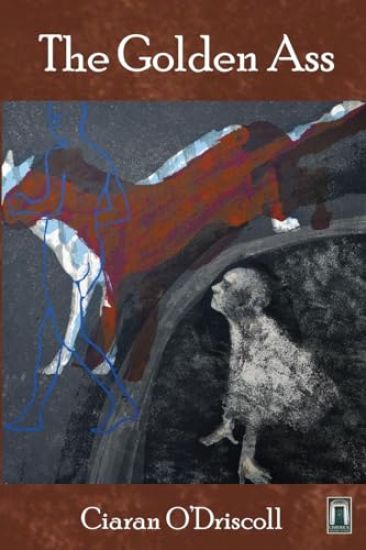
The Golden Ass

The Golden Ass

Ciaran O'Driscoll

Limerick Writers' Centre Publishing
2024
pokkari
"The Golden Ass" weaves together several storylines and characters. The main character Martin, an Irishman teaching in Paris, takes a sabbatical from marriage and family life to confront his demons of sexual confusion and PTSD arising from his period as a monk. Guilt-ridden, pursued by rumours of criminality, he travels through Europe to Rome, where he meets Hilary, an angelic rent boy in his twenties. They begin a whirlwind affair. Martin's wife, Sarah, goes in search of him."The Golden Ass" it alludes to the ancient Roman novel of the same name which was the story of a man turned into a donkey. Similarly in O'Driscoll's work the protagonist undergoes personal and psychological transformation. Early reviews of the novella has described it as "Disturbing, heart-warming and with generous amounts of darkly funny moments."
Irish-English Dictionary

Irish-English Dictionary

Ciaran O. Pronntaigh

Geddes Grosset
2014
nidottu
A fully up-to-date, comprehensive and clearly presented compact dictionary - the ideal reference aid for learners and speakers of Irish. Over 20,000 headwords Introduction to the use of Irish Concise and informative with accessible layout Mionfhocloir comhaimseartha, cuimsitheach agus e leagtha amach go soileir - ais tagartha iontach d'fhoghlaimeoiri agus do chainteoiri Gaeilge. Breis agus 20,000 ceannfhocal Intreoir ar usaid na Gaeilge Achomair agus faisneiseach le leagan amach aisiuil
Control the Controller

Control the Controller

Ciaran O'Connor

Free Association Books
2014
nidottu
Ciaran O'Connor looks at how gaming and addiction have come together so rapidly in recent years. Mobile based gaming and free-to-play games have revolutionised the gaming world - but what are the implications of this? And how does it affect current thinking on addiction? Control the Controller addresses gamers, their families, mental health professionals and game developers in this thorough and fascinating discussion of the nature of video game addiction. Many questions are answered including how we can recognise a gaming addiction, what causes it, and what we can do to return an addict to healthy behaviour. A step by step process for this is outlined by the author, making this an invaluable title for all affected by video game addiction and all those who encounter it. The disease model, the addictive personality and the indications from neuroscience are all considered before looking at gaming addiction as an escape from distress - the book's chosen stance on addiction. This is then expanded upon by looking at how pressures, both internal and external, can encourage a flight into games.
Angel Hour

Angel Hour

Ciaran O'Driscoll

SurVision Books
2021
pokkari
Ciaran O'Driscoll lives in Limerick. He is a highly-regarded poet known nationally and internationally. The critic Michael S. Begnal referred to his new (tenth) poetry collection as "a beautiful work, where the unexpected is intricately (even soberly) described."
The Speaking Trees

The Speaking Trees

Ciaran O'Driscoll

SurVision Books
2018
nidottu
Ciaran O'Driscoll lives in Limerick. A member of Aosd na, he has published eight books of poetry, including Gog and Magog (1987), Moving On, Still There (2001), Surreal Man (2006) and Life Monitor (2009). His work has been translated into many languages. Liverpool University Press published his childhood memoir, A Runner Among Falling Leaves (2001). His novel, A Year's Midnight, was published by Pighog Press (2012). His awards include the James Joyce Prize and the Patrick and Katherine Kavanagh Fellowship in Poetry.
Leading from Between

Leading from Between

Catherine Althaus; Ciaran O'Faircheallaigh

McGill-Queen's University Press
2019
sidottu
Since the 1970s governments in Canada and Australia have introduced policies designed to recruit Indigenous people into public services. Today, there are thousands of Indigenous public servants in these countries, and hundreds in senior roles. Their presence raises numerous questions: How do Indigenous people experience public-sector employment? What perspectives do they bring to it? And how does Indigenous leadership enhance public policy making? A comparative study of Indigenous public servants in British Columbia and Queensland, Leading from Between addresses critical concerns about leadership, difference, and public service. Centring the voices, personal experiences, and understandings of Indigenous public servants, this book uses their stories and testimony to explore how Indigenous participation and leadership change the way policies are made. Articulating a new understanding of leadership and what it could mean in contemporary public service, Catherine Althaus and Ciaran O'Faircheallaigh challenge the public service sector to work towards a more personalized and responsive bureaucracy. At a time when Canada and Australia seek to advance reconciliation and self-determination agendas, Leading from Between shows how public servants who straddle the worlds of Western bureaucracy and Indigenous communities are key to helping governments meet the opportunities and challenges of growing diversity.