

Kirjahaku
Etsi kirjoja tekijän nimen, kirjan nimen tai ISBN:n perusteella.
1000 tulosta hakusanalla Claude Peck

Fallait-il ?crire ces textes ? Apr's le drame apocalyptique de la Shoah, ? seul le silence est grand, tout le reste est faiblesse ?. Je me suis tu. Pendant cinquante ans? Mais je suis faible, tr's faible? Au moment de ce cinquanti?me anniversaire, en 1994, je n?ai pu continuer ? garder le silence. J?ai ?crit les premi?res pi?ces de ce petit livre, puis, au cours des ans, quelques autres. Fallait-il publier tout cela ? Lorsque viendra le centi?me anniversaire de leur d?part, que resterait-il d?autre de Victor et de Nelly Mes enfants, et les enfants de mes enfants, et leurs enfants, doivent comprendre, et savoir ce qui fut? Je voudrais? J-C. P.


Understanding the Heavens
Jean-Claude Pecker
Springer-Verlag Berlin and Heidelberg GmbH Co. K
2001
sidottu
Astronomy is the oldest and most fundamental of the natural sciences. From the early beginnings of civilization astronomers have attempted to explain not only what the Universe is and how it works, but also how it started, how it evolved to the present day, and how it will develop in the future. The author, a well-known astronomer himself, describes the evolution of astronomical ideas, briefly discussing most of the instrumental developments. Using numerous figures to elucidate the mechanisms involved, the book starts with the astronomical ideas of the Egyptian and Mesopotamian philosophers, moves on to the Greek period, and then to the golden age of astronomy, i.e. to Copernicus, Galileo, Kepler, and Newton, and ends with modern theories of cosmology. Written with undergraduate students in mind, this book gives a fascinating survey of astronomical thinking.

Understanding the Heavens
Jean-Claude Pecker
Springer-Verlag Berlin and Heidelberg GmbH Co. K
2010
nidottu
Astronomy is the oldest and most fundamental of the natural sciences. From the early beginnings of civilization astronomers have attempted to explain not only what the Universe is and how it works, but also how it started, how it evolved to the present day, and how it will develop in the future. The author, a well-known astronomer himself, describes the evolution of astronomical ideas, briefly discussing most of the instrumental developments. Using numerous figures to elucidate the mechanisms involved, the book starts with the astronomical ideas of the Egyptian and Mesopotamian philosophers, moves on to the Greek period, and then to the golden age of astronomy, i.e. to Copernicus, Galileo, Kepler, and Newton, and ends with modern theories of cosmology. Written with undergraduate students in mind, this book gives a fascinating survey of astronomical thinking.
Socrates knew all that was known by his contemporaries. But already in the Middle Ages it was becoming difficult for a single man to have a truly encyclopedic view of all human knowledge. It is true that Pico della Mirandola, Pius II, Leonardo da Vinci, and several other great minds were thoroughly in possession of considerable know ledge, and knew all that one could know, except no doubt for some techniques. The encyclopedists of the 18th century had to be content with an admirable survey: they could not go into details, and their work is a collective one, the specialized science of each collaborator compensating for the insufficiencies of the others. We know very well that our science of today is a science of specialists. Not only is it impossible for anyone person to assimilate the totality of human knowledge, it is impossible even to know ones own discipline perfectly thoroughly. Each year the presses of science pro duce a frightening quantity of printed paper. Even in very limited fields, new journals are created every day, devoted to extremely specialized, often very narrowly defined subjects. It is indeed evident that in a field whose scope extends well beyond astronomical or astrophysical research, it is materially impossible to be informed of everything, even with the richest of libraries at hand.
Le ciel est, par-dessus le toit, The sky is, up above the roof, Si bleu, si calme! So blue, so calm! Un arbre, par-dessus Je toit, A tree there, up above the roof, Berce sa palme. Waves leaves of palm. La cloche, dans le ciel qu'on voit, A church bell, in the sky I see, Doucement tinte. Softly tolls. Un oiseau, sur l'arbre qu'on voit, A bird, upon the tree I see, Chante sa plainte. Sadly calls. PAUL VERLAINE Like Verlaine, we are in prison. The prison is our Earth, "which is so pretty"; our atmosphere and its clouds, its "marvellous clouds". (You would think that Verlaine, Prevert and Baudelaire had been comparing notes!) The sky is up above the roof...A tree there, up above the roof...Stars in the sky, like birds ...their rays, like bells (and here we are with Apollinaire!) What we see opens the way to what we guess at; what we observe Ieads us towards the unobservable. A poem releases images, and the invisible grows big with reality. Astronomcrs are a little like poets (indirectly from the Greek 7tostco, make): they make the universe by interpreting messages, extrapolating spectra, and inventing 'models' of the cosmos or of stars - fictional constructions whose observable part constitutes only a small fraction of the whole, and which only the inductive logic of the theoretician allows us to consider as representing unique physical reality.


The year is 4256. Problems with interstellar drives have been solved and mankind is exploring the universe. There are more than a thousand inhabited planets and many thousands of additional habitable planets await colonization. Through all of this exploration, many independently evolved species have been found and identified, but none are intelligent - at least not until now. David Welch is wrongly convicted of a crime and is sentenced to expulsion on a prison planet where he discovers that a native life form is not simply vicious, as thought, but is fully intelligent and in some ways far advanced. This novel is the story of Dave's life, his discoveries, and what he does with them.

Title: Claude.Publisher: British Library, Historical Print EditionsThe British Library is the national library of the United Kingdom. It is one of the world's largest research libraries holding over 150 million items in all known languages and formats: books, journals, newspapers, sound recordings, patents, maps, stamps, prints and much more. Its collections include around 14 million books, along with substantial additional collections of manuscripts and historical items dating back as far as 300 BC.The GENERAL HISTORICAL collection includes books from the British Library digitised by Microsoft. This varied collection includes material that gives readers a 19th century view of the world. Topics include health, education, economics, agriculture, environment, technology, culture, politics, labour and industry, mining, penal policy, and social order. ++++The below data was compiled from various identification fields in the bibliographic record of this title. This data is provided as an additional tool in helping to insure edition identification: ++++ British Library Blake; 1870. 3 vol.; 8 . 12628.f.5.


Title: Claude.Publisher: British Library, Historical Print EditionsThe British Library is the national library of the United Kingdom. It is one of the world's largest research libraries holding over 150 million items in all known languages and formats: books, journals, newspapers, sound recordings, patents, maps, stamps, prints and much more. Its collections include around 14 million books, along with substantial additional collections of manuscripts and historical items dating back as far as 300 BC.The GENERAL HISTORICAL collection includes books from the British Library digitised by Microsoft. This varied collection includes material that gives readers a 19th century view of the world. Topics include health, education, economics, agriculture, environment, technology, culture, politics, labour and industry, mining, penal policy, and social order. ++++The below data was compiled from various identification fields in the bibliographic record of this title. This data is provided as an additional tool in helping to insure edition identification: ++++ British Library Blake, Lady; 1870. 3 vol.; 8 . 12628.f.5.

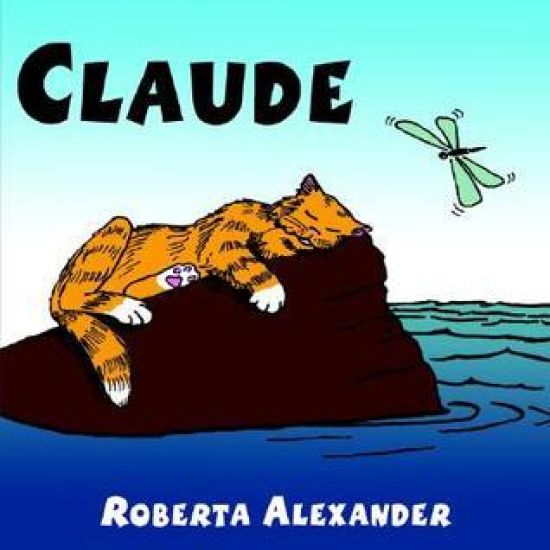

Claude is the story of the California Academy of Sciences' beloved albino alligator, from his birth in Louisiana to his present day life in his swamp at the Academy."Ultimately, Claude’s hopeful tale is a celebration of individuality and the joy in finding those who appreciate you for exactly who you are."--BooklistClaude is a celebrity alligator and the mascot for San Francisco's California Academy of Sciences. His story started almost 25 years ago in Louisiana, where he hatched out of his egg to discover he looked different from the other hatchlings. They were green and Claude was white. The other hatchings avoided him, and his color made him vulnerable to predators. So Claude went to a special zoo that cared for alligators where he lived in a pen by himself. Now he was safe--but alone. One day, scientists at the California Academy of Sciences heard about him and asked the zoo if he could come and live in the Academy's swamp. He made a 2,800 mile journey to his new home, where he had a surprise--he would share his swamp with Bonnie, an alligator who the scientists hoped would be a friend for Claude. Unfortunately, Bonnie didn't like Claude's differences either, so she was moved to another home. But then Claude was alone again--or was he? With Bonnie gone, Claude began to interact with the five enormous snapping turtles who shared his swamp. The turtles didn't mind at all that Claude was different! And neither do the millions of people who visit him every year. They know that Claude's differences are exactly what makes him special. Claude includes back matter with answers to frequently asked questions about the famous alligator, including information about albinism in animals.

Claude is a celebrity alligator and the mascot for San Francisco's California Academy of Sciences. His story started when he hatched out of his egg to discover he looked different from the other hatchlings, who didn’t like his differences. They were green and Claude was white. So he went to a special zoo that kept him safe, but he was alone. When scientists at the California Academy of Sciences heard about him and asked the zoo if he could come and live in the Academy's swamp, he made the long journey to his new home with Bonnie, an alligator scientists hoped would be a friend for Claude. Unfortunately, like Claude’s hatchlings, Bonnie didn't like Claude's differences, so she was moved to a new home, and then Claude was alone again—or was he? With Bonnie gone, Claude noticed the five enormous snapping turtles who shared his swamp. The turtles didn't mind at all that Claude was different! And neither do the millions of people who visit him every year. They know that Claude's differences are exactly what makes him special. Cuddle up with a toddler and share this special story that evokes empathy and shares the joy of finding friends who accept you just as you are.

Claude / par Paul Deroulede]Date de l'edition originale: 1866Ce livre est la reproduction fidele d une uvre publiee avant 1920 et fait partie d une collection de livres reimprimes a la demande editee par Hachette Livre, dans le cadre d un partenariat avec la Bibliotheque nationale de France, offrant l opportunite d acceder a des ouvrages anciens et souvent rares issus des fonds patrimoniaux de la BnF.Les uvres faisant partie de cette collection ont ete numerisees par la BnF et sont presentes sur Gallica, sa bibliotheque numerique.En entreprenant de redonner vie a ces ouvrages au travers d une collection de livres reimprimes a la demande, nous leur donnons la possibilite de rencontrer un public elargi et participons a la transmission de connaissances et de savoirs parfois difficilement accessibles.Nous avons cherche a concilier la reproduction fidele d un livre ancien a partir de sa version numerisee avec le souci d un confort de lecture optimal. Nous esperons que les ouvrages de cette nouvelle collection vous apporteront entiere satisfaction.Pour plus d informations, rendez-vous sur www.hachettebnf.fr

Handlingen utspelas under 1940- och 50-talen i Frankrike. Den kretsar främst kring godsägarsonen Claude Troisaints och hans relationer till människor i sin omgivning under och efter andra världskriget, framförallt ett något ovanligt vänskapsförhållande.

When Claude L vi-Strauss passed away in 2009 at age 100, France celebrated the life and contributions of not only a preeminent anthropologist, but one of the defining intellectuals of the 20th century. Just as Freud had shaken up the antiquarian discipline of psychiatry, so had L vi-Strauss revolutionized anthropology, transforming it from the colonial-era study of "exotic" tribes to one consumed with fundamental questions about the nature of humanity and civilization itself. Remarkably, there has never been a biography in English of the enigmatic Claude L vi-Strauss. Drawing on a welter of original research and interviews with the anthropologist, Patrick Wilcken's Claude L vi-Strauss fills this void. In rich detail, Wilcken recreates Levi-Strauss's peripatetic life: his groundbreaking fieldwork in some of the remotest reaches of the Amazon in the 1930s; his years as a Jew in Nazi-occupied France and an emigr in wartime New York; and his return to Paris in the late 1940s, where he clashed with Jean-Paul Sartre and fundamentally influenced fellow postwar thinkers from Jacques Lacan to Michel Foucault and Roland Barthes. It was in France that structuralism, the school of thought he founded, first took hold, creating waves far beyond the field of anthropology. In his heyday, Levi-Strauss was both a hero to contemporary intellectuals, and an international celebrity. In Claude Levi-Strauss, Wilcken gives the reader a fascinating intellectual tour of the anthropologist's landmark works: Tristes Tropiques, his most famous book, a literary meditation on his travels and fieldwork; The Savage Mind, which showed that "primitive" people are driven by the same intellectual curiosities as their Western counterparts, and finally his monumental four-volume Mythologiques, a study of the universal structures of native mythology in the Americas. In the years that L vi-Strauss published these pioneering works, Wilcken observes, tribal societies seemed to hold the answers to the most profound questions about the human mind. Following the great anthropologist from S o Paulo to the Brazilian interior, and from New York to Paris, Patrick Wilcken's Claude L vi-Strauss is both an evocative journey and an intellectual biography of one of the 20th century's most influential minds.