Kirjojen hintavertailu. Mukana 11 342 296 kirjaa ja 12 kauppaa.

Kirjahaku

Etsi kirjoja tekijän nimen, kirjan nimen tai ISBN:n perusteella.

1000 tulosta hakusanalla Clayton M. Christensen

The Clayton M. Christensen Reader

The Clayton M. Christensen Reader

Clayton M. Christensen

Harvard Business Review Press
2016
pokkari
The best of Clayton Christensen's seminal work on disruptive innovation, all in one place. No business can afford to ignore the theory of disruptive innovation. But the nuances of Clayton Christensen's foundational thinking on the subject are often forgotten or misinterpreted. To achieve continuing growth in your business while defending against upstarts, you need to understand clearly what disruption is and how it works, and know how it applies to your industry and your company. In this collection of Christensen's most influential articles--carefully selected by Harvard Business Review's editors--his incisive arguments, clear theories, and readable stories give you the tools you need to understand disruption and what to do about it. The collection features Christensen's newest article looking back on 20 years of disruptive innovation: what it is, and what it isn't. Covering a broad spectrum of topics--business model innovation, mergers and acquisitions, value-chain shifts, financial incentives, product development--these articles illuminate the impact and implications of disruptive innovation as well as Christensen's broader thinking on management theory and its application in business and in life. This collection of best-selling articles includes: "Disruptive Technologies: Catching the Wave," by Joseph L. Bower and Clayton M. Christensen, "Meeting the Challenge of Disruptive Change," by Clayton M. Christensen and Michael Overdorf, "Marketing Malpractice: The Cause and the Cure," by Clayton M. Christensen, Scott Cook, and Taddy Hall, "Innovation Killers: How Financial Tools Destroy Your Capacity to Do New Things," by Clayton M. Christensen, Stephen P. Kaufman, and Willy C. Shih, "Reinventing Your Business Model," by Mark W. Johnson, Clayton M. Christensen, and Henning Kagermann, "The New M&A Playbook," by Clayton M. Christensen, Richard Alton, Curtis Rising, and Andrew Waldeck, "Skate to Where the Money Will Be," by Clayton M. Christensen, Michael E. Raynor, and Matthew Verlinden, "Surviving Disruption," by Maxwell Wessel and Clayton M. Christensen, "What Is Disruptive Innovation?" by Clayton M. Christensen, Michael E. Raynor, and Rory McDonald, "Why Hard-Nosed Executives Should Care About Management Theory," by Clayton M. Christensen and Michael E. Raynor, and "How Will You Measure Your Life?" by Clayton M. Christensen.
The Clayton M. Christensen Reader

The Clayton M. Christensen Reader

Clayton M. Christensen

Harvard Business Review Press
2016
sidottu
The best of Clayton Christensen’s seminal work on disruptive innovation, all in one place. No business can afford to ignore the theory of disruptive innovation. But the nuances of Clayton Christensen’s foundational thinking on the subject are often forgotten or misinterpreted. To achieve continuing growth in your business while defending against upstarts, you need to understand clearly what disruption is and how it works, and know how it applies to your industry and your company. In this collection of Christensen’s most influential articles—carefully selected by Harvard Business Review’s editors—his incisive arguments, clear theories, and readable stories give you the tools you need to understand disruption and what to do about it. The collection features Christensen’s newest article looking back on 20 years of disruptive innovation: what it is, and what it isn’t. Covering a broad spectrum of topics—business model innovation, mergers and acquisitions, value-chain shifts, financial incentives, product development—these articles illuminate the impact and implications of disruptive innovation as well as Christensen’s broader thinking on management theory and its application in business and in life. This collection of best-selling articles includes: “Disruptive Technologies: Catching the Wave,” by Joseph L. Bower and Clayton M. Christensen, “Meeting the Challenge of Disruptive Change,” by Clayton M. Christensen and Michael Overdorf, “Marketing Malpractice: The Cause and the Cure,” by Clayton M. Christensen, Scott Cook, and Taddy Hall, “Innovation Killers: How Financial Tools Destroy Your Capacity to Do New Things,” by Clayton M. Christensen, Stephen P. Kaufman, and Willy C. Shih, “Reinventing Your Business Model,” by Mark W. Johnson, Clayton M. Christensen, and Henning Kagermann, “The New M&A Playbook,” by Clayton M. Christensen, Richard Alton, Curtis Rising, and Andrew Waldeck, “Skate to Where the Money Will Be,” by Clayton M. Christensen, Michael E. Raynor, and Matthew Verlinden, “Surviving Disruption,” by Maxwell Wessel and Clayton M. Christensen, “What Is Disruptive Innovation?” by Clayton M. Christensen, Michael E. Raynor, and Rory McDonald, “Why Hard-Nosed Executives Should Care About Management Theory,” by Clayton M. Christensen and Michael E. Raynor, and “How Will You Measure Your Life?” by Clayton M. Christensen.
HBR's 10 Must Reads on Business Model Innovation (with featured article "Reinventing Your Business Model" by Mark W. Johnson, Clayton M. Christensen, and Henning Kagermann)

HBR's 10 Must Reads on Business Model Innovation (with featured article "Reinventing Your Business Model" by Mark W. Johnson, Clayton M. Christensen, and Henning Kagermann)

Harvard Business Review; Clayton M. Christensen; Mark W. Johnson; Rita Gunther McGrath; Steve Blank

Harvard Business Review Press
2019
pokkari
Rethink how your organization creates, delivers, and captures value--or risk becoming irrelevant.If you read nothing else on business model innovation, read these 10 articles. We've combed through hundreds of Harvard Business Review articles and selected the most important ones to help you reach new customers and stay ahead of your competitors by reinventing your business model.This book will inspire you to:Assess whether your core business model is going strong or running out of gasFend off free and discount entrants to your marketReinvigorate growth by adding a second business modelAdopt the practices of lean startupsDevelop a platform around your key productsMake business model innovation an ongoing discipline within your organizationThis collection of articles includes "Why Business Models Matter," by Joan Magretta; "Reinventing Your Business Model," by Mark W. Johnson, Clayton M. Christensen, and Henning Kagermann; "When Your Business Model Is in Trouble," an interview with Rita Gunther McGrath by Sarah Cliffe; "Four Paths to Business Model Innovation," by Karan Girotra and Serguei Netessine; "The Transformative Business Model," by Stelios Kavadias, Kostas Ladas, and Christoph Loch; "Competing Against Free," by David J. Bryce, Je?rey H. Dyer, and Nile W. Hatch; "Why the Lean Start-Up Changes Everything," by Steve Blank; "Finding the Platform in Your Product," by Andrei Hagiu and Elizabeth J. Altman; "Pipelines, Platforms, and the New Rules of Strategy," by Marshall W. Van Alstyne, Geo?rey G. Parker, and Sangeet Paul Choudary; "When One Business Model Isn't Enough," by Ramon Casadesus-Masanell and Jorge Tarzijan; and "Reaching the Rich World's Poorest Consumers," by Muhammad Yunus, Frederic Dalsace, David Menasce, and Benedicte Faivre-Tavignot.HBR's 10 Must Reads paperback series is the definitive collection of books for new and experienced leaders alike. Leaders looking for the inspiration that big ideas provide, both to accelerate their own growth and that of their companies, should look no further.HBR's 10 Must Reads series focuses on the core topics that every ambitious manager needs to know: leadership, strategy, change, managing people, and managing yourself. Harvard Business Review has sorted through hundreds of articles and selected only the most essential reading on each topic. Each title includes timeless advice that will be relevant regardless of an ever-changing business environment.
HBR's 10 Must Reads on Business Model Innovation (with featured article "Reinventing Your Business Model" by Mark W. Johnson, Clayton M. Christensen, and Henning Kagermann)

HBR's 10 Must Reads on Business Model Innovation (with featured article "Reinventing Your Business Model" by Mark W. Johnson, Clayton M. Christensen, and Henning Kagermann)

Harvard Business Review; Clayton M. Christensen; Mark W. Johnson; Rita Gunther McGrath; Steve Blank

Harvard Business Review Press
2019
sidottu
Rethink how your organization creates, delivers, and captures value--or risk becoming irrelevant.If you read nothing else on business model innovation, read these 10 articles. We've combed through hundreds of Harvard Business Review articles and selected the most important ones to help you reach new customers and stay ahead of your competitors by reinventing your business model.This book will inspire you to:Assess whether your core business model is going strong or running out of gasFend off free and discount entrants to your marketReinvigorate growth by adding a second business modelAdopt the practices of lean startupsDevelop a platform around your key productsMake business model innovation an ongoing discipline within your organizationThis collection of articles includes "Why Business Models Matter," by Joan Magretta; "Reinventing Your Business Model," by Mark W. Johnson, Clayton M. Christensen, and Henning Kagermann; "When Your Business Model Is in Trouble," an interview with Rita Gunther McGrath by Sarah Cliffe; "Four Paths to Business Model Innovation," by Karan Girotra and Serguei Netessine; "The Transformative Business Model," by Stelios Kavadias, Kostas Ladas, and Christoph Loch; "Competing Against Free," by David J. Bryce, Je?rey H. Dyer, and Nile W. Hatch; "Why the Lean Start-Up Changes Everything," by Steve Blank; "Finding the Platform in Your Product," by Andrei Hagiu and Elizabeth J. Altman; "Pipelines, Platforms, and the New Rules of Strategy," by Marshall W. Van Alstyne, Geo?rey G. Parker, and Sangeet Paul Choudary; "When One Business Model Isn't Enough," by Ramon Casadesus-Masanell and Jorge Tarzijan; and "Reaching the Rich World's Poorest Consumers," by Muhammad Yunus, Frederic Dalsace, David Menasce, and Benedicte Faivre-Tavignot.HBR's 10 Must Reads paperback series is the definitive collection of books for new and experienced leaders alike. Leaders looking for the inspiration that big ideas provide, both to accelerate their own growth and that of their companies, should look no further.HBR's 10 Must Reads series focuses on the core topics that every ambitious manager needs to know: leadership, strategy, change, managing people, and managing yourself. Harvard Business Review has sorted through hundreds of articles and selected only the most essential reading on each topic. Each title includes timeless advice that will be relevant regardless of an ever-changing business environment.
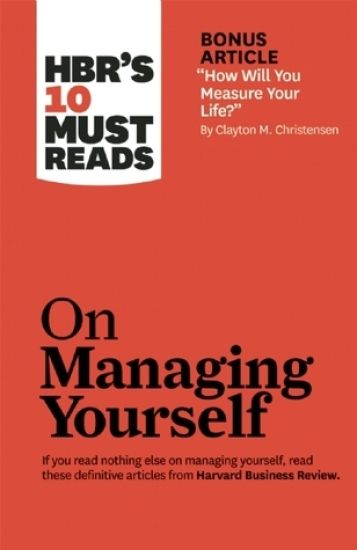
HBR's 10 Must Reads on Managing Yourself (with bonus article "How Will You Measure Your Life?" by Clayton M. Christensen)

HBR's 10 Must Reads on Managing Yourself (with bonus article "How Will You Measure Your Life?" by Clayton M. Christensen)

Harvard Business Review; Peter F. Drucker; Daniel Goleman; Clayton M. Christensen

Harvard Business Review Press
2011
pokkari
The path to your professional success starts with a critical look in the mirror. If you read nothing else on managing yourself, read these 10 articles (plus the bonus article "How Will You Measure Your Life?" by Clayton M. Christensen). We've combed through hundreds of Harvard Business Review articles to select the most important ones to help you maximize yourself. HBR's 10 Must Reads on Managing Yourself will inspire you to: Stay engaged throughout your 50+-year work life Tap into your deepest values Solicit candid feedback Replenish physical and mental energy Balance work, home, community, and self Spread positive energy throughout your organization Rebound from tough times Decrease distractibility and frenzy Delegate and develop employees' initiative This collection of best-selling articles includes: bonus article "How Will You Measure Your Life?" by Clayton M. Christensen, "Managing Oneself," "Management Time: Who's Got the Monkey?" "How Resilience Works," "Manage Your Energy, Not Your Time," "Overloaded Circuits: Why Smart People Underperform," "Be a Better Leader, Have a Richer Life," "Reclaim Your Job," "Moments of Greatness: Entering the Fundamental State of Leadership," "What to Ask the Person in the Mirror," and "Primal Leadership: The Hidden Driver of Great Performance."
HBR's 10 Must Reads on Managing Yourself (with bonus article "How Will You Measure Your Life?" by Clayton M. Christensen)

HBR's 10 Must Reads on Managing Yourself (with bonus article "How Will You Measure Your Life?" by Clayton M. Christensen)

Harvard Business Review; Peter F. Drucker; Daniel Goleman; Clayton M. Christensen

Harvard Business Review Press
2011
sidottu
The path to your professional success starts with a critical look in the mirror. If you read nothing else on managing yourself, read these 10 articles (plus the bonus article “How Will You Measure Your Life?” by Clayton M. Christensen). We've combed through hundreds of Harvard Business Review articles to select the most important ones to help you maximize yourself. HBR's 10 Must Reads on Managing Yourself will inspire you to: Stay engaged throughout your 50+-year work lifeTap into your deepest valuesSolicit candid feedbackReplenish physical and mental energyBalance work, home, community, and selfSpread positive energy throughout your organizationRebound from tough timesDecrease distractibility and frenzyDelegate and develop employees' initiative This collection of best-selling articles includes: bonus article “How Will You Measure Your Life?” by Clayton M. Christensen, "Managing Oneself," "Management Time: Who's Got the Monkey?" "How Resilience Works," "Manage Your Energy, Not Your Time," "Overloaded Circuits: Why Smart People Underperform," "Be a Better Leader, Have a Richer Life," "Reclaim Your Job," "Moments of Greatness: Entering the Fundamental State of Leadership," "What to Ask the Person in the Mirror," and "Primal Leadership: The Hidden Driver of Great Performance."
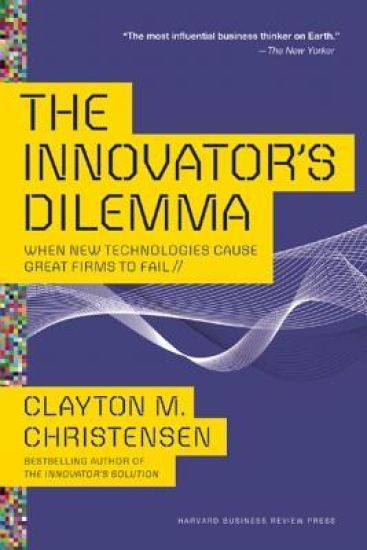
The Innovator's Dilemma

The Innovator's Dilemma

Clayton M. Christensen

Harvard Business Review Press
2016
pokkari
Named one of 100 Leadership & Success Books to Read in a Lifetime by Amazon Editors A Wall Street Journal and Businessweek bestseller. Named by Fast Company as one of the most influential leadership books in its Leadership Hall of Fame. An innovation classic. From Steve Jobs to Jeff Bezos, Clay Christensen's work continues to underpin today's most innovative leaders and organizations. The bestselling classic on disruptive innovation, by renowned author Clayton M. Christensen. His work is cited by the world's best-known thought leaders, from Steve Jobs to Malcolm Gladwell. In this classic bestseller--one of the most influential business books of all time--innovation expert Clayton Christensen shows how even the most outstanding companies can do everything right--yet still lose market leadership. Christensen explains why most companies miss out on new waves of innovation. No matter the industry, he says, a successful company with established products will get pushed aside unless managers know how and when to abandon traditional business practices. Offering both successes and failures from leading companies as a guide, The Innovator's Dilemma gives you a set of rules for capitalizing on the phenomenon of disruptive innovation. Sharp, cogent, and provocative--and consistently noted as one of the most valuable business ideas of all time--The Innovator's Dilemma is the book no manager, leader, or entrepreneur should be without.
How Will You Measure Your Life? (Harvard Business Review Classics)

How Will You Measure Your Life? (Harvard Business Review Classics)

Clayton M. Christensen

Harvard Business Review Press
2017
pokkari
In the spring of 2010, Harvard Business School's graduating class asked HBS professor Clay Christensen to address them--but not on how to apply his principles and thinking to their post-HBS careers. The students wanted to know how to apply his wisdom to their personal lives. He shared with them a set of guidelines that have helped him find meaning in his own life, which led to this now-classic article. Although Christensen's thinking is rooted in his deep religious faith, these are strategies anyone can use. Since 1922, Harvard Business Review has been a leading source of breakthrough ideas in management practice. The Harvard Business Review Classics series now offers you the opportunity to make these seminal pieces a part of your permanent management library. Each highly readable volume contains a groundbreaking idea that continues to shape best practices and inspire countless managers around the world.
How Will You Measure Your Life? (Harvard Business Review Classics)

How Will You Measure Your Life? (Harvard Business Review Classics)

Clayton M. Christensen

Harvard Business Review Press
2017
sidottu
In the spring of 2010, Harvard Business School's graduating class asked HBS professor Clay Christensen to address them--but not on how to apply his principles and thinking to their post-HBS careers. The students wanted to know how to apply his wisdom to their personal lives. He shared with them a set of guidelines that have helped him find meaning in his own life, which led to this now-classic article. Although Christensen's thinking is rooted in his deep religious faith, these are strategies anyone can use.Since 1922, Harvard Business Review has been a leading source of breakthrough ideas in management practice. The Harvard Business Review Classics series now offers you the opportunity to make these seminal pieces a part of your permanent management library. Each highly readable volume contains a groundbreaking idea that continues to shape best practices and inspire countless managers around the world.
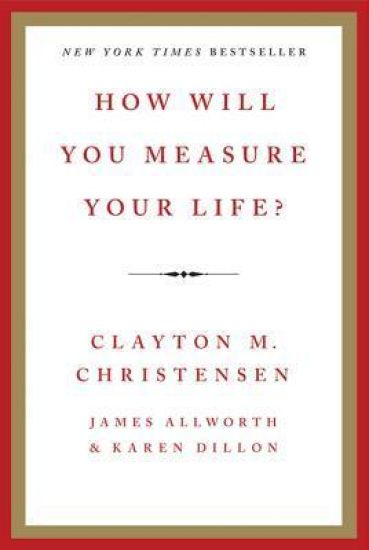
How Will You Measure Your Life?

How Will You Measure Your Life?

Clayton M. Christensen; James Allworth; Karen Dillon

HARPER BUSINESS
2012
sidottu
From the world's leading thinker on innovation and New York Times bestselling author of The Innovator's Dilemma, Clayton M. Christensen, comes an unconventional book of inspiration and wisdom for achieving a fulfilling life. Christensen's The Innovator's Dilemma, notably the only business book that Apple's Steve Jobs said "deeply influenced" him, is widely recognized as one of the most significant business books ever published. Now, in the tradition of Randy Pausch's The Last Lecture and Anna Quindlen's A Short Guide to a Happy Life, Christensen's How Will You Measure Your Life is with a book of lucid observations and penetrating insights designed to help any reader--student or teacher, mid-career professional or retiree, parent or child--forge their own paths to fulfillment.
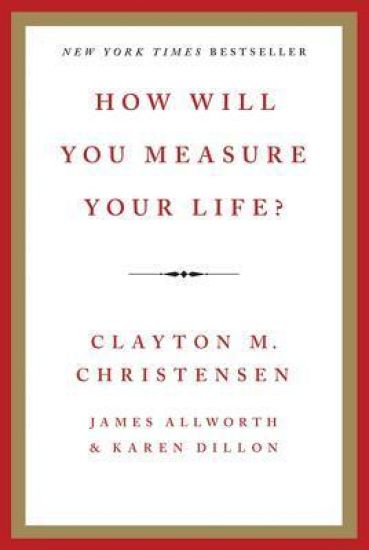
How Will You Measure Your Life?

How Will You Measure Your Life?

Clayton M. Christensen; James Allworth; Karen Dillon

HarperBusiness
2012
nidottu
In 2010 world-renowned innovation expert Clayton M. Christensen gave a powerful speech to the Harvard Business School's graduating class. Drawing upon his business research, he offered a series of guidelines for finding meaning and happiness in life. He used examples from his own experiences to explain how high achievers can all too often fall into traps that lead to unhappiness.The speech was memorable not only because it was deeply revealing but also because it came at a time of intense personal reflection: Christensen had just overcome the same type of cancer that had taken his father's life. As Christensen struggled with the disease, the question How do you measure your life? became more urgent and poignant, and he began to share his insights more widely with family, friends, and students. In this groundbreaking book, Christensen puts forth a series of questions: How can I be sure that I'll find satisfaction in my career? How can I be sure that my personalrelationships become enduring sources of happiness? How can I avoid compromising my integrity--and stay out of jail? Using lessons from some of the world's greatest businesses, he provides incredible insights into these challenging questions. How Will You Measure Your Life? is full of inspiration and wisdom, and will help students, midcareer professionals, and parents alike forge their own paths to fulfillment.
Competing Against Luck: The Story of Innovation and Customer Choice

Competing Against Luck: The Story of Innovation and Customer Choice

Clayton M. Christensen; Taddy Hall; Karen Dillon

HarperBusiness
2016
nidottu
The foremost authority on innovation and growth presents a path-breaking book every company needs to transform innovation from a game of chance to one in which they develop products and services customers not only want to buy, but are willing to pay premium prices for.How do companies know how to grow? How can they create products that they are sure customers want to buy? Can innovation be more than a game of hit and miss? Harvard Business School professor Clayton Christensen has the answer. A generation ago, Christensen revolutionized business with his groundbreaking theory of disruptive innovation. Now, he goes further, offering powerful new insights. After years of research, Christensen has come to one critical conclusion: our long held maxim--that understanding the customer is the crux of innovation--is wrong. Customers don't buy products or services; they hire them to do a job. Understanding customers does not drive innovation success, he argues. Understanding customer jobs does. The Jobs to Be Done approach can be seen in some of the world's most respected companies and fast-growing startups, including Amazon, Intuit, Uber, Airbnb, and Chobani yogurt, to name just a few. But this book is not about celebrating these successes--it's about predicting new ones. Christensen contends that by understanding what causes customers to hire a product or service, any business can improve its innovation track record, creating products that customers not only want to hire, but that they'll pay premium prices to bring into their lives. Jobs theory offers new hope for growth to companies frustrated by their hit and miss efforts.This book carefully lays down Christensen's provocative framework, providing a comprehensive explanation of the theory and why it is predictive, how to use it in the real world--and, most importantly, how not to squander the insights it provides.
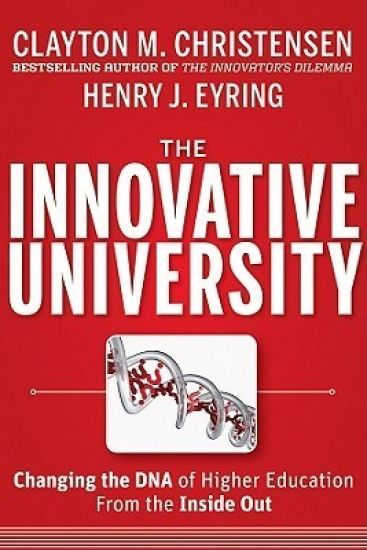
The Innovative University

The Innovative University

Clayton M. Christensen; Henry J. Eyring

John Wiley Sons Inc
2011
sidottu
The Innovative University illustrates how higher education can respond to the forces of disruptive innovation , and offers a nuanced and hopeful analysis of where the traditional university and its traditions have come from and how it needs to change for the future. Through an examination of Harvard and BYU-Idaho as well as other stories of innovation in higher education, Clayton Christensen and Henry Eyring decipher how universities can find innovative, less costly ways of performing their uniquely valuable functions. Offers new ways forward to deal with curriculum, faculty issues, enrollment, retention, graduation rates, campus facility usage, and a host of other urgent issues in higher educationDiscusses a strategic model to ensure economic vitality at the traditional universityContains novel insights into the kind of change that is necessary to move institutions of higher education forward in innovative ways This book uncovers how the traditional university survives by breaking with tradition, but thrives by building on what it's done best.
¿Cómo valorarías tu vida?

¿Cómo valorarías tu vida?

Clayton M. Christensen; James Allworth; Karen Dillon

HarperCollins Focus
2023
nidottu
Después de haber sufrido un ataque al corazón, cáncer en estado avanzado y un derrame cerebral en tres años sucesivos, Clayton M. Christensen pronunció un breve, pero poderoso discurso, frente a la Clase de graduación de la Escuela de Negocios.Presentó un conjunto de directrices personales que le han ayudado a encontrar sentido y felicidad en su vida, un desafío que incluso los estudiantes más brillantes y motivados encuentran desalentadores.En este libro innovador, Christensen plantea una serie de preguntas: ¿Cómo puedo estar seguro de que encontraré satisfacción en mi carrera? ¿Cómo puedo estar seguro de que mis relaciones personales se conviertan en fuentes duraderas de felicidad? ¿Cómo puedo evitar comprometer mi integridad y permanecer fuera de la cárcel? Aprovechando las lecciones de algunas de las mejores empresas del mundo, proporciona información increíble sobre estas preguntas desafiantes.¿Cómo valorarás tu vida? está lleno de inspiración y sabiduría, y ayudará a los estudiantes, a los profesionales de las carreras intermedias y a los padres a forjar sus propios caminos hacia la realización.How will you value your life?Having suffered a heart attack, late-stage cancer, and stroke in three successive years, Clayton M. Christensen delivered a short but powerful speech to the Graduating Class of the Business School.He presented a set of personal guidelines that have helped him find meaning and happiness in his life, a challenge that even the brightest and most motivated students find daunting.In this groundbreaking book, Christensen asks a series of questions: How can I be sure that I will find fulfillment in my career? How can I be sure that my personal relationships become lasting sources of happiness? How can I avoid compromising my integrity and stay out of jail? Drawing on lessons from some of the best companies in the world, he provides incredible insights into these challenging questions.How will you value your life? it is full of inspiration and wisdom, and will help students, mid-career professionals, and parents forge their own paths to achievement.
La paradoja de la prosperidad

La paradoja de la prosperidad

Clayton M. Christensen; Efosa Ojomo; Karen Dillon

HarperCollins Focus
2023
nidottu
La pobreza global es uno de los problemas más grandes del mundo. Desde la educación hasta la atención médica, la infraestructura para erradicar la corrupción, se han ofrecido demasiadas soluciones, pero que se basan en ensayo y error. Esencialmente, el plan a menudo es identificar áreas que necesitan ayuda, inundarlas de recursos y esperar ver cambios a lo largo del tiempo.Pero la esperanza no es una estrategia efectiva. ¿Cómo es posible que naciones que reciben millones de dólares en ayuda sigan siendo pobres?Christensen sugiere una mejor manera. El tipo correcto de innovación no solo construye empresas, sino que también construye países. La Paradoja de la Prosperidad identifica los límites de los modelos comunes de desarrollo económico, que tienden a ser esfuerzos de arriba hacia abajo, y ofrece un nuevo marco para el crecimiento económico basado en el espíritu empresarial y la innovación de creación de mercado, para analizar países como Japón, Corea del Sur, Nigeria, Ruanda, India, Argentina... y México.The Prosperity ParadoxGlobal poverty is one of the world’s most vexing problems. For decades, we’ve assumed smart, well-intentioned people will eventually be able to change the economic trajectory of poor countries. From education to healthcare, infrastructure to eradicating corruption, too many solutions rely on trial and error. Essentially, the plan is often to identify areas that need help, flood them with resources, and hope to see change over time.But hope is not an effective strategy. How is it possible for nations that receive millions of dollars in aid to remain poor?Christensen suggests a better way. The right kind of innovation not only builds companies, but also builds countries. The Prosperity Paradox identifies the limits of common models of economic development, which tend to be top-down efforts, and offers a new framework for economic growth based on entrepreneurship and market-making innovation, to analyze countries like Japan, South Korea, Nigeria, Rwanda, India, Argentina... and Mexico.
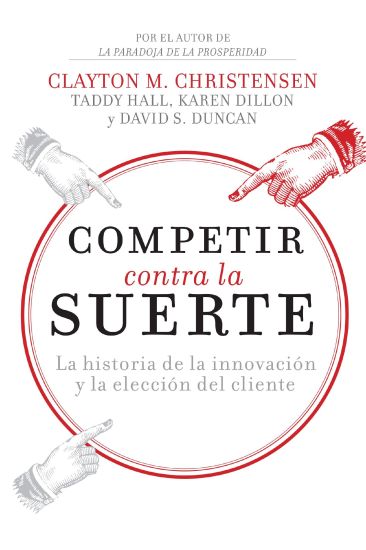
Competir contra la suerte

Competir contra la suerte

Clayton M. Christensen; Karen Dillon; Taddy Hall

HarperCollins Focus
2023
nidottu
¿Las empresas saben cómo crecer? ¿Cómo pueden crear productos que están seguros de que los clientes quieren comprar? ¿Puede la innovación ser más que un juego de éxito? El profesor Clayton Christensen de la Escuela de Negocios de Harvard tiene la respuesta. Hace una generación, Christensen revolucionó los negocios con su innovadora teoría de la innovación disruptiva. Ahora, él va más allá, ofreciendo nuevas y poderosas ideas. Después de años de investigación, Christensen ha llegado a una conclusión crítica: Los clientes no compran productos o servicios; ellos los "contratan" para hacer un trabajo. Comprender qué hace que los clientes "contraten" un producto o servicio, hará que cualquier empresa puede mejorar su historial de innovación, creando productos que los clientes no solo quieran contratar, sino que pagarán precios más altos para llevarlos a sus vidas; por ejemplo: Amazon, Intuit, Uber, Airbnb y Chobani, por nombrar solo algunos. Pero este libro no se trata de celebrar estos éxitos, se trata de predecir nuevos.Este libro establece cuidadosamente el marco provocativo de Christensen, que proporciona una explicación completa de la teoría y por qué es predictivo, cómo usarlo en el mundo real y, lo más importante, cómo no desperdiciar la información que proporciona.Competing Against LuckCompanies know how to grow? How can they create products that they are sure customers want to buy? Can innovation be more than a successful game? Professor Clayton Christensen of the Harvard Business School has the answer. A generation ago, Christensen revolutionized business with his groundbreaking theory of disruptive innovation. Now, he goes further, offering powerful new insights.After years of research, Christensen has come to a critical conclusion: Customers don't buy products or services; they "hire" them to do a job. Understanding what makes customers "hire" a product or service will help any company improve its innovation record, creating products that customers not only want to hire, but will pay higher prices to bring into their lives; for example: Amazon, Intuit, Uber, Airbnb and Chobani to name just a few. But this book isn't about celebrating these successes, it's about predicting new ones.This book carefully lays out Christensen's provocative framework, providing a comprehensive explanation of the theory and why it is predictive, how to use it in the real world, and most importantly, how not to waste the information it provides.
The Innovator's Solution

The Innovator's Solution

Clayton M. Christensen; Michael E. Raynor

Harvard Business Review Press
2013
sidottu
An innovation classic. From Steve Jobs to Jeff Bezos, Clay Christensen's work continues to underpin today's most innovative leaders and organizations. A seminal work on disruption--for everyone confronting the growth paradox. For readers of the bestselling The Innovator's Dilemma--and beyond--this definitive work will help anyone trying to transform their business right now. In The Innovator's Solution, Clayton Christensen and Michael Raynor expand on the idea of disruption, explaining how companies can and should become disruptors themselves. This classic work shows just how timely and relevant these ideas continue to be in today's hyper-accelerated business environment. Christensen and Raynor give advice on the business decisions crucial to achieving truly disruptive growth and propose guidelines for developing your own disruptive growth engine. The authors identify the forces that cause managers to make bad decisions as they package and shape new ideas--and offer new frameworks to help create the right conditions, at the right time, for a disruption to succeed. This is a must-read for all senior managers and business leaders responsible for innovation and growth, as well as members of their teams. Based on in-depth research and theories tested in hundreds of companies across many industries, The Innovator's Solution is a necessary addition to any innovation library--and an essential read for entrepreneurs and business builders worldwide.
Seeing What's Next

Seeing What's Next

Clayton M. Christensen; Scott D. Anthony; Erik A. Roth

Harvard Business Review Press
2004
sidottu
Every day, individuals take action based on how they believe innovation will change industries. Yet these beliefs are largely based on guesswork and incomplete data and lead to costly errors in judgment. Now, internationally renowned innovation expert Clayton M. Christensen and his research partners Scott D. Anthony and Erik A. Roth present a groundbreaking framework for predicting outcomes in the evolution of any industry. Based on proven theories outlined in Christensen's landmark books The Innovator's Dilemma and The Innovator's Solution, Seeing What's Next offers a practical, three-part model that helps decision-makers spot the signals of industry change, determine the outcome of competitive battles, and assess whether a firm's actions will ensure or threaten future success. Through in-depth case studies of industries from aviation to health care, the authors illustrate the predictive power of innovation theory in action.