Solid Mechanics: A Variational Approach, Augmented Edition presents a lucid and thoroughly developed approach to solid mechanics for students engaged in the study of elastic structures not seen in other texts currently on the market. This work offers a clear and carefully prepared exposition of variational techniques as they are applied to solid mechanics. Unlike other books in this field, Dym and Shames treat all the necessary theory needed for the study of solid mechanics and include extensive applications. Of particular note is the variational approach used in developing consistent structural theories and in obtaining exact and approximate solutions for many problems. Based on both semester and year-long courses taught to undergraduate seniors and graduate students, this text is geared for programs in aeronautical, civil, and mechanical engineering, and in engineering science. The authors’ objective is two-fold: first, to introduce the student to the theory of structures (one- and two-dimensional) as developed from the three-dimensional theory of elasticity; and second, to introduce the student to the strength and utility of variational principles and methods, including briefly making the connection to finite element methods. A complete set of homework problems is included.
Solid Mechanics: A Variational Approach, Augmented Edition presents a lucid and thoroughly developed approach to solid mechanics for students engaged in the study of elastic structures not seen in other texts currently on the market. This work offers a clear and carefully prepared exposition of variational techniques as they are applied to solid mechanics. Unlike other books in this field, Dym and Shames treat all the necessary theory needed for the study of solid mechanics and include extensive applications. Of particular note is the variational approach used in developing consistent structural theories and in obtaining exact and approximate solutions for many problems. Based on both semester and year-long courses taught to undergraduate seniors and graduate students, this text is geared for programs in aeronautical, civil, and mechanical engineering, and in engineering science. The authors’ objective is two-fold: first, to introduce the student to the theory of structures (one- and two-dimensional) as developed from the three-dimensional theory of elasticity; and second, to introduce the student to the strength and utility of variational principles and methods, including briefly making the connection to finite element methods. A complete set of homework problems is included.
The study of structural analysis and design is a central subject in civil, aeronautical and mechanical engineering. This book presents a modern and unified introduction to structural analysis, with a strong emphasis on how structures actually behave. The unifying theme is the application of energy methods, developed without the formal mathematics of the calculus of variations. The energy approach makes it possible to articulate the logical relationship between equilibrium and compatibility; emphasise the unity of structural analysis, particularly for indeterminate structures; and identify the roles of idealization and discretization in structural modelling. Thus, energy methods also serve as a prelude to the main ideas behind modern computational approaches to structural analysis and design. As an aid to upper-level undergraduate students in mastering this material, the text includes numerous worked examples, as well as homework problems.
The study of structural analysis and design is a central subject in civil, aeronautical and mechanical engineering. This book presents a modern and unified introduction to structural analysis, with a strong emphasis on how structures actually behave. The unifying theme is the application of energy methods, developed without the formal mathematics of the calculus of variations. The energy approach makes it possible to articulate the logical relationship between equilibrium and compatibility; emphasise the unity of structural analysis, particularly for indeterminate structures; and identify the roles of idealization and discretization in structural modelling. Thus, energy methods also serve as a prelude to the main ideas behind modern computational approaches to structural analysis and design. As an aid to upper-level undergraduate students in mastering this material, the text includes numerous worked examples, as well as homework problems.
Dym, Little and Orwin's Engineering Design: A Project-Based Introduction, 4th Edition gets students actively involved with conceptual design methods and project management tools. The book helps students acquire design skills as they experience the activity of design by doing design projects. It is equally suitable for use in project-based first-year courses, formal engineering design courses, and capstone project courses.
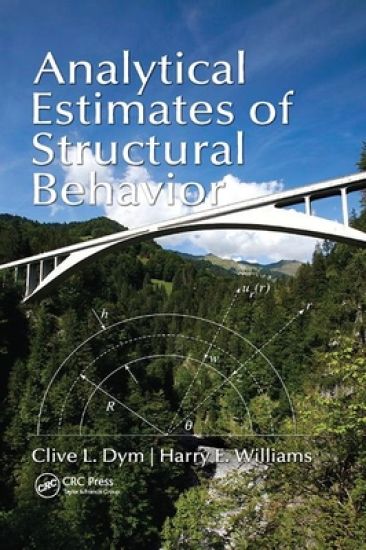
Explicitly reintroducing the idea of modeling to the analysis of structures, Analytical Estimates of Structural Behavior presents an integrated approach to modeling and estimating the behavior of structures. With the increasing reliance on computer-based approaches in structural analysis, it is becoming even more important for structural engineers to recognize that they are dealing with models of structures, not with the actual structures. As tempting as it is to run innumerable simulations, closed-form estimates can be effectively used to guide and check numerical results, and to confirm physical insights and intuitions.Spend Less Time Generating Numbers, and More Time Understanding What They MeanThis book encourages readers to think about structures and their models in a way that is rooted in classic elementary elasticity—depending less on advanced mathematical techniques and more on the dimensions and magnitudes of the underlying physics. The authors stretch the mold, emphasizing and more explicitly describing the modeling process. The focus is on learning which calculations to perform and how to validate and interpret the results—skills that will be increasingly useful for professional engineers.Chapters cover: Key principles and techniques of mathematical modeling, including dimensional analysis, scaling, linearity, and balance and conservation lawsBasic structural modelsHow to develop and express physical intuitionHow to track the behavior of arches under lateral loadTwo methods of analyzing coupled discrete systems—Castigliano’s theorems and Rayleigh’s quotient—to lay a foundation for their application to continuous systemsHow to derive simple, accurate estimates of the transverse displacements of structures modeled in terms of coupled Timoshenko beamsHow to
Contrary to popular mythology, the designs of favorable products and successful systems do not appear suddenly, or magically. This second edition of Engineering Design demonstrates that symbolic representation and related problem-solving methods, offer significant opportunities to clarify and articulate concepts of design to lay a better framework for design research and design education. Artificial Intelligence (AI) provides a substantial body of material concerned with understanding and modeling cognitive processes. This book adopts the vocabulary and a paradigm of AI to enhance the presentation and explanation of design. It includes concepts from AI because of their explanatory power and their utility as possible ingredients of practical design activity. This second edition has been enriched by the inclusion of recent work on design reasoning, computational design, AI in design, and design cognition, with pointers to a wide cross section of the current literature.
Contrary to popular mythology, the designs of favorable products and successful systems do not appear suddenly, or magically. This second edition of Engineering Design demonstrates that symbolic representation and related problem-solving methods, offer significant opportunities to clarify and articulate concepts of design to lay a better framework for design research and design education. Artificial Intelligence (AI) provides a substantial body of material concerned with understanding and modeling cognitive processes. This book adopts the vocabulary and a paradigm of AI to enhance the presentation and explanation of design. It includes concepts from AI because of their explanatory power and their utility as possible ingredients of practical design activity. This second edition has been enriched by the inclusion of recent work on design reasoning, computational design, AI in design, and design cognition, with pointers to a wide cross section of the current literature.
Explicitly reintroducing the idea of modeling to the analysis of structures, Analytical Estimates of Structural Behavior presents an integrated approach to modeling and estimating the behavior of structures. With the increasing reliance on computer-based approaches in structural analysis, it is becoming even more important for structural engineers to recognize that they are dealing with models of structures, not with the actual structures. As tempting as it is to run innumerable simulations, closed-form estimates can be effectively used to guide and check numerical results, and to confirm physical insights and intuitions.Spend Less Time Generating Numbers, and More Time Understanding What They MeanThis book encourages readers to think about structures and their models in a way that is rooted in classic elementary elasticity—depending less on advanced mathematical techniques and more on the dimensions and magnitudes of the underlying physics. The authors stretch the mold, emphasizing and more explicitly describing the modeling process. The focus is on learning which calculations to perform and how to validate and interpret the results—skills that will be increasingly useful for professional engineers.Chapters cover: Key principles and techniques of mathematical modeling, including dimensional analysis, scaling, linearity, and balance and conservation lawsBasic structural modelsHow to develop and express physical intuitionHow to track the behavior of arches under lateral loadTwo methods of analyzing coupled discrete systems—Castigliano’s theorems and Rayleigh’s quotient—to lay a foundation for their application to continuous systemsHow to derive simple, accurate estimates of the transverse displacements of structures modeled in terms of coupled Timoshenko beamsHow to
Integrated Mechanics Knowledge Essential for Any EngineerIntroduction to Engineering Mechanics: A Continuum Approach, Second Edition uses continuum mechanics to showcase the connections between engineering structure and design and between solids and fluids and helps readers learn how to predict the effects of forces, stresses, and strains. The authors’ "continuum checklist" provides a framework for a wide variety of problems in solid and fluid mechanics. The essence of continuum mechanics, the internal response of materials to external loading, is often obscured by the complex mathematics of its formulation. By gradually building the formulations from one-dimensional to two- and three-dimensional, the authors help students develop a physical intuition for solid and fluid behavior and for the very interesting behavior of those materials including many biomaterials, between these extremes. This text is an accessible first introduction to the mechanics of all engineering materials, and incorporates a wide range of case studies highlighting the relevance of the technical content in societal, historical, ethical, and global contexts. It also offers a useful perspective for engineers concerned with biomedical, civil, chemical, mechanical, or other applications.New in the Second Edition: The latest edition contains significantly more examples, problems, and case studies than the first edition.The 22 chapters in this text: Define and present the template for the continuum approachIntroduce strain and stress in one dimension, develop a constitutive law, and apply these concepts to the simple case of an axially loaded barExtend the concepts to higher dimensions by introducing the Poisson’s ratio and strain and stress tensorsApply the continuum sense of solid mechanics to problems including torsion, pressure vessels, beams, and columnsMake connections between solid and fluid mechanics, introducing properties of fluids and strain rate tensorAddress fluid staticsConsider applications in fluid mechanicsDevelop the governing equations in both control volume and differential formsEmphasize real-world design applicationsIntroduction to Engineering Mechanics: A Continuum Approach, Second Edition provides a thorough understanding of how materials respond to loading: how solids deform and incur stress and how fluids flow. It introduces the fundamentals of solid and fluid mechanics, illustrates the mathematical connections between these fields, and emphasizes their diverse real-life applications. The authors also provide historical context for the ideas they describe and offer hints for future use.
System modeling and analysis is a standard activity in every engineering discipline. This text offers a broad-based introduction to engineering systems, incorporating material from mechanical, electrical, aerospace, and chemical engineering. The overall theme that distinguishes the text from others is its unified treatment of disparate physical systems, emphasizing similarities in both the modeling and behaviour of lumped-element systems. Linear graph theory provides the framework for modeling engineering systems as lumped elements. The analysis of system dynamics that follows is organized by behavioral characteristics rather than by engineering subdisciplines. Next, the Laplace transform is introduced as a tool for understanding frequency response. The final chapter covers feedback systems. Every chapter includes a wide variety of examples, as well as exercise problems, drawn from real-world mechanical, electrical, hydraulic, chemical, and thermal systems. Aimed at second and third year undergraduates, this introductory text offers a unified entry to the multidisciplinary world of engineering.
System modeling and analysis is a standard activity in every engineering discipline. This text offers a broad-based introduction to engineering systems, incorporating material from mechanical, electrical, aerospace, and chemical engineering. The overall theme that distinguishes the text from others is its unified treatment of disparate physical systems, emphasizing similarities in both the modeling and behaviour of lumped-element systems. Linear graph theory provides the framework for modeling engineering systems as lumped elements. The analysis of system dynamics that follows is organized by behavioral characteristics rather than by engineering subdisciplines. Next, the Laplace transform is introduced as a tool for understanding frequency response. The final chapter covers feedback systems. Every chapter includes a wide variety of examples, as well as exercise problems, drawn from real-world mechanical, electrical, hydraulic, chemical, and thermal systems. Aimed at second and third year undergraduates, this introductory text offers a unified entry to the multidisciplinary world of engineering.
This book explores radical dissent from orthodox mainstream economics, and sets out a theoretically grounded vision for the emerging paradigm of social ecological economics. At the heart of this paradigmatic shift lies an acknowledgement of the inextricable embeddedness of economies in biophysical reality and social structure. The struggle for this transformative vision unfolds through a critical examination of mainstream environmental thought, followed by a nuanced evaluation of contributions from Marxists, socialists, critical institutionalists, feminists and Post-Keynesians grappling with the urgent environmental crisis.Synthesising insights from these diverse and heterodox schools, the book navigates the philosophical underpinnings of science, embracing a critical realist approach that challenges not only mainstream economic thought but also eclectic pluralism, relativism and strong constructionism. The question of what constitutes revolutionary science is explored in light of works by Kuhn, Schumpeter and Neurath, emphasising the pivotal role of values and ideology in works from Marx to Gramsci.Building on these radical and philosophical foundations, the book articulates a preanalytic vision of social ecological economics, dismantling entrenched notions of growth and efficiency in favour of a framework centered on social provisioning and needs embedded in ethics. In a thought-provoking conclusion, the book applies its analytical lens to the multiple crises of modernity within industrialised capital-accumulating economies. An agenda for social ecological transformation toward diverse alternative economies emerges, providing a compelling call to action in the face of contemporary challenges.
This book explores radical dissent from orthodox mainstream economics, and sets out a theoretically grounded vision for the emerging paradigm of social ecological economics. At the heart of this paradigmatic shift lies an acknowledgement of the inextricable embeddedness of economies in biophysical reality and social structure. The struggle for this transformative vision unfolds through a critical examination of mainstream environmental thought, followed by a nuanced evaluation of contributions from Marxists, socialists, critical institutionalists, feminists and Post-Keynesians grappling with the urgent environmental crisis.Synthesising insights from these diverse and heterodox schools, the book navigates the philosophical underpinnings of science, embracing a critical realist approach that challenges not only mainstream economic thought but also eclectic pluralism, relativism and strong constructionism. The question of what constitutes revolutionary science is explored in light of works by Kuhn, Schumpeter and Neurath, emphasising the pivotal role of values and ideology in works from Marx to Gramsci.Building on these radical and philosophical foundations, the book articulates a preanalytic vision of social ecological economics, dismantling entrenched notions of growth and efficiency in favour of a framework centered on social provisioning and needs embedded in ethics. In a thought-provoking conclusion, the book applies its analytical lens to the multiple crises of modernity within industrialised capital-accumulating economies. An agenda for social ecological transformation toward diverse alternative economies emerges, providing a compelling call to action in the face of contemporary challenges.
An authoritative introduction to the fascinating topic of archaeoastronomy—ancient peoples' understanding and use of the skies. Ancient Astronomy: An Encyclopedia of Cosmologies and Myth draws on archaeological evidence and oral traditions to reveal how prehistoric humans perceived the skies and celestial phenomena. With over 200 entries, it offers a number of ways to approach ancient astronomy, from key examples and case studies worldwide (Stonehenge; Mexican and Egyptian pyramids; Chaco Canyon, New Mexico; the Nazca lines in Peru) to general themes (cosmologies, calendars, ancient ideas of space and time, origin myths), to fundamental concepts and methods (how the sky has changed over the centuries, how to survey a site), and to the field's most frequently asked questions (How did ancient peoples navigate the ocean using the stars? How does astrology relate to ancient astronomy? Can ancient sites be dated astronomically?) By revealing the astronomical significance of some of the world's most famous ancient landmarks and enduring myths and by showing how different themes and concepts are connected, Ancient Astronomy: An Encyclopedia of Cosmologies and Myth brings a unique authoritative perspective to an area too often left to speculation and sensationalism.
These tales are firmly rooted in the folk traditions that have evolved since Europeans arrived on the continent. Many traditional -American stories and tall tales are based on real-life historical figures such as Daniel Boone and Davy Crockett, while others are pure fiction such as Paul Bunyan and the Lone Ranger. Some narratives are born of exaggeration, while others were created to help make sense of aspects of the world not understood at the time, and others to shape the ideals of society.The founding of the United States is often surrounded by legends and tall tales. Many stories have developed since the founding long ago to become a part of America's folklore and cultural awareness, and non-Native American folklore especially includes any narrative which has contributed to the shaping of American culture and belief systems. These narratives may be true and may be false or may be a little true and a little false; the veracity of the stories is not necessarily a determining factor.A number of these tales are also examples of early fictional writing in America, combining folklore and social commentary in innovative ways. Kate Chopin in particular embodies this form in her tales set in Louisiana.The tall tale is also a fundamental element of American folk literature. The tall tale's origins are seen in the bragging contests that often occurred when men of the American frontier gathered. A tall tale is a story with unbelievable elements, related as if it were true and factual. Some such stories are exaggerations of actual events; others are completely fictional tales set in a familiar setting, such as the American Old West, or the beginning of the Industrial Revolution. They are usually humorous or good-natured. The line between myth and tall tale is distinguished primarily by age; many myths exaggerate the exploits of their heroes, but in tall tales the exaggeration looms large, to the extent of becoming the whole of the story.I feel that we are just touching the tip of the iceberg here, based on those few texts that I've collected so far. There is, I believe a vast weight of storytelling beneath the waters upon which we sail in this collection. I hope that you enjoy these tales as much as I have in their discovery and their mild adaptation.
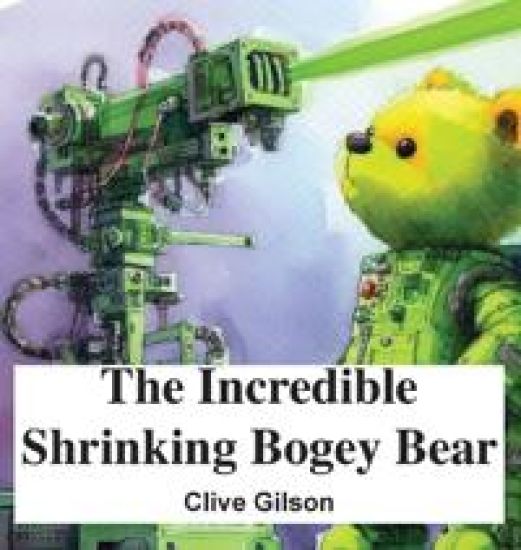
It's just a regular Saturday morning for Morgan, her inventor dad, and a small, green furry robot bear. It all goes wrong when Mrs. McGonagall pops round to make a macaroni cheese lunch. Can one small bear save Mrs. McGonagall's head from going BANG This is a Morgan and Bogey Bear story.