Clive Wilmer's fourth collection of poems. The elegies, colloquys, meditations and passionate recollections learn from masters of modernism such as Pessoa and Pound, and are all the time informed by the prophetic voices of Morris and Ruskin.
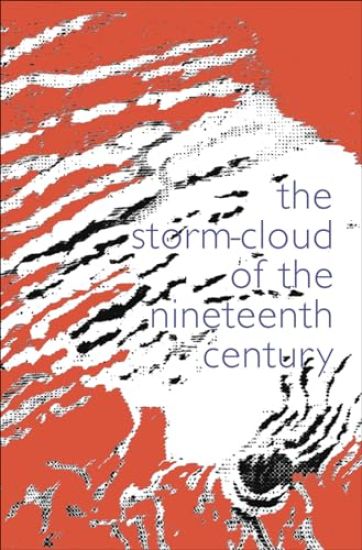
Dismissed by contemporaries as the ravings of a deluded enemy of modernity, The Storm Cloud of the Nineteenth Century is an eerily prescient denunciation of capitalism’s assault on the atmosphere – and the profound danger for the earth but also the spiritual well-being of humanity. It is one of Ruskin’s final writings, conducted with both rigorous scientific observation and a sense of Biblical prophecy. Ruskin’s call to action is even more urgently needed today. His rallying cry, There is no Wealth but Life, is implicit throughout the Storm Cloud. How his thought developed through a conflicted relationship with the professional science of his day, and what we can take from his writings, are examined by Peter Brimblecombe, Professor of Atmospheric Pollution at the University of Essex, in his Introduction. A foreword by the Master of the Guild of St George, Ruskin’s association for social and spiritual reform, sets out what Ruskinians today can do and are doing.
Lions in the Wilderness: England's Decade of Decline traces the trials and tribulations of the England football team in the 1970s.It was a decade that began with the Three Lions being deposed as holders at the 1970 World Cup in Mexico, and ended with them failing to appear in another major tournament until the 1980 European Championship. Manager Sir Alf Ramsey, who led England to their famous 1966 World Cup Final triumph over West Germany at Wembley, lost his job in the wake of his side's calamitous failure to qualify for the 1974 tournament, while ultimate successor Don Revie walked out in highly controversial fashion to take charge of the United Arab Emirates and leave Ron Greenwood to pick up the pieces of his country's shattered reputation.Lions in the Wilderness also focuses on the personalities who shaped English football in the 70s and charts the growing emergence of black players, culminating in right-back Viv Anderson becoming the first black player to win a senior England cap.
Drawing on nearly thirty years of prior analyses of growth, aging, and diversity in Texas populations and households, the authors of Changing Texas: Implications of Addressing or Ignoring the Texas Challenge examine key issues related to future Texas population change and its socioeconomic implications. Current interpretation of data indicates that, in the absence of any change in the socioeconomic conditions associated with the demographic characteristics of the fastest growing populations, Texas will become poorer and less competitive in the future. However, the authors delineate how such a future can be altered so that the “Texas Challenge” becomes a Texas advantage, leading to a more prosperous future for all Texans. Presenting extensive data and projections for the period through 2050, Changing Texas permits an educated preview of Texas at the middle of the twenty-first century. Discussing in detail the implications of population-related change and examining how the state could alter those outcomes through public policy, Changing Texas offers important insights for the implications of Texas’ changing demographics for educational infrastructure, income and poverty, unemployment, healthcare needs, business activity, public funding, and many other topics important to the state, its leaders, and its people. Perhaps most importantly, Changing Texas shows how objective information, appropriately analyzed, can inform governmental and private-sector policies that will have important implications for the future of Texas.
This new volume maps the complex interplay of demographic and socioeconomic changes in the United States, where rapid aging and ethnic diversification are merely the most salient of the many issues with major long-term implications. Drawing on The United States Census Bureau’s post-2010 detailed projections, as well as a wealth of data distilled from authoritative sources, the authors tackle many of the urgent policy questions raised by America’s changing population. The book explores the ways economic markets are adapting to an older and more diverse customer base, how the projected demographic change will impact public service demand, the growing economic disparities between asset-rich baby boomers and youth struggling for economic security, and how the projected demographic patterns will change the fiscal, economic, education, health, and housing sectors and alter the social structures and processes impacting American households and the diverse array of America’s future population.A thorough survey of major demographic patterns in the USA up to 2050 is followed by an assessment of how these will affect socioeconomic, public service, fiscal, economic, and social structures and mechanisms, down to the size and composition of households. The analysis then considers possible variations of outcome predicated on alternative dynamic patterns between demographics and socioeconomics. Cutting through the politics and communal anxieties with hard, cutting-edge data, this study will be a primary source for all those who must use its contents to guide their decisions.
This new volume maps the complex interplay of demographic and socioeconomic changes in the United States, where rapid aging and ethnic diversification are merely the most salient of the many issues with major long-term implications. Drawing on The United States Census Bureau’s post-2010 detailed projections, as well as a wealth of data distilled from authoritative sources, the authors tackle many of the urgent policy questions raised by America’s changing population. The book explores the ways economic markets are adapting to an older and more diverse customer base, how the projected demographic change will impact public service demand, the growing economic disparities between asset-rich baby boomers and youth struggling for economic security, and how the projected demographic patterns will change the fiscal, economic, education, health, and housing sectors and alter the social structures and processes impacting American households and the diverse array of America’s future population.A thorough survey of major demographic patterns in the USA up to 2050 is followed by an assessment of how these will affect socioeconomic, public service, fiscal, economic, and social structures and mechanisms, down to the size and composition of households. The analysis then considers possible variations of outcome predicated on alternative dynamic patterns between demographics and socioeconomics. Cutting through the politics and communal anxieties with hard, cutting-edge data, this study will be a primary source for all those who must use its contents to guide their decisions.
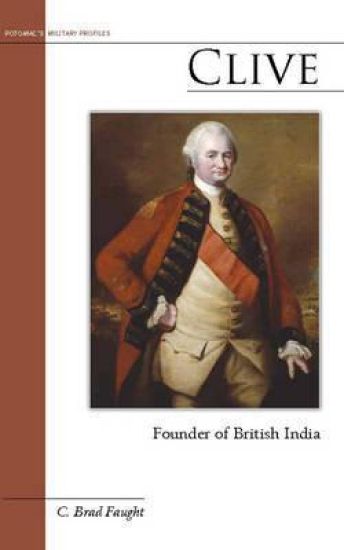
Robert Clive (1725–1774), later 1st Baron Clive, is widely considered the founder of British India. He arrived in Madras as a clerk for the East India Company in 1744. Through timely promotion and a clear affinity for military leadership, he proceeded to consolidate the company’s commercial and territorial position in South India before doing the same in the northeast in Bengal. In 1757 company troops under his command defeated the nawab of Bengal at the Battle of Plassey. This victory set in motion the East India Company’s ascendancy over much of India, paving the way for the 1857 creation of the British Raj, which would last for another ninety years. Clive is a fascinating and important historical figure: a lowly company employee who rose to great heights; an informally trained military commander who led company and local Indian troops to a series of stirring victories over local rivals who were supported by the French; a grasping politician who used his great wealth to secure a prominent social position; and, finally, a hounded society notable who, plagued by illness, allegedly took his own life. No one in the early days of the British ventures in India was as well known or as controversial as Clive became. In our own day, when empire and globalism are witnessed and talked about with ease, Clive’s position as both a servant of the East India Company-which developed into the world’s largest transnational trading company at the time-and an agent of imperialism makes him a surprisingly resonant figure.
With a special introduction by Armistead Maupin, author of Tales of the City, this is a unique selection of the author's best short stories and extracts from his novels, chosen by Clive and accompanied by a personal commentary which reveals the man behind the art.
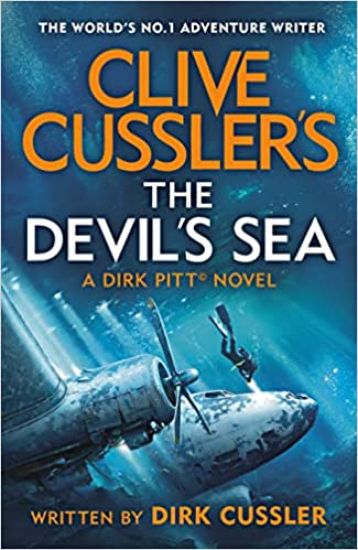
DIRK PITT IS BACK. AND ON HIS SHOULDERS RESTS THE FATE OF THE ENTIRE PLANET.JOIN THE LATEST THRILL RIDE FROM THE GRAND MASTER OF ADVENTURE, CLIVE CUSSLER_________Tibet, 1959.In the turmoil of the Communist takeover of the mountain kingdom, a Buddhist artefact of immense importance appears to have been lost to history.Until, sixty years later, clues to its survival emerged from the wreckage of a cargo plane discovered deep beneath the surface of the Philippine Sea . . .NUMA Director Dirk Pitt and his old friend Al Giordino already have their hands full dealing with the recovery of a top secret hypersonic missile that went down in the Luzon Strait. Especially when it becomes clear that a rogue Chinese military team has its sights set on the same prize.And that, after making their own earth-shattering discovery about what lies below the waves, they're prepared to go to any lengths to ensure that they possess it.Any lengths at all.From the cold, dark depths of the Pacific Ocean to the vertiginous peaks of the Himalayas, only Dirk Pitt can unravel the mysteries that will bring the world back from the brink of war . . .Praise for Clive Cussler:'The Adventure King' Sunday Express'Just about the best in the business' New York Post 'Cussler is hard to beat' Daily Mail
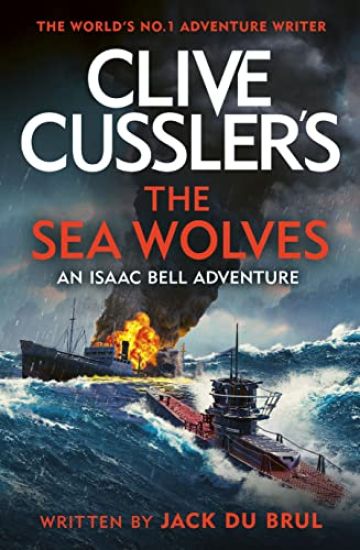
ISAAC BELL RETURNS IN A BRAND NEW THRILLING MISSION FROM THE GRAND MASTER OF ADVENTURE, CLIVE CUSSLERAn old nemesis. A secret technology. The fate of a Great War at stake . . .__________Summer, 1914.As New England swelters, Detective Isaac Bell is asked to investigate a cache of missing rifles. But whoever broke into this Winchester Factory wasn't just looking to take weapons - they wanted to leave something in the shipping crates . . . A radio transmitter, set to summon a fleet of dreaded German U-boats to their location in the seas.This means only one thing: someone is trying to keep American supplies from reaching British shores. And if Bell doesn't crack the conspiracy in time, the Atlantic Ocean will run red with blood.With the outcome of the war in the balance and Franklin Roosevelt's orders on the line, Bell must confront an old enemy, and hunt down a new piece of technology that is allowing the Germans to rule the seas from New York to England.In a high-stakes, high seas pursuit of explosive suspense, Bell will risk everything to stop the U-Boats, before they strike again . . .__________Praise for Clive Cussler:'The Adventure King' Sunday Express'Just about the best in the business' New York Post 'Cussler is hard to beat' Daily Mail
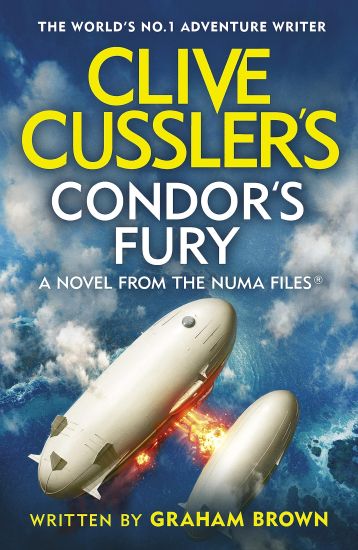
THE ELECTRIFYING NEW ADVENTURE OF THE NUMA CREW, FROM THE GRAND MASTER OF ADVENTURE, CLIVE CUSSLERA terrifying discovery. A cutting-edge weapon. A life-or-death showdown in the skies . . . A distress call from a nearby freighter in the Caribbean brings a NUMA training mission to an abrupt halt. Leaping into action, Kurt Austin and Joe Zavala locate the damaged vessel, where they make an eerie discovery. The captain lies face down and clutched beneath him - an empty shotgun. When Kurt and Joe search for clues, the situation grows stranger - and more dangerous. Lying hidden in wait are the rest of the crew: paranoid, disoriented and ready to fight. Could a mind-altering sickness have struck down an entire ship? Or is something much more sinister going on? Following the crew's tale of mysterious lights leads Kurt and Joe to a cadre of Cuban mercenaries, and when they learn of their plan to use magnificent modern airships to hijack a nuclear submarine, this impromptu mission moves from the seas to the skies. Faced with an irrepressible enemy and a new arena of fighting, stopping this plot could be the NUMA crew's toughest task yet... Praise for Clive Cussler: The Adventure King - Sunday Express Cussler is hard to beat - Daily Mail Just about the best in the business - New York Post
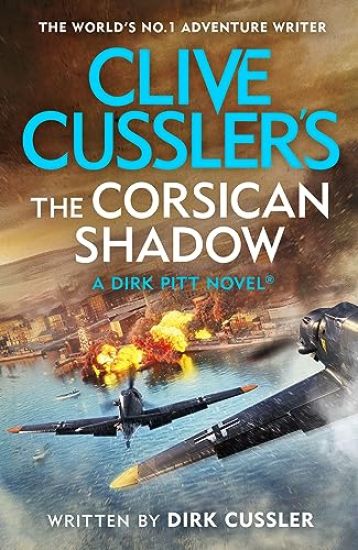
DISCOVER THE LATEST DIRK PITT ADVENTURE. From the shadow of war comes an enduring historical mystery - and a present-day plot of destruction . . .France, May 1940. As the German army blitzes Europe and Parisians flee their city, the chief curator of the Musee de l'Armee is ordered to take a mysterious piece of cargo out of the country. But when he learns his intended ship has been sunk, the fate of his cargo must rest on a decrepit steamer, sailing out under German fire. . .Decades later, a diving expedition in the English Channel leads Director Dirk Pitt to a cache of uncut diamonds on a shipwreck. No sooner than they are discovered, the diamonds are stolen!Pitt and the NUMA agency now find they must face a murderous cabal with far more destructive plans than mere theft. Vital water treatment facilities around the globe are being targeted - placing the world's population in grave peril.From the shadow of the Eiffel Tower to the islands of the Caribbean, only Dirk Pitt and his children, Summer and Dirk Jr., can locate the treasure that will save the world from catastrophe.Praise for Clive Cussler:-'The Adventure King' Sunday Express'Cussler is hard to beat' Daily Mail'Just about the best in the business' New York Post
Juan Cabrillo and the crew of the Oregon are back in an explosive new adventureA hypersonic missile. A genetically engineered army. A worldwide plot of destruction . . .When Juan Cabrillo, captain of the Oregon, is hired to extract an undercover operative in Kenya, he finds himself on the trail of a deadly international plot. A Saudi Prince seeks to unleash a deadly assault on U.S. forces, sparking a new war in the Middle East and ultimately destroying Israel.In their quest to stop him, Cabrillo's crew are about to meet their most fearsome adversaries yet: a force of bio-hacked soldiers endowed with extreme strength and stamina and an unquenchable appetite for violence.From the remote depths of Amazon rainforest to an abandoned monastery in Eritrea, to a final showdown on the jagged mountains of Yemen, the Oregon team must use every shred of courage and cunning they can muster on this global pursuit to disable the ship-killer missile - before the Arabian Sea becomes a mass grave . . .Praise for Clive Cussler:'The Adventure King' Sunday Express'Just about the best in the business' New York Post'Cussler is hard to beat' Daily Mail
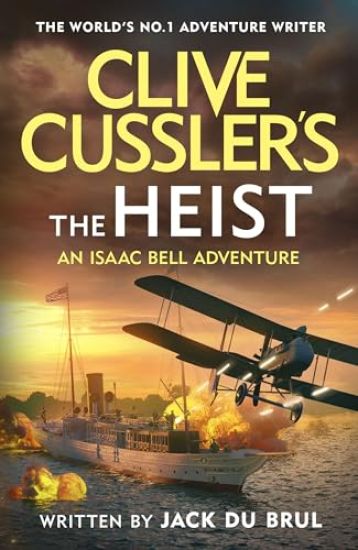
In summer 1914, a murder investigation leads Detective Isaac Bell to an explosive heist planned on the newly launched Federal Reserve System - a plot that will echo far into the future . . .----A MASTER THIEFAN ASSASSIN ACCOMPLICETHE MOST FIENDISH HEIST IN AMERICA’S HISTORYWashington D.C., 1914: President Woodrow Wilson is celebrating aboard his yacht, Mayflower, with the branch leaders of the newly created Federal Reserve. For Van Dorn agent, Detective Isaac Bell, few events could be duller. Until he notices the aeroplane flying dangerously low . . .Thwarting this aerial attack on the President and financial leaders, Bell soon learns that the strike was just the opening of an even deadlier gambit. It’s up to Bell to find the link between the attack, the mysterious death of a Newport heiress, and growing evidence of an unimaginably audacious heist: to steal a billion dollars from the country’s new and most secure banking system.Double-cross and betrayal are Bell’s stock and trade, but this time, the deeper he delves into the puzzle, the less he seems to understand. He is in a race against his most ruthless opponents yet, to prevent a financial panic that would bring the United States to its knees.----Praise for Clive Cussler:'The Adventure King' Sunday Express'Just about the best in the business' New York Post'Cussler is hard to beat' Daily Mail