

Kirjahaku
Etsi kirjoja tekijän nimen, kirjan nimen tai ISBN:n perusteella.
1000 tulosta hakusanalla Colin A Espie
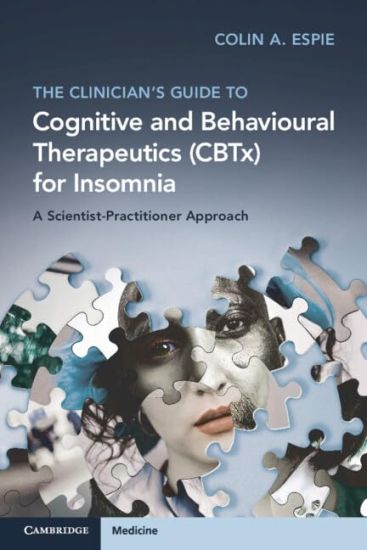
The Clinician's Guide to Cognitive and Behavioural Therapeutics (CBTx) for Insomnia
Colin A. Espie
Cambridge University Press
2025
pokkari
Based on Dr Colin Espie's 45 years of clinical and research experience, this expert manual for clinicians and healthcare professionals shows how best to assess insomnia and deliver effective treatment in everyday practice using cognitive and behavioural therapeutics (CBTx). The book provides in-depth background on the importance of sleep, the interactions between sleep and health, what insomnia is, and insomnia's negative impact on patients. Using detailed examples, metaphors, and practical guidance, it provides clear instructions on the evaluation of sleep complaints and on the why and how of selecting and providing a specific CBTx to suit the presenting patient. Delving beyond treating patients at the individual level, the book also considers how to develop an effective and efficient insomnia service at population scale.

'A practical description of the leading treatment for insomnia and the causes of insomnia' Allison G. Harvey, PhD, University of California, Berkeley, USAPoor sleep is one of the most common health problems and can leave you feeling exhausted, stressed and run down. While prescribed medications and over-the-counter remedies rarely offer lasting benefits, cognitive behavioural therapy (CBT) can help.This essential self-help book is written by one of the world's leading insomnia experts and uses CBT strategies to help you to overcome sleep problems - including persistent insomnia - and to enjoy your life once again. It includes advice on:- Developing good pre-bedtime regimes- The most effective relaxation techniques- Establishing a new sleeping and waking pattern- Dealing with a racing mind- Using sleeping pills more effectively- Handling jet lag and sleepwalkingOvercoming self-help guides use clinically-proven techniques to treat long-standing and disabling conditions, both psychological and physical.Series Editor: Emeritus Professor Peter Cooper

Søvnproblemer er uhyre udbredt, og søvnløshed er desuden årsag til mange plagsømme følgeproblemer, som træthed, depression, vægtsvingninger og stress. Der udskrives sovemedicin i enorme mængder, men medicin løser ofte ikke de dybereliggende forhold, der ligger til grund for de søvnproblemer, som forpester alt for mange menneskers liv. Ikke at kunne sove hører til de onder, folk oftest går til lægen med, men ikke desto mindre er sundhedsvæsenet endnu ikke nået særligt langt i retning af at kunne tilbyde en effektiv behandling.At overvinde søvnløshed gennemgår i letlæst form mere en 25 års forskning på området, og bogen udgør dermed en uundværlig selvhjælpsguide i behandlingen af søvnløshed baseret på teknikker fra kognitiv adfærdsterapi.
Along with increasing recognition of the consequences and costs of ins- nia, there is growing evidence documenting the effectiveness of cogniti- behavior therapy for insomnia. Yet, there is still a major gap between available evidence and current clinical practice. Much of this gap is due to economics, limited treatment access, and ineffective dissemination of knowledge. There is a definite need for practical materials to facilitate access to and implementation of interventions for insomnia. As scientis- practitioners, we are constantly reminded of this need by frequent requests from clinicians around the world for questionnaires and handouts to assist them in treating insomnia patients. It was during a recent international sleep meeting, more specifically on a trainjourney between Dresden and Prague, that we drafted an outline of a handbook that would help fill this gap. This clinical handbook describes an evidence-based treatment p- gram for insomnia. Its content is based on materials that have been cl- ically tested and validated with patients in various settings and with different subtypes of insomnia. The manual is divided into eight chapters. Chapter 1 presents an introduction to sleep and provides answers to f- quently asked questions about the nature of sleep, its determinants, and about the consequences of sleep loss and insomnia. Chapters 2 and 3 outline the main clinical features of insomnia and differential diagnostic issues and describe a practical approach to the assessment of insomnia complaint.
Along with increasing recognition of the consequences and costs of ins- nia, there is growing evidence documenting the effectiveness of cogniti- behavior therapy for insomnia. Yet, there is still a major gap between available evidence and current clinical practice. Much of this gap is due to economics, limited treatment access, and ineffective dissemination of knowledge. There is a definite need for practical materials to facilitate access to and implementation of interventions for insomnia. As scientis- practitioners, we are constantly reminded of this need by frequent requests from clinicians around the world for questionnaires and handouts to assist them in treating insomnia patients. It was during a recent international sleep meeting, more specifically on a trainjourney between Dresden and Prague, that we drafted an outline of a handbook that would help fill this gap. This clinical handbook describes an evidence-based treatment p- gram for insomnia. Its content is based on materials that have been cl- ically tested and validated with patients in various settings and with different subtypes of insomnia. The manual is divided into eight chapters. Chapter 1 presents an introduction to sleep and provides answers to f- quently asked questions about the nature of sleep, its determinants, and about the consequences of sleep loss and insomnia. Chapters 2 and 3 outline the main clinical features of insomnia and differential diagnostic issues and describe a practical approach to the assessment of insomnia complaint.

Entrega de Furoato de Diloxanida Específica a Cólon utilizando Microesferas
Siddharth Verma
Edições Nosso Conhecimento
2022
nidottu
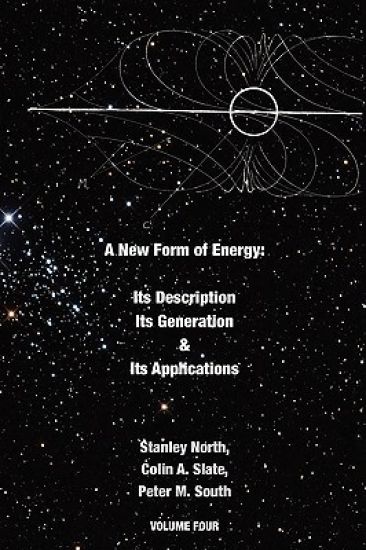
The purposes of the book are severalfold. One is to explain the fundamental nature of quantum Energy, its many strange effects and applications, and its ultimate relationship to - believe it or not - the mind. The second is to offer a complete description of a viable nuclear fusion generator and how a fusion process (the energy of the stars) may be initiated, contained, sustained, and controlled using a new application of electro-dynamics, - and furthermore, how practical energy may be extracted directly from this process. It is also explained why the fantastically expensive and elaborate methods of laboratory nuclear fusion as presently conceived of by physicists has not worked, does not work, and cannot work. The real solution is as simple as it is powerful.

The purposes of the book are severalfold. One is to explain the fundamental nature of quantum Energy, its many strange effects and applications, and its ultimate relationship to - believe it or not - the mind. The second is to offer a complete description of a viable nuclear fusion generator and how a fusion process (the energy of the stars) may be initiated, contained, sustained, and controlled using a new application of electro-dynamics, - and furthermore, how practical energy may be extracted directly from this process. It is also explained why the fantastically expensive and elaborate methods of laboratory nuclear fusion as presently conceived of by physicists has not worked, does not work, and cannot work. The real solution is as simple as it is powerful.
The purposes of the book are severalfold. One is to explain the fundamental nature of quantum Energy, its many strange effects and applications, and its ultimate relationship to - believe it or not - the mind. The second is to offer a complete description of a viable nuclear fusion generator and how a fusion process (the energy of the stars) may be initiated, contained, sustained, and controlled using a new application of electro-dynamics, - and furthermore, how practical energy may be extracted directly from this process. It is also explained why the fantastically expensive and elaborate methods of laboratory nuclear fusion as presently conceived of by physicists has not worked, does not work, and cannot work. The real solution is as simple as it is powerful.
The purposes of the book are severalfold. One is to explain the fundamental nature of quantum Energy, its many strange effects and applications, and its ultimate relationship to - believe it or not - the mind. The second is to offer a complete description of a viable nuclear fusion generator and how a fusion process (the energy of the stars) may be initiated, contained, sustained, and controlled using a new application of electro-dynamics, - and furthermore, how practical energy may be extracted directly from this process. It is also explained why the fantastically expensive and elaborate methods of laboratory nuclear fusion as presently conceived of by physicists has not worked, does not work, and cannot work. The real solution is as simple as it is powerful.


Bone Marrow Failure, An Issue of Hematology/Oncology Clinics of North America
Colin A Sieff
Elsevier - Health Sciences Division
2018
sidottu
This issue of Hematology/Oncology Clinics, edited by Dr. Colin A. Sieff, will focus on Bone Marrow Failure. Topics include, but are not limited to, Acquired and Inherited Bone Marrow Failure; Kickapoo Joy Juice and Somatic Mutations in the Pathogenesis of AA; Somatic Mutations in Aplastic Anemia; Recent Advances and Long-term Results of Medical Treatment of AA; Upfront Matched Unrelated Donor Transplantation in AA; Significance of Clonal Mutations in the Diagnosis and Management of Myelodysplastic Syndrome; Alternate (Haploidental) Donor Transplantation in AA; Management of Diamond Blackfan Anemia and Prospects for Novel Treatment; MDS, AML and Cancer Surveillance in Fanconi Anemia; Diagnosis, Treatment and Molecular Pathology of Shwachman Diamond Syndrome; Clinical Implications of Clonal Hematopoiesis in Dyskeratosis congenita; and Germline GATA2 Mutations and Bone Marrow Failure.

China, with over 20 percent of the earth's population, is both the world's largest producer and largest consumer of cereal grains. As a consequence, the supply and demand of grain in China will have a major impact on the world food trade. In this comprehensive study of China's grain production and trade, Colin A. Carter and Fu-Ning Zhong trace the historical role of China in the grain trade; analyze the impact of economic and political variables on production, consumption, and trade; and discuss alternative scenarios for China's future levels of trade. This is the first study to move beyond aggregate data to deal with regional models of Chinese grain production. The authors' major findings are that budgetary pressures will limit further increases in grain prices, and consequently the growth rate in grain yields will slow. As the total population continues to increase, China's area planted in grain will decline. The Chinese will gradually shift their food consumption toward more meat and other indirect grain consumption; therefore China may continue to import a limited amount of grain but imports will shift from wheat to feed grains.

This book traces the historical role of China in the grain trade; analyzes the impact of economic and political variables on production, consumption, and trade; and discusses alternative scenarios for China's future levels of trade. .
Originally published in 1994, The Earth, Humanity and God discusses the relationship between science and religion. The book discusses the condition of the earth (as it was at the time of publication) and the future prospects of the planet, arguing that neither the conventional "mechanistic" view nor "New Age" philosophy helps alone in evaluating our relationship with the Earth. The book examines methods of combatting the threats to the Earth exploring both a scientific and non-scientific stance, investigating the uncontrolled expansion of technology as well as empirical pre-scientific mysticism. The book also explores the resurgence in ancient ideas of "Mother Earth" as a dangerous piece of romantic irrationality and suggests, that these views pose a danger to religious/scientific examinations. The book suggests instead a hard-headed attempt to relate Biblical and scientific data, and that this in turn can yield a valuable new understanding of the problems facing the world.
Originally published in 1994, The Earth, Humanity and God discusses the relationship between science and religion. The book discusses the condition of the earth (as it was at the time of publication) and the future prospects of the planet, arguing that neither the conventional "mechanistic" view nor "New Age" philosophy helps alone in evaluating our relationship with the Earth. The book examines methods of combatting the threats to the Earth exploring both a scientific and non-scientific stance, investigating the uncontrolled expansion of technology as well as empirical pre-scientific mysticism. The book also explores the resurgence in ancient ideas of "Mother Earth" as a dangerous piece of romantic irrationality and suggests, that these views pose a danger to religious/scientific examinations. The book suggests instead a hard-headed attempt to relate Biblical and scientific data, and that this in turn can yield a valuable new understanding of the problems facing the world.

Since the publication of Colin A. Ross's influential work Multiple Personality Disorder in 1989, this challenging field has evolved rapidlywith new thinking, new research, and a new name: dissociative identity disorder (DID). Keeping pace with these developments, this retitled Second Edition has been skillfully revised and expanded to offer a comprehensive, detailed, and fully up-to-date grounding in the history, diagnosis, and treatment of DID. Readers will find three new chapters covering epidemiology, a sound critique of skeptics of DID, and the problem of attachment to the perpetrator and the locus of control shift. There is also a fresh look at the pathways leading to DID, a discussion of the false memory controversy, and more, with material throughout based on the latest research and the author's extensive clinical and forensic experience. By providing an in-depth examination of this complex illness, Dissociative Identity Disorder not only facilitates a deeper understanding of people who have used dissociation to cope with years of childhood physical, sexual, and emotional abuse, but also reveals new insights into many other psychiatric disorders in which dissociation plays a role. Like Multiple Personality Disorder, this updated volume is an authoritative and indispensable reference for psychiatrists, clinical psychologists, psychiatric nurses, social workers and other mental health professionals, as well as researchers in these fields. "Ross provides a comprehensive and interesting account of the history of MPD, dispelling many myths. He presents new insight into the treatment of MPD, with information about such concerns as how to talk to a patient, how to schedule your time, and how to keep your private and [professional] lives separate. . . . Multiple Personality Disorder will be an invaluable addition to the reference libraries of sexual abuse clinics, child abuse agencies, and correctional facilities, as well as clinicians." Family Violence Bulletin

The Shorter Science and Civilisation in China: Volume 4
Colin A. Ronan
Cambridge University Press
1994
sidottu
Three previous volumes of this series by Colin Ronan are each available in hardback as well as paperback. Volume I introduces the reader to the country of China: its history, geography and language. The major part of this book is devoted to the history of scientific thought in China itself. In Volume II, the first section deals with mathematics, and this is followed by a section dealing with mathematics. Then follow sections on astronomy, meteorology and the earth sciences. The volume closes with a description of various aspects of Chinese physics. Volume III looks in some detail at one of the greatest contributions the Chinese made to physics - the discovery of the magnetic compass.