

Kirjahaku
Etsi kirjoja tekijän nimen, kirjan nimen tai ISBN:n perusteella.
1000 tulosta hakusanalla Colonel Abdoulaye Aziz Ndaw

Problématique des armes légères et de petit calibre en Afrique
Colonel Abdoulaye Aziz Ndao
Editions Universitaires Europeennes
2021
pokkari
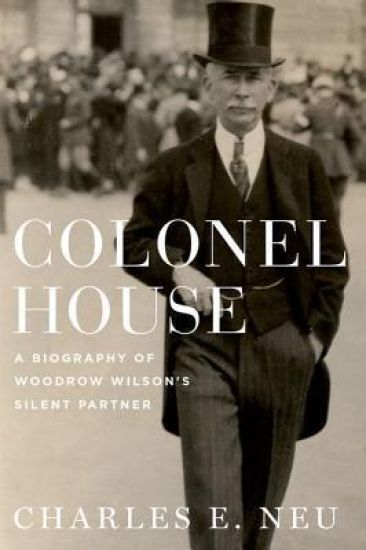
A man who lived his life mostly in the shadows, Edward M. House is little known or remembered today; yet he was one of the most influential figures of the Wilson presidency. Wilson's chief political advisor, House played a key role in international diplomacy, and had a significant hand in crafting the Fourteen Points at the Paris Peace Conference. Though the intimate friendship between the president and his advisor ultimately unraveled in the wake of these negotiations, House's role in the Wilson administration had a lasting impact on 20th century international politics. In this seminal biography, Charles E. Neu details the life of "Colonel" House, a Texas landowner who rose to become one of the century's greatest political operators. Ambitious and persuasive, House worked largely behind the scenes, developing ties of loyalty and using patronage to rally party workers behind his candidates. In 1911 he met Woodrow Wilson, and almost immediately the two formed what would become one of the most famous friendships in American political history. House became a high-level political intermediary in the Wilson administration, proving particularly adept at managing the intangible realm of human relations. After World War I erupted, House, realizing the complexity of the struggle and the dangers and opportunities it posed for the United States, began traveling to and from Europe as the president's personal representative. Eventually he helped Wilson recognize the need to devise a way to end the war that would place the United States at the center of a new world order. In this balanced account, Neu shows that while House was a resourceful and imaginative diplomat, his analysis of wartime politics was erratic. He relied too heavily on personal contacts, often exaggerating his accomplishments and missing the larger historical forces that shaped the policies of the warring powers. Ultimately, as the Paris Peace Conference unfolded, differences appeared between Wilson and his counselor. Their divergent views on the negotiations led to a bitter split, and after the president left France in June of 1919, he would never see House again. Despite this break, Neu refutes the idea that Wilson and House were antagonists. They shared the same beliefs and aspirations and were, Neu shows, part of an unusual partnership. As an organizer, tactician, and confidant, House helped to make possible Wilson's achievements, and this impressive biography restores the enigmatic counselor to his place at the center of that presidency.
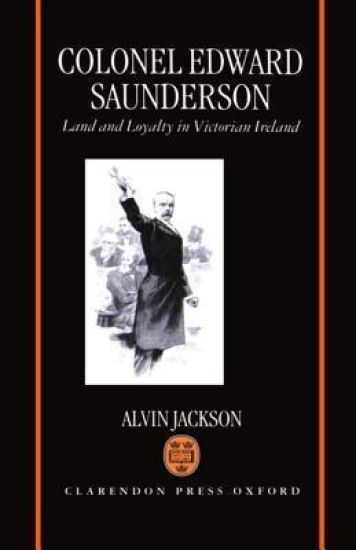
Colonel Edward Saunderson, the original leader of Irish Unionism, and the most prominent defender of Irish landlords in the late nineteenth century, has suffered undue neglect. This book, the first detailed account of his life to appear since the Edwardian era, explores the political traditions of the Saunderson family as well as the development and repercussions of the Colonel's career. The twin poles of Saunderson's life, landownership and the Union, represent the central themes of this study. Saunderson's Unionism was intimately bound with this status as a landed proprietor, and the party institutions and strategies which he helped to create owed much to the strengths and preoccupations of his caste. Equally, the retreat of the gentry within Irish society affected the structure and direction of the whole unionist movement. Jackson offers a wide-ranging account of an Irish landed family concentrating on its most notable member, and on the last decades of its influence. This book is both an important political biography and a valuable case-study of the gentry's economic decline and political reorientation. Edward Saunderson's career, significant within its own terms, serves to illustrate the death throes of the class to which he belonged.
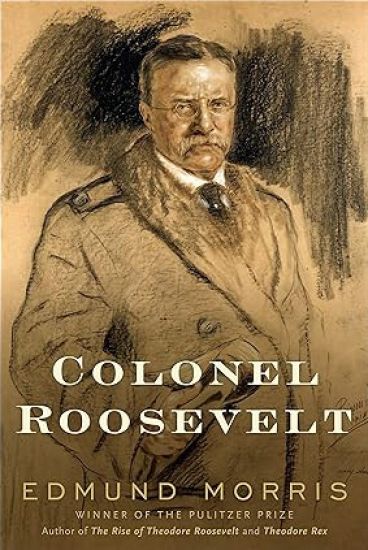
Of all our great presidents, Theodore Roosevelt is the only one whose greatness increased out of office. When he toured Europe in 1910 as plain "Colonel Roosevelt," he was hailed as the most famous man in the world. Crowned heads vied to put him up in their palaces. "If I see another king," he joked, "I think I shall bite him." Had TR won his historic "Bull Moose" campaign in 1912 (when he outpolled the sitting president, William Howard Taft), he might have averted World War I, so great was his international influence. Had he not died in 1919, at the early age of sixty, he would unquestionably have been reelected to a third term in the White House and completed the work he began in 1901 of establishing the United States as a model democracy, militarily strong and socially just. This biography by Edmund Morris, the Pulitzer Prize and National Book Award-winning author of The Rise of Theodore Roosevelt and Theodore Rex, is itself the completion of a trilogy sure to stand as definitive. Packed with more adventure, variety, drama, humor, and tragedy than a big novel, yet documented down to the smallest fact, it recounts the last decade of perhaps the most amazing life in American history. What other president has written forty books, hunted lions, founded a third political party, survived an assassin's bullet, and explored an unknown river longer than the Rhine? Colonel Roosevelt begins with a prologue recounting what TR called his "journey into the Pleistocene"--a yearlong safari through East Africa, collecting specimens for the Smithsonian. Some readers will be repulsed by TR's bloodlust, which this book does not prettify, yet there can be no denying that the Colonel passionately loved and understood every living thing that came his way: The text is rich in quotations from his marvelous nature writing. Although TR intended to remain out of politics when he returned home in 1910, a fateful decision that spring drew him back into public life. By the end of the summer, in his famous "New Nationalism" speech, he was the guiding spirit of the Progressive movement, which inspired much of the social agenda of the future New Deal. (TR's fifth cousin Franklin Delano Roosevelt acknowledged that debt, adding that the Colonel "was the greatest man I ever knew.") Then follows a detailed account of TR's reluctant yet almost successful campaign for the White House in 1912. But unlike other biographers, Edmund Morris does not treat TR mainly as a politician. This volume gives as much consideration to TR's literary achievements and epic expedition to Brazil in 1913-1914 as to his fatherhood of six astonishingly different children, his spiritual and aesthetic beliefs, and his eager embrace of other cultures--from Arab and Magyar to German and American Indian. It is impossible to read Colonel Roosevelt and not be awed by the man's universality. The Colonel himself remarked, "I have enjoyed life as much as any nine men I know." Morris does not hesitate, however, to show how pathologically TR turned upon those who inherited the power he craved--the hapless Taft, the adroit Woodrow Wilson. When Wilson declined to bring the United States into World War I in 1915 and 1916, the Colonel blasted him with some of the worst abuse ever uttered by a former chief executive. Yet even Wilson had to admit that behind the Rooseveltian will to rule lay a winning idealism and decency. "He is just like a big boy--there is a sweetness about him that you can't resist." That makes the story of TR's last year, when the "boy" in him died, all the sadder in the telling: the conclusion of a life of Aristotelian grandeur.

A vibrant retelling of Sense and Sensibility, Grange's sweeping epic breathes new life into another of Austen's best-loved novels. At the age of eighteen, James Brandon's world is shattered when the girl he loves, Eliza, is forced to marry his brother. In despair, he joins the army and leaves England for the East Indies for the next several years. Upon his return, he finds Eliza in a debtor's prison. He rescues her from her terrible situation, but she is dying of consumption and he can do nothing but watch and wait. Heartbroken at her death, he takes some consolation in her illegitimate daughter, who he raises as his ward. But at the age of fifteen, his ward goes missing. Devastated by the thought of what could have happened to her, he is surprised to find himself falling in love with Marianne Dashwood. But Marianne is falling in love with the charismatic Willoughby...
Colonel Gordon in Central Africa, 1874-1879
Charles G. Gordon; George B. (EDT) Hill
Kessinger Pub
2007
sidottu
Colonel Berry's Challenge
KESSINGER PUBLISHING, LLC
2007
pokkari



Colonel Thorpe's Scenes In Arkansas
William Trotter Porter; Joseph M. (CON) Field
Kessinger Pub
2007
pokkari