
Kirjahaku
Etsi kirjoja tekijän nimen, kirjan nimen tai ISBN:n perusteella.
1000 tulosta hakusanalla Constance M. Griffin

This book is a volume in the Penn Press Anniversary Collection. To mark its 125th anniversary in 2015, the University of Pennsylvania Press rereleased more than 1,100 titles from Penn Press's distinguished backlist from 1899-1999 that had fallen out of print. Spanning an entire century, the Anniversary Collection offers peer-reviewed scholarship in a wide range of subject areas.

Narrative, Identity, and the Map of Cultural Policy
Constance DeVereaux; Martin Griffin
CRC Press Inc
2017
nidottu
The story of arts and cultural policy in the twenty-first century is inherently of global concern no matter how local it seems. At the same time, questions of identity have in many ways become more challenging than before. Narrative, Identity, and the Map of Cultural Policy: Once Upon a Time in a Globalized World explores how and why stories and identities sometimes merge and often clash in an arena in which culture and policy may not be able to resolve every difficulty. DeVereaux and Griffin argue that the role of narrative is key to understanding these issues. They offer a wide-ranging history and justification for narrative frameworks as an approach to cultural policy and open up a wider field of discussion about the ways in which cultural politics and cultural identity are being deployed and interpreted in the present, with deep roots in the past. This timely book will be of great interest not just to students of narrative and students of arts and cultural policy, but also to administrators, policy theorists, and cultural management practitioners.

Narrative, Identity, and the Map of Cultural Policy
Constance DeVereaux; Martin Griffin
Ashgate Publishing Limited
2013
sidottu
The story of arts and cultural policy in the twenty-first century is inherently of global concern no matter how local it seems. At the same time, questions of identity have in many ways become more challenging than before. Narrative, Identity, and the Map of Cultural Policy: Once Upon a Time in a Globalized World explores how and why stories and identities sometimes merge and often clash in an arena in which culture and policy may not be able to resolve every difficulty. DeVereaux and Griffin argue that the role of narrative is key to understanding these issues. They offer a wide-ranging history and justification for narrative frameworks as an approach to cultural policy and open up a wider field of discussion about the ways in which cultural politics and cultural identity are being deployed and interpreted in the present, with deep roots in the past. This timely book will be of great interest not just to students of narrative and students of arts and cultural policy, but also to administrators, policy theorists, and cultural management practitioners.

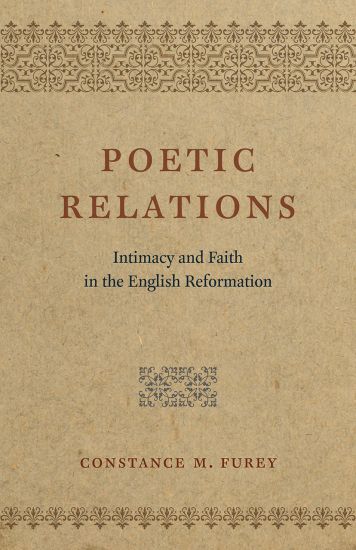
What is the relationship between our isolated and our social selves, between aloneness and interconnection? Constance M. Furey probes this question through a suggestive literary tradition: early Protestant poems in which a single speaker describes a solitary search for God. As Furey demonstrates, John Donne, George Herbert, Anne Bradstreet, and others describe inner lives that are surprisingly crowded, teeming with human as well as divine companions. The same early modern writers who bequeathed to us the modern distinction between self and society reveal here a different way of thinking about selfhood altogether. For them, she argues, the self is neither alone nor universally connected, but is forever interactive and dynamically constituted by specific relationships. By means of an analysis equally attentive to theological ideas, social conventions, and poetic form, Furey reveals how poets who understand introspection as a relational act, and poetry itself as a form ideally suited to crafting a relational self, offer us new ways of thinking about selfhood today and a resource for reimagining both secular and religious ways of being in the world.
Devotion
Constance M. Furey; Sarah Hammerschlag; Amy Hollywood
University of Chicago Press
2021
sidottu
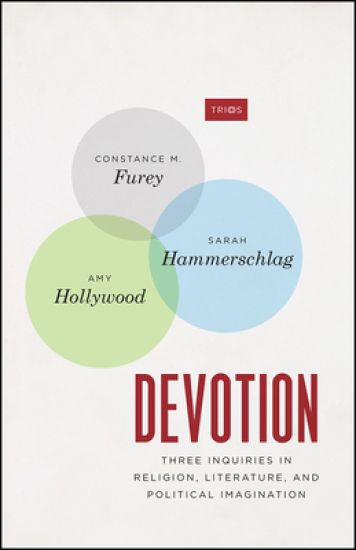
Three scholars of religion explore literature and the literary as sites of critical transformation. We are living in a time of radical uncertainty, faced with serious political, ecological, economic, epidemiological, and social problems. Scholars of religion Constance M. Furey, Sarah Hammerschlag, and Amy Hollywood come together in this volume with a shared conviction that what and how we read opens new ways of imagining our political futures and our lives. Each essay in this book suggests different ways to characterize the object of devotion and the stance of the devout subject before it. Furey writes about devotion in terms of vivification, energy, and artifice; Hammerschlag in terms of commentary, mimicry, and fetishism; and Hollywood in terms of anarchy, antinomianism, and atopia. They are interested in literature not as providing models for ethical, political, or religious life, but as creating the site in which the possible—and the impossible—transport the reader, enabling new forms of thought, habits of mind, and ways of life. Ranging from German theologian Martin Luther to French-Jewish philosopher Sarah Kofman to American poet Susan Howe, this volume is not just a reflection on forms of devotion and their critical and creative import but also a powerful enactment of devotion itself.
Devotion
Constance M. Furey; Sarah Hammerschlag; Amy Hollywood
University of Chicago Press
2021
nidottu
Three scholars of religion explore literature and the literary as sites of critical transformation. We are living in a time of radical uncertainty, faced with serious political, ecological, economic, epidemiological, and social problems. Scholars of religion Constance M. Furey, Sarah Hammerschlag, and Amy Hollywood come together in this volume with a shared conviction that what and how we read opens new ways of imagining our political futures and our lives. Each essay in this book suggests different ways to characterize the object of devotion and the stance of the devout subject before it. Furey writes about devotion in terms of vivification, energy, and artifice; Hammerschlag in terms of commentary, mimicry, and fetishism; and Hollywood in terms of anarchy, antinomianism, and atopia. They are interested in literature not as providing models for ethical, political, or religious life, but as creating the site in which the possible—and the impossible—transport the reader, enabling new forms of thought, habits of mind, and ways of life. Ranging from German theologian Martin Luther to French-Jewish philosopher Sarah Kofman to American poet Susan Howe, this volume is not just a reflection on forms of devotion and their critical and creative import but also a powerful enactment of devotion itself.

"State of Mind", the lavishly illustrated companion book to the exhibition of the same name, investigates California's vital contributions to Conceptual art - in particular, work that emerged in the late 1960s among scattered groups of young artists. The essays reveal connections between the northern and southern California Conceptual art scenes and argue that Conceptualism's experimental practices and an array of then-new media - performance, site-specific installations, film and video, mail art, and artists' publications - continue to exert an enormous influence on the artists working today.

500 Capp Street tells the story of David Ireland's house, a rundown Victorian in the Mission District of San Francisco that the artist transformed into an environmental artwork, taking the detritus of his restoration labors as well as objects left behind by previous owners and refashioning them into sculptures. Constance M. Lewallen begins by recounting the history of the house from 1886, when it was built, until Ireland acquired it in 1975. She then details Ireland's renovation and continuing engagement with the site that served simultaneously as his residence, studio, and evolving artwork; the house's influence on his own work and that of artists who followed him; and its relationship to other house museums. An introduction by Jock Reynolds, who was close to the artist for many years, chronicles the social scene that developed around 500 Capp Street in the 1980s. The book also includes a 1983 article on the house by renowned poet John Ashbery. Illustrated with a generous selection of photographs taken over the years by the artist and his many visitors, this is an invaluable and intimate record of Ireland's best-known work. 500 Capp Street is essential reading for anyone interested in the artistic and cultural history of the San Francisco Bay Area and the California conceptual art movement.
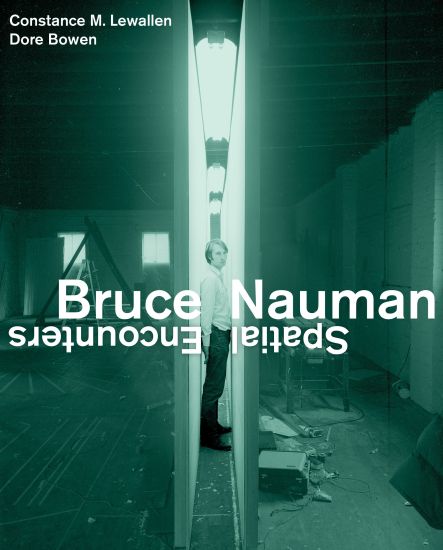
The first book devoted solely to Bruce Nauman’s corridors and other architectural installations, Bruce Nauman: Spatial Encounters deftly explores the significance of these works in the development of his singular art practice, examining them in the context of the period and in relation to other artists like Dan Graham, Robert Morris, Paul Kos, and James Turrell. Designed for viewer participation, Bruce Nauman’s architectural installations often confound expectations and induce physical and psychological unease. The essays in this book consider these works, which begin in 1969 and continue into the 1970s and beyond, in terms of the physical, perceptual, and psychological pressures they exert on the participant. Three interlocking perspectives on the topic—Constance M. Lewallen’s historical overview, Dore Bowen’s case study of Nauman’s 1970 Corridor Installation with Mirror—San Jose Installation (Double Wedge Corridor with Mirror), and a supplementary essay by Ted Mann on Nauman’s drawings—provide a comprehensive and in-depth approach. The book coincides with the major retrospective exhibition Bruce Nauman: Disappearing Acts at the Schaulager Museum, Basel, Switzerland (March 17–August 26, 2018) and the Museum of Modern Art and MoMA PS1, New York (October 21, 2018–March 17, 2019).

Erasmus, Contarini, and the Religious Republic of Letters
Constance M. Furey
Cambridge University Press
2008
pokkari
Though the paradigm of modernist progression has been challenged on many fronts, Erasmus and other sixteenth-century figures are still commonly viewed as people who led the transition from a religious Middle Ages to a more godless modern era. Erasmus, Contarini and the Religious Republic of Letters, published in 2005, complicates this transition by analysing a unique realm of spiritualised scholarship that cannot fit easily into any conventional intellectual chronology. By analysing the lives, work, and correspondence of Erasmus, Thomas More, Margaret More Roper, Reginald Pole, Gasparo Contarini, and Vittoria Colonna, this book demonstrates how these Catholic men and women of letters created a distinctive kind of religious community rooted in friendship and spiritualised scholarship. By spanning the too frequently respected gap between humanist reformers in northern and southern Europe, the book uncovers a widespread, if previously less visible, network that exhibited concerns we still grapple with today.

Erasmus, Contarini, and the Religious Republic of Letters
Constance M. Furey
Cambridge University Press
2005
sidottu
Though the paradigm of modernist progression has been challenged on many fronts, Erasmus and other sixteenth-century figures are still commonly viewed as people who led the transition from a religious Middle Ages to a more godless modern era. Erasmus, Contarini and the Religious Republic of Letters, published in 2005, complicates this transition by analysing a unique realm of spiritualised scholarship that cannot fit easily into any conventional intellectual chronology. By analysing the lives, work, and correspondence of Erasmus, Thomas More, Margaret More Roper, Reginald Pole, Gasparo Contarini, and Vittoria Colonna, this book demonstrates how these Catholic men and women of letters created a distinctive kind of religious community rooted in friendship and spiritualised scholarship. By spanning the too frequently respected gap between humanist reformers in northern and southern Europe, the book uncovers a widespread, if previously less visible, network that exhibited concerns we still grapple with today.

Trading Market Dynamics Using Technical Analysis by Constance M. BrownSummary: A book written for the International Federation of Technical Analysts. The premier global organization for market analysis. Learn how technical analysis charting skills are combined for trading or strategy. Applied technical analysis is different than theory. The interaction of signal, timing, and confirmation is critical in today's markets. Trading Market Dynamics is a detailed progression of methods that lead to a final chapter showing how they are used for trading daily intraday signals in a trader's log from January 1-31, 2022. The methods apply for longer horizon positions or short intraday swings. The 10th book by well known author. FULL COLOR, 398 pages, 8.5 by 11 inches, 2.8 pounds.(Beginner to Intermediate level)-provided by the Author.ISBN-978-0-578-38286-9 (alk. paper) 1. Investment analysis. 2. Speculation. 3. Technical Analysis.

The Worship Architect
Constance M. Cherry
Baker Academic, Div of Baker Publishing Group
2010
nidottu
There are many books available on the topic of worship today, but few provide a comprehensive, practical method for worship design. Constance M. Cherry, a worship professor and practitioner, provides worship leaders with credible blueprint plans for successfully designing worship services that foster meaningful conversation with God and the gathered community. Readers will learn how to create services that are faithful to Scripture, historically conscious, relevant to God, Christ-centered, and engaging for worshipers of all ages in the twenty-first century. The book sets forth basic principles concerning worship design and demonstrates how these principles are conducive to virtually any style of worship practiced today in a myriad of Christian communities. It will also work well as a guide for worship-planning teams in local churches and provide insight for worship students, pastors, and church leaders involved in congregational worship.

The Special Service Worship Architect – Blueprints for Weddings, Funerals, Baptisms, Holy Communion, and Other Occasions
Constance M. Cherry
Baker Academic, Div of Baker Publishing Group
2013
nidottu
One of the "Best Books of 2013," Worship LeaderThis book takes the principles found in Constance Cherry's successful The Worship Architect--in which she provided dynamic blueprints for designing worship services--and applies them to special services in the life of the church. Cherry, a worship professor and practitioner, offers theological reflection, practical guidance, and suggested resources to help worship leaders and ministry students in training to create meaningful special services related to the sacraments, life passages, and other occasions.Cherry sets forth a process concerning worship design for special services and demonstrates how this process is conducive to virtually any style of worship practiced today in a myriad of Christian communities. She includes a model order for each service type, including weddings, funerals, baptisms, child dedications, Holy Communion, and more. The book not only explains what leaders do in order to preside at special services and how to do it, but also why they make certain choices. Each chapter includes discussion questions, practical exercises, and a basic glossary.
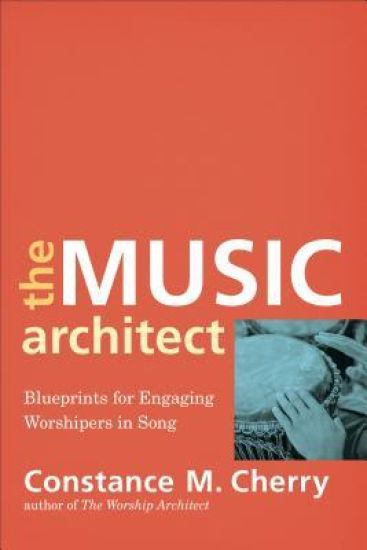
The Music Architect – Blueprints for Engaging Worshipers in Song
Constance M. Cherry
Baker Academic, Div of Baker Publishing Group
2016
nidottu
Guidance for Leaders Seeking a Richer Way to Employ Worship MusicWorship expert Constance Cherry offers comprehensive guidance to Christian leaders seeking a deeper, richer way to employ worship music in engaging ways for twenty-first-century worshipers. Following Cherry's successful book The Worship Architect, this work helps Christian leaders think theologically and act pastorally about worship music in their churches. It addresses larger issues beyond the surface struggles of musical styles and provides tools to critically evaluate worship songs. The book is applicable to all Christian traditions and worship styles and is well suited to both the classroom and the local church. Each chapter concludes with suggested practical exercises, recommended reading, and basic vocabulary terms.

A College for All Californians
Constance M. Carroll; Jack Scott
Teachers' College Press
2021
nidottu
This is the first comprehensive and contemporary history of the largest and most diverse public system of higher education in the United States. Serving over 2 million students annually—approximately one-quarter of the nation's community college undergraduates—California's 116 community colleges play an indispensable role in career and transfer education in North America and have maintained an outsized influence on the evolution of postsecondary education nationally. A College for All Californians chronicles the sector's emergence from K–12 institutions, its evolving mission and growth following World War II and the G.I. Bill For Education, the expansion of its ever-broadening mission, and its essential role in the 1960 Master Plan for Higher Education. Chapters cover California's junior and community colleges' development, mission, governance, faculty, finances, athletics, student support services, and more. It also examines the successes and ongoing political, financial, and educational challenges confronting this uniquely American educational experiment. Book Features:Encapsulates the evolution and contemporary status of our nation's largest and most diverse undergraduate education system.Examines how the colleges were influenced by the political, economic, and social issues of the day.Includes new historical information affecting postsecondary education in California.Analyzes some of the most important current and emerging issues that will continue to influence California's community colleges.