

Kirjahaku
Etsi kirjoja tekijän nimen, kirjan nimen tai ISBN:n perusteella.
1000 tulosta hakusanalla Constantin Pogor
Épreuves de Caractères de la Fonderie Typographique de E. Constantin Fils
Constantin
Hachette Livre - BNF
2021
pokkari
Constantin Hering's Homóopathischer Hausarzt
Constantine Hering
Creative Media Partners, LLC
2023
sidottu
Constantin's Geistesblitze - Dinge, die du nicht verstehen würdest, also - Finger weg! Private: Cooles Notizbuch ca. A5 für alle Männer 108 Seiten mit
Coolmennotes Publishing
Independently Published
2019
nidottu
Zauberhaftes Notizbuch f r M dchen / ca. A5 liniert / 108 SeitenDieses Notizbuch ist eine tolle, kleine Geschenkidee f r M dchen, ideal f r Notizen und Mitteilungen, die Schule, zur Einschulung oder als Tagebuch.PRODUKT DETAILS: ca. A5 (15,2 x 22,8 cm)Taschenbuch (soft cover)Zauberhaftes Design mit tanzendem M dchengl nzender Umschlag 108 Seiten liniertstarkes creme wei es Papierperfekt f r Notizen, Skizzen, Adressen, Mitteilungen, als Tagebuch, ...Es stehen viele andere Namen zur Verf gung. Gib einfach in die Amazon-Suche "DanceNotes Vorname" ein.
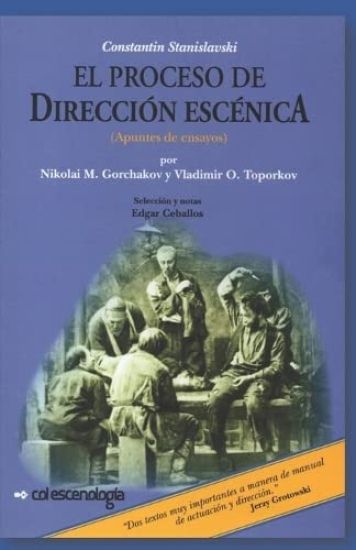
Constantin Stanislavski
Vladimir O Toporkov; Nikolai M Gorchakov
Independently Published
2019
pokkari
El Proceso de Direcci n Esc nica, es un estudio que compendia las observaciones de Stanislavski, en el arte de dirigir desde el melodrama, vodevil, farsa, comedia, drama hist rico, hasta otros g neros m s complejos.El Proceso de Direcci n Esc nica, de Stanislavski, de acuerdo a los apuntes de Nikolai M. Gorchakov y Vladimir O. Toporkov, es un minucioso estudio que parte desde la construcci n del personaje en el propio cuerpo del actor, de acuerdo al M todo de acciones f sicas, hasta la totalidad de la producci n esc nica, en la que se influye por supuesto, la percepci n del espectador. Nos hallamos ante una obra fundamental y b sica para aprender no solo direcci n sino tambi n actuaci n, dictada por uno de los m s grandes te ricos y reformadores del teatro del siglo XX: Constantin Stanislavski.
Operele Lui Constantin Cantacuzino
Constantin Cantacuzino; Nicolae (EDT) Iorga
Kessinger Pub
2009
pokkari
Operele Lui Constantin Cantacuzino
Constantin Cantacuzino; Nicolae (EDT) Iorga
Kessinger Pub
2009
sidottu


Principios t cnicos para la formaci n del actor: Concentraci n, memoria de la emoci n, acci n dram tica, caracterizaci n, observaci n, imaginaci n, improvisaci n, atm sfera, composici n dram tica, el personaje y su caracterizaci n, as como diversos tipos de actuaci n.
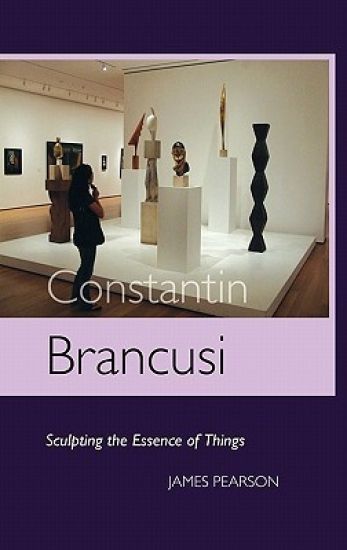
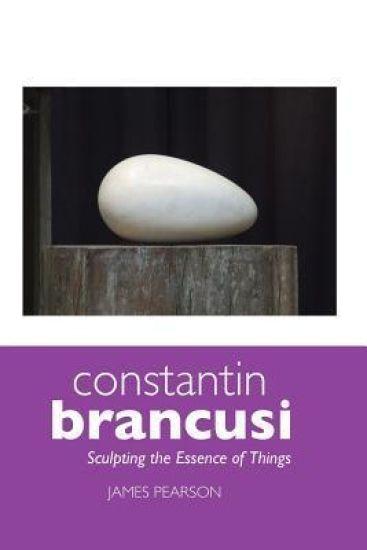
CONSTANTIN BRANCUSI Constantin Brancusi is one of the greatest of all sculptors, and a key sculptor of the modern era, with Auguste Rodin and Pablo Picasso. Brancusi's influence can be seen in a wide range of Western sculptors, including Donald Judd, Carl Andre, Henry Moore, Jean Arp, Barbara Hepworth, Minimalists and land artists. This new book studies the religious and mythical dimensions of Constantin Brancusi's distinctive scultpural forms, the 'eggs', 'fishes', 'heads' and 'columns'. His central quest was for the 'essence of things', which resulted in purifying a form until only the essence was left. It was Constantin Brancusi's project to strip away the detritus that had accumulated around sculpture, Henry Moore said, and to offer the pure, simple shape. What Brancusi did was 'to concentrate on very simple shapes, to keep his sculpture, as it were, one-cylindered, to refine and polish a single shape to a degree almost too precious.' As well as being a sculptor, Constantin Brancusi was also an accomplished photographer. Quite a few artists (not all of them sculptors) have expressed for Brancusi's photographs, and the way he would set up his sculptures in his studio and photograph them at particular times of the day, when the lighting was just right. They are early examples of installation art (and some of the best, too). Andy Goldsworthy said he admired how Brancusi created the right conditions in his studio so that his work 'comes alive at a particular time of the day as the light momentarily touches it'. For Goldsworthy, Brancusi's works were at their best when they were arranged by the sculptor in his studio and photographed. Somehow, it wasn't quite the same when they were displayed in modern art museums (such as the Pompidou Centre in Paris or the Museum of Modern Art in Gotham, which have important Brancusi pieces). Fully illustrated, including many photos of Brancusi's studio in Paris, and the art of his contemporaries.

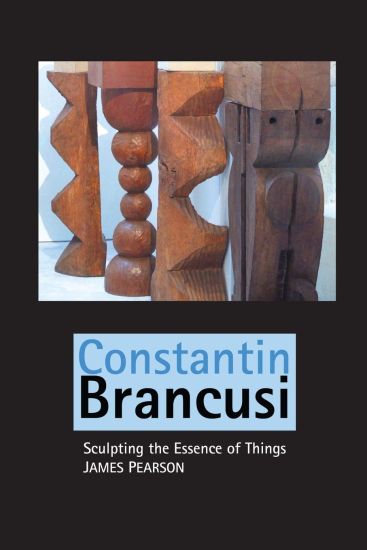
CONSTANTIN BRANCUSI By James Pearson Constantin Brancusi is one of the greatest of all sculptors, and a key sculptor of the modern era, along with Auguste Rodin and Pablo Picasso. Brancusi's influence can be seen in a wide range of Western sculptors, including Donald Judd, Carl Andre, Henry Moore, Jean Arp, Barbara Hepworth, Minimalists and land artists. This new book studies the religious and mythical dimensions of Constantin Brancusi's distinctive sculptural forms, the 'eggs', 'fishes', 'heads' and 'columns'. His central quest was for the 'essence of things', which resulted in purifying a form until only the essence was left. It was Constantin Brancusi's project to strip away the detritus that had accumulated around sculpture, Henry Moore said, and to offer the pure, simple shape. What Brancusi did was 'to concentrate on very simple shapes, to keep his sculpture, as it were, one-cylindered, to refine and polish a single shape to a degree almost too precious.' As well as being a sculptor, Constantin Brancusi was also an accomplished photographer. Quite a few artists (not all of them sculptors) have expressed for Brancusi's photographs, and the way he would set up his sculptures in his studio and photograph them at particular times of the day, when the lighting was just right. They are early examples of installation art (and some of the best, too). Andy Goldsworthy said he admired how Brancusi created the right conditions in his studio so that his work 'comes alive at a particular time of the day as the light momentarily touches it'. For Goldsworthy, Brancusi's works were at their best when they were arranged by the sculptor in his studio and photographed. Somehow, it wasn't quite the same when they were displayed in modern art museums (such as the Pompidou Centre in Paris or the Museum of Modern Art in Gotham, which have important Brancusi pieces). Fully illustrated, including many photos of Constantin Brancusi's studio in Paris, Brancusi's works in museums in New York, Washington and L.A., forerunners and influences, prehistoric art, and the art of his contemporaries. REVISED AND UPDATED, WITH NEW ILLUSTRATIONS With bibliography and notes. ISBN 9781861717412. 180 pages. This new (4th) edition has been revised. www.crmoon.com
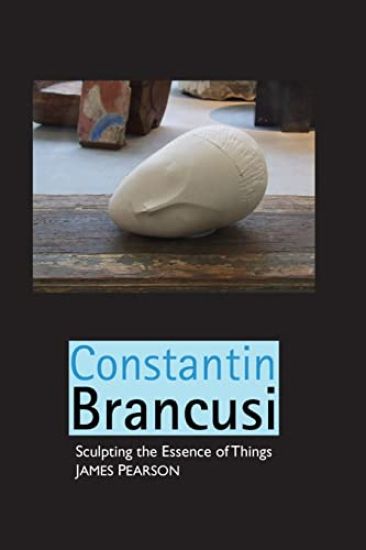
CONSTANTIN BRANCUSISCULPTING THE ESSENCE OF THINGSBy James PearsonLarge Print EditionConstantin Brancusi is one of the greatest of all sculptors, and a key sculptor of the modern era, along with Auguste Rodin and Pablo Picasso. Brancusi's influence can be seen in a wide range of Western sculptors, including Donald Judd, Carl Andre, Henry Moore, Jean Arp, Barbara Hepworth, Minimalists and land artists. This new book studies the religious and mythical dimensions of Constantin Brancusi's distinctive scultpural forms, the 'eggs', 'fishes', 'heads' and 'columns'. His central quest was for the 'essence of things', which resulted in purifying a form until only the essence was left. It was Constantin Brancusi's project to strip away the detritus that had accumulated around sculpture, Henry Moore said, and to offer the pure, simple shape. What Brancusi did was 'to concentrate on very simple shapes, to keep his sculpture, as it were, one-cylindered, to refine and polish a single shape to a degree almost too precious.' As well as being a sculptor, Constantin Brancusi was also an accomplished photographer. Quite a few artists (not all of them sculptors) have expressed for Brancusi's photographs, and the way he would set up his sculptures in his studio and photograph them at particular times of the day, when the lighting was just right. They are early examples of installation art (and some of the best, too). Andy Goldsworthy said he admired how Brancusi created the right conditions in his studio so that his work 'comes alive at a particular time of the day as the light momentarily touches it'. For Goldsworthy, Brancusi's works were at their best when they were arranged by the sculptor in his studio and photographed. Somehow, it wasn't quite the same when they were displayed in modern art museums (such as the Pompidou Centre in Paris or the Museum of Modern Art in Gotham, which have important Brancusi pieces). Fully illustrated, including many photos of Constantin Brancusi's studio in Paris, Brancusi's works in museums in New York, Washington and L.A., forerunners and influences, prehistoric art, and the art of his contemporaries. With bibliography and notes. 248 pages. With a full colour cover. This new (5th) edition has been revised. Large Print Edition - in 18-point type. www.crmoon.com

Acknowledged as one of the major sculptors and avant-garde artists of the twentieth century, Constantin Brancusi (1876-1957) also remained one of the most elusive. His mysterious nature was not only due to his upbringing in Romania – which, at the time, was still regarded by much of Europe as a backward country haunted by vampires and werewolves – but also because Brancusi was aware that myth and an ‘aura of otherness’ appealed to the public. This self-mythology is embodied in his white atelier in Montparnasse, Paris.In Constantin Brancusi Sanda Miller looks beyond the mythology of the artist to show us Constantin the Romanian student, as well as Brancusi the celebrated artist. Using new material, including private correspondence from Brancusi’s archive in Paris, works from Romania, and Brancusi’s own photos of his studio, the author weaves together and interprets a wealth of information, bringing to life his early years in Romania, his move to Paris and his years at his studio. She relates how his art scandalized the Paris salon, yet at the same time explores how his work connects with the folk art of his homeland. She also provides colourful evocations of Brancusi’s relationships with colleagues, dealers, friends and lovers.An innovative reassessment of Brancusi’s life and work, Sanda Miller’s perceptive book allows Brancusi to take his rightful place among the most important of the intellectual personalities who shaped twentieth-century modernism.