Reed's a demon, a lust demon and his job is hunting rogues. Those who have stopped following orders. Not that reed can blame them, the heads of the demons seem hell bent on driving all under their control out of the realm and into the world of humans. Reed would love to make them all eat their rules and see how well the do. However he's been given a case, to find Tony Grant, a rogue, though no one knows a damn thing about him.When the hunter finally finds his mark he discovers someone else is after the boy and in order to bring his rogue in he's going to have to deal with a mess the heads set in motion. Someones massing a small army hoping to take the fool in charge out. It's up to Reed and the rogue to stop them.
Honourable mention in NC book festival At the end of World War II it remained to be seen if the old south would fit back into the bottle from which it emerged in 1941. Could Dixie change to offer a safe environment including equal rights and opportunities for Negros or would it revert to the old way of Jim Crow with the Ku Klux Klan in the roll of the enforcer. Corinth is a story with an ending like no other.
The temple of Aphrodite on Acrocorinth. Sr. Paul's time in Corinth - What did he knew about Aphrodite? The temple of Apollo. Sr. Paul's peltens to the Corinthians expressing his anxiety.
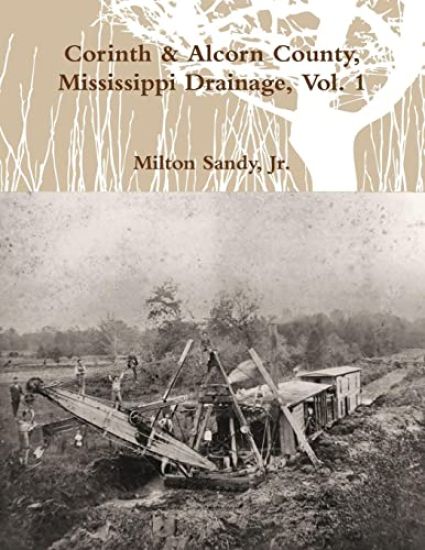
In 2010 extensive flooding caused property damage and loss of life in Corinth, Mississippi. Historic drainage districts established at the turn of the 20th century were reactivated to establish responsibility for maintenance of the neglected flood control drainage canals.
Winner of the Fletcher Pratt Award and McLemore PrizeIn the spring of 1862, there was no more important place in the western Confederacy-perhaps in all the South-than the tiny town of Corinth, Mississippi.Major General Henry W. Halleck, commander of Union forces in the Western Theater, reported to Washington that ""Richmond and Corinth are now the great strategical points of war, and our success at these points should be insured at all hazards."" In the same vein, Confederate General P. G. T. Beauregard declared to Richmond that ""If defeated at Corinth, we lose the Mississippi Valley and probably our cause."" Those were odd sentiments concerning a town scarcely a decade old. By this time, however, it sat at the junction of the South's two most important rail lines and had become a major strategic locale. Despite its significance, Corinth has received comparatively little attention from Civil War historians and has been largely overshadowed by events at Shiloh, Antietam, and Perryville. Timothy Smith's panoramic and vividly detailed new look at Corinth corrects that neglect, focusing on the nearly year-long campaign that opened the way to Vicksburg and presaged the Confederacy's defeat in the West.Combining big-picture strategic and operational analysis with ground-level views, Smith covers the spring siege, the vicious attacks and counterattacks of the October battle, and the subsequent occupation. He has drawn extensively on hundreds of eyewitness accounts to capture the sights, sounds, and smells of battle and highlight the command decisions of Halleck, Beauregard, Ulysses S. Grant, Sterling Price, William S. Rosecrans, and Earl Van Dorn.This is also the first in-depth examination of Corinth following the creation of a new National Park Service center located at the site. Weaving together an immensely compelling tale that places the reader in the midst of war's maelstrom, it substantially revises and enlarges our understanding of Corinth and its crucial importance in the Civil War.
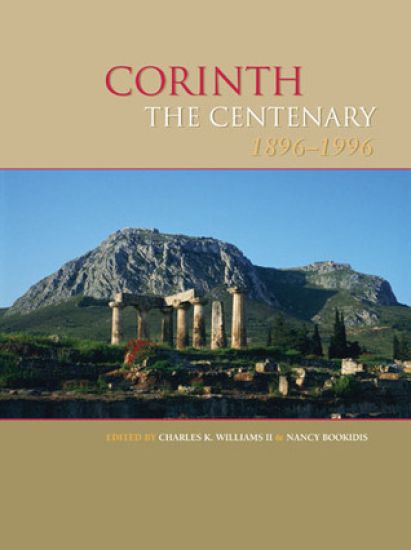
Twenty-five papers presented at the December 1996 symposium held in Athens to celebrate the 100th anniversary of the American School of Classical Studies excavations at ancient Corinth. The papers are intended to illustrate the range in subject matter of research currently being undertaken by scholars of ancient Corinth, and their inclusion in one volume will serve as a useful reference work for nonspecialists. Each of the topics (which vary widely from Corinthian geology to religious practices to Byzantine pottery) is presented by the acknowledged expert in that area. The book includes a full general bibliography of articles and volumes concerning material excavated at Corinth. As a summary of one hundred years’ research it will be useful to generations of scholars to come.
Late antique Corinth was on the frontline of the radical political, economic and religious transformations that swept across the Mediterranean world from the second to sixth centuries CE. A strategic merchant city, it became a hugely important metropolis in Roman Greece and, later, a key focal point for early Christianity. In late antiquity, Corinthians recognised new Christian authorities; adopted novel rites of civic celebration and decoration; and destroyed, rebuilt and added to the city's ancient landscape and monuments. Drawing on evidence from ancient literary sources, extensive archaeological excavations and historical records, Amelia Brown here surveys this period of urban transformation, from the old Agora and temples to new churches and fortifications. Influenced by the methodological advances of urban studies, Brown demonstrates the many ways Corinthians responded to internal and external pressures by building, demolishing and repurposing urban public space, thus transforming Corinthian society, civic identity and urban infrastructure.In a departure from isolated textual and archaeological studies, she connects this process to broader changes in metropolitan life, contributing to the present understanding of urban experience in the late antique Mediterranean.
Late antique Corinth was on the frontline of the radical political, economic and religious transformations that swept across the Mediterranean world from the second to sixth centuries CE. A strategic merchant city, it became a hugely important metropolis in Roman Greece and, later, a key focal point for early Christianity. In late antiquity, Corinthians recognised new Christian authorities; adopted novel rites of civic celebration and decoration; and destroyed, rebuilt and added to the city's ancient landscape and monuments. Drawing on evidence from ancient literary sources, extensive archaeological excavations and historical records, Amelia Brown here surveys this period of urban transformation, from the old Agora and temples to new churches and fortifications. Influenced by the methodological advances of urban studies, Brown demonstrates the many ways Corinthians responded to internal and external pressures by building, demolishing and repurposing urban public space, thus transforming Corinthian society, civic identity and urban infrastructure. In a departure from isolated textual and archaeological studies, she connects this process to broader changes in metropolitan life, contributing to the present understanding of urban experience in the late antique Mediterranean.
*Includes pictures *Includes ancient accounts of Corinth *Includes online resources and a bibliography for further reading Modern perceptions of Classical Greece are almost invariably based on Athens and Sparta, but Corinth was also a key city-state in antiquity. When St. Paul visited in 51 CE, the Corinth he saw was actually a relatively new city, having been built a little over 100 years previously, but he found a city five times larger than Athens at that time and one which was the capital of a prosperous province. However, ancient Corinth had actually been founded in the 10th century BCE and was, for most of its history, the richest port and the largest city in all of Greece. Corinth had a population in excess of 90,000 in 400 BCE, but the Romans leveled this original city in 146 BCE, killing all the male inhabitants and selling the women and children into slavery. The few that survived fled to Delos, and for the next 100 years the site was deserted until Julius Caesar rebuilt it in 44 BCE. The story of the rise and fall of this powerful polis is intriguing, as are the reasons for ancient Corinth's reputation throughout the Greek world for its licentiousness. One of the Greek words for fornication was korinthiazomai, and while the city's association with sacred prostitutes scandalized contemporary Athenians in particular, it also made the city a favorite destination for many Greeks. Corinth was also where so much of what became recognized as "Greek art and architecture" was first developed, and it was here that Eastern influence on Greece can first and most obviously be detected. The destruction of ancient Corinth marked the end of free Greece, but despite the integral role it played in Hellas, Corinth has never been recognized as a great military or naval power in the way that Athens and Sparta have. It did not boast any exceptional schools of philosophy, nor are there any great buildings still remaining to attest to its successes. Corinth's contribution to the spread of Greek civilization, however, matches if not surpasses all of the more well-known poleis. Corinth also acted as a gateway for many of the artistic ideas from the East that local artisans adapted and developed to produce their own uniquely Corinthian style of pottery and art. In architecture, too, Corinth's contribution was significant, and the Corinthian style was utilized throughout Greece and the Greek world, especially in relation to temple building. The quintessential Greek ship, the trireme, was first developed in Corinth, and its role in defeating the Persians, a defeat that most historians agree changed world history, is still understated, probably because of the credence given to Herodotus' claims about the Corinthians' behavior in that war. The fact that the city was reestablished by Julius Caesar and, even today, is a highly important center of trade suggests that Corinth was destined to be a hub of trading activity and a prosperous city. Still, the advantages conferred by a favorable geographic position had to be seized, and this ancient Corinth did. Its impact on the ancient Greek world, and hence its influence on Western civilization, should not be underestimated, even as it mostly continues to be. Corinth: The History and Legacy of the Ancient Greek City-State examines the history of one of Greece's most important poleis. Along with pictures depicting important people, places, and events, you will learn about Corinth like never before.
*Includes pictures *Includes ancient accounts of Corinth *Includes online resources and a bibliography for further reading Modern perceptions of Classical Greece are almost invariably based on Athens and Sparta, but Corinth was also a key city-state in antiquity. When St. Paul visited in 51 CE, the Corinth he saw was actually a relatively new city, having been built a little over 100 years previously, but he found a city five times larger than Athens at that time and one which was the capital of a prosperous province. However, ancient Corinth had actually been founded in the 10th century BCE and was, for most of its history, the richest port and the largest city in all of Greece. Corinth had a population in excess of 90,000 in 400 BCE, but the Romans leveled this original city in 146 BCE, killing all the male inhabitants and selling the women and children into slavery. The few that survived fled to Delos, and for the next 100 years the site was deserted until Julius Caesar rebuilt it in 44 BCE. The story of the rise and fall of this powerful polis is intriguing, as are the reasons for ancient Corinth's reputation throughout the Greek world for its licentiousness. One of the Greek words for fornication was korinthiazomai, and while the city's association with sacred prostitutes scandalized contemporary Athenians in particular, it also made the city a favorite destination for many Greeks. Corinth was also where so much of what became recognized as "Greek art and architecture" was first developed, and it was here that Eastern influence on Greece can first and most obviously be detected. The destruction of ancient Corinth marked the end of free Greece, but despite the integral role it played in Hellas, Corinth has never been recognized as a great military or naval power in the way that Athens and Sparta have. It did not boast any exceptional schools of philosophy, nor are there any great buildings still remaining to attest to its successes. Corinth's contribution to the spread of Greek civilization, however, matches if not surpasses all of the more well-known poleis. Corinth also acted as a gateway for many of the artistic ideas from the East that local artisans adapted and developed to produce their own uniquely Corinthian style of pottery and art. In architecture, too, Corinth's contribution was significant, and the Corinthian style was utilized throughout Greece and the Greek world, especially in relation to temple building. The quintessential Greek ship, the trireme, was first developed in Corinth, and its role in defeating the Persians, a defeat that most historians agree changed world history, is still understated, probably because of the credence given to Herodotus' claims about the Corinthians' behavior in that war. The fact that the city was reestablished by Julius Caesar and, even today, is a highly important center of trade suggests that Corinth was destined to be a hub of trading activity and a prosperous city. Still, the advantages conferred by a favorable geographic position had to be seized, and this ancient Corinth did. Its impact on the ancient Greek world, and hence its influence on Western civilization, should not be underestimated, even as it mostly continues to be. Corinth: The History and Legacy of the Ancient Greek City-State examines the history of one of Greece's most important poleis. Along with pictures depicting important people, places, and events, you will learn about Corinth like never before.
This volume is the product of an interdisciplinary conference held at the University of Texas at Austin. Specialists in the study of inscriptions, architecture, sculpture, coins, tombs, pottery, and texts collaborate to produce new portraits of religion and society in the ancient city of Corinth. The studies focus on groups like the early Roman colonists, the Augustales (priests of Augustus), or the Pauline house churches; on specific cults such as those of Asklepios, Demeter, or the Sacred Spring; on media (e.g., coins, or burial inscriptions); or on the monuments and populations of nearby Kenchreai or Isthmia. The result is a deeper understanding of the religious life of Corinth, contextualized within the socially stratified cultures of the Hellenistic and Roman periods.




![Corinth, and Other Poems. [By Miss - Earle.]](/covers/9781241041908.jpg)