Kirjojen hintavertailu. Mukana 11 244 527 kirjaa ja 12 kauppaa.

Kirjahaku

Etsi kirjoja tekijän nimen, kirjan nimen tai ISBN:n perusteella.

1000 tulosta hakusanalla Craig A. Evans

The Cradle of Christianity: Judaism, Jesus, and the New Testament: Essays in Honor of Craig A. Evans
This major collection of essays by senior colleagues and friends of Craig A. Evans recognizes his contribution to the field of biblical studies by concentrating upon his areas of research and writing interest. These include: the emergence and characteristics of early Judaism, Jesus and the apostolic tradition, and a variety of other supporting areas in New Testament studies. These essays include both focused studies and challenging theoretical explorations.
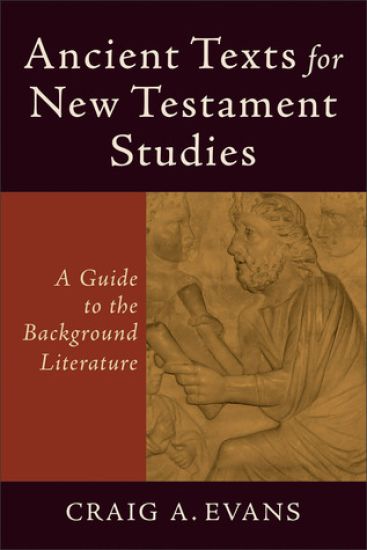
Ancient Texts for New Testament Studies – A Guide to the Background Literature

Ancient Texts for New Testament Studies – A Guide to the Background Literature

Craig A. Evans

Baker Academic, Div of Baker Publishing Group
2012
nidottu
One of the daunting challenges facing the New Testament interpreter is achieving familiarity with the immense corpus of related literatures. Scholars and students alike must have a fundamental understanding of the content, provenance, and utility for New Testament interpretation of a wide range of pagan, Jewish, and diversely Christian documents.Ancient Texts for the Study of the New Testament provides descriptions of all ancient literature that is relevant for serious study of the New Testament writings. Readers can quickly survey the literature clustered under various headings (such as the Apocrypha, Dead Sea Scrolls, or early Rabbinic literature), easily access brief definitions and descriptions, and then consider examples of how the literature sheds light on the background and interpretation of specific passages in the New Testament. There are several helpful appendices, including one that lists, beginning with Matthew and ending with Revelation, potentially significant parallels between New Testament passages and the ancient writings treated in the book.This thoroughly revised and significantly expanded edition of Noncanonical Writings and New Testament Interpretation examines a vast range of ancient literature, masterfully distilling details of date, language, text, and translation into an eminently usable handbook. Craig Evans evaluates the materials' relevance for interpreting the New Testament and provides essential biographies. Although the book is written at an introductory level, its comprehensive scope makes it useful even for the seasoned scholar.
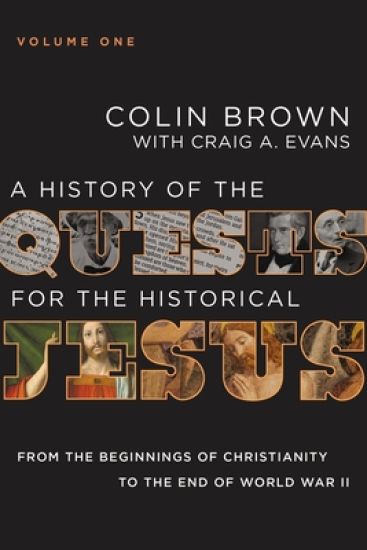
A History of the Quests for the Historical Jesus, Volume 1
A comprehensive, two-volume reassessment of the quests for the historical Jesus that details their origins and underlying presuppositions as well as their ongoing influence on today's biblical and theological scholarship.Jesus' life and teaching is important to every question we ask about what we believe and why we believe it. And yet there has never been common agreement about his identity, intentions, or teachings—even among first-century historians and scholars. Throughout history, different religious and philosophical traditions have attempted to claim Jesus and paint him in the cultural narratives of their heritage, creating a labyrinth of conflicting ideas.From the evolution of orthodoxy and quests before Albert Schweitzer's famous "Old Quest," to today's ongoing questions about criteria, methods, and sources, A History of the Quests for the Historical Jesus not only chronicles the developments but lays the groundwork for the way forward.The late Colin Brown brings his scholarly prowess in both theology and biblical studies to bear on the subject, assessing not only the historical and exegetical nuts and bolts of the debate about Jesus of Nazareth but also its philosophical, sociological, and theological underpinnings. Instead of seeking a bedrock of "facts," Brown stresses the role of hermeneutics in formulating questions and seeking answers.Colin Brown was almost finished with the manuscript at the time of his passing in 2019. Brought to its final form by Craig A. Evans, this book promises to become the definitive history and assessment of the quests for the historical Jesus.Volume One covers the period from the beginnings of Christianity to the end of World War II.Volume Two (sold separately) covers the period from the post-War era through contemporary debates.
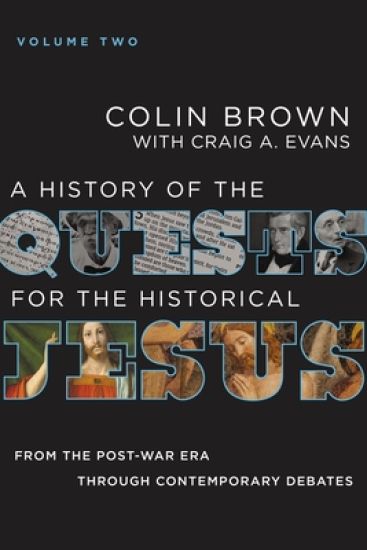
A History of the Quests for the Historical Jesus, Volume 2
A comprehensive, two-volume reassessment of the quests for the historical Jesus that details their origins and underlying presuppositions as well as their ongoing influence on today's biblical and theological scholarship.Jesus' life and teaching is important to every question we ask about what we believe and why we believe it. And yet there has never been common agreement about his identity, intentions, or teachings—even among first-century historians and scholars. Throughout history, different religious and philosophical traditions have attempted to claim Jesus and paint him in the cultural narratives of their heritage, creating a labyrinth of conflicting ideas.From the evolution of orthodoxy and quests before Albert Schweitzer's famous "Old Quest," to today's ongoing questions about criteria, methods, and sources, A History of the Quests for the Historical Jesus not only chronicles the developments but lays the groundwork for the way forward.The late Colin Brown brings his scholarly prowess in both theology and biblical studies to bear on the subject, assessing not only the historical and exegetical nuts and bolts of the debate about Jesus of Nazareth but also its philosophical, sociological, and theological underpinnings. Instead of seeking a bedrock of "facts," Brown stresses the role of hermeneutics in formulating questions and seeking answers.Colin Brown was almost finished with the manuscript at the time of his passing in 2019. Brought to its final form by Craig A. Evans, this book promises to become the definitive history and assessment of the quests for the historical Jesus.Volume One (sold separately) covers the period from the beginnings of Christianity to the end of World War II.Volume Two covers the period from the post-War era through contemporary debates.
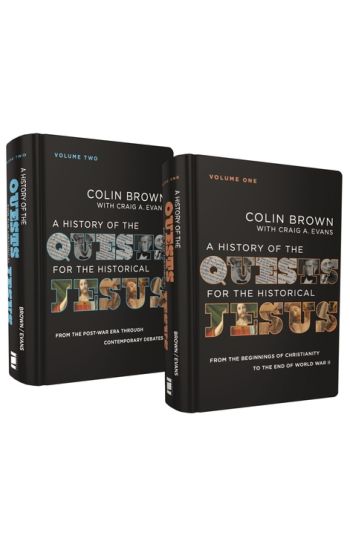
A History of the Quests for the Historical Jesus: Two-Volume Set
A comprehensive, two-volume reassessment of the quests for the historical Jesus that details their origins and underlying presuppositions as well as their ongoing influence on today's biblical and theological scholarship.Jesus' life and teaching is important to every question we ask about what we believe and why we believe it. And yet there has never been common agreement about his identity, intentions, or teachings—even among first-century historians and scholars. Throughout history, different religious and philosophical traditions have attempted to claim Jesus and paint him in the cultural narratives of their heritage, creating a labyrinth of conflicting ideas.From the evolution of orthodoxy and quests before Albert Schweitzer's famous "Old Quest," to today's ongoing questions about criteria, methods, and sources, A History of the Quests for the Historical Jesus not only chronicles the developments but lays the groundwork for the way forward.The late Colin Brown brings his scholarly prowess in both theology and biblical studies to bear on the subject, assessing not only the historical and exegetical nuts and bolts of the debate about Jesus of Nazareth but also its philosophical, sociological, and theological underpinnings. Instead of seeking a bedrock of "facts," Brown stresses the role of hermeneutics in formulating questions and seeking answers.Colin Brown was almost finished with the manuscript at the time of his passing in 2019. Brought to its final form by Craig A. Evans, this book promises to become the definitive history and assessment of the quests for the historical Jesus.Volume One covers the period from the beginnings of Christianity to the end of World War II.Volume Two covers the period from the post-War era through contemporary debates.
Mark 8:27-16:20, Volume 34B

Mark 8:27-16:20, Volume 34B

Craig A. Evans

Zondervan
2015
sidottu
The Word Biblical Commentary delivers the best in biblical scholarship, from the leading scholars of our day who share a commitment to Scripture as divine revelation. This series emphasizes a thorough analysis of textual, linguistic, structural, and theological evidence. The result is judicious and balanced insight into the meanings of the text in the framework of biblical theology. These widely acclaimed commentaries serve as exceptional resources for the professional theologian and instructor, the seminary or university student, the working minister, and everyone concerned with building theological understanding from a solid base of biblical scholarship.Overview of Commentary OrganizationIntroduction—covers issues pertaining to the whole book, including context, date, authorship, composition, interpretive issues, purpose, and theology.Each section of the commentary includes:Pericope Bibliography—a helpful resource containing the most important works that pertain to each particular pericope.Translation—the author’s own translation of the biblical text, reflecting the end result of exegesis and attending to Hebrew and Greek idiomatic usage of words, phrases, and tenses, yet in reasonably good English.Notes—the author’s notes to the translation that address any textual variants, grammatical forms, syntactical constructions, basic meanings of words, and problems of translation.Form/Structure/Setting—a discussion of redaction, genre, sources, and tradition as they concern the origin of the pericope, its canonical form, and its relation to the biblical and extra-biblical contexts in order to illuminate the structure and character of the pericope. Rhetorical or compositional features important to understanding the passage are also introduced here.Comment—verse-by-verse interpretation of the text and dialogue with other interpreters, engaging with current opinion and scholarly research.Explanation—brings together all the results of the discussion in previous sections to expose the meaning and intention of the text at several levels: (1) within the context of the book itself; (2) its meaning in the OT or NT; (3) its place in the entire canon; (4) theological relevance to broader OT or NT issues.General Bibliography—occurring at the end of each volume, this extensive bibliographycontains all sources used anywhere in the commentary.
Jesus and His Contemporaries

Jesus and His Contemporaries

Craig A. Evans

Brill
2001
nidottu
Jesus was a man from Nazareth who died in Jerusalem. But he was nor ordinary man, or was he? That Jesus existed we are all quite sure, but what were the real, historical facts of his life and death? What, about all that has been said of him, is truly authentic? Who is the real Jesus? With Evans’ research, a more accurate portrait of Jesus begins to emerge. Ironically, the most important and obvious fact to bear in mind when trying to understand Jesus is that he was, in fact, a Jew. Embracing the historical and cultural context in which Jesus lived goes against the tide of Jesus research, specifically, Evans takes on the research from the Jesus Seminar. In the first part of his book, Evans shows us through comparative studies, the diversity of beliefs and actions that existed in the Jewish culture of which Jesus was indeed a part. Evans’ goal is to understand better the Sitz im Leben Jesu. In the second part of the book, Evans pits Jesus against his opponents, seeking to identify Jesus’ teachings and actions that led to his death. Not only does Evans paint a realistic portrait of Jesus, but he helps lay a firmer foundation upon which one can begin to understand the emergence of Christian theology. This publication has also been published in hardback (no longer available).
Matthew

Matthew

Craig A. Evans

Cambridge University Press
2012
pokkari
This book is a verse-by-verse analysis of the New Testament Gospel of Matthew. It provides a comprehensive introduction to the Gospel, which describes the world of Jesus and his first followers. This commentary explores the historical, social and religious contexts of Matthew and examines the customs, beliefs and ideas that inform the text. Unfamiliar to many readers of the New Testament, this background will help readers fully understand the text of Matthew, which focuses on what Jesus taught and why the religious authorities in Jerusalem rejected his message and gave him up to the Roman governor for execution. This book will be an important tool for the clergy, scholars and other interested readers of Matthew.
Matthew

Matthew

Craig A. Evans

Cambridge University Press
2012
sidottu
This book is a verse-by-verse analysis of the New Testament Gospel of Matthew. It provides a comprehensive introduction to the Gospel, which describes the world of Jesus and his first followers. This commentary explores the historical, social and religious contexts of Matthew and examines the customs, beliefs and ideas that inform the text. Unfamiliar to many readers of the New Testament, this background will help readers fully understand the text of Matthew, which focuses on what Jesus taught and why the religious authorities in Jerusalem rejected his message and gave him up to the Roman governor for execution. This book will be an important tool for the clergy, scholars and other interested readers of Matthew.
Of Scribes and Sages, Vol 2

Of Scribes and Sages, Vol 2

Craig A. Evans

T. T.Clark Ltd
2004
sidottu
Of Scribes and Sages focuses primarily on early interpretation of Scripture, including the emergence of Scripture as Scripture in its various versions and contexts. It examines recent research into the relationship of the Old Testament to the New and how sacred Scripture was interpreted during New Testament times. It also provides stimulating examples to students, scholars, and clergy in how the task of interpretation is to be done.
To See and Not Perceive

To See and Not Perceive

Craig A. Evans

Continuum International Publishing Group Ltd.
2009
nidottu
In his famous vision of the enthroned and exalted Lord, Isaiah is told to harden the hearts of his people, 'lest they repent' (Isa. 6.9-10). According to Mark's Gospel, which cites this text, Jesus speaks in parables for the same reason. Interpreters of all generations have, not unnaturally, found the text difficult and disturbing. This study is concerned with the fascinating variety of early Jewish and Christian interpretations and modifications that have attempted to cope with the difficulty. At different stages in Judaism and Christianity the Isaianic vision of God is more clearly perceived than at other times. Isa. 6.9-10 is itself indeed shocking and disturbing, but this is not inappropriate in the context of the prophetic message.
From Jesus to the Church

From Jesus to the Church

Craig A. Evans

WESTMINSTER/JOHN KNOX PRESS,U.S.
2025
pokkari
Did Jesus intend to start a new religion-or was Christianity simply born from conflict?Did Jesus intend to found a church separate from Judaism? Who were the very first followers of Jesus? And how did a clash between two families-the family of Jesus on one hand and the family of high priest Annas and their aristocratic allies on the other-eventually lead to the formation of Christianity?Best-selling author Craig A. Evans looks at how a tumultuous chain of events from 30-70 CE-beginning with Jesus's entry into Jerusalem and subsequent crucifixion and ending with the destruction of the temple-led to the separation between the followers of Jesus and other Jews.Topics include the following: whether Jesus actually intended to found the Christian Churchthe ways in which Jesus's proclamation of the "Kingdom of God" relate to the Christian Churchthe role of James, brother of Jesus, in the new movement in Jerusalemthe tension between James and Paul in the matter of law and worksthe conflict between the families and followers of Jesus and those of the high priest Annas before the destruction of the templethe aftermath of the Jewish rebellion, whereby the Church moved away from its Jewish roots.A power struggle between Jesus's family and the ruling priestly elite set the stage for one of history's most pivotal religious shifts. Best-selling author Craig A. Evans unpacks the dramatic events between 30-70 CE-from Jesus's crucifixion to the temple's destruction-that led to the split between his followers and Judaism. With fresh insights on key figures like James, Paul, and the high priest Annas, this fascinating study explores the early Church's origins and the forces that shaped its future. A must-read for anyone interested in the historical Jesus and the roots of Christianity.
Luke

Luke

Craig A. Evans

Baker Books
2012
nidottu
The Understanding the Bible Commentary Series helps readers navigate the strange and sometimes intimidating literary terrain of the Bible. These accessible volumes break down the barriers between the ancient and modern worlds so that the power and meaning of the biblical texts become transparent to contemporary readers. The contributors tackle the task of interpretation using the full range of critical methodologies and practices, yet they do so as people of faith who hold the text in the highest regard. Pastors, teachers, and lay people alike will cherish the truth found in this commentary series.
Fabricating Jesus

Fabricating Jesus

Craig A. Evans

INTERVARSITY PRESS
2008
nidottu
Modern historical study of the Gospels seems to give us a new portrait of Jesus every spring--just in time for Easter. The more unusual the portrait, the more it departs from the traditional view of Jesus, the more attention it gets in the popular media.Why are scholars so prone to fabricate a new Jesus? Why is the public so eager to accept such claims without question? What methods and assumptions predispose scholars to distort the record? Is there a more sober approach to finding the real Jesus?Commenting on such recent releases as Bart Ehrman's Misquoting Jesus, James Tabor's The Jesus Dynasty, Michael Baigent's The Jesus Papers and the Gospel of Judas, for which he served as an advisory board member to the National Geographic Society, Craig Evans offers a sane approach to examining the sources for understanding the historical Jesus.
Jesus and the Ossuaries

Jesus and the Ossuaries

Craig A. Evans

Baylor University Press
2003
nidottu
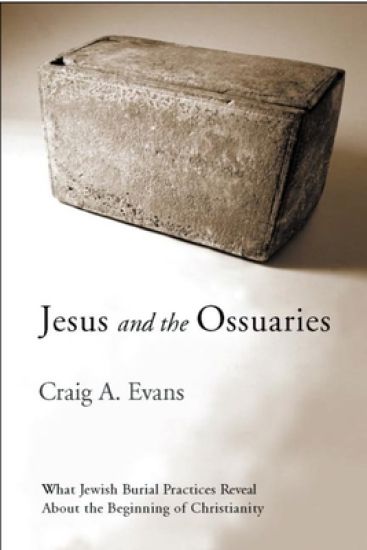
In Jesus and the Ossuaries, Craig A. Evans helps all readers, expert and layperson alike, understand the importance this recent find might have for the quest for the historical Jesus and any historical reconstruction of early Christianity. Evans does this by providing an overview of the most important archaeological discoveries before examining nine other inscriptions (six on ossuaries, three on stone slabs) that pertain in one way or another to the historical Jesus. He then surveys the arguments for and against the authenticity and identification of the recently discovered James Ossuary. Evans concludes his volume with a measured consideration of the historical value of the archaeological data afforded by the several inscriptions.
Jesus and the Ossuaries

Jesus and the Ossuaries

Craig A. Evans

Baylor University Press
2020
sidottu
In Jesus and the Ossuaries, Craig A. Evans helps all readers, expert and layperson alike, understand the importance this recent find might have for the quest for the historical Jesus and any historical reconstruction of early Christianity. Evans does this by providing an overview of the most important archaeological discoveries before examining nine other inscriptions (six on ossuaries, three on stone slabs) that pertain in one way or another to the historical Jesus. He then surveys the arguments for and against the authenticity and identification of the recently discovered James Ossuary. Evans concludes his volume with a measured consideration of the historical value of the archaeological data afforded by the several inscriptions.
Jesus and the Remains of His Day

Jesus and the Remains of His Day

Craig A. Evans

Hendrickson Publishers Inc
2015
sidottu
This book is a collection of thirteen articles on various aspects of how archaeological evidence enlightens our understanding of the life and death of Jesus and the culture in which he lived. Nine of the book's thirteen essays were published previously, though several of these have been revised or augmented for inclusion in the present book; four of the book's essays are new. Several of the essays deal with the death of Jesus and the burial practices of his day. Articles in the book include: - A Fishing Boat, a House, and an Ossuary: What Can We Learn from the Artifacts - A Tale of Two Cities: What We Have Learned from Bethsaida and Magdala - Jewish Scripture and the Literacy of Jesus - Jesus, Healer and Exorcist - Hanging and Crucifixion in Second Temple Israel - Excavating Caiaphas, Pilate, and Simon of Cyrene: Assessing the Literary and Archaeological Evidence - The Family Buried Together Stays Together - Post-Mortem Beliefs in Jewish and Pagan Epitaphs The book's introduction explains the value of material culture (i.e., archaeological evidence) for interpreting Jesus and the Gospels and discusses the limits of such evidence. Also, the author is including several of his own photos in this book.
Word and Glory

Word and Glory

Craig A. Evans

BLOOMSBURY PUBLISHING PLC
1993
sidottu
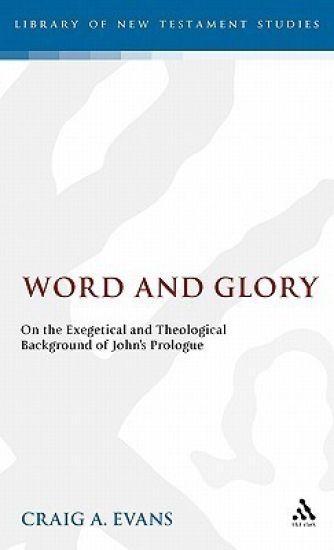
Word and Glory challenges recent claims that Gnosticism, especially as expressed in the Nag Hammadi tractate Trimorphic Protennoia, is the most natural and illuminating background for understanding the Prologue of the Fourth Gospel. Scriptural allusions and interpretive traditions suggest that Jewish wisdom tradition, mediated by the synagogue of the diaspora, lies behind the Prologue and the Fourth Gospel as a whole, not some form of late first-century Gnosticism. Several features of the Fourth Gospel reflect the synagogue and nascent Christianity's struggle to advance and defend its beliefs about Jesus who, as God's son and Agent, was understood as the embodiment of the Divine Word. All of the ingredients that make up Johannine christology derive from dominical tradition, refracted through the lens of Jewish interpretive traditions. There is no compelling evidence that this christology derived from or was influenced by gnostic mythology. Word and Glory also develops and tests criteria for assessing the relative value of post-New Testament sources for the interpretation of New Testament documents.
Jesus, the Final Days

Jesus, the Final Days

Craig A. Evans; N. T. Wright

Westminster/John Knox Press,U.S.
2009
nidottu
What do history and archaeology have to say about Jesus' death, burial, and resurrection? In this superb book, two of the world's most celebrated writers on the historical Jesus share their greatest findings. Together, Craig A. Evans and N. T. Wright concisely and compellingly convey the drama and the world-shattering significance of Jesus' final days on earth.