

Kirjahaku
Etsi kirjoja tekijän nimen, kirjan nimen tai ISBN:n perusteella.
1000 tulosta hakusanalla Craig L. Delue

This work identifies and explains those mutual funds and direct stock purchases available for nominal monthly cost. It offers small investors specific, prescriptive suggestions about affordable investments. Craig Israelson demonstrates the performance differentials over time between lump sum investments and investments made monthly - often referred to as dollar-cost averaging - arguing that because most publicly available information assumes a lump sum investment, reinvestment of dividends, no additional investments, and no withdrawls, that today's small investors are somewhat misled; their investment returns will seldom, if ever, match published returns. Historical data illustrates which funds are best suited for each different investment approach.
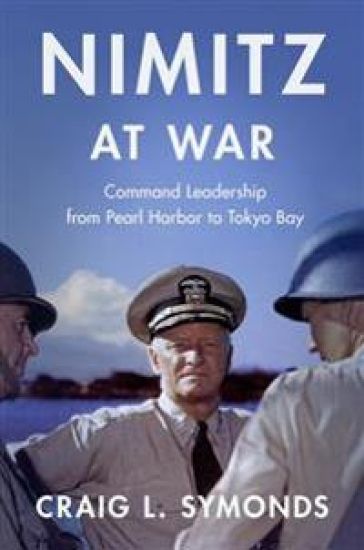
From America's preeminent naval historian, the first full-length portrait in over fifty years of the man who won the war in the Pacific in World War Two—"destined," says Andrew Roberts, "to be the defining life of Chester Nimitz for a long time to come." Only days after the Japanese attacked Pearl Harbor, President Franklin D. Roosevelt tapped Chester W. Nimitz to assume command of the Pacific Fleet. Nimitz was not the most senior candidate available, and some, including his new boss, U.S. Navy Admiral Ernest J. King, considered him a "desk admiral," more suited to running a bureaucracy than a theater of war. Yet FDR's selection proved nothing less than inspired. From the precarious early months of the war after December 7th 1941 to the surrender ceremony in Tokyo Bay nearly four years later, Nimitz transformed the devastated and dispirited Pacific fleet into the most powerful and commanding naval force in history. From the start, the pressures on Nimitz were crushing. Facing demands from Washington to mount an early offensive, he had first to revive the depressed morale of the thousands of sailors, soldiers, and Marines who served under him. He had to corral independent-minded subordinates—including Admiral Bill "Bull" Halsey and General Holland "Howlin' Mad" Smith—and keep them focused on shared objectives. He had to maintain a sometimes-fraught relationship with his Army counterpart Douglas MacArthur, and cope with his superiors, including the formidably prickly King and the inscrutable FDR. He had to navigate the expectations of a nation impatient for revenge and eventual victory. And of course, he also confronted a formidable and implacable enemy in the Imperial Japanese Navy, which, until the Battle of Midway, had the run of the Pacific. Craig Symonds' Nimitz at War reveals how the quiet man from the Hill Country of Texas eventually surmounted all of these challenges. Using Nimitz's headquarters—the eye of the hurricane—as his vantage point, Symonds covers all the major campaigns in the Pacific from Guadalcanal to Okinawa. He captures Nimitz's composure, discipline, homespun wisdom, and most of all his uncanny sense of when to assert authority and when to pull back. In retrospect it is difficult to imagine anyone else accomplishing what Nimitz did. As Symonds' absorbing, dynamic, and authoritative portrait reveals, it required qualities of leadership exhibited by few other commanders in history, qualities that are enduringly and even poignantly relevant to our own moment.
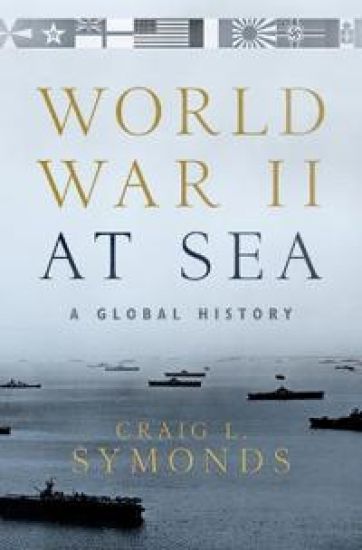
Author of Lincoln and His Admirals (winner of the Lincoln Prize), The Battle of Midway (Best Book of the Year, Military History Quarterly), and Operation Neptune, (winner of the Samuel Eliot Morison Award for Naval Literature), Craig L. Symonds has established himself as one of the finest naval historians at work today. World War II at Sea represents his crowning achievement: a complete narrative of the naval war and all of its belligerents, on all of the world's oceans and seas, between 1939 and 1945. Opening with the 1930 London Conference, Symonds shows how any limitations on naval warfare would become irrelevant before the decade was up, as Europe erupted into conflict once more and its navies were brought to bear against each other. World War II at Sea offers a global perspective, focusing on the major engagements and personalities and revealing both their scale and their interconnection: the U-boat attack on Scapa Flow and the Battle of the Atlantic; the "miracle" evacuation from Dunkirk and the pitched battles for control of Norway fjords; Mussolini's Regia Marina-at the start of the war the fourth-largest navy in the world-and the dominance of the Kidö Butai and Japanese naval power in the Pacific; Pearl Harbor then Midway; the struggles of the Russian Navy and the scuttling of the French Fleet in Toulon in 1942; the landings in North Africa and then Normandy. Here as well are the notable naval leaders-FDR and Churchill, both self-proclaimed "Navy men," Karl Dönitz, François Darlan, Ernest King, Isoroku Yamamoto, Erich Raeder, Inigo Campioni, Louis Mountbatten, William Halsey, as well as the hundreds of thousands of seamen and officers of all nationalities whose live were imperiled and lost during the greatest naval conflicts in history, from small-scale assaults and amphibious operations to the largest armadas ever assembled. Many have argued that World War II was dominated by naval operations; few have shown and how and why this was the case. Symonds combines precision with story-telling verve, expertly illuminating not only the mechanics of large-scale warfare on (and below) the sea but offering wisdom into the nature of the war itself.
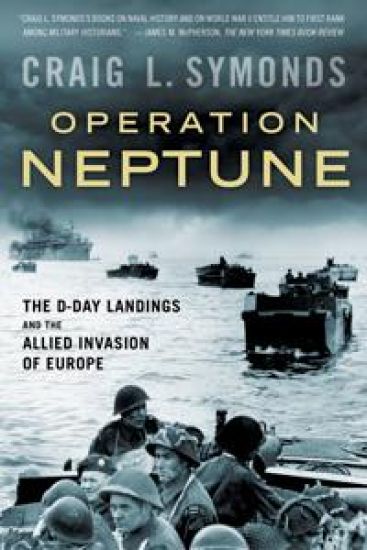
Seventy years ago, more than six thousand Allied ships carried more than a million soldiers across the English Channel to a fifty-mile-wide strip of the Normandy coast in German-occupied France. It was the greatest sea-borne assault in human history. The code names given to the beaches where the ships landed the soldiers have become immortal: Gold, Juno, Sword, Utah, and especially Omaha, the scene of almost unimaginable human tragedy. The sea of crosses in the cemetery sitting today atop a bluff overlooking the beaches recalls to us its cost. Most accounts of this epic story begin with the landings on the morning of June 6, 1944. In fact, however, D-Day was the culmination of months and years of planning and intense debate. In the dark days after the evacuation of Dunkirk in the summer of 1940, British officials and, soon enough, their American counterparts, began to consider how, and, where, and especially when, they could re-enter the European Continent in force. The Americans, led by U.S. Army Chief of Staff General George C. Marshall, wanted to invade as soon as possible; the British, personified by their redoubtable prime minister, Winston Churchill, were convinced that a premature landing would be disastrous. The often-sharp negotiations between the English-speaking allies led them first to North Africa, then into Sicily, then Italy. Only in the spring of 1943, did the Combined Chiefs of Staff commit themselves to an invasion of northern France. The code name for this invasion was Overlord, but everything that came before, including the landings themselves and the supply system that made it possible for the invaders to stay there, was code-named Neptune. Craig L. Symonds now offers the complete story of this Olympian effort, involving transports, escorts, gunfire support ships, and landing craft of every possible size and function. The obstacles to success were many. In addition to divergent strategic views and cultural frictions, the Anglo-Americans had to overcome German U-boats, Russian impatience, fierce competition for insufficient shipping, training disasters, and a thousand other impediments, including logistical bottlenecks and disinformation schemes. Symonds includes vivid portraits of the key decision-makers, from Franklin Roosevelt and Churchill, to Marshall, Dwight Eisenhower, and Admiral Sir Bertram Ramsay, who commanded the naval element of the invasion. Indeed, the critical role of the naval forces--British and American, Coast Guard and Navy--is central throughout. In the end, as Symonds shows in this gripping account of D-Day, success depended mostly on the men themselves: the junior officers and enlisted men who drove the landing craft, cleared the mines, seized the beaches and assailed the bluffs behind them, securing the foothold for the eventual campaign to Berlin, and the end of the most terrible war in human history.
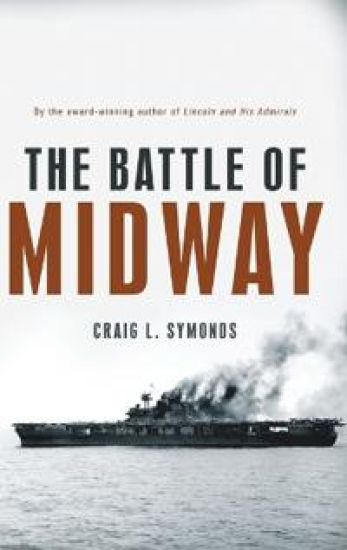
There are few moments in American history in which the course of events tipped so suddenly and so dramatically as at the Battle of Midway. At dawn of June 4, 1942, a rampaging Japanese navy ruled the Pacific. By sunset, their vaunted carrier force (the Kido Butai) had been sunk and their grip on the Pacific had been loosened forever. In this absolutely riveting account of a key moment in the history of World War II, one of America's leading naval historians, Craig L. Symonds paints an unforgettable portrait of ingenuity, courage, and sacrifice. Symonds begins with the arrival of Admiral Chester A. Nimitz at Pearl Harbor after the devastating Japanese attack, and describes the key events leading to the climactic battle, including both Coral Sea--the first battle in history against opposing carrier forces--and Jimmy Doolittle's daring raid of Tokyo. He focuses throughout on the people involved, offering telling portraits of Admirals Nimitz, Halsey, Spruance and numerous other Americans, as well as the leading Japanese figures, including the poker-loving Admiral Yamamoto. Indeed, Symonds sheds much light on the aspects of Japanese culture--such as their single-minded devotion to combat, which led to poorly armored planes and inadequate fire-safety measures on their ships--that contributed to their defeat. The author's account of the battle itself is masterful, weaving together the many disparate threads of attack--attacks which failed in the early going--that ultimately created a five-minute window in which three of the four Japanese carriers were mortally wounded, changing the course of the Pacific war in an eye-blink. Symonds is the first historian to argue that the victory at Midway was not simply a matter of luck, pointing out that Nimitz had equal forces, superior intelligence, and the element of surprise. Nimitz had a strong hand, Symonds concludes, and he rightly expected to win.
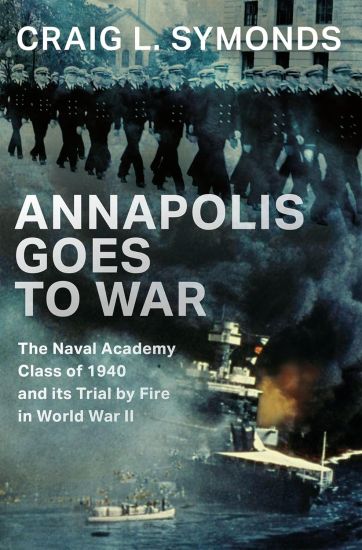
America's preeminent naval historian offers a history of the Second World War based on the experiences of the young officers--fresh out of the United States Naval Academy--who served on its front lines. They arrived in Annapolis as teenagers the year Hitler re-occupied the Rhineland and graduated as young men the week the British Army evacuated Dunkirk. Annapolis Goes to War tells the story of their four transformative years at the Naval Academy, and then four more annealing years in the cauldron of war. More than a hundred of them were on duty in Pearl Harbor on December 7, 1941. Ten of them died that day-seven remain entombed in the USS Arizona still. Over the next four years, these former Midshipmen participated in virtually every significant engagement in both the Atlantic and the Pacific, from Pearl Harbor to Tokyo Bay, from North Africa to Normandy. They were at the front edge of the war in battleships, carriers, destroyers, submarines, and airplanes, and led Marine Corps units ashore. Some experienced the war as prisoners of the Japanese. Fifty-six of them died in the Second World War, the greatest wartime loss any service academy ever experienced. Taking readers into and through the lives of these young men in wartime, Craig Symonds offers a poignant and powerful story of adjustment, growth, pain, loss, and eventually triumph. Using their diaries, memoirs, and letters, he evokes unforgettably their trials and bonds, their loss of innocence and their discovery of the meaning of sacrifice. Annapolis Goes to War is essential reading for anyone seeking to understand the experience of fighting the bloodiest war in human history.
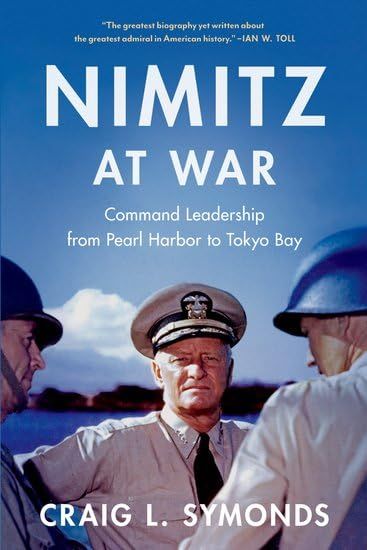
From America's preeminent naval historian, the first full-length portrait in over fifty years of the man who won the war in the Pacific in World War TwoD "destined," says Andrew Roberts, "to be the defining life of Chester Nimitz for a long time to come." "Nimitz at War is the greatest biography yet written about the greatest admiral in American history." - Ian Toll Only days after the Japanese attacked Pearl Harbor, President Franklin D. Roosevelt tapped Chester W. Nimitz to assume command of the Pacific Fleet. Nimitz was not the most senior candidate available, and some, including his new boss, U.S. Navy Admiral Ernest J. King, considered him a "desk admiral," more suited to running a bureaucracy than a theater of war. Yet FDR's selection proved nothing less than inspired. From the precarious early months of the war after December 7th, 1941 to the surrender ceremony in Tokyo Bay nearly four years later, Nimitz transformed the devastated and dispirited Pacific fleet into the most powerful and commanding naval force in history. From the start, the pressures on Nimitz were crushing. Facing demands from Washington to mount an early offensive, he had first to revive the depressed morale of the thousands of sailors, soldiers, and Marines who served under him. He had to corral independent-minded subordinatesD including Admiral Bill "Bull" Halsey and General Holland "Howlin' Mad" SmithD and keep them focused on shared objectives. He had to maintain a sometimes-fraught relationship with his Army counterpart Douglas MacArthur, and cope with his superiors, including the formidably prickly King and the inscrutable FDR. He had to navigate the expectations of a nation impatient for revenge and eventual victory. And of course, he also confronted a formidable and implacable enemy in the Imperial Japanese Navy, which, until the Battle of Midway, had the run of the Pacific. Craig Symonds' Nimitz at War reveals how the quiet man from the Hill Country of Texas eventually surmounted all of these challenges. Using Nimitz's headquartersD the of the hurricaneD as his vantage point, Symonds covers all the major campaigns in the Pacific from Guadalcanal to Okinawa. He captures Nimitz's composure, discipline, homespun wisdom, and most of all his uncanny sense of when to assert authority and when to pull back. In retrospect it is difficult to imagine anyone else accomplishing what Nimitz did. As Symonds' absorbing, dynamic, and authoritative portrait reveals, it required qualities of leadership exhibited by few other commanders in history, qualities that are enduringly and even poignantly relevant to our own moment. Nimitz at War has sold over 25,000 copies in hardcover and ebook combined.
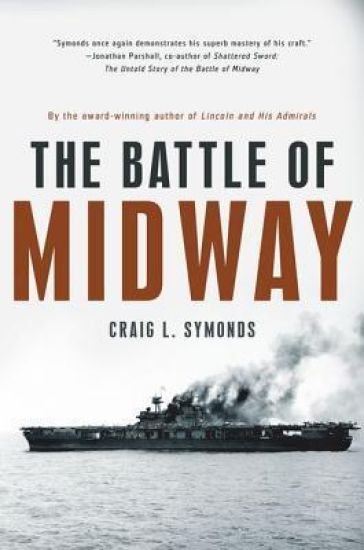
There are few moments in American history in which the course of events tipped so suddenly and so dramatically as at the Battle of Midway. At dawn of June 4, 1942, a rampaging Japanese navy ruled the Pacific. By sunset, their vaunted carrier force (the Kido Butai) had been sunk and their grip on the Pacific had been loosened forever. In this riveting account of a key moment in the history of World War II, one of America's leading naval historians, Craig L. Symonds, paints an unforgettable portrait of ingenuity, courage, and sacrifice. Symonds begins with the arrival of Admiral Chester A. Nimitz at Pearl Harbor after the devastating Japanese attack, and describes the key events leading to the climactic battle, including both Coral Sea--the first battle in history against opposing carrier forces--and Jimmy Doolittle's daring raid of Tokyo. He focuses throughout on the people involved, offering telling portraits of Admirals Nimitz, Halsey, Spruance and numerous other Americans, as well as the leading Japanese figures, including the poker-loving Admiral Yamamoto. Indeed, Symonds sheds much light on the aspects of Japanese culture--such as their single-minded devotion to combat, which led to poorly armored planes and inadequate fire-safety measures on their ships--that contributed to their defeat. Symond's account of the battle itself is masterful, weaving together the many disparate threads of attack--attacks which failed in the early going--that ultimately created a five-minute window in which three of the four Japanese carriers were mortally wounded, changing the course of the Pacific war in an eye-blink. Symonds is the first historian to argue that the victory at Midway was not simply a matter of luck, pointing out that Nimitz had equal forces, superior intelligence, and the element of surprise. Nimitz had a strong hand, Symonds concludes, and he rightly expected to win.

This fast-paced narrative traces the emergence of the United States Navy as a global power from its birth during the American Revolution through to its current superpower status. The story highlights iconic moments of great drama pivotal to the nation's fortunes: John Paul Jones' attacks on the British during the Revolution, the Barbary Wars, and the arduous conquest of Iwo Jima. The book illuminates the changes--technological, institutional, and functional--of the U.S. Navy from its days as a small frigate navy through the age of steam and steel to the modern era of electronics and missiles. Historian Craig L. Symonds captures the evolving culture of the navy and debates between policymakers about what role the institution should play in world affairs. Internal and external challenges dramatically altered the size and character of the navy, with long periods of quiet inertia alternating with rapid expansion emerging out of crises. The history of the navy reflects the history of the nation as a whole, and its many changes derive in large part from the changing role of the United States itself.
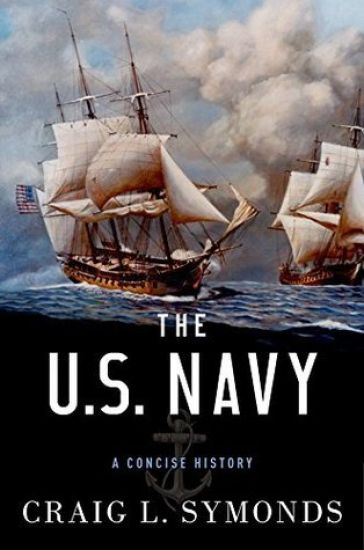
This fast-paced narrative traces the emergence of the United States Navy as a global power from its birth during the American Revolution through to its current superpower status. The story highlights iconic moments of great drama pivotal to the nation's fortunes: John Paul Jones' attacks on the British in the Revolution, the Barbary Wars, and the arduous conquest of Iwo Jima. The book illuminates the changes--technological, institutional, and functional--of the U.S. Navy from its days as a small frigate navy through the age of steam and steel to the modern era of electronics and missiles. Historian Craig L. Symonds captures the evolving culture of the Navy and debates between policymakers about what role the institution should play in world affairs. Internal and external challenges dramatically altered the size and character of the Navy, with long periods of quiet inertia alternating with rapid expansion emerging out of crises. The history of the navy reflects the history of the nation as a whole, and its many changes derive in large part from the changing role of the United States itself.
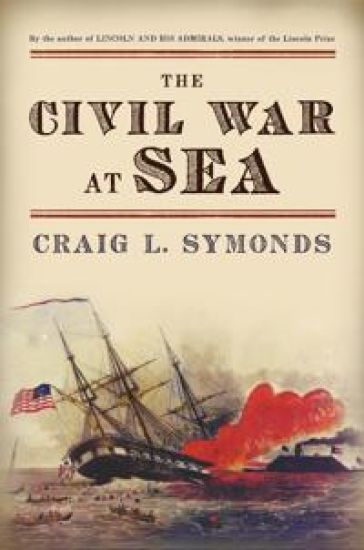
Continuing in the vein of his Lincoln Prize-winning book Lincoln and His Admirals, acclaimed naval historian Craig L. Symonds presents a masterful history of the Civil War navies--both Union and Confederate--and places them within the broader context of the emerging industrial age. Symonds begins with an account of the dramatic pre-war revolution in naval technology--the advent of steam propulsion, the screw propeller, and larger and more powerful rifled guns that could fire explosive shells as well as solid shot. These extraordinary changes were epitomized in the famous "Battle of the Ironclads"--one of the great stories of the Civil War--pitting USS Monitor against the larger and more heavily armed CSS Virginia (also known as Merrimack). Symonds also offers an overview of Lincoln's blockade of the South, a vast campaign involving as many as 500 ships and 100,000 men; discusses the fierce naval war for control of the rivers in the West; and looks at the important siege of Charleston, which would last three years and involve 40,000 men and sixty warships. Symonds concludes with three key episodes from the end of the war--the dramatic Battle of Mobile Bay, where Farragut delivered his famous cry: "Damn the torpedoes! Full speed ahead!"; the battle of Wilmington, where combined naval and army forces successfully overran Fort Fisher, a giant earthwork fort called by one historian "the mightiest fortress in America"; and the remarkable cruise of the CSS Shenandoah, a round-the-world voyage of 58,000 miles, during which she captured thirty-eight prizes--mostly after Lee had surrendered, alas. The Civil War at Sea illuminates a little-discussed and greatly undervalued aspect of America's national conflict. Concise yet comprehensive, this volume is a lively addition to the field of naval history.
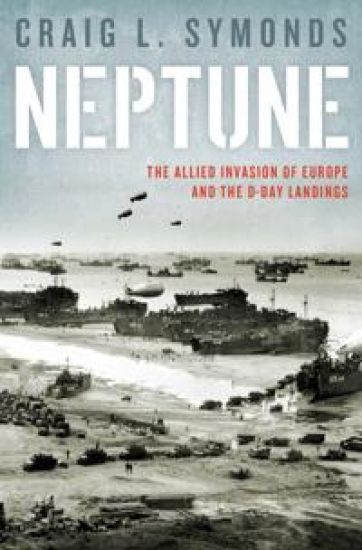
D-Day--June 6, 1944--is seared into popular consciousness: 160,000 Allied troops landed along 50 miles of French coastline to battle German forces on the beaches of Normandy, suffering devastating losses in an invasion that would eventually lead to the liberation of Western Europe. Though it has been studied, discussed, and debated extensively, histories of D-Day have typically overlooked the incredible naval operation necessary for the invasion to succeed: Operation Neptune. Involving over five thousand ships and nearly half a million personnel, Neptune was the largest seaborne assault in human history, without which the battles at Normandy never could have taken place. In Neptune, renowned historian Craig L. Symonds brilliantly traces the central thread of this Olympian event from the first tentative conversations by British and American officers in Washington in the winter of 1941 to the storming of the beaches in the summer of 1944. With characteristically vivid narration, he uncovers the various components of the operation, including the strategic unity, industrial productivity, sea control, and organizational execution on which the Allied armies in Normandy depended. Symonds follows key personalities, both British and American, from the well-known--Franklin Roosevelt, Winston Churchill, George Marshall, and "Ike " Eisenhower--to the less-prominent--Admiral Sir Bertram Ramsay and his American counterpart Admiral Ernest J. King--to offer an intimate look at the men involved in this exceptional campaign. Operation Neptune was never a sure-thing, as Symonds shows, and Neptune explores the disputes of the Anglo-American allies, the demands of Russia, the dangers of German U-boats, and the hundreds of logistical bottlenecks that could have undone the operation at any time. From the suppressing of the U-boat menace in the Battle of the Atlantic to the gearing up of the industrial machine to produce the ships, tanks, landing craft, and other tools of war that would make an invasion possible, Symonds' riveting narrative uncovers the means by which Neptune was brought to fruition, and presents for the first time a comprehensive history of the greatest naval operation of the 20th century.

Scholars of Latin American politics have been challenged to account for the varied outcomes of the transitions from authoritarian to democratic government that have occurred in many countries south of the border during the past two decades. What explains why some transitions were relatively smooth, with the military firmly in control of the process, while others witnessed substantial concessions by the military to civilian leaders, or even total military collapse? Rather than focus on causes external to the military, such as the previous legacy of democratic rule, severe economic crisis, or social protest, as other scholars have done, Craig Arceneaux draws attention to the important variables internal to the military, such as its unity or ability to coordinate strategy. Using this "historical-institutionalist" approach, he compares five different transitions in Brazil and three countries of the Southern Cone—Argentina, Chile, and Uruguay—to show what similarities and differences existed and how the differences may be attributed to variations in the internal institutional structure and operation of the military.
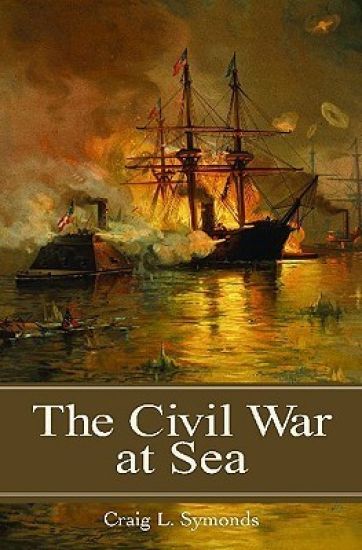
This work provides an assessment of the crucial roles played by the Union and Confederate navies in the Civil War. From Craig Symonds, author of the 2009 Lincoln Prize award-winner Lincoln and His Admirals, comes a fascinating look at the era when American naval power came of age. Thoroughly researched and excitingly written, it brings to light a wealth of new information on a pivotal aspect of the Civil War. The Civil War at Sea covers navies on both sides of the conflict, examining key issues such as the impact of emergent technologies, the effectiveness of the Union's ambitious strategy of blockading, the odyssey of Confederate commerce raiders, the role of naval forces on the western rivers, and the difficulty of conducting combined sea and ground operations against the major Southern port cities. For Civil War buffs, fans of military and technological history, and other interested readers, it is insightful, essential reading.

Concentrate on the biblical author’s message as it unfolds.Designed to assist the pastor and Bible teacher in conveying the significance of God’s Word, the Zondervan Exegetical Commentary on the New Testament series treats the literary context and structure of every passage of the New Testament book in the original Greek.With a unique layout designed to help you comprehend the form and flow of each passage, the ZECNT unpacks:The key message.The author’s original translation.An exegetical outline.Verse-by-verse commentary.Theology in application.While primarily designed for those with a basic knowledge of biblical Greek, all who strive to understand and teach the New Testament will benefit from the depth, format, and scholarship of these volumes.

What does the Bible say about money, material possessions, and stewardship? In Christians in an Age of Wealth, Craig Blomberg addresses tough questions about the place and purpose of wealth and material possessions in a Christian's life. He points to the goodness of wealth, as God originally designed it, but also surveys the Bible's many warnings against making an idol out of money.Taking a close exegetical look at this topic as it’s discussed in Scripture, Blomberg answers the toughest questions about Christianity and wealth:Is there any one key to keeping possessions in their proper, God-intended perspective?Are there limits on how rich we should become or on how poor we should allow others to get?What does a truly Christian economic system look like?How does the Bible's teaching on wealth fit into the gospel? Blomberg expounds upon how the sharing of goods and possessions is the key safeguard against both greed and covetousness. He expands on the concept of giving generously, even sacrificially, to those who are needier, demonstrating how Christians can participate in God's original good design for abundance and demonstrate the world-altering gospel of Christ.____________Part of the Biblical Theology for Life series, this practical and challenging book will help you and your church ground your worldly possessions on the solid foundation of biblical understanding and reflection.
The NIV Application Commentary helps you communicate and apply biblical text effectively in today's context.To bring the ancient messages of the Bible into today's world, each passage is treated in three sections:Original Meaning. Concise exegesis to help readers understand the original meaning of the biblical text in its historical, literary, and cultural context.Bridging Contexts. A bridge between the world of the Bible and the world of today, built by discerning what is timeless in the timely pages of the Bible.Contemporary Significance. This section identifies comparable situations to those faced in the Bible and explores relevant application of the biblical messages. The author alerts the readers of problems they may encounter when seeking to apply the passage and helps them think through the issues involved.This unique, award-winning commentary is the ideal resource for today's preachers, teachers, and serious students of the Bible, giving them the tools, ideas, and insights they need to communicate God's Word with the same powerful impact it had when it was first written.The book you receive may have a different cover design than shown on the website.


The third edition of Democratic Latin America retains its classic institutional approach to understand contemporary Latin American politics. Each chapter focuses on a different institution and compares how they are constructed differently across countries. Placing a premium on accessibility, the chapters open with a story and end with a detailed country case study, making use of contemporary examples to feed student interest in current events, with comparison-based tables and box features interspersed throughout to stimulate analysis. Every chapter finishes with a set of questions and recommended readings. This approach allows for a very practical approach to politics that encourages critical analysis.Updates to this new edition include:updated comparison-based tables and box features to stimulate analysis; new "Country in the Spotlight" to include developments unique to each country; and discussions on political change in Cuba, indigenous peoples and political power, neopopulism, impeachment procedures, transitional justice, the 2019 protests, the new militarism, the mobilization of women against violence, LGBT rights, the evangelical movement, and the Colombian peace process.A clear-eyed look at political institutions to provide a roadmap to the political activity in a country, Democratic Latin America continues to offer an original way of teaching and learning about Latin American politics.