Kirjojen hintavertailu. Mukana 11 238 394 kirjaa ja 12 kauppaa.

Kirjahaku

Etsi kirjoja tekijän nimen, kirjan nimen tai ISBN:n perusteella.

1000 tulosta hakusanalla Craig R. Smith

The Quest for Charisma

The Quest for Charisma

Craig R. Smith

Praeger Publishers Inc
2000
sidottu
Smith examines the major canons of classical rhetorical theory by demonstrating their influence on Christian speakers. He begins by explaining why charisma has become a misused term. He then explores why writing about charisma has been so difficult in terms of the academic prejudice in favor of objectivity and reason. He then constructs a three- level definition of charisma to replace the current one. After analyzing the charisma of Jesus in terms of the three personae he developed as teacher, human, and messiah, Smith argues that his power arose from this rich development of character. The textual charisma of the Gospel narrators is explored in terms of their narrative techniques, and Smith then examines the concept of ethos, the use of emotion in persuasion, and explicates the theories of leading existential thinkers to develop advanced notions of human responsibility and transcendent spirituality. These two notions are used to refine and improve previous definitions of charisma. Smith then establishes a matrix that crosses levels of charisma with different types of identification. This work will be of particular interest to scholars, students, and researchers involved with Christianity, philosophy, and persuasion.
Defender of the Union

Defender of the Union

Craig R. Smith

Greenwood Press
1989
sidottu
Like no other orator in American history, Daniel Webster dominated the Federal courts, the Congress, and the public speaking circuit. In this book, Smith offers a close study of the rhetorical techniques and powers of persuasion that gave Webster a uniquely influential voice in the political, legal, and social affairs of the young republic. The volume includes the edited texts of six speeches that illustrate the range of Webster's achievements, together with a chronology of his speeches and an annotated bibliography.In his introduction, Smith examines Webster's early training and accomplishments in the field of oratory and discusses the Aristotelean principles upon which the present analysis of Webster's work is based. Smith begins with Webster's forensic speeches before the Supreme Court and in the famous Knapp-White murder trial. He next considers Webster's gift for ceremonial speaking, by analyzing examples of his eulogies, dedication addresses, and other commemorative speeches. Two chapters focus on his deliberative speech-making, with special emphasis on analysis of the audience Webster spoke to, the Webster-Hayne debate, and Webster's speeches endorsing the Compromise of 1850. Among the edited works presented are Webster's presentations in McCulloch v. Maryland, a milestone in American constitutional precedent; in the Knapp-White murder case; his Eulogy to Adams and Jefferson; Webster's second reply to Hayne; and his Seventh of March Address. The author stresses that Webster's importance goes beyond his considerable impact on constitutional thought and the political life of the nation. His speeches are unequaled as models of effective and literate public address, and his arguments, values, style, and use of evidence have much to tell us about American consciousness during the antebellum era. Written by a noted speechwriter and scholar specializing in rhetoric and First Amendment issues, this book is an appropriate choice for speech communication classes or studies in speech communication, American public address, and rhetorical criticism, as well as antebellum U.S. history classes.
To Form a More Perfect Union

To Form a More Perfect Union

Craig R. Smith

University Press of America
1993
sidottu
This book presents research on the emergence of the Bill of Rights from the constitutional ratification debates through to adoption of the first ten amendments of the Constitution. Its aim is to answer the following questions: when did Americans first see the need for a Bill of Rights? Who provided the inspiration for its enactment? What were the circumstances that led to the proposing of a Bill of Rights? And why is it important for us to understand how our Bill of Rights came into existence? This study begins in Europe in 1456 with the historical framework that traces the evolution of the Bill of Rights; it ends with the ratification of ten amendments to the new United States Constitution in December of 1791. Co-published with the Center for First Amendment Studies.
To Form a More Perfect Union

To Form a More Perfect Union

Craig R. Smith

University Press of America
1993
nidottu
This book presents research on the emergence of the Bill of Rights from the constitutional ratification debates through to adoption of the first ten amendments of the Constitution. Its aim is to answer the following questions: when did Americans first see the need for a Bill of Rights? Who provided the inspiration for its enactment? What were the circumstances that led to the proposing of a Bill of Rights? And why is it important for us to understand how our Bill of Rights came into existence? This study begins in Europe in 1456 with the historical framework that traces the evolution of the Bill of Rights; it ends with the ratification of ten amendments to the new United States Constitution in December of 1791. Co-published with the Center for First Amendment Studies.
Daniel Webster and the Oratory of Civil Religion

Daniel Webster and the Oratory of Civil Religion

Craig R. Smith

University of Missouri Press
2004
sidottu
Daniel Webster (1782-1852) was a statesman and lawyer who embodied the golden age of oratory in America; mastering each of the major genres of public speaking of the time. This study examines Webster's career and how his great speeches and created a ""civil religion"" that moved citizens to true romantic patriotism.
Nobility in Small Things: A Surgeon's Path

Nobility in Small Things: A Surgeon's Path

Craig R. Smith

St. Martin's Press
2023
sidottu
His routine was the same every day for 38 years: up at 4:15, make a turkey-on-rye, drive the deserted Henry Hudson Parkway to the hospital, check the schedule, scrub, cut, reattach, save a life or two, repeat. Until March 2020, when the Covid-19 pandemic shut hospital surgeries all over the world. Craig Smith, M.D., Chairman of the Department of Surgery at Columbia Presbyterian Hospital, went from performing heart surgeries on patients both everyday and celebrated (he performed the quadruple bypass that saved Bill Clinton's life in 2004) to sitting in his tomb-quiet office looking out at George Washington Bridge. And he started to write. His Covid emails were balm to the staffers and later became celebrated for Dr. Smith's care and thought in his assessment of the work of the hospital-of any hospital. Nobility in Small Things not only takes us into the mind and soul of a surgeon with the ability to "play God" but into the heart of a man who chose a lifesaving career. The book introduces us to patients and peers, and moves from family-building and heartbreak at home, to the tragic suicide of two fellow M.D.s. Dr. Smith also writes vulnerably about his debilitating social anxiety and how he overcame it. Dr. Smith shows us not just the making of a surgeon in Nobility in Small Things, but the maintenance of one: the deep feeling and moral philosophy that anchor the daily miracles that define his profession.
Confessions of a Presidential Speechwriter

Confessions of a Presidential Speechwriter

Craig R. Smith

Michigan State University Press
2014
pokkari
An avid high school debater and enthusiastic student body president, Craig Smith seemed destined for a life in public service from an early age. As a sought-after speechwriter, Smith had a front-row seat at some of the most important events of the twentieth century, meeting with Robert Kennedy and Richard Nixon, advising Governor Ronald Reagan, writing for President Ford, serving as a campaign manager for a major U.S. senator's reelection campaign, and writing speeches for a contender for the Republican nomination for president. Life in the volatile world of politics wasn't always easy, however, and as a closeted gay man, Smith struggled to reconcile his private and professional lives. In this revealing memoir, Smith sheds light on what it takes to make it as a speechwriter in a field where the only constant is change. While bouncing in and out of the academic world, Smith transitions from consultantships with George H. W. Bush and the Republican caucus of the U.S. Senate to a position with Chrysler CEO Lee Iacocca. When Smith returns to Washington, D.C., as president and founder of the Freedom of Expression Foundation, he becomes a leading player on First Amendment issues in the nation's capital.Returning at long last to academia, Smith finds happiness coming out of the closet and reaping the benefits of a dedicated and highly successful career.
The Call

The Call

Craig R. Smith; Michael Hyde

Michigan State University Press
2022
nidottu
This book is a unique examination of the phenomenon of the call. Characterizing the call as a rhetorical event, the book identifies how speakers can use eloquence in the service of truth. Authors Craig R. Smith and Michael J. Hyde offer the rare combination of a phenomenology of the call linked closely to eloquence and explore this linkage by examining the components of eloquence, including examples of its misuse by George W. Bush and Donald Trump. The bulk of the text examines case studies of eloquence in the service of truth including epideictic, forensic, and deliberative eloquence, with examples drawn from addresses by Barack Obama, Daniel Webster, Ronald Reagan, Margaret Chase Smith, Susan Collins, and Mitt Romney. The authors also examine the Epistles of St. Paul, the writings of St. Augustine, and the preaching of Jonathan Edwards. Finally, the book explores eloquence in filmic narratives and dialogic communication between artists and writers, concluding with a study of the sublime and how it is evoked with awe using the work of Annie Dillard.
A Perfect Threat

A Perfect Threat

Craig R Smith

Amjenn Publishing LLC
2021
pokkari
Evidence has been accumulating for the past several decades that mankind will likely be threatened by its own existence sometime in the next 50-100 years. By the end of the 21st century, population and economic growth will cause depletion of many essential natural resources and serious deterioration in many terrestrial and marine habitats, including our own. This catastrophe can be averted. We have the tools. Why aren't we doing more? What can we do to change course?A physician and entrepreneur whose career has spanned academic medicine, the bio-pharmaceutical industry, and environmental biotechnology, Dr. Craig Smith guides you through an objective and apolitical analysis of this threat and describes how we can respond and what we must do now to change course and create a sustainable future. At the end of this journey, you will have a better understanding of population growth, climate change, and natural resource depletion, and why, collectively, they are A Perfect Threat.Visit http: //aperfectthreat.com/ for additional data on population growth, climate change, and natural resource depletion, including tables, graphs, and charts with links to primary data sources. The website contains reviews of important new research on population growth, climate change, and natural resource depletion as well as a forum for exchange of ideas on methods and strategies to mitigate the consequences.
A Perfect Threat

A Perfect Threat

Craig R Smith

Amjenn Publishing LLC
2021
sidottu
Evidence has been accumulating for the past several decades that mankind will likely be threatened by its own existence sometime in the next 50-100 years. By the end of the 21st century, population and economic growth will cause depletion of many essential natural resources and serious deterioration in many terrestrial and marine habitats, including our own. This catastrophe can be averted. We have the tools. Why aren't we doing more? What can we do to change course?A physician and entrepreneur whose career has spanned academic medicine, the bio-pharmaceutical industry, and environmental biotechnology, Dr. Craig Smith guides you through an objective and apolitical analysis of this threat and describes how we can respond and what we must do now to change course and create a sustainable future. At the end of this journey, you will have a better understanding of population growth, climate change, and natural resource depletion, and why, collectively, they are A Perfect Threat.Visit http: //aperfectthreat.com/ for additional data on population growth, climate change, and natural resource depletion, including tables, graphs, and charts with links to primary data sources. The website contains reviews of important new research on population growth, climate change, and natural resource depletion as well as a forum for exchange of ideas on methods and strategies to mitigate the consequences.
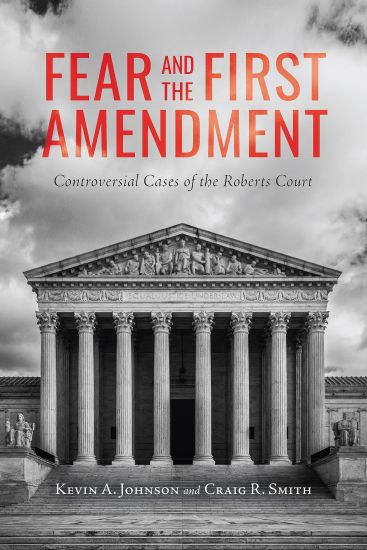
Fear and the First Amendment

Fear and the First Amendment

Kevin A. Johnson; Craig R. Smith

THE UNIVERSITY OF ALABAMA PRESS
2024
sidottu
A highly original account of the role that fear plays in key First Amendment cases ruled on by the Roberts Supreme Court In Fear and the First Amendment, Kevin A. Johnson and Craig R. Smith offer a deeply considered examination of the ways fear figures in First Amendment questions ruled on by the contemporary Supreme Court. Bringing together literature on theories of fear in rhetorical and philosophical traditions, Johnson and Smith focus on the rulings from the Roberts Court, which form a pivotal era of dramatic precedents. Each chapter in this book analyzes one or more First Amendment cases and a variety of related fears--whether evidentiary or not--that pertain to a given case. These cases include Morse v. Frederick, which takes up the competing fears of school administrators’ loss of authority and students’ loss of free speech rights. The authors touch on corporate funding of elections in Citizens United v. Federal Elections Commission, from the fear of corporate influence on electoral politics to corporate fears of alienating their consumers by backing political candidates. They explore religious freedom and fears of homosexuality in Christian Legal Society v. Martinez. Similarly, in Snyder v. Phelps, the authors delve further into fears of God, death, emotional distress, failing as a parent, and losing one’s reputation. Next, they investigate parents’ anxieties about violence in video games in Brown v. Entertainment Merchants Association. Finally, Johnson and Smith examine the role of fear in indecent, obscene, and graphic communication in three cases: FCC v. Fox Television Stations, Ashcroft v. American Civil Liberties Union, and United States v. Stevens. Together these cases reveal fear to be an endemic factor in the rhetoric of First Amendment cases. This fascinating and original work will appeal to current legal practitioners and students of law, rhetoric, philosophy, and the First Amendment.
Fear and the First Amendment

Fear and the First Amendment

Kevin A. Johnson; Craig R. Smith

THE UNIVERSITY OF ALABAMA PRESS
2024
nidottu
A highly original account of the role that fear plays in key First Amendment cases ruled on by the Roberts Supreme Court In Fear and the First Amendment, Kevin A. Johnson and Craig R. Smith offer a deeply considered examination of the ways fear figures in First Amendment questions ruled on by the contemporary Supreme Court. Bringing together literature on theories of fear in rhetorical and philosophical traditions, Johnson and Smith focus on the rulings from the Roberts Court, which form a pivotal era of dramatic precedents. Each chapter in this book analyzes one or more First Amendment cases and a variety of related fears--whether evidentiary or not--that pertain to a given case. These cases include Morse v. Frederick, which takes up the competing fears of school administrators’ loss of authority and students’ loss of free speech rights. The authors touch on corporate funding of elections in Citizens United v. Federal Elections Commission, from the fear of corporate influence on electoral politics to corporate fears of alienating their consumers by backing political candidates. They explore religious freedom and fears of homosexuality in Christian Legal Society v. Martinez. Similarly, in Snyder v. Phelps, the authors delve further into fears of God, death, emotional distress, failing as a parent, and losing one’s reputation. Next, they investigate parents’ anxieties about violence in video games in Brown v. Entertainment Merchants Association. Finally, Johnson and Smith examine the role of fear in indecent, obscene, and graphic communication in three cases: FCC v. Fox Television Stations, Ashcroft v. American Civil Liberties Union, and United States v. Stevens. Together these cases reveal fear to be an endemic factor in the rhetoric of First Amendment cases. This fascinating and original work will appeal to current legal practitioners and students of law, rhetoric, philosophy, and the First Amendment.
Private Foreign Aid

Private Foreign Aid

Landrum R Bolling; Craig Smith

Routledge
2019
sidottu
Over the past 150 years, Americans have responded repeatedly to the needs of people in foreign lands, providing aid in times of natural disaster, in the wake of war, in the development of resources, in the eradication of disease and poverty and in the battle against hunger. This challenging task has been tackled again and again by churches, corpora
Private Foreign Aid

Private Foreign Aid

Landrum R Bolling; Craig Smith

Routledge
2020
nidottu
Over the past 150 years, Americans have responded repeatedly to the needs of people in foreign lands, providing aid in times of natural disaster, in the wake of war, in the development of resources, in the eradication of disease and poverty and in the battle against hunger. This challenging task has been tackled again and again by churches, corpora
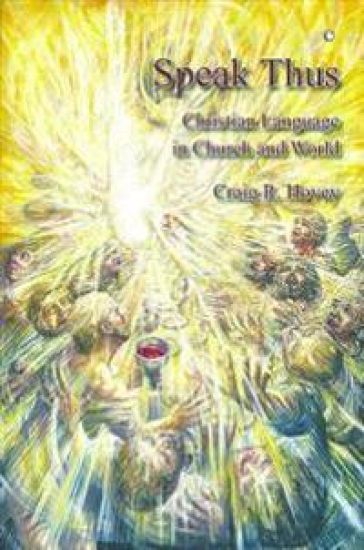
Speak Thus

Speak Thus

Craig R. Hovey

James Clarke Co Ltd
2008
nidottu
In its various forms, speech is absolutely integral to the Christian mission. The gospel is a message, news that must be passed on if it is to be known by others. Nevertheless, the reality of God cannot be exhausted by Christian knowledge and Christian knowledge cannot be exhausted by our words. All the while, the philosophy of modernity has left Christianity an impoverished inheritance within which to think these things. In Speak Thus, Craig Hovey explores the possibilities and limits of Christian speaking. At times ethical, epistemological, and metaphysical, these essays go to the heart of what it means to be the church today. In practice, the Christian life often has a linguistic shape that surprisingly implicates and reveals the commitments of people like those who care for the sick or those who respond as peacemakers in the face of violence. Because learning to speak one way as opposed to another is a skill that must be learned, Christian speakers are also guides who bear witness to the importance of churches for passing on a felicity with Christian ways of speaking. Through constructive engagements with interlocutors like Ludwig Wittgenstein, George Lindbeck, Jeffrey Stout, Stanley Hauerwas, John Howard Yoder, Thomas Aquinas, and the theology of Radical Orthodoxy, Hovey offers a challenging vision of the church able to speak with a confidence that only comes from a deep attentiveness to its own limitations while able to speak prophetically in a world weary of words.
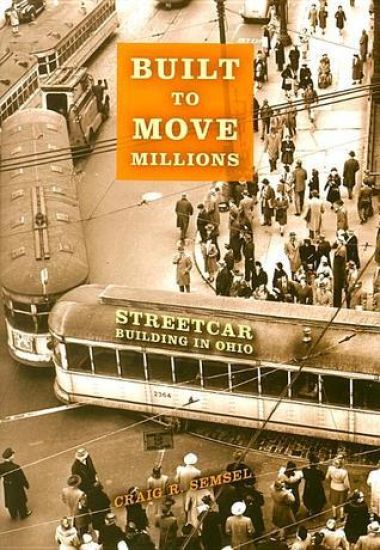
Built to Move Millions

Built to Move Millions

Craig R. Semsel

Indiana University Press
2008
sidottu
At the beginning of the 20th century, the street railway industry was one of the largest in the nation. Once ubiquitously visible on the city streets, by mid-century the streetcar was nothing more than a distant memory. Ohio was home to several large streetcar systems, especially in Cleveland and Cincinnati, and had more interurban tracks than any other state in the union. Thus, Ohio served as one of the street railway industry's greatest centers of manufacturing. Built to Move Millions examines the manufacture of streetcars and interurbans within the state of Ohio between 1900 and 1940. In addition to discussing the five major car builders that were active in Ohio during this period, the book addresses Ohio companies that manufactured the various components that went into these vehicles.