Nearly everyone knows that the airplane was invented in Ohio, that Buckeye born Thomas Edison thought up the light bulb, that a hat to prevent and cure baldness was created in that same great state...Never heard of the hat? It's just one of many surprises that How Ohio Helped Invent the World has in store for its readers. Author Curt Dalton has combed the patent records and discovered that Ohio was responsible for numerous inventions, both great and small, including: Chewing Gum * Barbed Wire * Hot Dogs * Modern Beehive * Drinking Fountain * Live Savers Candy * Hamburger * Toe Holder for Sunbathers * Automobile Starter * Modern Golf Ball * Teflon... and many, many more As an added bonus, fun and informative trivia on Ohio, as well as original patent drawings, have been included throughout the book. Sure to educate without being boring, How Ohio Helped Invent the World has been written to delight both young and old alike
Curt Dalton writes about 10 incredible, but true, stories of Dayton murders that took place during the city's first one hundred years, including...* John McAfee, whose murder of his wife and affair with the girl next door still lives on in song nearly two hundred years later* Francis Dick, who bludgeoned his mother-in-law in an attempt to win back his wife* John Dobbins, a Civil War deserter who danced a "hoe-down" on his way to the scaffold* James Murphy, the lieutenant of a Dayton street gang, who was hung twice for his crimes... and more tales of murder, violence and suicide from the Gem City.
Over the years many books have been written on World War II, especially about the battles overseas. This book was written, in part, to honor those that helped fight the war, not on the battlefields, but also in Dayton, Ohio. By focusing on the home front, the military aspect of the war has been somewhat diminished compared to other books about the era. Wright, Patterson and McCook Field, although of utmost importance in the United States effort to win the war, takes more of a backseat here. Instead, the changes that occurred in the everyday lives of those who were left behind are discussed. It may seem strange to compare the men and women who served in the armed forces with those who stayed behind, but the truth is that both made sacrifices for the greater good, including the supreme sacrifice of giving up their lives. During the war 292,000 American soldiers died, with another 671,000 wounded. On the home front, nearly 300,000 war workers died while on the job, with more than one million disabled and three million injured. Many "soldiers" on the home front gave freely of their time, working 48 hour a week, volunteering as civil defense wardens or making bandages for the Red Cross in the evenings and on weekends. Many types of food were rationed, as was gasoline, tires, automobiles, and even safety razors. Scrap drives were held in an effort to collect metals to make new weapons, hosiery to make parachutes and fat to make glycerin for gunpowder. Even the children got into the act, being trained as "defense messengers", earning money for the purchase of war bonds, and forming clubs like the Dayton Junior Commandos, all in an effort to help shorten the war. The citizens of Dayton who lived during the war were, and still are, extraordinary people who helped shape the way our city and our nation is today. It is to them that this book is dedicated.
Breweries have been a part of Dayton almost from the beginning. Colonel George Newcom, one of the original settlers of the city, was said to have opened a brewery next to his tavern around 1810. This was three years before Davis Embree would open the first brewery in Cincinnati.Several breweries came and went, making mostly common beer, ale, porter and stout. Then, in 1852 John and Michael Schiml introduced lager beer to Dayton. The brewing business boomed. Lager was lighter in taste, with an effervescent quality that reminded the German community in Dayton of their homeland.By 1908 more than 200.000 barrels were being made annually, with $300,000 being paid each year in wages."Breweries of Dayton" tells the history of the city's breweries from 1810 to 1961, as well as biographies of some of the men who owned them.Also included is a small history of how the local breweries brewed their beer in the early 1900's, how they fought against prohibition, and how Dayton's brewing industry never fully recovered from the "Noble Experiment", the last brewery closing it's doors in 1961.
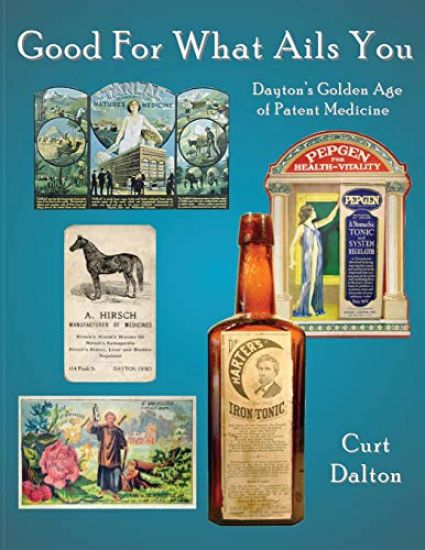
Dayton was once a hotbed for patent medicine sellers and manufacturers. It was a time of Redfern's Indian Tonic and Hirsch's Ambition Tablets, of liniments and cure-alls, of pills and powders and the occasional health potion.Step inside this book and see the lure of the ads, almanacs, trade cards and testimonials that sold a city, as well as a nation, on the idea of do-it-yourself medication. Discover the story of a Dayton traveling medicine show, a failed cure that caused a young woman to be murdered, and a dead man's testimonial of how he was feeling much better after taking a stimulating elixir.Here, in all its original color, is the history of the reckless and robust golden age of patent medicines in the Gem City.
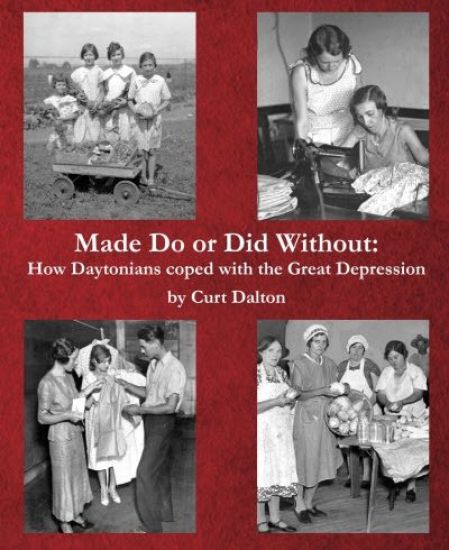
The 1920's was a time of prosperity for the nation. Businesses were doing well and people decided they wanted in on the action. Soon people from all walks of life were buying stocks. Profits could so easily be made this way that some people began borrowing from banks and plowing the money back into the stock market. Shareholders called it the "Big Bull Market," with the price of stock rising and everyone seemingly getting rich, at least on paper. Unfortunately, in some instances, stock shares rose to a price that was much greater than companies were worth. On October 24, 1929, the stock market plummeted. Five days later, on Tuesday, October 29, the stock market crashed, as prices again fell. Known as "Black Tuesday", billions of dollars worth of stock were wiped out as investors panicked and began selling their shares at lower and lower prices, hoping to get back at least part of their money before prices dropped even further. But there was little buying that day. Some stocks ended up being worth 2 cents on the dollar before the nightmarish day ended. Confidence in the U.S. economy crashed along with the stock market. Investors no longer wanted to risk their money. People stopped buying anything that wasn't really needed. This led to factories shutting down, as many already had merchandise they couldn't sell. This, in turn, caused businesses to fail. By the end of 1930 it was estimated that 7 million people had lost their jobs. It was just the beginning of a depressed economy that would last over a decade. This is the story of how Daytonians endured this period of hardship, battling to find jobs and feed their families, working together to survive, and how they dealt with trying to escape, if even for a little while, the grinding world-weariness of harsh conditions that seemed to have no ending in sight.
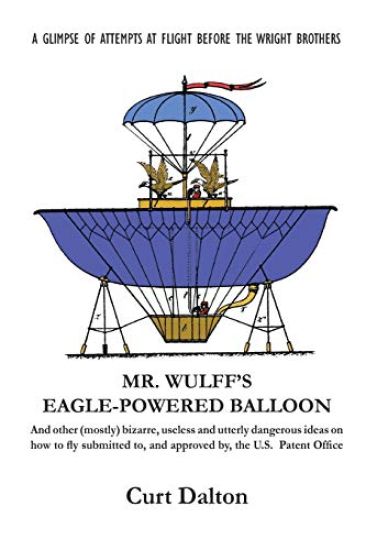
People have attempted to fly since before the time of Leonardo da Vinci, usually with very little success. Many of the aircraft designs were modeled after birds or sailing ships. Some, like Mr. Wullf's idea, actually included live birds in their plans. What's even more incredulous is that the ideas contained in this book somehow passed the stringent guidelines of the U.S. Patent Office and were granted patents for their (mostly) impractical inventions.These patent drawings are reproduced here, along with descriptions of how the aircraft were supposed to fly. Be sure not to miss this exciting look of how, when man attempted to soar like a bird, he usually landed like a lead balloon.
On January 22, 1936, Earl Kiser was buried with a leg he had lost in an accident 31 years before. On April 19, 1861, a water spaniel by the name of Curley went off to fight in the Civil War. On April 26, 1944, with Howard Hughes as the co-pilot, Orville Wright took the controls of an airplane one last time. The first Downtown Dayton Days event was held on May 14, 1959. On May 26, 1870, spectators watched as their local baseball team, the Daytons, went down in defeat against the Cincinnati Red Stockings, with a score of 104-9. On August 27, 1833, the first history of Dayton appeared in print. As an added bonus, this account has been included in this book.This book contains 366 stories Curt Dalton has accumulated during his nearly quarter of a century researching the history of Dayton. Read them on the date the event occurred, or all at once. Enjoy
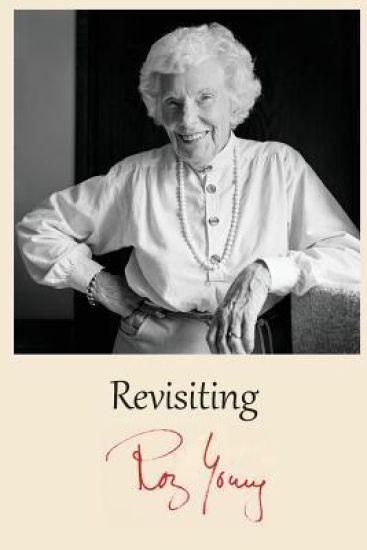
After 30 years Rosamond M. Young "retired" as a teacher and began working as a columnist for The Journal Herald and the Dayton Daily News. It was during the writing of these columns that she became affectionately known as Roz. Her columns touched on a variety of subjects: from history, culture and everyday events in Dayton, to the exploits of her beloved cat, Edith.In this book, Revisiting Roz Young, she once again recalls for us stories about murders and mysteries, revivals and Rike's, an obese judge, a gypsy or two and, of course, her constant companion, Edith.
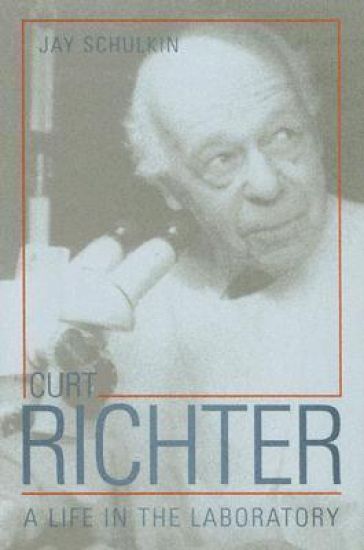
In the first half of the twentieth century, psychology was a discipline in search of scientific legitimacy. Debates raged over how much of human and animal behavior is instinctive and how much is learned, and how behavior could be quantified accurately. At the Johns Hopkins University's new Phipps Psychiatric Clinic, Curt P. Richter stood aside from these heated theoretical arguments, choosing instead to apply his data-collection methods, innovative measurement techniques, playful sense of exploration, and consummate surgical skill to laboratory examinations of the biological basis of behavior. From identifying the biological clocks that govern behavior and physiology to observing the self-regulation of nutrient levels by the body, the cyclical nature of some mental illnesses, and the causes of hopelessness, Richter's wide-ranging discoveries not only influenced the burgeoning field of psychobiology and paved the way for later researchers but also often had implications for the treatment of patients in the clinic. At the time of his death in 1988, Richter left behind a massive collection of laboratory data. For this book, Jay Schulkin mined six decades of Richter's archived research data, personal documents, and interviews to flesh out an engaging portrait of a "laboratory artisan" in the context of his work.
Curt Verschoor On Ethics is a compilation of the best business ethics columns that will continue for years forward to be of lasting educational value. In a company setting, the columns can function as the basis for discussion on proper business ethics. In academia, the columns can serve as assigned readings over significant ethics events and issues. Some topics that are covered in the columns include: Value of a Strong Ethical CultureStudies of Ethical and Unethical CulturePublic and Management Accounting EthicsEthics of Executive CompensationInternational Ethics StandardsFraud Case StudiesSmall Organization Fraud StudiesRegulation and EnforcementWhistleblowingSustainability and Integrated ReportingTax Avoidance Issues