Arnold Richards's psychoanalytic contributions follow the leitmotif of "integrative pluralism" how to continue the dialogue between the contributors of disparate psychoanalytic schools of thought (i.e., thought collectives) with the larger psychoanalytic knowledge base as it grows and changes with each new contribution. The chapters of the first section of this book show us the evolution of this design.Although these chapters give us a noticeable trace of this motif, it has taken more then half a century to develop, requiring life experience from the many roles Richards has played and the posts he has held (see Friedman, p.__). He has been editor of The American Psychoanalyst (TAP), Journal of the American Psychoanalytic Association (JAPA), Festschrifts for four prominent psychoanalysts (1986, 1988, 1993, 1994), two additional collections (2001, 2010), and lately International Psychoanalysis.net. He is also the publisher of IPBooks. During this time he has practiced his craft as teacher, supervisor, training analyst, and clinician, along the way contributing over a hundred publications to the psychoanalytic literature. As editor-in-chief of InternationalPsychoanalysis.net, Richards has kept its readers up to date on all things psychoanalytically fit to print., He has also organized a series of annual conferences bringing together dissimilar points of view around (a) common clinical concerns and (b) major educational and training dilemmas. It has been suggested that he be given the title "omnicompetent editor" (Friedman 2004, p. 13). Throughout these dialogues, as we will see, Richards has attempted to engage those who claim a new orthodoxy and would minimize the overall efforts of psychoanalysis; those who claim new theories, usually untested and unproven, that would replace the old; and those immovably complacent in the status quo.
The Prussian Officer and Other Stories is a collection of early short stories by D. H. Lawrence. It was published by Duckworth in London on 26 November 1914, and in America by B. W. Huebsch in 1916. The stories collected in this volume are: "The Prussian Officer" "The Thorn in the Flesh" "Daughters of the Vicar" "A Fragment of Stained Glass" "The Shades of Spring" "Second Best" "The Shadow in the Rose Garden" "Goose Fair" "The White Stocking" "A Sick Collier" "The Christening" "Odour of Chrysanthemums" The first narrative in the collection is "The Prussian Officer", which tells of a Captain and his orderly. Having wasted his youth gambling, the captain has been left with only his military career, and though he has taken on mistresses throughout his life, he remains single. His young orderly is involved in a relationship with a young woman, and the captain, feeling sexual tension towards the young man, prevents the orderly from engaging in the relationship by taking up his evenings. These evenings lead to the captain abusing his orderly and leaving large, painful bruises on his thighs, making it hard for the orderly to walk. Whilst isolated in a forest during manoeuvres, the orderly takes out murderous revenge on the captain, but finds himself in a daze seemingly due both to the pain of the bruises and thirst. The orderly eventually collapses and dies in the hospital shortly there after. The corpses of the two men lay side by side. David Herbert Richards Lawrence (11 September 1885 - 2 March 1930) was an English novelist, poet, playwright, essayist, literary critic and painter who published as D. H. Lawrence. His collected works, among other things, represent an extended reflection upon the dehumanising effects of modernity and industrialisation. In them, some of the issues Lawrence explores are emotional health, vitality, spontaneity and instinct. Lawrence's opinions earned him many enemies and he endured official persecution, censorship, and misrepresentation of his creative work throughout the second half of his life, much of which he spent in a voluntary exile which he called his "savage pilgrimage".At the time of his death, his public reputation was that of a pornographer who had wasted his considerable talents. E. M. Forster, in an obituary notice, challenged this widely held view, describing him as, "The greatest imaginative novelist of our generation."Later, the influential Cambridge critic F. R. Leavis championed both his artistic integrity and his moral seriousness, placing much of Lawrence's fiction within the canonical "great tradition" of the English novel.
Dr. Arnold Richards is a towering figure in psychoanalysis: a consummate clinician, revered educator, prolific author, legendary editor, and original thinker. Volume 6 of his selected papers cull these distinguishing contributions to the field with interviews, book reviews, commentaries and autobiography. As psychoanalysis is rooted in dialogue-listening and speaking-this volume is aptly based in conversations: sometimes Dr. Richards is the interviewer or interviewee, sometimes a reviewer or reviewee. This makes for an exceptional volume that is both conversational and true to life. I highly recommend it to anyone interested in learning about this exceptional psychoanalyst and his work."-Ahron Friedberg, MD, LP, Clinical Professor of Psychiatry, Mount Sinai; author, Faces of Love: Life Studies in Psychoanalysis"I've been fascinated by Arnold Richards's collected papers and memoir since the beginning. He was an influential presence in the history of both the "orthodox" American Psychoanalytic Associations, and the heretical ones. Equally fascinating and enviable are his personal reminiscences of encounters with other psychoanalysts. I am particularly fond that Dr. Richards also wrote about two men whom I myself admired and learned from: Otto Isakower, my beloved teacher, and Aldous Huxley, one of the literary greats."-Henry Zvi Lothane, MD, Board-certified psychiatrist; Clinical Professor of Psychiatry, Icahn School of Medicine, Mount Sinai; Life Fellow ApsA, Member, IPA
he Lost Girl is a novel by D. H. Lawrence, first published in 1920. It was awarded the 1920 James Tait Black Memorial Prize in the fiction category. Lawrence started it shortly after writing Women in Love, and worked on it only sporadically until he completed it in 1920.Alvina Houghton, the daughter of a widowed Midlands draper, comes of age just as her father's business is failing. In a desperate attempt to regain his fortune and secure his daughter's proper upbringing, James Houghton buys a theater. Among the traveling performers he employs is Ciccio, a sensual Italian who immediately captures Alvina's attention. Fleeing with him to Naples, she leaves her safe world behind and enters one of sexual awakening, desire, and fleeting freedom. David Herbert Richards Lawrence (11 September 1885 - 2 March 1930) was an English novelist, poet, playwright, essayist, literary critic and painter who published as D. H. Lawrence. His collected works, among other things, represent an extended reflection upon the dehumanising effects of modernity and industrialisation. In them, some of the issues Lawrence explores are emotional health, vitality, spontaneity and instinct.Lawrence's opinions earned him many enemies and he endured official persecution, censorship, and misrepresentation of his creative work throughout the second half of his life, much of which he spent in a voluntary exile which he called his "savage pilgrimage". At the time of his death, his public reputation was that of a pornographer who had wasted his considerable talents. E. M. Forster, in an obituary notice, challenged this widely held view, describing him as, "The greatest imaginative novelist of our generation." Later, the influential Cambridge critic F. R. Leavis championed both his artistic integrity and his moral seriousness, placing much of Lawrence's fiction within the canonical "great tradition" of the English novel.The fourth child of Arthur John Lawrence, a barely literate miner at Brinsley Colliery, and Lydia (n e Beardsall), a former pupil teacher who, owing to her family's financial difficulties, had to do manual work in a lace factory, Lawrence spent his formative years in the coal mining town of Eastwood, Nottinghamshire. The house in which he was born, in Eastwood, 8a Victoria Street, is now the D. H. Lawrence Birthplace Museum.His working-class background and the tensions between his parents provided the raw material for a number of his early works. Lawrence would return to this locality and often wrote about nearby Underwood, calling it; "the country of my heart,"as a setting for much of his fiction. Despite common misconception he is not related to T.E. Lawrence.
The Trespasser is the second novel written by D. H. Lawrence, published in 1912. Originally it was entitled the Saga of Siegmund and drew upon the experiences of a friend of Lawrence, Helen Corke, and her adulterous relationship with a married man that ended with his suicide. Lawrence worked from Corke's diary, with her permission, but also urged her to publish; which she did in 1933 as Neutral Ground. Corke later wrote several biographical works on Lawrence. David Herbert Richards Lawrence (11 September 1885 - 2 March 1930) was an English novelist, poet, playwright, essayist, literary critic and painter who published as D. H. Lawrence. His collected works, among other things, represent an extended reflection upon the dehumanising effects of modernity and industrialisation. In them, some of the issues Lawrence explores are emotional health, vitality, spontaneity and instinct. Lawrence's opinions earned him many enemies and he endured official persecution, censorship, and misrepresentation of his creative work throughout the second half of his life, much of which he spent in a voluntary exile which he called his "savage pilgrimage".At the time of his death, his public reputation was that of a pornographer who had wasted his considerable talents. E. M. Forster, in an obituary notice, challenged this widely held view, describing him as, "The greatest imaginative novelist of our generation."Later, the influential Cambridge critic F. R. Leavis championed both his artistic integrity and his moral seriousness, placing much of Lawrence's fiction within the canonical "great tradition" of the English novel. The fourth child of Arthur John Lawrence, a barely literate miner at Brinsley Colliery, and Lydia (n e Beardsall), a former pupil teacher who, owing to her family's financial difficulties, had to do manual work in a lace factory, Lawrence spent his formative years in the coal mining town of Eastwood, Nottinghamshire. The house in which he was born, in Eastwood, 8a Victoria Street, is now the D. H. Lawrence Birthplace Museum. His working-class background and the tensions between his parents provided the raw material for a number of his early works. Lawrence would return to this locality and often wrote about nearby Underwood, calling it; "the country of my heart," as a setting for much of his fiction. Despite common misconception he is not related to T.E. Lawrence. The young Lawrence attended Beauvale Board School (now renamed Greasley Beauvale D. H. Lawrence Primary School in his honour) from 1891 until 1898, becoming the first local pupil to win a County Council scholarship to Nottingham High School in nearby Nottingham. He left in 1901, working for three months as a junior clerk at Haywood's surgical appliances factory, but a severe bout of pneumonia ended this career. During his convalescence he often visited Hagg's Farm, the home of the Chambers family, and began a friendship with Jessie Chambers.
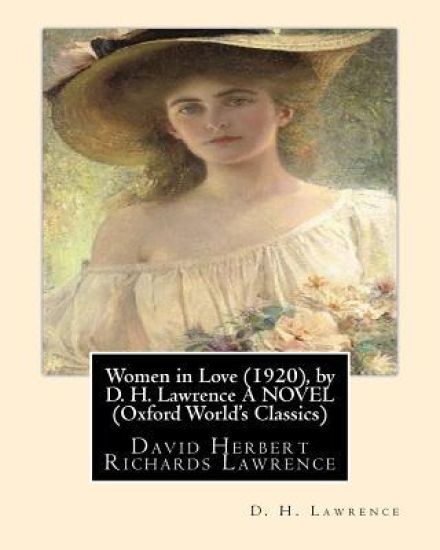
The Rainbow is a 1915 novel by British author D. H. Lawrence. It follows three generations of the Brangwen family living in Nottinghamshire, particularly focusing on the individual's struggle to growth and fulfilment within the confining strictures of English social life. The Rainbow tells the story of three generations of the Brangwen family, a dynasty of farmers and craftsmen who live in the east Midlands of England, on the borders of Nottinghamshire and Derbyshire. The book spans a period of roughly 65 years from the 1840s to 1905, and shows how the love relationships of the Brangwens change against the backdrop of the increasing industrialisation of Britain. The first central character, Tom Brangwen, is a farmer whose experience of the world does not stretch beyond these two counties; while the last, Ursula, his granddaughter, studies at university and becomes a teacher in the progressively urbanised, capitalist and industrial world. The book starts with a description of the Brangwen dynasty, then deals with how Tom Brangwen, one of several brothers, fell in love with a Polish refugee and widow, Lydia. The next part of the book deals with Lydia's daughter by her first husband, Anna, and her destructive, battle-riven relationship with her husband, Will, the son of one of Tom's brothers. The last and most extended part of the book, and also probably the most famous, then deals with Will and Anna's daughter, Ursula, and her struggle to find fulfilment for her passionate, spiritual and sensual nature against the confines of the increasingly materialist and conformist society around her. She experiences a same-sex relationship with a teacher, and a passionate but ultimately doomed love affair with Anton Skrebensky, a British soldier of Polish ancestry. At the end of the book, having failed to find her fulfilment in Skrebensky, she has a vision of a rainbow towering over the Earth, promising a new dawn for humanity: "She saw in the rainbow the earth's new architecture, the old, brittle corruption of houses and factories swept away, the world built up in a living fabric of Truth, fitting to the over-arching heaven." Lawrence's frank treatment of sexual desire and the part it plays within relationships as a natural and even spiritual force of life, caused The Rainbow to be prosecuted in an obscenity trial at Bow Street Magistrates' Court on 13 November 1915, as a result of which 1,011 copies were seized and burnt. After this ban it was unavailable in Britain for 11 years, although editions were available in the United States. The Rainbow was followed by a sequel in 1920, Women in Love. Although Lawrence conceived of the two novels as one, considering the titles The Sisters and The Wedding Ring for the work, they were published as two separate novels at the urging of his publisher. However, after the negative public reception of The Rainbow, Lawrence's publisher opted out of publishing the sequel. Ursula's spiritual and emotional quest continues in Women in Love, in which she continues to be a main character. This second work follows her into a relationship with Rupert Birkin (often seen as a self-portrait by Lawrence), and follows her sister, Gudrun's parallel relationship with Birkin's friend, Gerald Crich.Philosopher Roger Scruton writes in his Sexual Desire (1986) that "because we live in a world structured by gender, the other sex is forever to some extent a mystery to us, with a dimension of experience that we can imagine but never inwardly know." Scruton believes that the prevailing theme of The Rainbow, like Lawrence's other novels, is that "In desiring to unite with the other sex], we are desiring to mingle with something that is deeply - perhaps essentially - not ourselves, and which brings us to experience a character and inwardness that challenge us with their strangeness." Scruton believes that The Rainbow vindicates Lawrence's visio
The Trespasser is the second novel written by D. H. Lawrence, published in 1912. Originally it was entitled the Saga of Siegmund and drew upon the experiences of a friend of Lawrence, Helen Corke, and her adulterous relationship with a married man that ended with his suicide. Lawrence worked from Corke's diary, with her permission, but also urged her to publish; which she did in 1933 as Neutral Ground. Corke later wrote several biographical works on Lawrence. David Herbert Richards Lawrence (11 September 1885 - 2 March 1930) was an English novelist, poet, playwright, essayist, literary critic and painter who published as D. H. Lawrence. His collected works, among other things, represent an extended reflection upon the dehumanising effects of modernity and industrialisation. In them, some of the issues Lawrence explores are emotional health, vitality, spontaneity and instinct. Lawrence's opinions earned him many enemies and he endured official persecution, censorship, and misrepresentation of his creative work throughout the second half of his life, much of which he spent in a voluntary exile which he called his "savage pilgrimage".At the time of his death, his public reputation was that of a pornographer who had wasted his considerable talents. E. M. Forster, in an obituary notice, challenged this widely held view, describing him as, "The greatest imaginative novelist of our generation."Later, the influential Cambridge critic F. R. Leavis championed both his artistic integrity and his moral seriousness, placing much of Lawrence's fiction within the canonical "great tradition" of the English novel. The fourth child of Arthur John Lawrence, a barely literate miner at Brinsley Colliery, and Lydia, a former pupil teacher who, owing to her family's financial difficulties, had to do manual work in a lace factory, Lawrence spent his formative years in the coal mining town of Eastwood, Nottinghamshire. The house in which he was born, in Eastwood, 8a Victoria Street, is now the D. H. Lawrence Birthplace Museum. His working-class background and the tensions between his parents provided the raw material for a number of his early works. Lawrence would return to this locality and often wrote about nearby Underwood, calling it; "the country of my heart," as a setting for much of his fiction. Despite common misconception he is not related to T.E. Lawrence. The young Lawrence attended Beauvale Board School (now renamed Greasley Beauvale D. H. Lawrence Primary School in his honour) from 1891 until 1898, becoming the first local pupil to win a County Council scholarship to Nottingham High School in nearby Nottingham. He left in 1901, working for three months as a junior clerk at Haywood's surgical appliances factory, but a severe bout of pneumonia ended this career. During his convalescence he often visited Hagg's Farm, the home of the Chambers family, and began a friendship with Jessie Chambers.
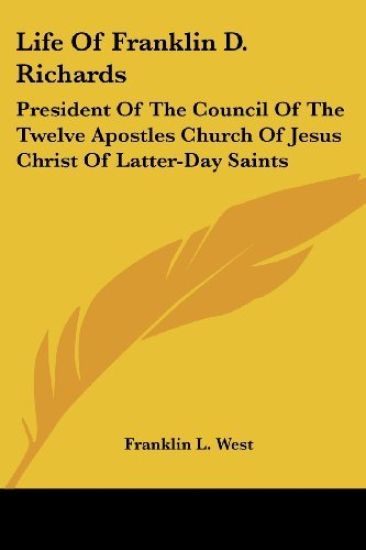
The book titled ""Life of Franklin D. Richards: President of the Council of the Twelve Apostles Church of Jesus Christ of Latter-Day Saints"" is a biographical account of the life of Franklin D. Richards, who was a prominent leader in the Church of Jesus Christ of Latter-Day Saints. The author of the book is Franklin L. West.The book provides a detailed description of Franklin D. Richards' life, starting from his childhood and early years in the church. It covers his journey as a missionary, his role in the church leadership, and his contributions to the development of the church in various parts of the world.The book also sheds light on the personal life of Franklin D. Richards, including his family, relationships, and struggles. It provides insights into his personality, beliefs, and values, which shaped his leadership style and approach to serving the church.Overall, the book is a comprehensive and insightful account of the life and legacy of Franklin D. Richards, who played a crucial role in the growth and development of the Church of Jesus Christ of Latter-Day Saints. It is a valuable resource for anyone interested in the history and evolution of the church and its leaders.This is a new release of the original 1924 edition.This scarce antiquarian book is a facsimile reprint of the old original and may contain some imperfections such as library marks and notations. Because we believe this work is culturally important, we have made it available as part of our commitment for protecting, preserving, and promoting the world's literature in affordable, high quality, modern editions, that are true to their original work.
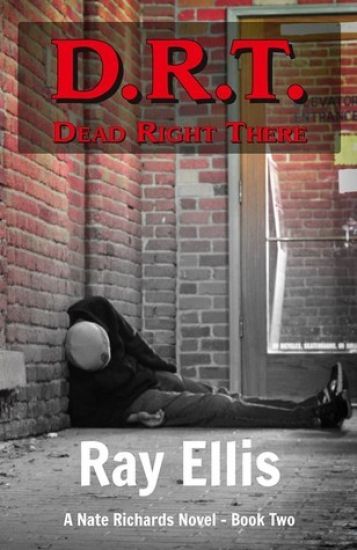
Registered sex offenders in Treasure Valley have started showing up dead, killed with apparent violence and forethought; and Detective Nate Richards finds himself pitted against a psychotic killer set on ridding the valley of the unclean. When Chrystal Johansson, the only female on the killer's list, barely escapes the attempt on her life, Richards takes her into protective custody. Driven by a voice he calls God and a group of men he calls the Uncles, the killer sets a deadline of two weeks to complete the valley's cleansing. Around him, the community divides about the actions of the vigilante. Some hail the killer as a modern day knight, only doing what they wish they could; while others curse him as being part of the sickness he claims to fight. With the deadline quickly approaching, and the city threatening to tear itself apart, will the killer fulfill his calling or will Nate stop the killings before another victim turns up DEAD RIGHT THERE.
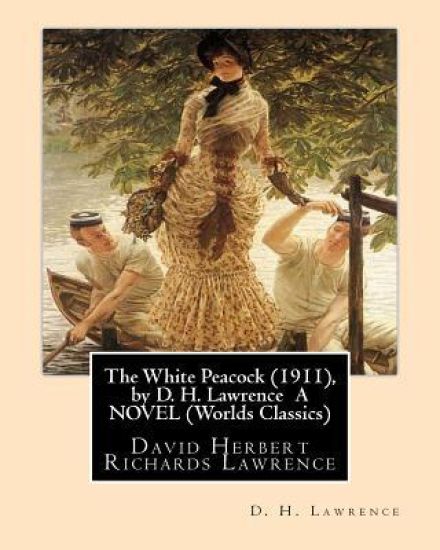
David Herbert Richards Lawrence (11 September 1885 - 2 March 1930) was an English novelist, poet, playwright, essayist, literary critic and painter who published as D. H. Lawrence. His collected works, among other things, represent an extended reflection upon the dehumanising effects of modernity and industrialisation. In them, some of the issues Lawrence explores are emotional health, vitality, spontaneity and instinct. Lawrence's opinions earned him many enemies and he endured official persecution, censorship, and misrepresentation of his creative work throughout the second half of his life, much of which he spent in a voluntary exile which he called his "savage pilgrimage".t the time of his death, his public reputation was that of a pornographer who had wasted his considerable talents. E. M. Forster, in an obituary notice, challenged this widely held view, describing him as, "The greatest imaginative novelist of our generation."Later, the influential Cambridge critic F. R. Leavis championed both his artistic integrity and his moral seriousness, placing much of Lawrence's fiction within the canonical "great tradition" of the English novel.