Kirjahaku
Etsi kirjoja tekijän nimen, kirjan nimen tai ISBN:n perusteella.
1000 tulosta hakusanalla Da Wei Liu
Estratégias para o ensino da arquitectura ao nível do ensino básico e secundário
Li-Wei Liu
Edicoes Nosso Conhecimento
2023
pokkari
Embora muitos dos actuais quadros curriculares de artes exijam que os educadores de artes visuais ensinem alguns conte dos relacionados com a arquitectura, os debates no terreno sobre formas de ensinar arquitectura oferecem pouca ajuda pr tica aos educadores de artes no planeamento de aulas e unidades sobre arquitectura. Este estudo examinou as formas como o ensino da arquitectura no ensino b sico e secund rio analisado e apresentado por autores que escrevem em l ngua inglesa nos ltimos vinte e cinco anos (1986-2010). Utilizou uma revis o hist rica e uma revis o meta-anal tica para examinar as poss veis for as subjacentes que moldam a apresenta o do ensino da arquitectura no ensino b sico e secund rio. Descobriu-se que, para evitar que o ensino da arquitectura seja dominado pelo modelo educativo frequentemente did ctico, crucial um equil brio entre a transmiss o de conhecimentos (aulas te ricas) e as descobertas pessoais inovadoras (pr tica em atelier), para que o ensino da arquitectura no ensino b sico e secund rio possa ser inclu do nos curr culos de artes visuais.

Predictive Cooperative Control for High-Order Fully Actuated Multiagent Systems
Da-Wei Zhang; Guo-Ping Liu
SPRINGER VERLAG, SINGAPORE
2026
sidottu

wen du xiang ying xing da fen zi pei ti gong neng hua de ying guang na mi wei li za hua ti xi de zhi bei guang xue xing zhi ji ying yong
Bing Xin Liu; Chang Li Lv
¿¿¿¿¿¿¿
2016
nidottu

Nonequilibrium Atmospheric Pressure Plasma Jets
XinPei Lu; Stephan Reuter; Mounir Laroussi; DaWei Liu
CRC Press
2021
nidottu
Nonequilibrium atmospheric pressure plasma jets (N-APPJs) generate plasma in open space rather than in a confined chamber and can be utilized for applications in medicine. This book provides a complete introduction to this fast-emerging field, from the fundamental physics, to experimental approaches, to plasma and reactive species diagnostics. It provides an overview of the development of a wide range of plasma jet devices and their fundamental mechanisms. The book concludes with a discussion of the exciting application of plasmas for cancer treatment.The book provides details on experimental methods including expert tips and caveats. covers novel devices driven by various power sources and the impact of operating conditions on concentrations and fluxes of the reactive species. discusses the latest advances including theory, modeling, and simulation approaches. gives an introduction, overview and details on state of the art diagnostics of small scale high gradient atmospheric pressure plasmas. covers the use of N-APPJs for cancer applications, including discussion of destruction of cancer cells, mechanisms of action, and selectivity studies. XinPei Lu is a Chair Professor in the School of Electrical and Electronic Engineering at Huazhong University of Science and Technology. Stephan Reuter is currently Visiting Professor at Université Paris-Saclay. In a recent Alexander von Humboldt research fellowship at Princeton University, he performed ultrafast laser spectroscopy on cold plasmas.Mounir Laroussi is Professor of Electrical and Computer Engineering and director of the Plasma Engineering and Medicine Institute at Old Dominion University. He is a Fellow of IEEE and recipient of an IEEE Merit Award.DaWei Liu is Professor in the School of Electrical and Electronic Engineering at Huazhong University of Science and Technology.

Nonequilibrium Atmospheric Pressure Plasma Jets
XinPei Lu; Stephan Reuter; Mounir Laroussi; DaWei Liu
Productivity Press
2019
sidottu
Nonequilibrium atmospheric pressure plasma jets (N-APPJs) generate plasma in open space rather than in a confined chamber and can be utilized for applications in medicine. This book provides a complete introduction to this fast-emerging field, from the fundamental physics, to experimental approaches, to plasma and reactive species diagnostics. It provides an overview of the development of a wide range of plasma jet devices and their fundamental mechanisms. The book concludes with a discussion of the exciting application of plasmas for cancer treatment.The book provides details on experimental methods including expert tips and caveats. covers novel devices driven by various power sources and the impact of operating conditions on concentrations and fluxes of the reactive species. discusses the latest advances including theory, modeling, and simulation approaches. gives an introduction, overview and details on state of the art diagnostics of small scale high gradient atmospheric pressure plasmas. covers the use of N-APPJs for cancer applications, including discussion of destruction of cancer cells, mechanisms of action, and selectivity studies. XinPei Lu is a Chair Professor in the School of Electrical and Electronic Engineering at Huazhong University of Science and Technology. Stephan Reuter is currently Visiting Professor at Université Paris-Saclay. In a recent Alexander von Humboldt research fellowship at Princeton University, he performed ultrafast laser spectroscopy on cold plasmas.Mounir Laroussi is Professor of Electrical and Computer Engineering and director of the Plasma Engineering and Medicine Institute at Old Dominion University. He is a Fellow of IEEE and recipient of an IEEE Merit Award.DaWei Liu is Professor in the School of Electrical and Electronic Engineering at Huazhong University of Science and Technology.

Parameter Estimation of Permanent Magnet Synchronous Machines
Zi Qiang Zhu; Kan Liu; Dawei Liang
JOHN WILEY SONS INC
2025
sidottu
Comprehensive reference delivering basic principles and state-of-the-art parameter estimation techniques for permanent magnet synchronous machines (PMSMs) Parameter Estimation of Permanent Magnet Synchronous Machines reviews estimation techniques of the parameters of PMSMs, introducing basic models and techniques, as well as issues and solutions in parameter estimation challenges, including rank deficiency, inverter nonlinearity, and magnetic saturation. This book is supported by theories, experiments, and simulation examples for each technique covered. Topics explored in this book include: Electrical and mechanical parameter estimation techniques, including those based on current/voltage injection and position offset injection, under constant or variable speed and load for sensored or sensorless controlled PMSMs, accounting for magnetic saturation, cross-coupling, inverter nonlinearity, temperature effects, and moreRecursive least squares, the Kalman filter, model reference adaptive systems, Adaline neural networks, gradient-based methods, particle swarm optimization, and genetic algorithmsApplications of parameter estimation techniques for improvement of control performance, sensorless control, thermal condition monitoring, and fault diagnosis This book is an essential reference for professionals working on the control and design of electrical machines, researchers studying electric vehicles, wind power generators, aerospace, industrial drives, automation systems, robots, and domestic appliances, as well as advanced undergraduate and graduate students in related programs of study.

Focusing on Shenzhen as a representation of the general urban village phenomenon in China, this book considers the impact of China’s economic reform on urbanization and urban villages over the past three decades. Shenzhen’s urban villages are some of the first of their kind in China, unique in their diversity and organizational capacity, but most notably in their ability to protect village culture whilst coexisting with Shenzhen, one of the fastest urbanizing cities on earth. Providing a study of regional contrast of urban villages in China with newly collected fieldwork materials from Guangzhou, Beijing, and Xi’an, this book also considers recent developments within urban villages, including attempts at marketization of the so-called xiao chanquanfang (the quintessential urban village apartment units). It also addresses the corruption scandals that engulfed some urban villages in late 2013. Through cutting edge fieldwork, the author offers a cross-disciplinary study ofthe history, culture, socio-economic changes, and migration of the villages which arguably embody Chinese social mobility in an urban form.

Focusing on Shenzhen as a representation of the general urban village phenomenon in China, this book considers the impact of China’s economic reform on urbanization and urban villages over the past three decades. Shenzhen’s urban villages are some of the first of their kind in China, unique in their diversity and organizational capacity, but most notably in their ability to protect village culture whilst coexisting with Shenzhen, one of the fastest urbanizing cities on earth. Providing a study of regional contrast of urban villages in China with newly collected fieldwork materials from Guangzhou, Beijing, and Xi’an, this book also considers recent developments within urban villages, including attempts at marketization of the so-called xiao chanquanfang (the quintessential urban village apartment units). It also addresses the corruption scandals that engulfed some urban villages in late 2013. Through cutting edge fieldwork, the author offers a cross-disciplinary study ofthe history, culture, socio-economic changes, and migration of the villages which arguably embody Chinese social mobility in an urban form.
Robust Control Design with MATLAB®
Da-Wei Gu; Petko H. Petkov; Mihail M Konstantinov
Springer London Ltd
2013
nidottu
Robust Control Design with MATLAB® (second edition) helps the student to learn how to use well-developed advanced robust control design methods in practical cases. To this end, several realistic control design examples from teaching-laboratory experiments, such as a two-wheeled, self-balancing robot, to complex systems like a flexible-link manipulator are given detailed presentation. All of these exercises are conducted using MATLAB® Robust Control Toolbox 3, Control System Toolbox and Simulink®. By sharing their experiences in industrial cases with minimum recourse to complicated theories and formulae, the authors convey essential ideas and useful insights into robust industrial control systems design using major H-infinity optimization and related methods allowing readers quickly to move on with their own challenges. The hands-on tutorial style of this text rests on an abundance of examples and features for the second edition: • rewritten and simplified presentation of theoretical and methodological material including original coverage of linear matrix inequalities; • new Part II forming a tutorial on Robust Control Toolbox 3; • fresh design problems including the control of a two-rotor dynamic system; and • end-of-chapter exercises. Electronic supplements to the written text that can be downloaded from extras.springer.com/isbn include: • M-files developed with MATLAB® help in understanding the essence of robust control system design portrayed in text-based examples; • MDL-files for simulation of open- and closed-loop systems in Simulink®; and • a solutions manual available free of charge to those adopting Robust Control Design with MATLAB® as a textbook for courses. Robust Control Design with MATLAB® is for graduate students and practising engineers who want to learn how to deal with robust control design problems without spending a lot of time in researching complextheoretical developments.

shuang kui feng li fa dian ji te shu yun xing gong kuang xia li ci kong zhi ce lve de yan jiu
Da Wei Xiang
¿¿¿¿¿¿¿
2016
nidottu
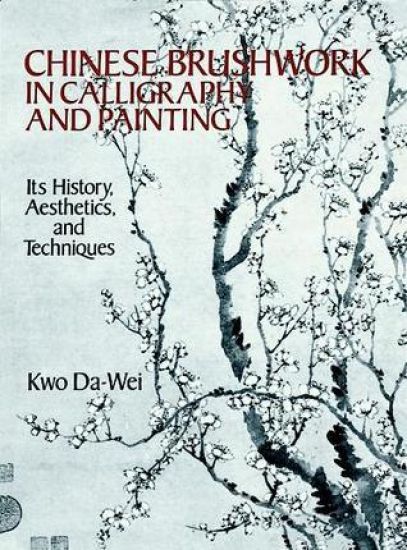
Comprehensive volume traces historical development of techniques and styles; analyzes aesthetic concepts; provides information on materials, technical principles and brush strokes.
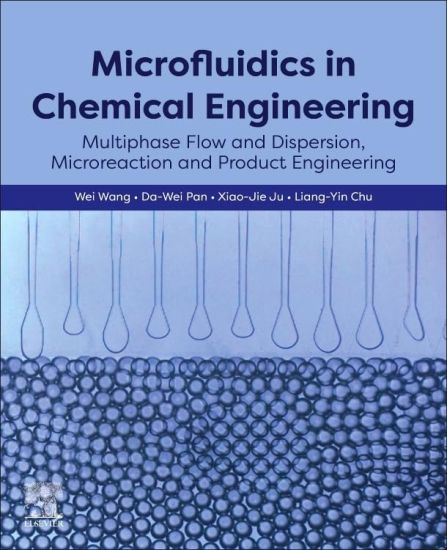
Microfluidics in Chemical Engineering
Wei Wang; Da-Wei Pan; Xiao-Jie Ju; Liang-Yin Chu
Elsevier - Health Sciences Division
2025
nidottu
Microfluidics for Chemical Engineering: Flow and Reaction, Microreaction, On-line Detection, and Product Engineering presents the fundamentals of microfluidic flow and dispersion and provides new insights on the use of microfluidics in the field of chemical engineering. The book provides a timely, comprehensive, and detailed overview, demonstrating this state-of-the-art methodology, research advances, and classic instances, and providing insightful, forward-looking perspectives. Content ranges from flow and dispersion in microfluidics, microreaction regulation via the coalesce and transfer of droplets, to product engineering regarding controllable fabrication of microparticles and microfibers with advanced functions. The chapters clearly summarize the design concepts and general strategies involved as well as the involved mechanisms and classic instances. Instructive advice is also featured throughout on rational regulation of multiphase flows and interfaces in microfluidics, thus offering guidance for process intensification of chemical engineering. It is primarily written for advanced graduate/postdoc students and researchers chemical engineering, but with relevance to materials scientists, physical and materials (including polymer) chemists, physicists, biochemists, as well as pharmaceutical and biomedical scientists.
A Two-port Framework for Robust and Optimal Control introduces an alternative approach to robust and optimal controller synthesis procedures for linear, time-invariant systems, based on the two-port system widespread in electrical engineering. The novel use of the two-port system in this context allows straightforward engineering-oriented solution-finding procedures to be developed, requiring no mathematics beyond linear algebra. A chain-scattering description provides a unified framework for constructing the stabilizing controller set and for synthesizing H2 optimal and H8 sub-optimal controllers. Simple yet illustrative examples explain each step.A Two-port Framework for Robust and Optimal Control features:· a hands-on, tutorial-style presentation giving the reader the opportunity to repeat the designs presented and easily to modify them for their own programs;· an abundance of examples illustrating the most important steps in robust and optimal design; and· end-of-chapter exercises.To further demonstrate the proposed approaches, in the last chapter an application case study is presented which demonstrates the use of the framework in a real-world control system design and helps the reader quickly move on with their own challenges. MATLAB® codes used in examples throughout the book and solutions to selected exercise questions are available for download.The text will have particular resonance for researchers in control with an electrical engineering background, who wish to avoid spending excessive time in learning complex mathematical, theoretical developments but need to know how to deal with robust and optimal control synthesis problems.Please see [http://km.emotors.ncku.edu.tw/class/hw1.html] for solutions to the exercises provided in this book.
A Two-port Framework for Robust and Optimal Control introduces an alternative approach to robust and optimal controller synthesis procedures for linear, time-invariant systems, based on the two-port system widespread in electrical engineering. The novel use of the two-port system in this context allows straightforward engineering-oriented solution-finding procedures to be developed, requiring no mathematics beyond linear algebra. A chain-scattering description provides a unified framework for constructing the stabilizing controller set and for synthesizing H2 optimal and H8 sub-optimal controllers. Simple yet illustrative examples explain each step.A Two-port Framework for Robust and Optimal Control features:· a hands-on, tutorial-style presentation giving the reader the opportunity to repeat the designs presented and easily to modify them for their own programs;· an abundance of examples illustrating the most important steps in robust and optimal design; and· end-of-chapter exercises.To further demonstrate the proposed approaches, in the last chapter an application case study is presented which demonstrates the use of the framework in a real-world control system design and helps the reader quickly move on with their own challenges. MATLAB® codes used in examples throughout the book and solutions to selected exercise questions are available for download.The text will have particular resonance for researchers in control with an electrical engineering background, who wish to avoid spending excessive time in learning complex mathematical, theoretical developments but need to know how to deal with robust and optimal control synthesis problems.Please see [http://km.emotors.ncku.edu.tw/class/hw1.html] for solutions to the exercises provided in this book.
Nonlinear Filtering
Kumar Pakki Bharani Chandra; Da-Wei Gu
Springer Nature Switzerland AG
2018
sidottu
This book gives readers in-depth know-how on methods of state estimation for nonlinear control systems. It starts with an introduction to dynamic control systems and system states and a brief description of the Kalman filter. In the following chapters, various state estimation techniques for nonlinear systems are discussed, including the extended, unscented and cubature Kalman filters. The cubature Kalman filter and its variants are introduced in particular detail because of their efficiency and their ability to deal with systems with Gaussian and/or non-Gaussian noise. The book also discusses information-filter and square-root-filtering algorithms, useful for state estimation in some real-time control system design problems. A number of case studies are included in the book to illustrate the application of various nonlinear filtering algorithms. Nonlinear Filtering is written for academic and industrial researchers, engineers and research students who are interested in nonlinear control systems analysis and design. The chief features of the book include: dedicated coverage of recently developed nonlinear, Jacobian-free, filtering algorithms; examples illustrating the use of nonlinear filtering algorithms in real-world applications; detailed derivation and complete algorithms for nonlinear filtering methods, which help readers to a fundamental understanding and easier coding of those algorithms; and MATLAB® codes associated with case-study applications, which can be downloaded from the Springer Extra Materials website.
Fault Detection and Flight Data Measurement
Ihab Samy; Da-Wei Gu
Springer-Verlag Berlin and Heidelberg GmbH Co. K
2011
nidottu
This book considers two popular topics: fault detection and isolation (FDI) and flight data estimation using flush air data sensing (FADS) systems. Literature surveys, comparison tests, simulations and wind tunnel tests are performed. In both cases, a UAV platform is considered for demonstration purposes. In the first part of the book, FDI is considered for sensor faults where a neural network approach is implemented. FDI is applied both in academia and industry resulting in many publications over the past 50 years or so. However few publications consider neural networks in comparison to traditional techniques such as observer based, parameter estimations and parity space approaches. The second part of this book focuses on how to estimate flight data (angle of attack, airspeed) using a matrix of pressure sensors and a neural network model. In conclusion this book can serve as an introduction to FDI and FADS systems, a literature survey, and a case study for UAV applications.