

Kirjahaku
Etsi kirjoja tekijän nimen, kirjan nimen tai ISBN:n perusteella.
1000 tulosta hakusanalla Dale E Wagman

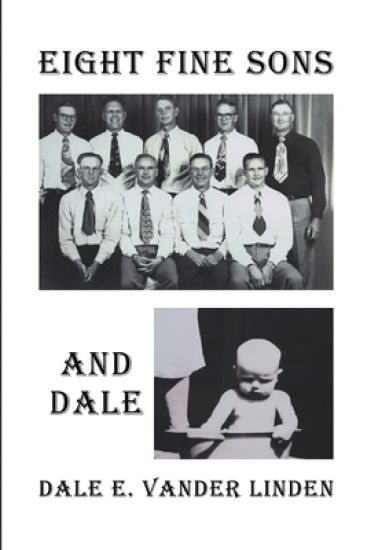
A touch of history. An Iowa sharecroppers son describes the adventures and vagaries of growing up in the 1930s and 40s and 50s.

Five E. E. Cummings Songs: for High Voice with Piano
Dale E. Victorine
Createspace Independent Publishing Platform
2015
nidottu
People once stood in awe of electricity, writes Dale Zand, until scientists identified and harnessed its three basic variables: voltage, current, and resistance. Likewise, people marvel at the achievements of successful leaders, such as Lee Iacocca at Chrysler or Jack Welch at GE, and wonder how they do it. In this superb volume, Zand dispels the mystery surrounding leadership so that managers at all levels - from the CEO to the shop supervisor - can develop the skills needed to lead effectively. Zand highlights the three elements required for leadership in today's information-driven organizations: knowledge, trust, and power. Knowledge, Zand argues, is essential to decision making: Leaders must be able to tap information about customers, products, and processes found throughout the organization. The book brims with suggestions about how to tap this knowledge. The author demonstrates, for instance, how a leader's attitudes and behavior can release (or repress) the flow of knowledge in a corporation (he shows how at one failed home-appliance company managers suppressed information about customer complaints and reprimanded factory workers for suggesting changes, fatal mistakes); he outlines how the skillful use of questions can draw out and highlight the knowledge managers and workers possess; and he discusses how to avoid subtle obstacles (such as the complacency of success) to improve the link between knowledge and action. Trust, the second element of the triad, helps a leader achieve open, collaborative communication. Indeed, Zand shows that the degree to which people trust a leader determines how much access they will give him or her to their knowledge. The book explores the key elements in the development of trust (a leader must disclose relevant information, share influence, live up to the spirit of agreements, and not abuse power) and also illustrates some basic laws of trust - mistrust drives out trust; trust stimulates productivity; and mistrusting groups self-destruct. Zand then considers power, showing how the leader must set the agenda for the firm; select, develop, and motivate the people who will implement the agenda; and examine and adjust individual performance. Equally important, he shows that in today's knowledge-driven corporation, the effective leader rarely issues directives, but instead acts more as a consultant or a client. At Chrysler, for example, CEO Robert Eaton, senior managers, and project leaders all meet when a new car model is to be created or redesigned. After the objectives are worked out, the team is turned loose to organize itself and get the job done. Freed from constant second-guessing by top bosses, teams work harder and take greater pride in their work. By the mid-1990s, this design-consignment process at Chrysler was so effective that the companys speed to market and reduction of development costs far exceeded its U. S. competitors. Masterfully written, Triadic Leadership is a down-to-earth, powerful guide. Full of examples--many from the author's consulting experience--of companies from General Motors, Wal-Mart, and American Express to electronics, manufacturing, and health care organizations, it offers a wealth of practical information to managers at all levels, and to anyone who aspires to a leadership position.
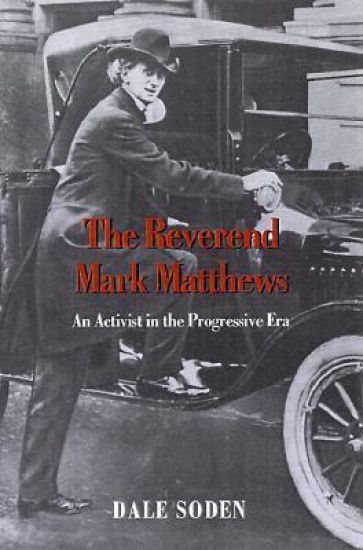
When the Reverend Mark Allison Matthews died in February 1940, thousands of mourners gathered at a Seattle church to pay their final respects. The Southern-born Presbyterian came to Seattle in 1902. He quickly established himself as a city leader and began building a congregation that was eventually among the nation's largest, with nearly 10,000 members. Throughout his career, he advocated Social Christianity, a blend of progressive reform and Christian values, as a blueprint for building a morally righteous community.In telling Matthews's story, Dale Soden presents Matthews's multiple facets: a Southern-born, fundamentalist proponent of the Social Gospel; a national leader during the tumultuous years of schism within the American Presbyterian church; a social reformer who established day-care centers, kindergartens, night classes, and soup kitchens; a colorful figure who engaged in highly public and heated disputes with elected officials. Much of the controversy that surrounded Matthews centered on the proper relationship between church and state — an issue that is still hotly debated.

Welcome to Wise Acres, where the sassy kids go. In the seventh installment of Heck, Dale E. Basye sends Milton and Marlo Fauster to Wise Acres, the circle reserved for kids who sass back. In Wise Acres, the cleverest, snarkiest, put-downiest kids debate and trade insults in Spite Club. But the new vice principal, Lewis Carroll, has some curious plans to raise the profile--and the stakes--of the competition. Now a full-fledged War of the Words will be broadcast through the afterlife. The winner will get the heck out of Heck and go straight to heaven. And the loser? Well, the loser goes down . . . all the way down to the real h-e-double-hockey-sticks. And Milton and Marlo are on opposite teams. Can they find a way out of Lewis Carroll's mad-as-a-hatter scheme? Or is one Fauster about to pay a permanent visit to the Big Guy Downstairs?

This is the first English-language general bibliography on military fortifications. It deals with the history of fortifications from the earliest times to the present throughout the world. Design, construction, and maintenance of all types of fortifications are noted, from permanent to temporary, from earthworks to fortifications of wood and stone. Although the work mainly cites English-language sources, numerous useful foreign-language publications are noted as well. Materials included range from books and pamphlets to essays, periodicals, book chapters, dissertations, and videos.After the frontmatter, which provides an overview of the subject, the volume consists of six major sections: general works are cited first, followed by chapters on fortifications in the Eastern Hemisphere, Europe, the Pacific, the Western Hemisphere, and specific topics. Each entry contains an annotation which notes the work's content, assesses its usefulness, and notes any unique features. Access to the contents of the volume is augmented through an author index and a subject index. This bibliography should prove invaluable to scholars and researchers concerned with military history, and the place of fortifications in warfare.

Rapacia: The Second Circle of Heck
Dale E. Basye
Yearling (imprint of Random House Children's Books)
2010
pokkari
In his second novel in the popular series Heck, Dale E. Basye takes Milton and Marlo Fauster on a journey that is as full of clever, dark humor and laugh-out-loud silliness as the first. Welcome to Rapacia, where the greedy kids go. When her brother, Milton, escapes the otherworldly reform school Heck in a soul balloon made of old clothes, Marlo is the only Fauster child left to take the blame. Bea Elsa Bubb, the Principal of Darkness, sends her straight to Rapacia, the circle of Heck where greedy kids are tormented by glimpses of a just-out-of-reach, glittering shoppers' paradise called Mallvana. Marlo soon falls under the sway of Rapacia's vice principal, a grinning metal rabbit known as the Grabbit that seems to have plans of its own. Marlo is torn between wanting to find a way out and wanting to do . . . whatever the Grabbit asks her to do.Meanwhile, back on the Surface, Milton has his own problems. He is determined to get in touch with Marlo and help her find a way out of Heck. But it's hard to concentrate when his body and soul don't seem to hold together the way they used to. Will Milton ever reach Marlo? And if he does, will they both end up as pawns in the Grabbit's mysterious game?

With more clever, dark humor and zany silliness, Dale E. Basye sends Milton and Marlo Fauster back for thirds in another laugh-out-loud installment of the popular series Heck. After his second escape from Bea "Elsa" Bubb, the Principal of Darkness, Milton Fauster makes his way to Blimpo--the circle of the otherworldly reform school, Heck, where he's sure his friend Virgil is sentenced. Virgil's only crime is being, well, plump. Milton has to wonder if that's really enough to justify eternal darnation. And what Milton finds in Blimpo horrifies him. The overweight dead kids spend most of their time running on giant human hamster wheels called DREADmills that detect and exploit their deepest fears. The rest they spend eating Hambone Hank's barbecue--mystery meat that is delicious, but suspiciously (to Milton, anyway) haunting. Every classroom has a huge TV screen showing happy thin people who taunt Blimpo residents with a perfection they will never attain. Meanwhile, at her new job in the devil's Infernship program, Milton's sister, Marlo, knows all about trying to achieve perfection. And failing miserably. Can Milton get himself and Virgil out of Blimpo in time to rescue Marlo, too? Or is Fauster the next delicacy on Bea "Elsa" Bubb's menu?

Dale E. Basye's most over-the-top (the Big Top, that is) adventure yet is now available in paperback. When Marlo Fauster claims she has switched souls with her brother, she gets sent straight to Fibble, the circle of Heck reserved for liars. But it's true--Milton and Marlo have switched places, and Marlo finds herself trapped in Milton's gross, gangly body. She also finds herself trapped in Fibble, a three-ring media circus run by none other than P. T. Barnum, an insane ringmaster with grandiose plans and giant, flaming pants. Meanwhile Milton, as Marlo, is working at the devil's new television network, T.H.E.E.N.D. But there's something strange about these new shows. Why do they all air at the same time? And are they really broadcasting to "the Surface"? Soon Milton and Marlo realize that they need each other to sort through the lies and possibly prevent the end of the world--if Bea "Elsa" Bubb doesn't catch them first.

In That Land: A Seedtime and Harvest Approach to Finding a Wife
Dale E. Lott Jr
1978 Publishing
2012
nidottu
We've all seen the pick-up artists online promising you the latest techniques to meet the hottest chicks and dozens of books about dating that seem to be all about rules. But what about the man who is sincere about finding a Godly wife without the added stress that dating according to the world's system brings? To that individual this book was written. It is not a book about dating, but about receiving a Godly wife God's way - through seedtime and harvest. Inside, you'll learn: 1. How your thoughts impact your search 2. How to set your compass with four foundational truths. 3. Three preparation principles that affect your sowing. 4. Three principles to position yourself to receive harvest. 5. Eight keys to recognize your wife when you meet her.

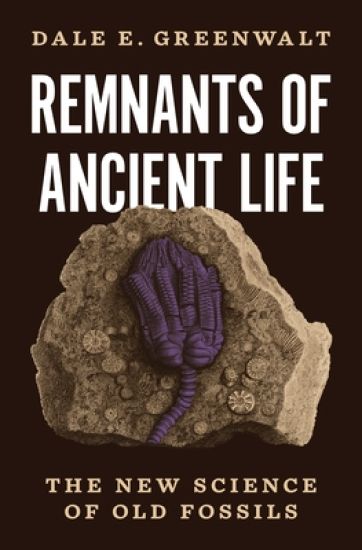
The revolution in science that is transforming our understanding of extinct lifeWe used to think of fossils as being composed of nothing but rock and minerals, all molecular traces of life having vanished long ago. We were wrong. Remnants of Ancient Life reveals how the new science of ancient biomolecules—pigments, proteins, and DNA that once functioned in living organisms tens of millions of years ago—is opening a new window onto the evolution of life on Earth.Paleobiologists are now uncovering these ancient remnants in the fossil record with increasing frequency, shedding vital new light on long-extinct creatures and the lost world they inhabited. Dale Greenwalt is your guide to these astonishing breakthroughs. He explains how ancient biomolecules hold the secrets to how mammoths dealt with the bitter cold, what colors dinosaurs exhibited in mating displays, how ancient viruses evolved to become more dangerous, and much more. Each chapter discusses different types of biomolecules and the insights they provide about the physiology, behavior, and evolution of extinct organisms, many of which existed long before the age of dinosaurs.A marvelous adventure of discovery, Remnants of Ancient Life offers an unparalleled look at an emerging science that is transforming our picture of the remote past. You will never think of fossils in the same way again.

The revolution in science that is transforming our understanding of extinct lifeWe used to think of fossils as being composed of nothing but rock and minerals, all molecular traces of life having vanished long ago. We were wrong. Remnants of Ancient Life reveals how the new science of ancient biomolecules—pigments, proteins, and DNA that once functioned in living organisms tens of millions of years ago—is opening a new window onto the evolution of life on Earth.Paleobiologists are now uncovering these ancient remnants in the fossil record with increasing frequency, shedding vital new light on long-extinct creatures and the lost world they inhabited. Dale Greenwalt is your guide to these astonishing breakthroughs. He explains how ancient biomolecules hold the secrets to how mammoths dealt with the bitter cold, what colors dinosaurs exhibited in mating displays, how ancient viruses evolved to become more dangerous, and much more. Each chapter discusses different types of biomolecules and the insights they provide about the physiology, behavior, and evolution of extinct organisms, many of which existed long before the age of dinosaurs.A marvelous adventure of discovery, Remnants of Ancient Life offers an unparalleled look at an emerging science that is transforming our picture of the remote past. You will never think of fossils in the same way again.

Falling Away from Me: A Journey of Courage, Confidence and Character
Dale E. Similton
King's Daughter Publishing
2016
nidottu
This book offers a clear and highly readable introduction to the ethical and social-political philosophy of John Stuart Mill. Dale E. Miller argues for a "utopian" reading of Mill's utilitarianism. He analyses Mill's views on happiness and goes on to show the practical, social and political implications that can be drawn from his utilitarianism, especially in relation to the construction of morality, individual freedom, democratic reform, and economic organization. By highlighting the utopian thinking which lies at the heart of Mill's theories, Miller shows that rather than allowing for well-being for the few, Mill believed that a society must do everything in its power to see to it that each individual can enjoy a genuinely happy life if the happiness of its members is to be maximized. Miller provides a cogent and careful account of the main arguments offered by Mill, considers the critical responses to his work, and assesses its legacy for contemporary philosophy. Lucidly and persuasively written, this book will be a valuable resource for students and scholars seeking to understand the continued importance of Mill's thinking.
This book offers a clear and highly readable introduction to the ethical and social-political philosophy of John Stuart Mill. Dale E. Miller argues for a "utopian" reading of Mill's utilitarianism. He analyses Mill's views on happiness and goes on to show the practical, social and political implications that can be drawn from his utilitarianism, especially in relation to the construction of morality, individual freedom, democratic reform, and economic organization. By highlighting the utopian thinking which lies at the heart of Mill's theories, Miller shows that rather than allowing for well-being for the few, Mill believed that a society must do everything in its power to see to it that each individual can enjoy a genuinely happy life if the happiness of its members is to be maximized. Miller provides a cogent and careful account of the main arguments offered by Mill, considers the critical responses to his work, and assesses its legacy for contemporary philosophy. Lucidly and persuasively written, this book will be a valuable resource for students and scholars seeking to understand the continued importance of Mill's thinking.

High-Performing Self-Managed Work Teams
Dale E. Yeatts; Cloyd Hyten
SAGE Publications Inc
1998
sidottu
Since the mid-1970s, pressure from international competition has forced U.S. businesses to look for better ways to achieve and maintain a competitive position. At the same time, public organizations have been asked to produce their services with fewer dollars. The result of these trends has been a growing urgency among public and private organizations to find new ways of reducing their expenses while maintaining or increasing productivity and quality. One popular tool is the self-managed work team (SMWT). How is it different than a work group or short-term team? Which problems compel an organization to create an SMWT? What factors explain successful SMWTs? What must the organization do to develop high-performance, cost-effective teams? In High-Performing Self-Managed Work Teams, Dale E. Yeatts and Cloyd Hyten, Principle Investigators for the three-year National Science Foundation study of the performance of SMWTs, answer these questions and thoroughly examine the most widely accepted theories that attempt to explain SMWT performance. They introduce a synthesis of these theories based on 10 case studies from three different settings: manufacturing, public service, and health care. In an accessible style, the authors lead students and professionals to better understand the theory behind SMWTs as well as the practical aspects of when to use SMWTs to find solutions and how to develop achieving teams. This book appeals to practitioners and scholars in management, human resources, organization studies, industrial psychology, public administration, organizational communication, marketing, sociology, public health, and nursing.

High-Performing Self-Managed Work Teams
Dale E. Yeatts; Cloyd Hyten
SAGE Publications Inc
1998
nidottu
Since the mid-1970s, pressure from international competition has forced U.S. businesses to look for better ways to achieve and maintain a competitive position. At the same time, public organizations have been asked to produce their services with fewer dollars. The result of these trends has been a growing urgency among public and private organizations to find new ways of reducing their expenses while maintaining or increasing productivity and quality. One popular tool is the self-managed work team (SMWT). How is it different than a work group or short-term team? Which problems compel an organization to create an SMWT? What factors explain successful SMWTs? What must the organization do to develop high-performance, cost-effective teams? In High-Performing Self-Managed Work Teams, Dale E. Yeatts and Cloyd Hyten, Principle Investigators for the three-year National Science Foundation study of the performance of SMWTs, answer these questions and thoroughly examine the most widely accepted theories that attempt to explain SMWT performance. They introduce a synthesis of these theories based on 10 case studies from three different settings: manufacturing, public service, and health care. In an accessible style, the authors lead students and professionals to better understand the theory behind SMWTs as well as the practical aspects of when to use SMWTs to find solutions and how to develop achieving teams. This book appeals to practitioners and scholars in management, human resources, organization studies, industrial psychology, public administration, organizational communication, marketing, sociology, public health, and nursing.