Kirjojen hintavertailu. Mukana 11 342 296 kirjaa ja 12 kauppaa.

Kirjahaku

Etsi kirjoja tekijän nimen, kirjan nimen tai ISBN:n perusteella.

1000 tulosta hakusanalla Dale Stephen F.

The Muslim Empires of the Ottomans, Safavids, and Mughals

The Muslim Empires of the Ottomans, Safavids, and Mughals

Dale Stephen F.

Cambridge University Press
2009
pokkari
Between 1453 and 1526 Muslims founded three major states in the Mediterranean, Iran and South Asia: respectively the Ottoman, Safavid, and Mughal empires. By the early seventeenth century their descendants controlled territories that encompassed much of the Muslim world, stretching from the Balkans and North Africa to the Bay of Bengal and including a combined population of between 130 and 160 million people. This book is the first comparative study of the politics, religion, and culture of these three empires between 1300 and 1923. At the heart of the analysis is Islam, and how it impacted on the political and military structures, the economy, language, literature and religious traditions of these great empires. This original and sophisticated study provides an antidote to the modern view of Muslim societies by illustrating the complexity, humanity and vitality of these empires, empires that cannot be reduced simply to religious doctrine.
The Muslim Empires of the Ottomans, Safavids, and Mughals

The Muslim Empires of the Ottomans, Safavids, and Mughals

Stephen F. Dale

Cambridge University Press
2009
sidottu
Between 1453 and 1526 Muslims founded three major states in the Mediterranean, Iran and South Asia: respectively the Ottoman, Safavid, and Mughal empires. By the early seventeenth century their descendants controlled territories that encompassed much of the Muslim world, stretching from the Balkans and North Africa to the Bay of Bengal and including a combined population of between 130 and 160 million people. This book is the first comparative study of the politics, religion, and culture of these three empires between 1300 and 1923. At the heart of the analysis is Islam, and how it impacted on the political and military structures, the economy, language, literature and religious traditions of these great empires. This original and sophisticated study provides an antidote to the modern view of Muslim societies by illustrating the complexity, humanity and vitality of these empires, empires that cannot be reduced simply to religious doctrine.
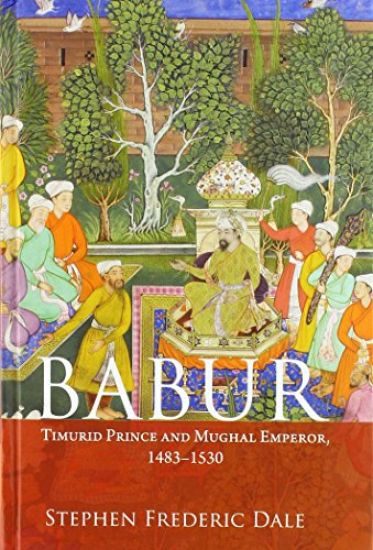
Babur

Babur

Stephen F. Dale

Cambridge University Press
2018
pokkari
This book is a concise biography of Babur, who founded the Timurid-Mughal Empire of South Asia. Based primarily on his autobiography and existential verse, it chronicles the life and career of a Central Asian, Turco-Mongol Muslim who, driven from his homeland by Uzbeks in 1504, ruled Kabul for two decades before invading 'Hindustan' in 1526. It offers a revealing portrait of Babur's Perso-Islamic culture, Timurid imperial ambition and turbulent emotional life. It is, above all, a humanistic portrait of an individual, who even as he triumphed in South Asia, suffered the regretful anguish of an exile who felt himself to be a stranger in a strange land.
Babur

Babur

Stephen F. Dale

Cambridge University Press
2018
sidottu
This book is a concise biography of Babur, who founded the Timurid-Mughal Empire of South Asia. Based primarily on his autobiography and existential verse, it chronicles the life and career of a Central Asian, Turco-Mongol Muslim who, driven from his homeland by Uzbeks in 1504, ruled Kabul for two decades before invading 'Hindustan' in 1526. It offers a revealing portrait of Babur's Perso-Islamic culture, Timurid imperial ambition and turbulent emotional life. It is, above all, a humanistic portrait of an individual, who even as he triumphed in South Asia, suffered the regretful anguish of an exile who felt himself to be a stranger in a strange land.
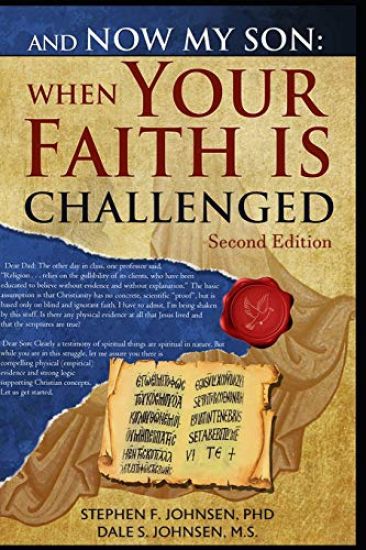
And Now My Son: When Your Faith Is Challenged: Letters from a father to his son regarding an evidence based logical approach to answer
"Dear Dad, You know, even though I'm not attending a religious school, I didn't realize the topic of religion would come up so frequently. In fact, I didn't realize I would be bombarded with a lot of criticism and questions about my religion. Even the professors are into it. The other day in class, one professor said, "Religion ... relies on the gullibility of its clients, who have been educated to believe without evidence and without explanation." I don't want to fall into that category."Research shows that the millennial generation is the most secular minded in the history of the United States. Consequently, this book is written for youth as well as adults who because of societal trends are curious about the data and evidence of the truths of spiritual records. In the form of emails from a father to his son, this book is clear and easy to digest. This son is away at school and is feeling "bombarded" by secular thought, thereby shaking his spirituality. He is exposed to many who maintain that religion has no credible evidence to support the stories and claims of the scriptures. These philosophies disturb him as he begins to question his own faith. Since this book is a reasoned and data driven approach minimizing stereotypical generalizations, it can be appreciated by individuals of good will who are not only faith-based but also of a skeptical nature, an opportunity for civil discourse on common ground.The author, reared as a Protestant spent his young adult years in religious rebellion and skepticism. Quite unexpectedly, having had a spiritual experience, he joined the Church of Jesus Christ of Latter-day Saints and has maintained a devout testimony ever since. As a result of his own personal journey the secular attacks are familiar to him and have been a focus of his study. This combined with considerable research into the empirical data that relate to scriptural records have given him the unique ability to address the evidence with respect to all sides. In addition, as a psychologist and researcher, he helps the reader know how to recognize when emotion is used over logic. Throughout this book, Dr. Johnsen demonstrates that religion is improperly characterized as "an opiate for the masses" to a reader of goodwill. In fact, after considering the evidence recorded in this book one prominent attorney said these facts could be upheld in a court of law.
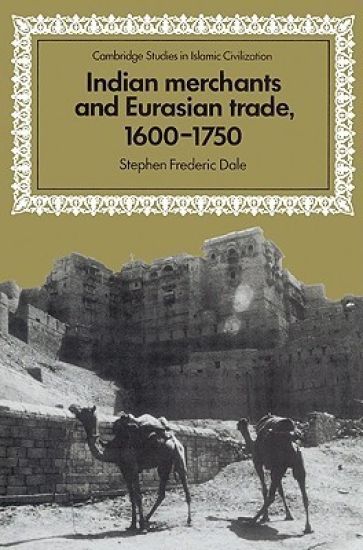
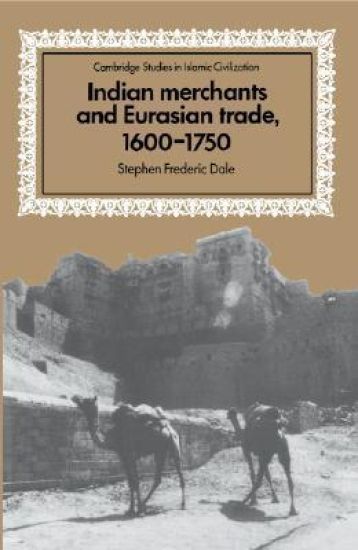
Indian Merchants and Eurasian Trade, 1600–1750

Indian Merchants and Eurasian Trade, 1600–1750

Dale Stephen Frederic

Cambridge University Press
2002
pokkari
In this remarkable work of comparative economic history, Stephen Dale studies the activities and economic significance of the Indian mercantile communities which traded in Iran, Central Asia and Russia in the seventeenth and eighteenth centuries. The author uses Russian sources, hitherto largely ignored, to show that these merchants represented part of the hegemonic trade diaspora of the Indian world economy, thus challenging the conventional interpretation of world economic history that European merchants overwhelmed their Asian counterparts in the early modern era. The book not only demonstrates the vitality of Indian mercantile capitalism, but also offers a unique insight into the social characteristics of an Indian expatriate trading community in the Volga-Caspian port of Astrakhan.
Noble Illusions

Noble Illusions

Stephen Dale

Fernwood Publishing Co Ltd
2014
nidottu
One hundred years ago saw the declaration of a war that would forever change our understanding of war. With a staggering loss of life, World War One was, by all accounts, a brutal and devastating tragedy. And yet, on the eve of the hundredth anniversary, countries around the world are preparing to commemorate the Great War not with regret but with nationalist pride. Conservative forces, already well into a program to elevate the place of the military in society, are embracing the opportunity to replace today's apparent cynicism with an unquestioning patriotism similar to that which existed a century ago. Politicians on both sides of the Atlantic are imploring their citizens - especially their youth - to revive the sense of duty embodied in the generation that served in the trenches. But is the ennobling nature of patriotism the real lesson that people today should extract from that now-vanished generation's experience? Through a dialogue with a pop-culture artifact from a lost world - a boys' annual called Young Canada - Noble Illusions examines the use of propaganda to glorify racist colonial wars and, in the wake of those, the Great War. A juxtaposition of earnest instruction on the cultivation of everyday virtues and brutal tales of war masquerading as moral lessons on valour and righteousness, Young Canada helped to persuade a generation of young Canadians to head eagerly to the trenches of World War One. Concerned that the rise of militarism is leading today's youth in a similar direction, Stephen Dale offers this examination as an inoculation against the blind patriotism politicians are working so hard to instill.
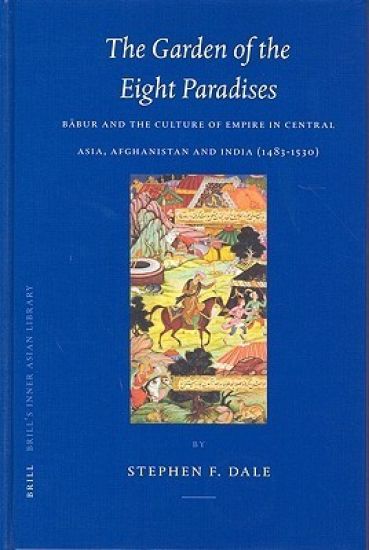
The Garden of the Eight Paradises
This the first critical biography of Zahir al-Din Muhammad Babur, the founder of one of the great premodern Islamic empires, the Timurid-Mughul empire of India. It contains an original evaluation of his life and writings as well as fresh insights into both the nature of empire building and the character of the Timurid-Mughul state. Based upon recently published critical editions of Babur's autobiography and poetry, the book examines Babur's life from the time he inherited his father's authority in the Ferghanah valley, east of Samarqand, in 1494, until his death in Agra, India in 1530. The book is written in an alternating series of thematic and narrative chapters. The thematic or analytical chapters examine his major writings, discuss his cultural personality and his reaction to Indian culture, while the narrative chapters relate the story of his life while critically commenting on his autobiographical intent. The book contributes to the history of the Timurid period, the study of early modern Islamic empires and the nature of autobiographical literature in Islamic and Asian societies. It is illustrated with fifteen colour plates and four maps.
Indian Merchants and Eurasian Trade, 1600–1750

Indian Merchants and Eurasian Trade, 1600–1750

Stephen Frederic Dale

Cambridge University Press
1994
sidottu
In this remarkable work of comparative economic history, Stephen Dale studies the activities and economic significance of the Indian mercantile communities which traded in Iran, Central Asia and Russia in the seventeenth and eighteenth centuries. The author uses Russian sources, hitherto largely ignored, to show that these merchants represented part of the hegemonic trade diaspora of the Indian world economy, thus challenging the conventional interpretation of world economic history that European merchants overwhelmed their Asian counterparts in the early modern era. The book not only demonstrates the vitality of Indian mercantile capitalism, but also offers a unique insight into the social characteristics of an Indian expatriate trading community in the Volga-Caspian port of Astrakhan.
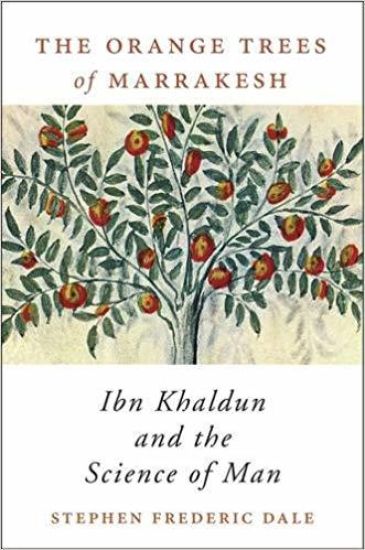
The Orange Trees of Marrakesh

The Orange Trees of Marrakesh

Stephen Frederic Dale

Harvard University Press
2015
sidottu
In his masterwork Muqaddimah, the Arab Muslim Ibn Khaldun (1332–1406), a Tunisian descendant of Andalusian scholars and officials in Seville, developed a method of evaluating historical evidence that allowed him to identify the underlying causes of events. His methodology was derived from Aristotelian notions of nature and causation, and he applied it to create a dialectical model that explained the cyclical rise and fall of North African dynasties. The Muqaddimah represents the world’s first example of structural history and historical sociology. Four centuries before the European Enlightenment, this work anticipated modern historiography and social science.In Stephen F. Dale’s The Orange Trees of Marrakesh, Ibn Khaldun emerges as a cultured urban intellectual and professional religious judge who demanded his fellow Muslim historians abandon their worthless tradition of narrative historiography and instead base their works on a philosophically informed understanding of social organizations. His strikingly modern approach to historical research established him as the premodern world’s preeminent historical scholar. It also demonstrated his membership in an intellectual lineage that begins with Plato, Aristotle, and Galen; continues with the Greco-Muslim philosophers al-Farabi, Avicenna, and Averroes; and is renewed with Montesquieu, Hume, Adam Smith, and Durkheim.
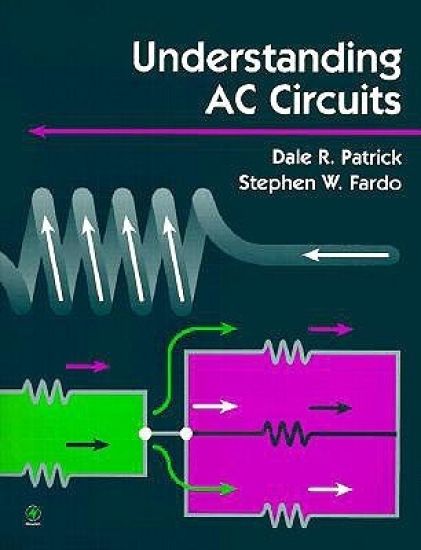
Understanding AC Circuits

Understanding AC Circuits

Dale Patrick; Stephen Fardo

Newnes (an imprint of Butterworth-Heinemann Ltd )
1999
nidottu
Understanding AC Circuits covers the second half of a basic electronic circuits theory course, integrating theory and laboratory practice into a single text. Several key features in each unit make this an excellent teaching tool: objectives, key terms, self-tests, lab experiments, and a unit exam. This new edition has been thoroughly revised and updated by the authors to reflect the latest information on electronics. Understanding AC Circuits is designed with the electronics beginner and student in mind. The authors use a practical approach exposing the reader to the systems that are built with AC circuits making it easy for beginners to master even complex concepts in electronics while gradually building their knowledge base of both theory and applications. Each chapter includes easy-to-read text accompanied by clear and concise graphics fully explaining each concept before moving onto the next. The authors have provided section quizzes and chapter tests so the readers can monitor their progress and review any sections before moving onto the next chapter. Each chapter also includes several electronics experiments, allowing the reader to build small circuits and low-cost projects for the added bonus of hands-on experience in AC electronics. Understanding AC Circuits fully covers dozens of topics including single-phase and three-phase AC electronics; electrical generator basics; how to use a multimeter and oscilloscope in AC electronics; troubleshooting and testing circuits; tools and equipment; resistive circuits; inductive circuits; capacitive circuits; vector diagrams; series circuits; transformers; filter circuits; resonant circuits; decibels; waveshaping control; electronic symbols; soldering techniques; plus much more.
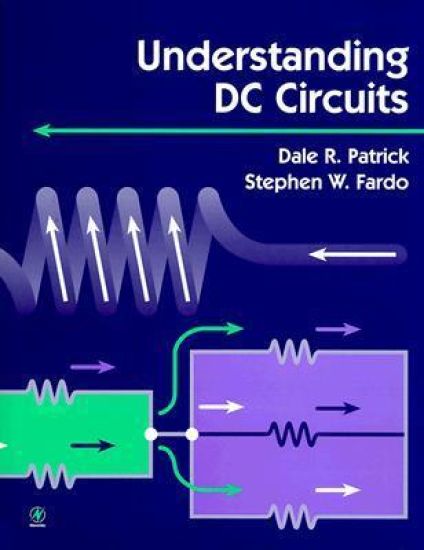
Understanding DC Circuits

Understanding DC Circuits

Dale Patrick; Stephen Fardo

Newnes (an imprint of Butterworth-Heinemann Ltd )
1999
nidottu
Understanding DC Circuits covers the first half of a basic electronic circuits theory course, integrating theory and laboratory practice into a single text. Several key features in each unit make this an excellent teaching tool: objectives, key terms, self-tests, lab experiments, and a unit exam. Understanding DC Circuits is designed with the electronics beginner and student in mind. The authors use a practical approach, exposing the reader to the systems that are built with DC circuits, making it easy for beginners to master even complex concepts in electronics while gradually building their knowledge base of both theory and applications. Each chapter includes easy-to-read text accompanied by clear and concise graphics fully explaining each concept before moving onto the next. The authors have provided section quizzes and chapter tests so the readers can monitor their progress and review any sections before moving onto the next chapter. Each chapter also includes several electronics experiments, allowing the reader to build small circuits and low-cost projects for the added bonus of hands-on experience in DC electronics. Understanding DC Circuits fully covers dozens of topics including energy and matter; static electricity; electrical current; conductors; insulators; voltage; resistance; schematic diagrams and symbols; wiring diagrams; block diagrams; batteries; tools and equipment; test and measurement; series circuits; parallel circuits; magnetism; electromagnetism; inductance; capacitance; soldering techniques; circuit troubleshooting; basic electrical safety; plus much more.
WAP

WAP

Stephen Lee; Dale Bulbrook

Osborne/McGraw-Hill
2001
pokkari
This work aims to act as a hands-on beginner's guide to learning how to deliver content to WAP-enabled devices. It includes: WML and WMLScript tutorial; existing Web pages to WAP; Access databases and ASP; information on securing commerce sites; and information on how to integrate WAP into an existing website or company intranet.
Project Risk Management Guidelines

Project Risk Management Guidelines

Dale Cooper; Pauline Bosnich; Stephen Grey; Grant Purdy; Geoffrey Raymond; Phil Walker; Mike Wood

John Wiley Sons Inc
2014
nidottu
Risk runs through the fabric of any project. It is so intimately bound up in forecasting and decision making that it cannot be isolated or handled separately from other project management activities. Success can only be achieved if risk management is integrated closely with project management. Over the past decade, developments in risk management methods and standards have addressed the need to manage risk in a project in an integrated manner. This is a more natural way of working than past practices have been. It has beneficial effects on the practice of risk management and the way it is implemented in projects. This new edition of Project Risk Management Guidelines has been fully updated to include the new international standards that embody this principle, ISO 31000 Risk management and IEC 62198 Managing risk in projects. The book explains the standards and how they can be applied. It provides a clear introduction to basic project risk management, introduces the reader to specialized areas of projects and procurement, and shows how quantitative risk analysis methods can be used in large projects. Chapter by chapter, the authors present simple, practical steps and illustrate them with examples drawn from their extensive experience from around the world, in many different industry sectors and cultures and at all stages of projects from conception through development and into execution. Qualitative and quantitative approaches are covered. Traditional structures and processes are discussed as well as developments in the way projects are conducted, such as outsourcing arrangements and risk-sharing structures like public–private partnerships. Improved outcomes can be achieved when sound risk management is used to capture opportunities and reduce threats. Its unique focus and wealth of checklists, tables and other resources make this book an essential and enduring tool for anyone involved with project work.
Industrial Process Control Systems, Second Edition

Industrial Process Control Systems, Second Edition

Dale R. Patrick; Stephen W. Fardo

CRC Press
2019
nidottu
This book provides a basic approach to understanding and effectively applying industrial process control based on the systems concept. It provides an overview of an operating system, then divides it into sections for individual discussion. It covers topics including the operating system, process control, pressure systems, thermal systems, and level determining systems. It also addresses flow process systems, analytical process systems, microprocessor systems, automated processes, and robotic systems.
Electronic Digital System Fundamentals

Electronic Digital System Fundamentals

Dale R. Patrick; Stephen W. Fardo; Vigyan Chandra

CRC Press Inc
2007
sidottu
This self-study text explains the basics of digital electronics using a combination of fundamental theory, examples and practical applications. Digital devices form an integral part of numerous modern-day systems and include those used for operating electronic alarm systems, for performing arithmetic, timing and computing operations, and for logging, processing and data transfer. Well-illustrated, step-by-step procedures are provided for explaining the working of these and other digital devices. All the chapters in the text include a summary of the key points covered for the purpose of review. The recommended safety precautions, datasheets of selected digital devices, and implementation guidelines while working with digital circuits in the appendices, should be of interest to the electronics hobbyist.
Electricity and Electronics Fundamentals, Second Edition

Electricity and Electronics Fundamentals, Second Edition

Dale R. Patrick; Stephen W. Fardo

Taylor Francis Inc
2008
sidottu
An introductory text, Electricity and Electronics Fundamentals, delineates key concepts in electricity using a simplified approach that enhances learning. Mathematical calculations are kept to the very minimum and concepts are demonstrated through application examples and illustrations. The books span of topics includes vital information on direct current electronics, alternating current electricity and semiconductor devices as well as electronic circuits, digital electronics, computers and microprocessors, electronic communications, and electronic power control. Supplementary appendices provide a glossary and section on electrical safety along with an explanation of soldering techniques.