AS it turned out, young Daniel never outgrew the enchantment of the mysterious Yeti, the Abominable Snowman. His search for the enigmatic creature of Himalayan legends spread over many decades: from 1956 until 2015, Daniel C. Taylor visited almost all valley systems in his quest to explain the ‘Yeti’s footprints’. But to his surprise, solving the footprint mystery did not answer the Yeti question. As his quest evolved, Taylor went on to create two massive national parks around Mount Everest.Equipped with abundant knowledge of the Himalaya, Taylor tells a story that is captivating and full of surprises. He looks back at his exploration of the 2,000-mile-wide Himalaya and talks about bio resilience as a parallel dynamic to biodiversity, thus widening the scope of our understanding of ecology.Yeti:
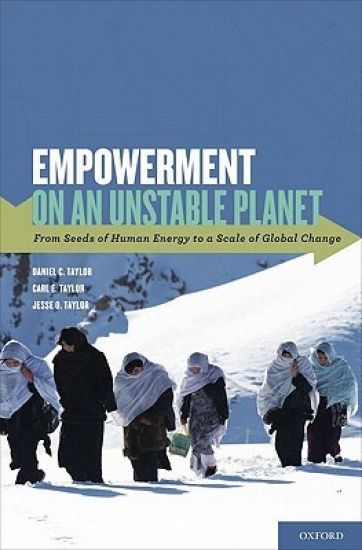
Since World War II, development projects have invested more than two trillion dollars towards health services, poverty alleviation, education, food security, and environmental initiatives around the world. Despite these efforts, 20% of the world still lives on less than $1.50 a day and the environment within which all live declines dramatically. There are clear limits to what further investments at this rate can achieve. This book advances the thesis that a more effective and universal foundation for social change and environmental restoration is not money, but human energy. Using this approach Tibet recovered from being nearly deforested to having over 40% of its land area protected under conservation management. Using principles outlined in this book mothers in northeast India implemented a package of life-changing actions that halved child mortality. They parallel the way New York City has created a citywide conservation program over three-and-a-half centuries. Each of these examples is particular to its time and place, yet a shared set of principles is at work in all of them. Improving the quality of life for a community starts by strengthening successes already operating. It involves local knowledge and a relatively simple set of principles, tasks, and criteria designed to empower communities. This highly readable account demonstrates how a comprehensive process for social change harnesses the energy of a community and scales it up with a rising number of participants becoming invested in increasingly high-quality work. Richly illustrated with photographs and stories of innovative people and programs in communities ranging from Nepal to Afghanistan to the South Bronx, it provides practical, proven guidelines for creating profound and sustained social change that begins in individual communities and grows to scale.
How can public health workers, policy experts, and medical professionals work with members of developing nations to promote social change in rapid, cost-effective, and locally appropriate ways? In Just and Lasting Change, Daniel C. and Carl E. Taylor present readers with an innovative, proven, and site-specific guide to helping communities thrive through growing their own change in partnership with experts, donors, and government. The Taylors built their decades-long careers by partnering with key thinkers to combat inequity, environmental degradation, and globalization. The SEED-SCALE model they describe enables people (wherever they might live) to transform their communities by analyzing their local context in relation to the global, taking appropriate actions based on their priorities and resources, and assessing what succeeding actions may be needed to continue making progress. Just and Lasting Change describes, step by step, how the SEED-SCALE model can be effectively implemented. Drawing from a variety of engaging personal experiences and case studies, this wide-ranging book describes early attempts to promote social development a century ago, as well as current efforts in South America, Africa, and Asia. It also reveals how community-based social change unfolded in America, spurred at different points by Abraham Lincoln's leadership style and the Green Bay Packers's ownership model, and presents readers with thematic global examples from the anti-smoking campaign, Green Revolution, Child Survival Revolution, and urban agriculture. The second edition of this pathbreaking handbook offers a hopeful description of how people have improved the quality of life in diverse communities around the world and is fully revised and updated with* Five completely new chapters * Thirteen years of scholarship and global evidence* Contributions from leading international experts in community-based development and public health
Iván Marinovic; Nancy Cartwright; John Rust; Peter C. Reiss; Charles F. Manski; Jeremy Bertomeu; Anne Beyer; Daniel J. Taylor; R. Jay Kahn; Toni M. Whited; Ivo Welch; Qi Chen; Katherine Schipper
Causal Inferences in Capital Markets Research is an attempt to promote a broad interdisciplinary debate about the notion of causality and the role of causal inference in the social sciences.At the risk of oversimplifying, the issue of causality divides the accounting research community in two polar views: the view that causality is an unattainable ideal for the social sciences and must be given up as a standard, and the view that, on one hand, causality should be the ultimate goal of all scientific endeavors and, on the other hand, theory and causal inference are inextricable. Reflecting and discussing these views was the main motivation for this volume. This volume contains eight articles on three topics: I) Econometrics; III) Accounting, and III) Finance.First, Nancy Cartwright addresses the problem of external validity and the reliability of scientific claims that generalize individual cases. Then, John Rust discusses the role of assumptions in empirical research and the possibility of assumption-free inference. Peter Reiss considers the question how sensitive are instrumental variables to functional form transformations. Finally, Charles Manski studies the logical issues that affect the interpretation of point predictions.Second, Jeremy Bertomeu, Anne Beyer and Daniel Taylor provide a critical overview of empirical accounting research focusing on the benefits of theory-based estimation, while Qi Chen and Katherine Schipper consider the question whether all research should be causal and assess the existing gap between theory and empirical research in accounting.Third, R. Jay Kahn and Toni Whited clarifies and contrasts the notions of identification and causality, whereas Ivo Welch adopts a sociology of science approach to understand the consequences of the researchers’ race for discovering novel and surprising results.This volume allows researchers and Ph.D students in accounting, and the social sciences in general, to acquire a deeper understanding of the notion of causality and the nature, limits, and scope of empirical research in the social sciences.
The good, bad, and uhm...about love. Walk through experience of love through the eyes of 28 successful women and one man... if you ever thought you was alone, think again.. love is something we can't live without...
Il rapporto tra consapevolezza e cervello (Mind-Body Problem) centrale nella riflessione sul 'mentale' in filosofia e psicologia. L'influente filosofo Daniel Dennett, discutendo una serie di dati sperimentali ottenuti con particolari tecniche di indagine, critica la concezione di un 'Io' centrale, l'idea di identit personale unitaria caratterizzata da continuit della coscienza. Proponendo una metodologia interpretativa detta 'eterofenomenologia', come approccio oggettivo scientifico al mondo introspettivo del parlante (i fenomeni della sua esperienza soggettiva e la sua trama di autonarrazioni), designa il 'S ' come baricentro narrativo del corpo. E definisce 'atteggiamento intenzionale' l'attribuzione di credenze, giudizi, desideri e aspettative, al titolare degli atti linguistici, ritenuto come agente razionale che regola la scelta dei suoi comportamenti. Il rapporto tra l'eterofenomenologo e il soggetto narrante assimilabile alla relazione psicoterapeutica tra terapeuta e paziente. L'originale e singolare teoria di Dennett riveste specifico interesse per filosofi, psicologi, formatori e chiunque opera nel campo delle neuroscienze, della clinica e della didattica.
Bachelorarbeit aus dem Jahr 2021 im Fachbereich Philosophie - Philosophie der Gegenwart, Note: 1,7, Ludwig-Maximilians-Universit t M nchen (Fakult t f r Philosophie), Sprache: Deutsch, Abstract: Die Frage nach dem Wesen des Bewusstseins ist eine der zentralen und auch verbl ffendsten Fragen der Menschheit, die wahrscheinlich seit der Zeit gestellt wird, als der Geist im Menschen erwacht ist und nach Erkenntnis rief. In der t glichen Erfahrung ist das Bewusstsein allgegenw rtig und subjektive Erlebnisse sind auf so einer direkten Art und Weise gegeben, dass niemand unter normalen Umst nden deren Existenz in Frage stellen w rde. Die Neurowissenschaften versuchen seit langer Zeit erfolglos, ein Korrelat des Bewusstseins im menschlichen Gehirn zu finden, und es ist fraglich, ob das jemals gelingen kann. Ren Descartes, sah das Bewusstsein gar nicht im Gehirn verortet, sondern postulierte eine res cogitans, eine eigene Substanz des denkenden Geistes, unabh ngig von der res extensa, der K rperwelt. David J. Chalmers, mit dessen 1996 erschienenen Buch "The Conscious Mind - In Search of a Fundamental Theory" diese Bachelorarbeit sich haupts chlich besch ftigt, fragt nach dem subjektiven Charakter des Bewusstseins und dessen Status in einer vor allem naturwissenschaftlich, physikalisch gepr gten Welt. Im Verlauf dieser Arbeit wird sich zeigen, dass die Existenz des Bewusstseins von Chalmers nicht in Frage gestellt wird, aber es schwierig ist, Bewusstsein zu fassen, da es eben nicht aus der Perspektive der dritten Person erkl rt werden kann. Mit Hilfe u. a. des Zombiearguments zeigt er, dass consciousness nicht global logisch ber dem Physikalischen superveniert, nicht auf das Physikalische reduzierbar ist und das der Physikalismus falsch ist. Er beschreibt einen "Naturalistic dualism", einen speziellen Eigenschaftsdualismus der consciousness als grundlegendes Prinzip "over and above" des Physikalismus betrachtet. Die Darstellung von David Chalmers negativer Theorie im Te
A translation of the Kabbalah for the layperson includes a compact presentation of each primary text and features a practical analysis and vital historical information that offer insight into the various aspects of Jewish mysticism.
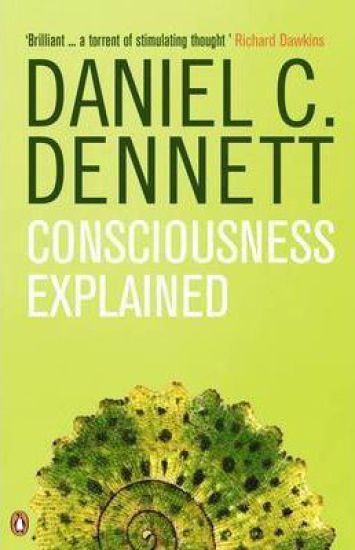
In Consciousness Explained, Daniel C. Dennett reveals the secrets of one of the last remaining mysteries of the universe: the human brain.Daniel C. Dennett's now-classic book blends philosophy, psychology and neuroscience - with the aid of numerous examples and thought-experiments - to explore how consciousness has evolved, and how a modern understanding of the human mind is radically different from conventional explanations of consciousness.What people think of as the stream of consciousness is not a single, unified sequence, the author argues, but 'multiple drafts' of reality composed by a computer-like 'virtual machine'. Dennett explains how science has exploded the classic mysteries of consciousness: the nature of introspection, the self or ego and its relation to thoughts and sensations, the problems posed by qualia, and the level of consciousness of non-human creatures. 'Brilliant ... a torrent of stimulating thought' Richard Dawkins 'Revolutionary ... one of the most mentally agile, intellectually resourceful books you are likely to read' Guardian 'A masterful tapestry of deep insights ... Dennett has written a profound and important book that is also clear, exciting and witty' Douglas R. Hofstadter, author of Gödel, Escher, Bach
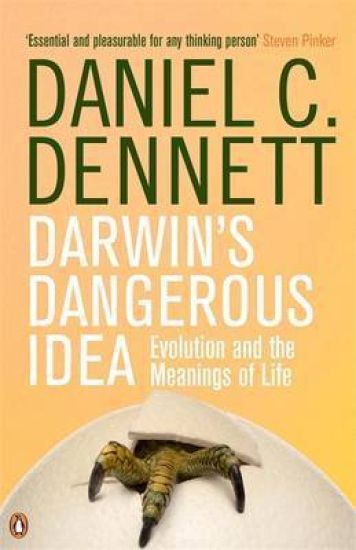
In Darwin's Dangerous Idea: Evolution and the Meanings of Life Daniel C. Dennett argues that the theory of evolution can demystify the miracles of life without devaluing our most cherished beliefs. From the moment it first appeared, Charles Darwin's theory of evolution by natural selection has been controversial: misrepresented, abused, denied and fiercely debated. In this powerful defence of Darwin, Daniel C. Dennett explores every aspect of evolutionary thinking to show why it is so fundamental to our existence, and why it affirms - not threatens - our convictions about the meaning of life. 'Essential and pleasurable for any thinking person'Stephen Pinker 'A surpassingly brilliant book. Where creative, it lifts the reader to new intellectual heights. Where critical, it is devastating'Richard Dawkins 'A brilliant piece of persuasion, excitingly argued and compulsively readable'The Times Higher Education Supplement 'Superb ... This is the best single-author overview of all the implications of evolution by natural selection available ... deserves a place on the bookshelves of every thinking person'John Gribbin, Sunday Times 'Dennett's book brings together science and philosophy with wit, complex clarity and an infectious sense that these ideas matter, to us and the way we live now'A.S. Byatt, Sunday Times Books of the Year Daniel C. Dennett is one of the most original and provocative thinkers in the world. A brilliant polemicist and philosopher, he is famous for challenging unexamined orthodoxies, and an outspoken supporter of the Brights movement. His books include Brainstorms, Brainchildren, Elbow Room, Breaking the Spell, Darwin's Dangerous Idea, Consciousness Explained and Freedom Evolves.