

Kirjahaku
Etsi kirjoja tekijän nimen, kirjan nimen tai ISBN:n perusteella.
1000 tulosta hakusanalla Daniel De Vinne


This work has been selected by scholars as being culturally important, and is part of the knowledge base of civilization as we know it. This work was reproduced from the original artifact, and remains as true to the original work as possible. Therefore, you will see the original copyright references, library stamps (as most of these works have been housed in our most important libraries around the world), and other notations in the work.This work is in the public domain in the United States of America, and possibly other nations. Within the United States, you may freely copy and distribute this work, as no entity (individual or corporate) has a copyright on the body of the work.As a reproduction of a historical artifact, this work may contain missing or blurred pages, poor pictures, errant marks, etc. Scholars believe, and we concur, that this work is important enough to be preserved, reproduced, and made generally available to the public. We appreciate your support of the preservation process, and thank you for being an important part of keeping this knowledge alive and relevant.


History of the Irish Primitive Church: Together with the Life of St. Patrick and His Confession in Latin, with a Parallel Translation
Daniel De Vinne
Literary Licensing, LLC
2014
nidottu





Por miedo a que no me quieras: Toda poesía viene acompañada de su historia
Daniel Jimenez Boland
Independently Published
2019
nidottu
Por miedo a que no nos quieran somos capaces de jugar con nuestra identidad sin que verdaderamente nos importe perdernos en el juego, por miedo a que no nos quieran todos hemos mentido alguna vez sobre alg n aspecto de nuestra vida, alg n deseo, alg n pensamiento, alg n acto... alguna cicatriz. Este libro te ofrecer una profunda reflexi n inicial nada m s abrir su primer hoja, te har sumergirte en una historia contada por el autor que te brindar tal cantidad de emociones que necesitar s tu tiempo para procesarlas, y seguidamente, un poquito de arte en versos y palabras. Soy Daniel Jim nez Boland y prometo no decepcionarte. **MAS INFORMACI N EN LA VERSI N KINDLE DEL LIBRO*

De Dentro para Fora: Refletir. Agir. Transmutar.
Daniela G. Vianello
Independently Published
2018
nidottu
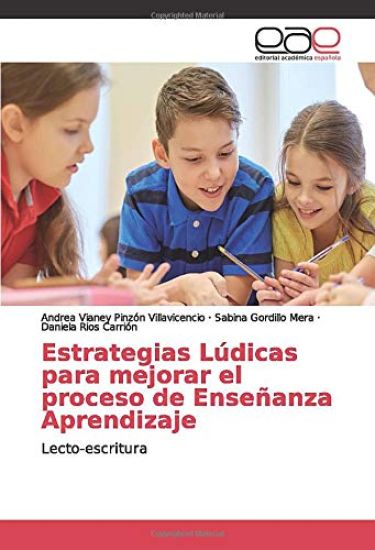
Estrategias Lúdicas para mejorar el proceso de Enseñanza Aprendizaje
Andrea Vianey Pinzón Villavicencio; Sabina Gordillo Mera; Daniela Rios Carrión
Editorial Académica Española
2019
nidottu



Sermons Translated From The French Of Daniel De Superville
Daniel De Superville
KESSINGER PUBLISHING, LLC
2009
pokkari

The Novels And Miscellaneous Works Of Daniel De Foe - Vol XVIII
Daniel De Foe
READ BOOKS
2008
sidottu

The Eighteenth Brumaire of Louis Napoleon, by Karl Marx and Daniel De Leon: translated by Daniel De Leon (December 14, 1852 - May 11, 1914)
Daniel de Leon; Karl Marx
Createspace Independent Publishing Platform
2016
nidottu
The Eighteenth Brumaire of Louis Napoleon was written between December 1851 and March 1852, and originally published in 1852 in Die Revolution, a German-language monthly magazine. The pamphlet shows Marx in his form as a social and political historian, treating actual historical events-those leading up to Louis Bonaparte's coup d' tat of 2 December 1851-from the viewpoint of his materialist conception of history. The "Eighteenth Brumaire" refers to November 9, 1799 in the French Revolutionary Calendar-the day Louis Bonaparte's uncle Napoleon Bonaparte had made himself dictator by a coup d' tat. The work is the source of one of Marx's most quoted statements, that history repeats itself, "the first as tragedy, then as farce". Karl Marx 5 May 1818 - 14 March 1883) was a philosopher, economist, sociologist, journalist, and revolutionary socialist. Born in Prussia to a middle-class family, he later studied political economy and Hegelian philosophy. As an adult, Marx became stateless and spent much of his life in London, England, where he continued to develop his thought in collaboration with German thinker Friedrich Engels and published various works, the most well-known being the 1848 pamphlet The Communist Manifesto. His work has since influenced subsequent intellectual, economic, and political history. Marx's theories about society, economics and politics-collectively understood as Marxism-hold that human societies progress through class struggle: a conflict between ruling classes (known as the bourgeoisie) that control the means of production and working classes (known as the proletariat) that work on these means by selling their labour for wages. Employing a critical approach known as historical materialism, Marx propounded the theory of base and superstructure, asserting that the cultural and political conditions of society, as well as its notions of human nature, are largely determined by obscured economic foundations. Through his theories of alienation, value, commodity fetishism, and surplus value, Marx argued that capitalism facilitated social relations and ideology through commodification, inequality, and the exploitation of labour. These economic critiques would result in influential works such as Capital, Volume I (1867). According to Marx, states are run in the interests of the ruling class but are nonetheless represented as being in favor of the common interest of all. 6] He predicted that, like previous socioeconomic systems, capitalism produced internal tensions which would lead to its self-destruction and replacement by a new system: socialism. For Marx, class antagonisms under capitalism, owing in part to its instability and crisis-prone nature, would eventuate the working class' development of class consciousness, leading to their conquest of political power and eventually the establishment of a classless, communist society governed by a free association of producers. Marx actively fought for its implementation, arguing that the working class should carry out organised revolutionary action to topple capitalism and bring about socio-economic emancipation. Marx has been described as one of the most influential figures in human history, and his work has been both lauded and criticised. His work in economics laid the basis for much of the current understanding of labour and its relation to capital, and subsequent economic thought.