

Kirjahaku
Etsi kirjoja tekijän nimen, kirjan nimen tai ISBN:n perusteella.
1000 tulosta hakusanalla Daniel H Dorian

The Looking-Glass: Being a True Report and Narrative of the Life, Travels, and Labors of the Rev. Daniel H. Peterson, a Colored Clergyman
Daniel H. Peterson
Createspace Independent Publishing Platform
2013
nidottu

Daniel H. Kean (1850-1926): The Architect and Builder of the Western Frontier: A Tribute to His Life and Times
Michael T. Tracy
Createspace Independent Publishing Platform
2017
nidottu

A Tribute to the Life of Daniel H. Tracy 1828-1907
Michael T. Tracy
Createspace Independent Publishing Platform
2016
nidottu


In 1967, an extraterrestrial microbe-designated the Andromeda Strain-came crashing down to Earth and nearly ended the human race. A team of top scientists assigned to Project Wildfire worked valiantly to save the world from an epidemic of unimaginable proportions. In the ensuing decades, research on the microparticle continued. And the world thought it was safe..Deep inside Fairchild Air Force Base, Project Eternal Vigilance has continued to watch and wait for the Andromeda Strain to reappear. For years, the project has registered no activity-until now. A Brazilian terrain-mapping drone has detected a bizarre anomaly of otherworldly matter, and, worse yet, the tell-tale chemical signature of the deadly microparticle.With this shocking discovery, the next-generation Project Wildfire is activated, and a diverse team of experts hailing from all over the world is dispatched to investigate the potentially apocalyptic threat.But the microbe is growing-evolving. And if the Wildfire team can't reach the quarantine zone, enter the anomaly, and figure out how to stop it, this new Andromeda Evolution will annihilate all life as we know it.
Iran's Nuclear Program and International Law
Daniel H. Joyner
Oxford University Press Inc
2016
nidottu
This book provides an international legal analysis of the most important questions regarding Iran's nuclear program since 2002. Setting these legal questions in their historical and diplomatic context, this book aims to clarify how the relevant sources of international law - including primarily the 1968 Nuclear Non-proliferation Treaty and IAEA treaty law - should be properly applied in the context of the Iran case. It provides an instructional case study of the application of these sources of international law, the lessons which can be applied to inform both the on-going legal and diplomatic dynamics surrounding the Iran nuclear dispute itself, as well as similar future cases. Some questions raised regard the watershed diplomatic accord reached between Iran and Western states in July, 2015, known as the Joint Comprehensive Program of Action. The answers will be of interests to diplomats and academics, as well as to anyone who is interested in understanding international law's application to this sensitive dispute in international relations.
Providing complete coverage of advanced research methods for undergraduates, Daniel H. Baker supports students in their mastery of more advanced research methods and their application in R. This brand new title brings together coverage of a variety of topics for readers with basic statistical knowledge. It begins with material on the fundamental tools - nonlinear curve fitting and function optimization, stochastic methods, and Fourier (frequency) analysis - before leading readers on to more specialist content - bivariate and multivariate statistics, Bayesian statistics, and machine learning methods. Several chapters also discuss methods that can be used to improve research practises, including power analysis, meta-analysis, reproducible data analysis. Written to build a student's confidence with using R in a step-by-step way, early chapters present the essentials, ensuring that the content is accessible to those that have never programmed before. By giving them a feel for how the software works in practice, students are gradually introduced to simple examples of techniques before building up to more detailed implementations demonstrated in worked examples. Readers are also presented with opportunities to try analysis techniques for themselves. Practice questions are presented at the end of each chapter with answer guidance supplied in the book, while multiple-choice-questions with instant feedback can be accessed online. The author also provides datasets online which students can use to practise their new skills. Digital formats and resources This book is available for students and institutions to purchase in a variety of formats, and is supported by online resources. - The e-book offers a mobile experience and convenient access along with functionality, navigation features, and links that offer extra learning support. This book is accompanied by online resources including multiple-choice-questions with instant feedback, example code, and data files allowing students to run examples independently.
Ambrose of Milan and the End of the Arian-Nicene Conflicts
Daniel H. Williams
Clarendon Press
1995
sidottu
This is a new and provocative study re-evaluating the history of the struggle between orthodoxy and heresy in the early church. Dr Williams argues that the traditional picture of Nicene ascendancy in the western church from 350 - 381 is substantially misleading, and in particular that the conventional portrait of Ambrose of Milan as one who rapidly and easily overpowered his "Arian" opponents is a fictional product derived from idealized accounts of the fifth century. Sources illustrating the struggle between the orthodox pro-Nicenes and "Arians" or Homoians, in the fourth century reveal that Latin "Arianism" was not the lifeless and theologically alien system that historians of the last century would have us believe. Dr Williams shows that the majority of churches in the West had little practical use for the Nicene creed until the end of the 350s - over twenty five years after it was first issued under Constantine - and that the ultimate triumph of the Nicene faith was not as inevitable as it has been assumed. Ambrose himself was seriously harrassed by sustained attacks from "Arians" in Milan for the first decade of his episcopate, and his early career demonstrates the severity of the religious conflict which embroiled the western churches,especially in North Italy. Only after an intense and uncertain decade did Ambrose finally prevail in Milan once the Nicene form of faith was embraced by the Roman empire through imperial legislation and "Arianism" was outlawed as heresy. This is an innovative and challenging book full of illumination new insights on the social, political, and theological entanglements ofthe early church.
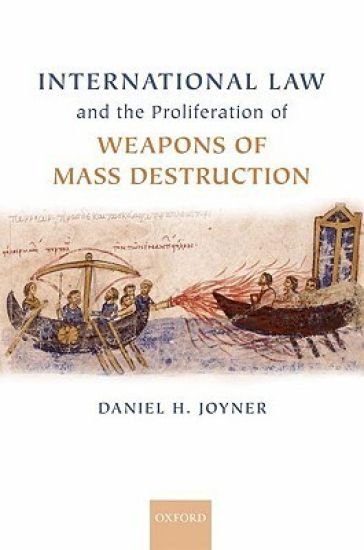
International Law and the Proliferation of Weapons of Mass Destruction
Daniel H. Joyner
Oxford University Press
2009
sidottu
Proliferation of WMD technologies is by no means a new concern for the international community. Indeed, since the signing of the Nuclear Non-proliferation Treaty in 1968, tremendous energies have been expended upon diplomatic efforts to create a web of treaties and international organisations regulating the production and stockpiling of WMD sensitive materials within states, as well as their spread through the increasingly globalised channels of international trade to other states and non-state actors. However, the intervention in 2003 by Western powers in Iraq has served as an illustration of the importance of greater understanding of and attention to this area of law, as disagreements over its content and application have once again lead to a potentially destabilising armed intervention by members of the United Nations into the sovereign territory of another member state. Other ongoing disputes between states regarding the character of obligations assumed under non-proliferation treaty instruments, and the effect of international organisations' decisions in this area, form some of the most contentious and potentially destabilising issues of foreign policy concern for many states. This book provides a comprehensive analysis of international law and organisations in the area of WMD proliferation. It will serve both as a reference for understanding the law as it currently exists in its political and economic context, as well as an analysis of areas in which amendments to existing law and organisations are needed.
Interpreting the Nuclear Non-Proliferation Treaty
Daniel H. Joyner
Oxford University Press
2011
sidottu
The 1968 Nuclear Non-proliferation Treaty has proven the most complicated and controversial of all arms control treaties, both in principle and in practice. Statements of nuclear-weapon States from the Cold War to the present, led by the United States, show a disproportionate prioritization of the non-proliferation pillar of the Treaty, and an unwarranted underprioritization of the civilian energy development and disarmament pillars of the treaty. This book argues that the way in which nuclear-weapon States have interpreted the Treaty has laid the legal foundation for a number of policies related to trade in civilian nuclear energy technologies and nuclear weapons disarmament. These policies circumscribe the rights of non-nuclear-weapon States under Article IV of the Treaty by imposing conditions on the supply of civilian nuclear technologies. They also provide for the renewal and maintaintenance, and in some cases further development of the nuclear weapons arsenals of nuclear-weapon States. The book provides a legal analysis of this trend in treaty interpretation by nuclear-weapon States and the policies for which it has provided legal justification. It argues, through a close and systematic examination of the Treaty by reference to the rules of treaty interpretation found in the 1969 Vienna Convention on the Law of Treaties, that this disproportionate prioritization of the non-proliferation pillar of the Treaty leads to erroneous legal interpretations in light of the original balance of principles underlying the Treaty, prejudicing the legitimate legal interests of non-nuclear-weapon States.
Iran's Nuclear Program and International Law
Daniel H. Joyner
Oxford University Press Inc
2016
sidottu
This book provides an international legal analysis of the most important questions regarding Iran's nuclear program since 2002. Setting these legal questions in their historical and diplomatic context, this book aims to clarify how the relevant sources of international law - including primarily the 1968 Nuclear Non-proliferation Treaty and IAEA treaty law - should be properly applied in the context of the Iran case. It provides an instructional case study of the application of these sources of international law, the lessons which can be applied to inform both the on-going legal and diplomatic dynamics surrounding the Iran nuclear dispute itself, as well as similar future cases. Some questions raised regard the watershed diplomatic accord reached between Iran and Western states in July, 2015, known as the Joint Comprehensive Program of Action. The answers will be of interests to diplomats and academics, as well as to anyone who is interested in understanding international law's application to this sensitive dispute in international relations.
Interpreting the Nuclear Non-Proliferation Treaty
Daniel H. Joyner
Oxford University Press
2012
nidottu
The 1968 Nuclear Non-Proliferation Treaty has proven the most complicated and controversial of all arms control treaties, both in principle and in practice. Statements of nuclear-weapon States from the Cold War to the present, led by the United States, show a disproportionate prioritization of the non-proliferation pillar of the Treaty, and an unwarranted underprioritization of the civilian energy development and disarmament pillars of the treaty. This book argues that the way in which nuclear-weapon States have interpreted the Treaty has laid the legal foundation for a number of policies related to trade in civilian nuclear energy technologies and nuclear weapons disarmament. These policies circumscribe the rights of non-nuclear-weapon States under Article IV of the Treaty by imposing conditions on the supply of civilian nuclear technologies. They also provide for the renewal and maintaintenance, and in some cases further development of the nuclear weapons arsenals of nuclear-weapon States. The book provides a legal analysis of this trend in treaty interpretation by nuclear-weapon States and the policies for which it has provided legal justification. It argues, through a close and systematic examination of the Treaty by reference to the rules of treaty interpretation found in the 1969 Vienna Convention on the Law of Treaties, that this disproportionate prioritization of the non-proliferation pillar of the Treaty leads to erroneous legal interpretations of the Treaty, prejudicing the legitimate legal interests of non-nuclear-weapon States.

Hermann Cohen (1842-1918) is widely regarded as the most influential representative of twentieth-century Jewish philosophy, and his Religion of Reason is often described as one of the most significant attempts to wrestle with the competing claims of philosophy and the Jewish religious tradition since Maimonides' Guide of the Perplexed. Nevertheless, Cohen has often been treated merely as an historical precursor to later Jewish thinkers like Buber, Rosenzweig, and Levinas. Daniel H. Weiss offers an insightful new reading of Religion of Reason, arguing that the style and method of Cohen's final work have long been fundamentally misunderstood. Previous readers, puzzled by the seemingly incompatible perspectives within Religion of Reason, have tended either to uphold one or another of the text's 'voices' or to criticize the text for intellectual incoherence. Weiss demonstrates that the multiplicity of Cohen's text is an essential element of its rational and communicative purposes. Drawing upon Kierkegaard as a theorist of indirect communication, he shows how Cohen combines the 'incompatible voices' of philosophy and of Scripture in order to convey religious and ethical ideas-such as the unique God, the other as You, and the messianic future-that would be distorted in a fully consistent, single-voiced mode of thought and communication. While focusing on the details and style of Cohen's text, Paradox and the Prophets also explores the broader philosophical claim that Religion of Reason, far from representing an outdated mode of thought, serves as a model for contemporary efforts to reason about religion and ethics.
Natural history has always been the foundation of conservation biology. For centuries, botanists collected specimens in the field to understand plant diversity; now that many habitats are threatened, botanists have turned their focus to conservation, and, increasingly, they look to the collections of museums, herbaria, and botanical gardens for insight on developing informed management programs. Plant Conservation explores the value of these collections in light of contemporary biodiversity studies. Plant Conservation opens with a broad view of plant biodiversity and then considers evolutionary and taxonomic threats and consequences of habitat alteration; specific threats to plant diversity, such as invasive species and global climate change; consequences of plant population decline at the ecological, evolutionary, and taxonomic levels; and, finally, management strategies that protect plant biodiversity from further decline. With a unique perspective on biodiversity and scientific collections, Plant Conservation ultimately emphasizes the role museums and botanical gardens will play in future conservation.

The fifteen years in Germany between the end of World War I and the National Socialists’ rise to power in 1933 stand out as one of the twentieth century’s most tumultuous periods. These years of political and economic upheaval famously spawned significant and lasting changes in the arts. However, one noteworthy product of Weimar Germany’s booming cultural life has escaped significant critical attention: the photo essay. The Photography of Crisis examines narrative photography and creates a snapshot of where Germany was after World War I and what it would become with the rise of National Socialism. By reading Weimar photo essays within their historical and literary context, Daniel Magilow shows how German photographers intervened in modernity’s key political and philosophical debates regarding the changing notions of nature, culture, personal identity, and national identity.

The fifteen years in Germany between the end of World War I and the National Socialists’ rise to power in 1933 stand out as one of the twentieth century’s most tumultuous periods. These years of political and economic upheaval famously spawned significant and lasting changes in the arts. However, one noteworthy product of Weimar Germany’s booming cultural life has escaped significant critical attention: the photo essay. The Photography of Crisis examines narrative photography and creates a snapshot of where Germany was after World War I and what it would become with the rise of National Socialism. By reading Weimar photo essays within their historical and literary context, Daniel Magilow shows how German photographers intervened in modernity’s key political and philosophical debates regarding the changing notions of nature, culture, personal identity, and national identity.

A powerful reflection on the universal art museum, considering the values critical to its history and anticipating its evolving place in our cultural future Art museums have played a vital role in our culture, drawing on Enlightenment ideals in shaping ideas, advancing learning, fostering community, and providing spaces of beauty and permanence. In this thoughtful and often personal volume, Daniel H. Weiss contemplates the idea of the universal art museum alongside broad considerations about the role of art in society and what defines a cultural experience. The future of art museums is far from secure, and Weiss reflects on many of the difficulties these institutions face, from their financial health to their collecting practices to the audiences they engage to ensuring freedom of expression on the part of artists and curators. In grappling with these challenges, Weiss sees a solution in shared governance. His tone is one of optimism as he looks to a future where the museum will serve a greater public while continuing to be a steward of culture and a place of discovery, discourse, inspiration, and pleasure. This poignant questioning and affirmation of the museum explores our enduring values while embracing the need for change in a rapidly evolving world.

A powerful reflection on the universal art museum, considering the values critical to its history and anticipating its evolving place in our cultural future Art museums have played a vital role in our culture, drawing on Enlightenment ideals in shaping ideas, advancing learning, fostering community, and providing spaces of beauty and permanence. In this thoughtful and often personal volume, Daniel H. Weiss contemplates the idea of the universal art museum alongside broad considerations about the role of art in society and what defines a cultural experience. The future of art museums is far from secure, and Weiss reflects on many of the difficulties these institutions face, from their financial health to their collecting practices to the audiences they engage to ensuring freedom of expression on the part of artists and curators. In grappling with these challenges, Weiss sees a solution in shared governance. His tone is one of optimism as he looks to a future where the museum will serve a greater public while continuing to be a steward of culture and a place of discovery, discourse, inspiration, and pleasure. This poignant questioning and affirmation of the museum explores our enduring values while embracing the need for change in a rapidly evolving world.
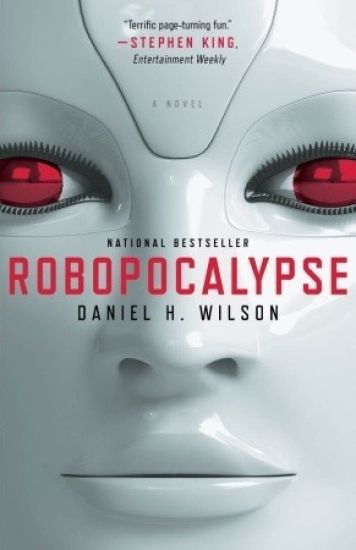
NATIONAL BESTSELLER - This terrifying tale of humanity's desperate stand against a robot uprising is the most entertaining sci-fi thriller in years. - "Terrific, page-turning fun." --Stephen King, Entertainment Weekly Not far into our future, the dazzling technology that runs our world turns against us. Controlled by a childlike--yet massively powerful--artificial intelligence known as Archos, the global network of machines on which our world has grown dependent suddenly becomes an implacable, deadly foe. At Zero Hour--the moment the robots attack--the human race is almost annihilated, but as its scattered remnants regroup, humanity for the first time unites in a determined effort to fight back. This is the oral history of that conflict, told by an international cast of survivors who experienced this long and bloody confrontation with the machines. Brilliantly conceived and amazingly detailed, Robopocalypse is an action-packed epic with chilling implications about the real technology that surrounds us.