Kirjahaku
Etsi kirjoja tekijän nimen, kirjan nimen tai ISBN:n perusteella.
1000 tulosta hakusanalla Daniel J Stokes

Student Displacement in Louisiana After the Hurricanes of 2005
John F Pane; Daniel F McCaffrey; Shannah Tharp-Taylor; Gary J Asmus; Billy R Stokes
RAND
2007
pokkari
Focusing on the Louisiana public school system, this report explores the experiences of students displaced by Hurricanes Katrina and Rita: their movements among schools, the durations of enrollments at each site, and time out of school. It also documents the effects of these movements on the state's public education system during the first academic year following the hurricanes, as reported by 415 school principals in survey responses.

Scranton's Bygone Department Stores: The Globe and the Dry
Daniel J. Packer
History Press
2025
nidottu
Remembering two palaces of retail For generations, Scranton's two big department stores, The Globe Store and Oppenheim's Scranton Dry Goods Company, affectionately known as the "Dry," dominated retail in the Electric City. Facing each other on Wyoming Avenue, they created special memories for those who walked their sales floors with attractive displays, special events, community service, and elaborate Christmas decorations. Many fondly recall the steamship round of beef carved to order at The Globe's Charl-Mont Restaurant or waving to customers passing by on the escalator from the Dry's mezzanine Tea Room. Together, the two stores brought the best the world had to offer to Northeastern Pennsylvania. Join Scranton area native Daniel J. Packer Jr. and step through the iconic revolving doors into a bygone era of shopping in grand style.

Vancouver Shopping Guide 2019: Best Rated Stores in Vancouver, Canada - Stores Recommended for Visitors, (Shopping Guide 2019)
Daniel J. Sargent
Createspace Independent Publishing Platform
2018
nidottu
The stores found in this shopping guide are the most positively reviewed and recommended by locals and travelers. Antiques, Arts & Crafts, Baby Gear & Furniture, Bookstores, Candle Stores, Cards & Stationery, Children's Clothing, Comic Books, Convenience Stores, Cosmetics & Beauty Supply, Department Stores, Discount Store, Drugstores, Electronics, Fashion, Flea Markets, Flowers & Gifts, Formal Wear, Furniture Stores, Gift Shops, Gold Buyers, Grocery, Guitar Stores, Hair Salons, Hats, Health Markets, Hobby Shops, Home Decor, Jewelry, Kitchen & Bath, Leather Goods, Lighting Stores, Lingerie, Mags, Men's Clothing, Music & DVDs, Outdoor Furniture Stores, Outdoor Gear, Outlet Stores, Personal Shopping, Rugs, Shoe Stores, Shopping Centers, Skate Shops, Skin Care, Souvenir Shops, Sporting Goods, Sports Wear, Swimwear, Thrift Stores, Toy Stores and many more options to visit and enjoy your stay.
Neighborhood Effects on Crime and Youth Violence
John MacDonald; Ricky N Bluthenthan; Daniela Golinelli; Aaron Kofner; Robert J Stokes
RAND
2009
pokkari
Business improvement districts (BIDs) collect assessments and invest in local service provisions and activities, such as place promotion, street cleaning, and public safety. Such activities can help reduce crime and youth violence by increasing informal social control, reducing signs of disorder and blight, improving order maintenance, and enriching job opportunities. This report examines BIDs' impact on crime and youth violence in Los Angeles.

Three days of savage and bloody fighting between Confederate and Union troops at Stones River in Middle Tennessee ended with nearly 25,000 casualties but no clear victor. The staggering number of killed or wounded equaled the losses suffered in the well-known Battle of Shiloh. Using previously neglected sources, Larry J. Daniel rescues this important campaign from obscurity. The Battle of Stones River, fought between December 31, 1862, and January 2, 1863, was a tactical draw but proved to be a strategic northern victory. According to Daniel, Union defeats in late 1862 -- both at Chickasaw Bayou in Mississippi and at Fredericksburg, Virginia -- transformed the clash in Tennessee into a much-needed morale booster for the North. Daniel's study of the battle's two antagonists, William S. Rosecrans for the Union Army of the Cumberland and Braxton Bragg for the Confederate Army of Tennessee, presents contrasts in leadership and a series of missteps. Union soldiers liked Rosecrans's personable nature, whereas Bragg acquired a reputation as antisocial and suspicious. Rosecrans had won his previous battle at Corinth, and Bragg had failed at the recent Kentucky Campaign. But despite Rosecrans's apparent advantage, both commanders made serious mistakes. With only a few hundred yards separating the lines, Rosecrans allowed Confederates to surprise and route his right ring. Eventually, Union pressure forced Bragg to launch a division-size attack, a disastrous move. Neither side could claim victory on the battlefield. In the aftermath of the bloody conflict, Union commanders and northern newspapers portrayed the stalemate as a victory, bolstering confidence in the Lincoln administration and dimming the prospects for the ""peace wing"" of the northern Democratic Party. In the South, the deadlock led to continued bickering in the Confederate western high command and scorn for Braxton Bragg.
Three days of savage and bloody fighting between Confederate and Union troops at Stones River in Middle Tennessee ended with nearly 25,000 casualties but no clear victor. The staggering number of killed or wounded equaled the losses suffered in the well-known Battle of Shiloh. Using previously neglected sources, Larry J. Daniel rescues this important campaign from obscurity. The Battle of Stones River, fought between December 31, 1862, and January 2, 1863, was a tactical draw but proved to be a strategic northern victory. According to Daniel, Union defeats in late 1862 -- both at Chickasaw Bayou in Mississippi and at Fredericksburg, Virginia -- transformed the clash in Tennessee into a much-needed morale booster for the North. Daniel's study of the battle's two antagonists, William S. Rosecrans for the Union Army of the Cumberland and Braxton Bragg for the Confederate Army of Tennessee, presents contrasts in leadership and a series of missteps. Union soldiers liked Rosecrans's personable nature, whereas Bragg acquired a reputation as antisocial and suspicious. Rosecrans had won his previous battle at Corinth, and Bragg had failed at the recent Kentucky Campaign. But despite Rosecrans's apparent advantage, both commanders made serious mistakes. With only a few hundred yards separating the lines, Rosecrans allowed Confederates to surprise and route his right ring. Eventually, Union pressure forced Bragg to launch a division-size attack, a disastrous move. Neither side could claim victory on the battlefield. In the aftermath of the bloody conflict, Union commanders and northern newspapers portrayed the stalemate as a victory, bolstering confidence in the Lincoln administration and dimming the prospects for the "peace wing" of the northern Democratic Party. In the South, the deadlock led to continued bickering in the Confederate western high command and scorn for Braxton Bragg.

One of the best known consensus or synthesis historians, Daniel J. Boorstin crosses disciplinary boundaries by writing about universities and students, lawyers and historians, history of science and everyday phenomena, material and popular culture, libraries and literacy, film and theater, statistics and words, airwaves and highways, and generally speaking, the past, present, and world to come. This bibliography brings together works by and about Boorstin, showing the volume, range, and importance of his contribution to the study of American history.With more than 1,300 entries, the bibliography records a history of Daniel Boorstin in print and non-print from 1930 to 1999. It covers a multitude of types of entries, including monographs, book reviews by and about Boorstin, newspaper and scholarly articles, manuscript and archival material, videocassettes, sound reels, Websites, and CD-ROMs. Entries are selectively annotated, in many instances using direct quotes from Boorstin, to give the reader a snapshot understanding of the works cited. This book will be the definitive Boorstin bibliography.
Family Record of Daniel J. Gingerich, 1818 - 1877; and His Descendants / by Ben G. and Nettie Gingerich ...
Ben G. Gingerich
Hassell Street Press
2021
nidottu
Descendants of Daniel J. Yoder, Born 1856, and Elizabeth Eash, Born 1859
Andrew L. 1919- Mast
Hassell Street Press
2021
nidottu
![Family Record of Daniel J. Borntrager and the Decendants [sic] ... by Sam R., Wife Lizzie, and Son Rudy Borntrager.](/covers/9781015191150.jpg)
Family Record of Daniel J. Borntrager and the Decendants [sic] ... by Sam R., Wife Lizzie, and Son Rudy Borntrager.
Sam Rudolf 1896- Borntrager
Hassell Street Press
2021
nidottu
![Family Record of Daniel J. Borntrager and the Decendants [sic] ... by Sam R., Wife Lizzie, and Son Rudy Borntrager.](/covers/9781019361788.jpg)
Family Record of Daniel J. Borntrager and the Decendants [sic] ... by Sam R., Wife Lizzie, and Son Rudy Borntrager.
Sam Rudolf 1896- Borntrager
Hassell Street Press
2023
sidottu
This book is a genealogical record of the Borntrager family, focusing on the descendants of Daniel J. Borntrager. Written by Sam Rudolf Borntrager, it provides a detailed account of the family's origins and lineage, as well as their notable achievements and contributions to society. The book includes photographs and other illustrations, as well as extensive appendices containing additional information on related families and individuals.This work has been selected by scholars as being culturally important, and is part of the knowledge base of civilization as we know it.This work is in the "public domain in the United States of America, and possibly other nations. Within the United States, you may freely copy and distribute this work, as no entity (individual or corporate) has a copyright on the body of the work.Scholars believe, and we concur, that this work is important enough to be preserved, reproduced, and made generally available to the public. We appreciate your support of the preservation process, and thank you for being an important part of keeping this knowledge alive and relevant.
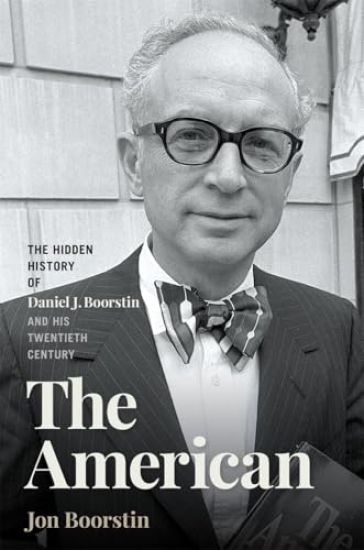
The American: The Hidden History of Daniel J. Boorstin and His Twentieth Century
Jon Boorstin
UNIVERSITY OF GEORGIA PRESS
2026
sidottu
What does it mean to be American? Daniel J. Boorstin, one of the most important intellectuals of the twentieth century, spent a lifetime pondering that question. And many people thought he came as close as anyone to providing answers that captured the nuances of that existential question. But as his son, novelist and filmmaker Jon Boorstin, reveals in The American, the nation's story--and his father's story--is far more complicated. As the twelfth Librarian of Congress and University of Chicago professor, Boorstin won a Pulitzer Prize in 1974 for the half-million words he wrote about being American and authored another trilogy about the history of humanity (The Discoverers, The Creators, and The Seekers). Yet he wrote just nine pages about himself. While his histories were embraced by readers for his celebration of frontier optimism and America's infinite capacity for hope, his own story suggests a more complicated truth--about humanity and America. In searching for the America that shaped Daniel J. Boorstin, Jon confronts the story Daniel never told. A true story about fathers and sons, about Jews and race, and the price of becoming an American. Daniel grew up living the kind of history he didn't write about. His father, Sam, was a Jew from Georgia, a would-be Southern Gentleman and good friend and legal counsel to Leo Frank, who was lynched in America's most notorious antisemitic incident. Sam fled Atlanta with his family to another unlikely Jewish home: Tulsa, Oklahoma, which was then just becoming the self-proclaimed oil capital of the world. There Sam lived through the infamous Tulsa Massacre in 1921. Jon describes how despite these tragedies, Sam Boorstin's booster spirit and his idiosyncratic morality combined to shape Daniel's gilded views of America and Americans. Jon also explores his father's lifelong friendship with distinguished Black historian, John Hope Franklin, a fellow Tulsan. Both of whom were unwavering proponents of the American Dream in the face of extraordinary prejudice. Part biography, part family history, and a crucial extension of his father's work, Jon Boorstin illuminates what we might learn from what was left out. And how, during another challenging time for America, we may renew our own faith in the future.
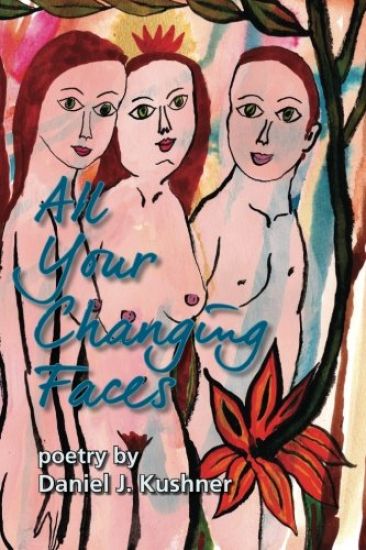
All Your Changing Faces: poetry by Daniel J. Kushner
Magnus Champlin; Daniel J. Kushner
Createspace Independent Publishing Platform
2016
nidottu
Die Frage nach der Motivation der Täter in Daniel J. Goldhagens "Hitlers Willige Vollstrecker"
Jürgen Bartels
GRIN Verlag
2016
nidottu

Hitlers willige Vollstrecker. Die Intentionen von Daniel J. Goldhagens
Osman Taskiran
GRIN Verlag
2023
nidottu

Das Reserve-Polizeibataillon 101 im Blickpunkt von Christopher R. Browning und Daniel J. Goldhagen
Tina Walz
Grin Publishing
2015
pokkari

Daniel and Andrew and the Path to Perkins is the 3rd and final book in the Big Dan Runs the Marathon series. It tells the story of the boys and their journey to the Perkins School for the Blind.

Essays on the World of Humans: F. Frosini & D.J. Brick
Daniel J. Brick; Fabrizio Frosini
Independently Published
2019
nidottu
Many years ago, in a poetry class for beginners, I read one of my early efforts which contained the following three lines: "A young poet drops his pen, astonished / by the twenty lines he has just written, / certain it is the Poem of Total Realization." The teacher smiled and said, "I remember thinking I had written that poem when I was sixteen." What we learn from writing poems over a long expanse of time is that each one takes further along the path of our daily life, leading eventually to whatever fulfills our existence. Each poem illuminates for its moment the darkness surrounding us, and in that light we can see the World in its glory or, sadly, in its degradation. Finally, we will carry within, not only the poem as a piece of literature but also the emotional growth it promotes. DJ Brick] ***Nature is wild and eagles and wolves will never be lovers. But certainly Poetry can overcome every obstacle and translates our dreams, desires, passions.. in images that evoke even a new, different Universe. Furthermore, Poetry is such a powerful tool: violence can kill, of course, but Words are stronger. Thus, Ideals/Values will be the final winner, because they can speak directly to hearts and minds - and touching them deeply, they can profoundly change a human being - Even the whole Humankind F. Frosini] ***In the arts repetition is the path of mastery. John Gielgud is said to have performed the role of Hamlet more than any actor in history. Only his innate modesty and respect for Shakespeare's genius kept him from claiming he had mastered the role. Those who witnessed his stage performances several times readily called him the master. A pianist of the caliber of Glenn Gould achieves greatness by rehearsing 'The Goldberg Variations' over and over, performing them again and again, continually discovering new details for each new performance. And the venerable Robert Frost was still reciting from memory poems he had written just before World War I in the 1960s and still charming audiences who knew them almost as well as he did. DJ Brick] ***Stating that our human nature is evil, would not be acceptable at all. Yet, it is beyond doubt that we humans are capable of behaving much and much worse than the most ferocious beasts, when our mental inhibitory-control fails to curb the worst and most pressing impulses. Nowadays, the rise of mass media has changed the way societies think and, unfortunately, exploiting mass psychology has become a lucrative affair for many. Politicians and CEOs of large corporations, in particular, know very well how to manipulate the masses, and in doing so, they can profoundly change our societies -our lives. Above all, through an increase in social inequality. And failing to deal with inequalities only leads to a rise of political extremes. F. Frosini]