In this laugh-out-loud picture book perfect for fans of Lyle the Crocodile and Dragons Love Tacos, an alligator family runs into trouble when their son can't seem to curb his appetite for their new human neighbors. "A fun and surprising classic picture book appeal threaded with a subversive and sometimes macabre laugh-out-loud text. It's James Marshall meets Edward Gorey " --Matthew Cordell, Caldecott Medalist After Libby and Herbert Alligator's mom lands her dream job as a pastry chef, the family is moving on up out of the slimy swamp and into a bustling town filled with houses, restaurants, schools . . . and people. Libby can't wait to meet the new neighbors. Herbert can't wait to eat them. And that's not okay with the folks in the neighborhood, who most certainly do not want to become alligator food. Is there a way for Herbert to fit in while remaining true to who he really is? With a little help from his mom, maybe he can have his friends . . . and eat them, too. From author-illustrator Daniel J. Mahoney, We Don't Eat Our Neighbors is a witty, heartfelt story about family, fitting in, and finding happiness in a new community.
In this laugh-out-loud picture book that's purr-fect for fans of Adam Rubin and James Marshall, a girl tries to convince her parents that their cat is really an undercover spy. But when things don't quite go as planned, hilarious hijinks and plenty of feline fun ensue. Samantha knows her cat, Walter, is anything but ordinary--he's a secret agent with the very serious codename Kitty Pants. Unfortunately, no one else appreciates Walter's superspy-ness. Samantha's parents think he's nothing more than your average pet. It's up to Walter to convince them otherwise. Operation Kitty Pants is a go. But will this undercover feline prove his impressive espionage skills battling foes, including a butt-sniffing pup, a wild-haired kitty, and a band of mischievous mice, or will he find his missions compromised? With Samantha's help, perhaps Walter can show that there's a bit of secret agent in all of us. From Daniel J. Mahoney, the author-illustrator of We Don't Eat Our Neighbors, My Cat Is a Secret Agent is a rollicking read-aloud for pet lovers and pet-free families alike--ideal for storytime in the classroom or at home.
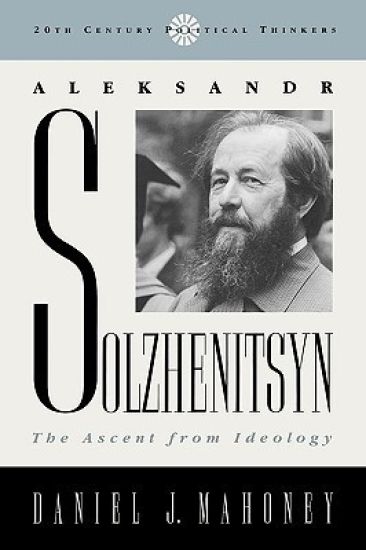
In Aleksandr Solzhenitsyn, Daniel Mahoney presents a philosophical perspective on the political condition of modern man through an exegesis and analysis of Solzhenitsyn's work. Mahoney demonstrates the tremendous, yet often unappreciated, impact of Solzhenitsyn's writing on twentieth century thinking through an examination of the writer's profoundly important critique of communist totalitarianism in a judicious and original mix of western and Russian, Christian and classical wisdom.
This is a critical introduction to Raymond Aron's conception of political science, based on a careful study of one of his central statements, "The Dawn of Universal History", with collateral reference to most of his other major works, and with a clear account of his unfolding thought. Mahoney discusses Aron's relationship to such political and social thinkers as Aristotle, Tocqueville, Marx, Strauss and Von Hayek. He shows how Aron represented in a lively and vigorous way a tradition of political prudence increasingly under theoretical and practical assault. Mahoney argues that Aron's notion of political science is superior to today's reigning social science in scope, rigour and availability to practical political leaders and citizens.
The great Russian writer Aleksandr Solzhenitsyn (1918–2008) is widely recognized as one of the most consequential human beings of the twentieth century. Through his writings and moral witness, he illumined the nature of totalitarianism and helped bring down an ‘evil empire.’ His courage and tenacity are acknowledged even by his fiercest critics. Yet the world-class novelist, historian, and philosopher (one uses the latter term in its capacious Russian sense) has largely been eclipsed by a caricature that has transformed a measured and self-critical patriot into a ferocious nationalist, a partisan of local self-government into a quasi-authoritarian, a man of faith and reason into a narrow-minded defender of Orthodoxy. The caricature, widely dispensed in the press, and too often taken for granted, gets in the way of a thoughtful and humane confrontation with the “other” Solzhenitsyn, the true Solzhenitsyn, who is a writer and thinker of the first rank and whose spirited defense of liberty is never divorced from moderation. It is to the recovery of this Solzhenitsyn that this book is dedicated. This book above all explores philosophical, political, and moral themes in Solzhenitsyn’s two masterworks, The Gulag Archipelago and The Red Wheel, as well as in his great European novel In the First Circle. We see Solzhenitsyn as analyst of revolution, defender of the moral law, phenomenologist of ideological despotism, and advocate of “resisting evil with force.” Other chapters carefully explore Solzhenitsyn’s conception of patriotism, his dissection of ideological mendacity, and his controversial, but thoughtful and humane discussion of the “Jewish Question” in the Russian – and Soviet twentieth century. Some of Solzhenitsyn’s later writings, such as the “binary tales” that he wrote in the 1990s, are subject to critically appreciative analysis. And a long final chapter comments on Solzhenitsyn’s July 2007 Der Spiegel interview, his last word to Russia and the West. He is revealed to be a man of faith and freedom, a patriot but not a nationalist, and a principled advocate of self-government for Russia and the West. A final Appendix reproduces the beautiful Introduction (“The Gift of Incarnation”) that the author’s widow, Natalia Solzhenitsyn, wrote to the 2009 Russian abridgment of The Gulag Archipelago, a work that is now taught in Russian high schools.
The Western inheritance is under sustained theoretical and practical assault. Legitimate self-criticism has given way to nihilistic self-loathing and cultural, moral, and political repudiation is the order of the day. Yet, as Daniel J. Mahoney shows in this learned, eloquent, and provocative set of essays, two contemporary philosophic thinkers, Roger Scruton and Pierre Manent, have––separately and together––traced a path for the renewal of politics and practical reason, our civilized inheritance, the natural moral law, and the soul as the enduring site of self-conscious reflection, moral and civic agency, and mutual accountability. Both Scruton and Manent have repudiated the fashionable nihilism associated with the “thought of 1968” and the “Parisian nonsense machine,” and have shown that gratitude is the proper response of the human person to the “givenness of things.” Both defend the self-governing nation against reckless nationalism and the even more reckless temptation of supranational governance and post-political democracy, what Manent suggestively calls a “kratos” without a “demos.” Both defend the secular state while taking aim at a radical secularism that rejects “the Christian mark” that is at the heart of our inheritance and that sustains the rich and necessary interpenetration of truth and liberty. Scruton’s more “cultural” perspective is indebted to Burke and Kant; Manent’s more political perspective draws on Aristotle, St. Thomas, Tocqueville, and Raymond Aron, among others. By highlighting their affinities, and reflecting on their instructive differences, Mahoney shows how, together, the English man of letters Scruton, and the French political philosopher Manent, guide us to the recovery of a horizon of thought and action animated by practical reason and the wellsprings of the human soul. They show us the humanizing path forward, but first we must make the necessary spiritual decision to repudiate repudiation once and for all. “With sophisticated and profound scholarship, Daniel Mahoney deploys his elegant style to defend the soul of civilization. Through the writings of Pierre Manent and Roger Scruton, he charts a course through the political and philosophical turmoil of the present age, providing hope and light amid the prevailing darkness.” — Mark Dooley, Irish philosopher, writer and journalist. Author of Conversations with Roger Scruton and Sir Roger's literary executor. “Mahoney's collection of essays does a marvelous job of contextualizing and explaining the vital work of these two philosophers. He's also an engaging and elegant writer.” — Daniel DiSalvo, City Journal “A series of reflective essays by Mahoney on the philosophical, theological, and political thinking of our best conservative theorists: Pierre Manent and the late Roger Scruton. Recovering Politics, Civilization, and the Soul expresses well what we need.” — Richard M. Reinsch II, National Review
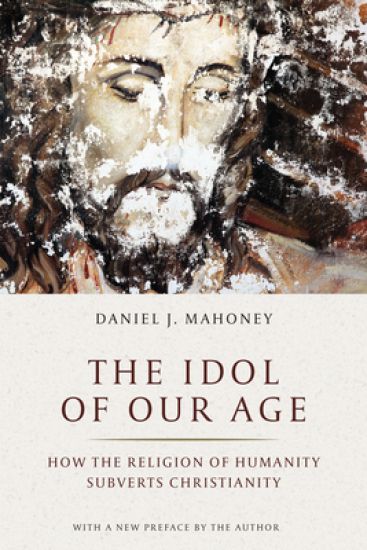
This book is a learned essay at the intersection of politics, philosophy, and religion. It is first and foremost a diagnosis and critique of the secular religion of our time, humanitarianism, or the “religion of humanity.” It argues that the humanitarian impulse to regard modern man as the measure of all things has begun to corrupt Christianity itself, reducing it to an inordinate concern for “social justice,” radical political change, and an increasingly fanatical egalitarianism. Christianity thus loses its transcendental reference points at the same time that it undermines balanced political judgment. Humanitarians, secular or religious, confuse peace with pacifism, equitable social arrangements with socialism, and moral judgment with utopianism and sentimentality. With a foreword by the distinguished political philosopher Pierre Manent, Mahoney’s book follows Pope Emeritus Benedict XVI in affirming that Christianity is in no way reducible to a “humanitarian moral message.” In a pungent if respectful analysis, it demonstrates that Pope Francis has increasingly confused the Gospel with left-wing humanitarianism and egalitarianism that owes little to classical or Christian wisdom. It takes its bearings from a series of thinkers (Orestes Brownson, Aurel Kolnai, Vladimir Soloviev, and Aleksandr Solzhenitsyn) who have been instructive critics of the “religion of humanity.” These thinkers were men of peace who rejected ideological pacifism and never confused Christianity with unthinking sentimentality. The book ends by affirming the power of reason, informed by revealed faith, to provide a humanizing alternative to utopian illusions and nihilistic despair.
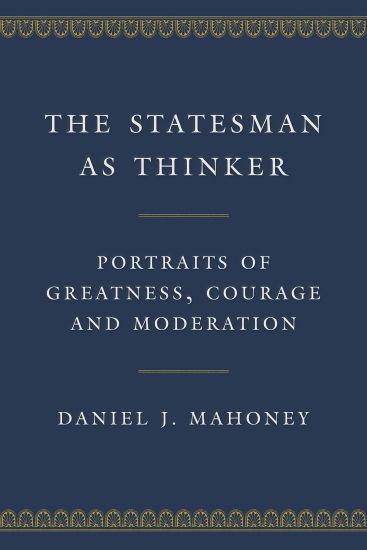
In his newest book, Daniel J. Mahoney offers refreshing historical antidotes to the displays of despotism in today's political arena."A brilliantly written and researched tribute to the pantheon of classically trained and thinking men of action." —Victor Davis HansonIn The Statesman as Thinker, Daniel J. Mahoney provides thoughtful and elegant portraits of statesmen who struggled to preserve freedom during times of crisis: Cicero using all the powers of rhetoric to preserve republican liberty in Rome against Caesar’s encroaching autocracy; Burke defending ordered liberty against Jacobin tyranny in revolutionary France; Tocqueville defending liberty and human dignity against blind reaction, democratic impatience, and revolutionary fanaticism; Lincoln preserving the American republic and putting an end to chattel slavery; Churchill defending liberty and law and opposing Nazi and Communist despotism; de Gaulle defending the honor of France during World War II; and Havel fighting Communism before 1989 and then leading the Czech Republic with dignity and grace.Mahoney makes sense of the mixture of magnanimity and moderation that defines the statesman as thinker at his or her best. That admirable mixture of greatness, courage, and moderation owes much to classical and Christian wisdom and to the noble desire to protect the inheritance of civilization against rapacious and destructive despotic regimes and ideologies.
The Ideological Lie, as Solzhenitsyn calls it, was born when modern revolutionaries replaced the age-old distinction between good and evil with the illusory distinction between progress and reaction. In the name of progress, evil was called goodness, and goodness in the form of wise restraint was labeled evil, backward, racist, colonialist, sexist, etc.Jacobinism, Marxism-Leninism, National Socialism, Progressive Democracy, the New Left, and now the new woke dispensation have all iterated upon this central conceit. Their adherents were all frenziedly preoccupied with being on “the right side of history”—the side of “progress.”In The Persistence of the Ideological Lie, Daniel Mahoney chronicles each manifestation of the Ideological Lie, up to and including contemporary wokeism. He explains how each is marked by the same errors: impatience with piecemeal reform, contempt for self-limiting constitutional order, and the belief that people are guilty for their immutable characteristics—belonging to the wrong class or race—rather than for their actions. He shows how the woke, moved by self-loathing and a disdain for our civic inheritance, are transmuting our so-called democracy into a new form of despotism.Mahoney ultimately argues that our failure to learn from the totalitarian tragedy of the twentieth century allowed the ideological virus to metastasize in new and alarming ways. Above all, he takes aim at the omnipresent “culture of repudiation,” as the late Roger Scruton called it, and elucidates multiple paths for overcoming the ideological clichés that continue to deform intellectual and political life today.
This book is a learned essay at the intersection of politics, philosophy, and religion. It is first and foremost a diagnosis and critique of the secular religion of our time, humanitarianism, or the “religion of humanity.” It argues that the humanitarian impulse to regard modern man as the measure of all things has begun to corrupt Christianity itself, reducing it to an inordinate concern for “social justice,” radical political change, and an increasingly fanatical egalitarianism. Christianity thus loses its transcendental reference points at the same time that it undermines balanced political judgment. Humanitarians, secular or religious, confuse peace with pacifism, equitable social arrangements with socialism, and moral judgment with utopianism and sentimentality. With a foreword by the distinguished political philosopher Pierre Manent, Mahoney’s book follows Pope Emeritus Benedict XVI in affirming that Christianity is in no way reducible to a “humanitarian moral message.” In a pungent if respectful analysis, it demonstrates that Pope Francis has increasingly confused the Gospel with left-wing humanitarianism and egalitarianism that owes little to classical or Christian wisdom. It takes its bearings from a series of thinkers (Orestes Brownson, Aurel Kolnai, Vladimir Soloviev, and Aleksandr Solzhenitsyn) who have been instructive critics of the “religion of humanity.” These thinkers were men of peace who rejected ideological pacifism and never confused Christianity with unthinking sentimentality. The book ends by affirming the power of reason, informed by revealed faith, to provide a humanizing alternative to utopian illusions and nihilistic despair.
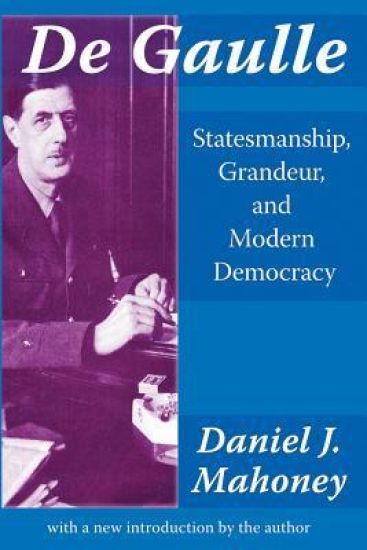
This analysis of the thought and action of Charles de Gaulle explores the intellectual foundations of Gaullist statecraft. Mahoney's careful exegesis of de Gaulle's major writings and speeches, reveals a penetrating political thinker as well as a major political actor. He explains de Gaulle to an American public that too often sees him as a posturing figure suffering from an exaggerated and misplaced sense of personal and national grandeur. Mahoney shows that de Gaulle's defense of the "grandeur" of France is tied to a fundamentally classical view of human nature and politics. In elucidating de Gaulle's political self-understanding, Mahoney highlights the foundation of his noble but elusive moderation.Mahoney shows how de Gaulle repeatedly and explicitly rejected the cult of the Nietzschean superman, the Bonapartist separation of grandeur from moderation, and all temptations of personal and ideological despotism. He explicates de Gaulle's self-understanding as a statesman or "man of character" who comes to the service of a democratic political order in a time of crisis. He articulates de Gaulle's relationship to classical and Christian thought, his place in the French tradition, his profound debts to the Catholic poet-philosopher Charles Peguy, as well as his important affinities with Alexis de Tocqueville on the need to remain faithful to the dual imperatives of democracy and grandeur.In addition, the book discusses the principal moments of de Gaulle's statecraft from his "appeal" to resistance in June, 1940, and his founding of a new French Republic in 1958, to his articulation of a "Europe of Nations" in the 1960's. In doing so, Mahoney thoughtfully clarifies the Gaullist understanding of the "problem" of democracy: The democratic statesman must correct the corrosive acids of modern individualism, while accepting that democratic individualism sets the inescapable contours of political action in our time.Written in clear and non-technical l
This analysis of the thought and action of Charles de Gaulle explores the intellectual foundations of Gaullist statecraft. Mahoney's careful exegesis of de Gaulle's major writings and speeches, reveals a penetrating political thinker as well as a major political actor. He explains de Gaulle to an American public that too often sees him as a posturing figure suffering from an exaggerated and misplaced sense of personal and national grandeur. Mahoney shows that de Gaulle's defense of the "grandeur" of France is tied to a fundamentally classical view of human nature and politics. In elucidating de Gaulle's political self-understanding, Mahoney highlights the foundation of his noble but elusive moderation.Mahoney shows how de Gaulle repeatedly and explicitly rejected the cult of the Nietzschean superman, the Bonapartist separation of grandeur from moderation, and all temptations of personal and ideological despotism. He explicates de Gaulle's self-understanding as a statesman or "man of character" who comes to the service of a democratic political order in a time of crisis. He articulates de Gaulle's relationship to classical and Christian thought, his place in the French tradition, his profound debts to the Catholic poet-philosopher Charles Peguy, as well as his important affinities with Alexis de Tocqueville on the need to remain faithful to the dual imperatives of democracy and grandeur.In addition, the book discusses the principal moments of de Gaulle's statecraft from his "appeal" to resistance in June, 1940, and his founding of a new French Republic in 1958, to his articulation of a "Europe of Nations" in the 1960's. In doing so, Mahoney thoughtfully clarifies the Gaullist understanding of the "problem" of democracy: The democratic statesman must correct the corrosive acids of modern individualism, while accepting that democratic individualism sets the inescapable contours of political action in our time.Written in clear and non-technical language for both a scholarly and general audience. De Gaulle will be of interest to students of modern European political history, contemporary political theory, and those concerned with statecraft or statesmanship.
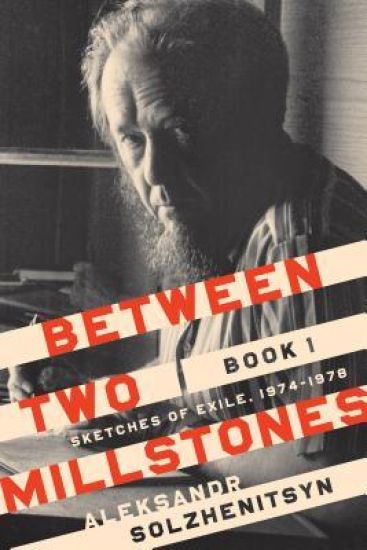
Russian Nobel prize–winner Aleksandr Solzhenitsyn (1918–2008) is widely acknowledged as one of the most important figures—and perhaps the most important writer—of the last century. To celebrate the centenary of his birth, the first English translation of his memoir of the West, Between Two Millstones, Book 1, is being published. Fast-paced, absorbing, and as compelling as the earlier installments of his memoir The Oak and the Calf (1975), Between Two Millstones begins on February 13, 1974, when Solzhenitsyn found himself forcibly expelled to Frankfurt, West Germany, as a result of the publication in the West of The Gulag Archipelago. Solzhenitsyn moved to Zurich, Switzerland, for a time and was considered the most famous man in the world, hounded by journalists and reporters. During this period, he found himself untethered and unable to work while he tried to acclimate to his new surroundings. Between Two Millstones contains vivid descriptions of Solzhenitsyn's journeys to various European countries and North American locales, where he and his wife Natalia ("Alya") searched for a location to settle their young family. There are fascinating descriptions of one-on-one meetings with prominent individuals, detailed accounts of public speeches such as the 1978 Harvard University commencement, comments on his television appearances, accounts of his struggles with unscrupulous publishers and agents who mishandled the Western editions of his books, and the KGB disinformation efforts to besmirch his name. There are also passages on Solzhenitsyn's family and their property in Cavendish, Vermont, whose forested hillsides and harsh winters evoked his Russian homeland, and where he could finally work undisturbed on his ten-volume dramatized history of the Russian Revolution, The Red Wheel. Stories include the efforts made to assure a proper education for the writer's three sons, their desire to return one day to their home in Russia, and descriptions of his extraordinary wife, editor, literary advisor, and director of the Russian Social Fund, Alya, who successfully arranged, at great peril to herself and to her family, to smuggle Solzhenitsyn's invaluable archive out of the Soviet Union. Between Two Millstones is a literary event of the first magnitude. The book dramatically reflects the pain of Solzhenitsyn's separation from his Russian homeland and the chasm of miscomprehension between him and Western society.
Russian Nobel prize–winner Aleksandr Solzhenitsyn (1918–2008) is widely acknowledged as one of the most important figures—and perhaps the most important writer—of the last century. To celebrate the centenary of his birth, the first English translation of his memoir of the West, Between Two Millstones, Book 1, is being published. Fast-paced, absorbing, and as compelling as the earlier installments of his memoir The Oak and the Calf (1975), Between Two Millstones begins on February 13, 1974, when Solzhenitsyn found himself forcibly expelled to Frankfurt, West Germany, as a result of the publication in the West of The Gulag Archipelago. Solzhenitsyn moved to Zurich, Switzerland, for a time and was considered the most famous man in the world, hounded by journalists and reporters. During this period, he found himself untethered and unable to work while he tried to acclimate to his new surroundings. Between Two Millstones contains vivid descriptions of Solzhenitsyn's journeys to various European countries and North American locales, where he and his wife Natalia ("Alya") searched for a location to settle their young family. There are fascinating descriptions of one-on-one meetings with prominent individuals, detailed accounts of public speeches such as the 1978 Harvard University commencement, comments on his television appearances, accounts of his struggles with unscrupulous publishers and agents who mishandled the Western editions of his books, and the KGB disinformation efforts to besmirch his name. There are also passages on Solzhenitsyn's family and their property in Cavendish, Vermont, whose forested hillsides and harsh winters evoked his Russian homeland, and where he could finally work undisturbed on his ten-volume dramatized history of the Russian Revolution, The Red Wheel. Stories include the efforts made to assure a proper education for the writer's three sons, their desire to return one day to their home in Russia, and descriptions of his extraordinary wife, editor, literary advisor, and director of the Russian Social Fund, Alya, who successfully arranged, at great peril to herself and to her family, to smuggle Solzhenitsyn's invaluable archive out of the Soviet Union. Between Two Millstones is a literary event of the first magnitude. The book dramatically reflects the pain of Solzhenitsyn's separation from his Russian homeland and the chasm of miscomprehension between him and Western society.
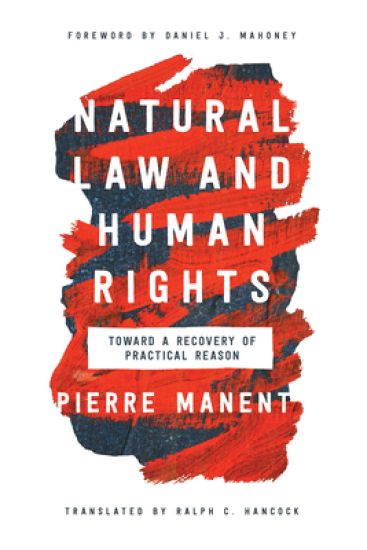
This first English translation of Pierre Manent's profound and strikingly original book La loi naturelle et les droits de l'homme is a reflection on the central question of the Western political tradition. In six chapters, developed from the prestigious Étienne Gilson lectures at the Institut Catholique de Paris, and in a related appendix, Manent contemplates the steady displacement of the natural law by the modern conception of human rights. He aims to restore the grammar of moral and political action, and thus the possibility of an authentically political order that is fully compatible with liberty. Manent boldly confronts the prejudices and dogmas of those who have repudiated the classical and Christian notion of "liberty under law" and in the process shows how groundless many contemporary appeals to human rights turn out to be. Manent denies that we can generate obligations from a condition of what Locke, Hobbes, and Rousseau call the "state of nature," where human beings are absolutely free, with no obligations to others. In his view, our ever-more-imperial affirmation of human rights needs to be reintegrated into what he calls an "archic" understanding of human and political existence, where law and obligation are inherent in liberty and meaningful human action. Otherwise we are bound to act thoughtlessly and in an increasingly arbitrary or willful manner. Natural Law and Human Rights will engage students and scholars of politics, philosophy, and religion, and will captivate sophisticated readers who are interested in the question of how we might reconfigure our knowledge of, and talk with one another about, politics.
This first English translation of Pierre Manent's profound and strikingly original book La loi naturelle et les droits de l'homme is a reflection on the central question of the Western political tradition. In six chapters, developed from the prestigious Étienne Gilson lectures at the Institut Catholique de Paris, and in a related appendix, Manent contemplates the steady displacement of the natural law by the modern conception of human rights. He aims to restore the grammar of moral and political action, and thus the possibility of an authentically political order that is fully compatible with liberty. Manent boldly confronts the prejudices and dogmas of those who have repudiated the classical and Christian notion of "liberty under law" and in the process shows how groundless many contemporary appeals to human rights turn out to be. Manent denies that we can generate obligations from a condition of what Locke, Hobbes, and Rousseau call the "state of nature," where human beings are absolutely free, with no obligations to others. In his view, our ever-more-imperial affirmation of human rights needs to be reintegrated into what he calls an "archic" understanding of human and political existence, where law and obligation are inherent in liberty and meaningful human action. Otherwise we are bound to act thoughtlessly and in an increasingly arbitrary or willful manner. Natural Law and Human Rights will engage students and scholars of politics, philosophy, and religion, and will captivate sophisticated readers who are interested in the question of how we might reconfigure our knowledge of, and talk with one another about, politics.
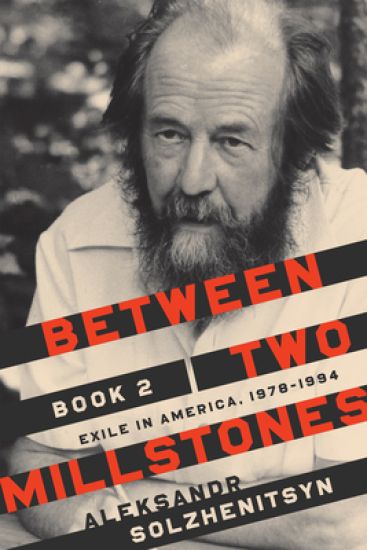
"Aleksandr Solzhenitsyn delineates his idyllic time in rural Vermont, where he had the freedom to work, spend time with his family, and wage a war of ideas against the Soviet Union and other detractors from afar. At his quiet retreat . . . the Nobel laureate found . . . 'a happiness in free and uninterrupted work.'" —Kirkus Reviews This compelling account concludes Nobel Prize–winner Aleksandr Solzhenitsyn's literary memoirs of his years in the West after his forced exile from the USSR following the publication of The Gulag Archipelago. The book reflects both the pain of separation from his Russian homeland and the chasm of miscomprehension between him and Western opinion makers. In Between Two Millstones, Solzhenitsyn likens his position to that of a grain that becomes lodged between two massive stones, each grinding away—the Soviet Communist power with its propaganda machine on the one hand and the Western establishment with its mainstream media on the other. Book 2 picks up the story of Solzhenitsyn's remarkable life after the raucous publicity over his 1978 Harvard Address has died down. The author parries attacks from the Soviet state (and its many fellow-travelers in the Western press) as well as from recent émigrés who, according to Solzhenitsyn, defame Russian culture, history, and religion. He shares his unvarnished view of several infamous episodes, such as a sabotaged meeting with Ronald Reagan, aborted Senate hearings regarding Radio Liberty, and Gorbachev's protracted refusal to allow The Gulag Archipelago to be published back home. There is also a captivating chapter detailing his trips to Japan, Taiwan, and Great Britain, including meetings with Margaret Thatcher and Prince Charles and Princess Diana. Meanwhile, the central themes of Book 1 course through this volume, too—the immense artistic quandary of fashioning The Red Wheel, staunch Western hostility to the historical and future Russia (and how much can, or should, the author do about it), and the challenges of raising his three sons in the language and spirit of Russia while cut off from the homeland in a remote corner of rural New England. The book concludes in 1994, as Solzhenitsyn bids farewell to the West in a valedictory series of speeches and meetings with world leaders, including John Paul II, and prepares at last to return home with his beloved wife Natalia, full of misgivings about what use he can be in the first chaotic years of post-Communist Russia, but never wavering in his conviction that, in the long run, his books would speak, influence, and convince. This vibrant, faithful, and long-awaited first English translation of Between Two Millstones, Book 2, will fascinate Solzhenitsyn's many admirers, as well as those interested in twentieth-century history, Russian history, and literature in general.
"Aleksandr Solzhenitsyn delineates his idyllic time in rural Vermont, where he had the freedom to work, spend time with his family, and wage a war of ideas against the Soviet Union and other detractors from afar. At his quiet retreat . . . the Nobel laureate found . . . 'a happiness in free and uninterrupted work.'" —Kirkus Reviews This compelling account concludes Nobel Prize–winner Aleksandr Solzhenitsyn's literary memoirs of his years in the West after his forced exile from the USSR following the publication of The Gulag Archipelago. The book reflects both the pain of separation from his Russian homeland and the chasm of miscomprehension between him and Western opinion makers. In Between Two Millstones, Solzhenitsyn likens his position to that of a grain that becomes lodged between two massive stones, each grinding away—the Soviet Communist power with its propaganda machine on the one hand and the Western establishment with its mainstream media on the other. Book 2 picks up the story of Solzhenitsyn's remarkable life after the raucous publicity over his 1978 Harvard Address has died down. The author parries attacks from the Soviet state (and its many fellow-travelers in the Western press) as well as from recent émigrés who, according to Solzhenitsyn, defame Russian culture, history, and religion. He shares his unvarnished view of several infamous episodes, such as a sabotaged meeting with Ronald Reagan, aborted Senate hearings regarding Radio Liberty, and Gorbachev's protracted refusal to allow The Gulag Archipelago to be published back home. There is also a captivating chapter detailing his trips to Japan, Taiwan, and Great Britain, including meetings with Margaret Thatcher and Prince Charles and Princess Diana. Meanwhile, the central themes of Book 1 course through this volume, too—the immense artistic quandary of fashioning The Red Wheel, staunch Western hostility to the historical and future Russia (and how much can, or should, the author do about it), and the challenges of raising his three sons in the language and spirit of Russia while cut off from the homeland in a remote corner of rural New England. The book concludes in 1994, as Solzhenitsyn bids farewell to the West in a valedictory series of speeches and meetings with world leaders, including John Paul II, and prepares at last to return home with his beloved wife Natalia, full of misgivings about what use he can be in the first chaotic years of post-Communist Russia, but never wavering in his conviction that, in the long run, his books would speak, influence, and convince. This vibrant, faithful, and long-awaited first English translation of Between Two Millstones, Book 2, will fascinate Solzhenitsyn's many admirers, as well as those interested in twentieth-century history, Russian history, and literature in general.
Challenging Modern Atheism and Indifference is the first English translation of Pierre Manent's penetrating engagement with the seventeenth century polymath and apologist for the Christian faith, Blaise Pascal. Blaise Pascal (1623–1662) was the first Christian apologist to address modern human beings on their own terms and present a defense of the Christian religion that still resonates today. A major publishing and intellectual event in France when it first appeared in 2022, Challenging Modern Atheism and Indifference is Pierre Manent's investigation of Pascal's exploration of Christianity in the wake of a sharp atheistic turn at the dawn of the modern state and modern science. Comprehensive in scope and profound in treatment, this engagement with all of Pascal's writings, including his famous Pensées, appeals to the reader's head and heart. Manent emphasizes the joy that comes from engaging the truth of faith, and he argues that we are diminished by forgetting the unique and distinctive contributions of Christianity. More than brilliant exegesis, Manent enlists Pascal in a much greater endeavor: to make what he calls "the Christian proposition" concerning God and man intelligible to Europeans who have made it their business to ignore the religion that founded Europe and the larger Western world.
A philosophical and historical analysis of the paradox of French democracy that illuminates the challenges of the current democratic age. In Prosperity and Torment in France, philosopher Chantal Delsol provides an analysis of the current state of affairs in French politics, economics, and cultural life that reveals key lessons for modern democracies around the world. She examines the seeming paradox of France as a wealthy country that provides almost unrivaled social services to its citizens at no extra cost, but one whose citizens are unsatisfied with the current state of affairs. Delsol traces this current dilemma back several hundred years, and examines the principle of the common good and its inherent tension with concepts like democracy and egalitarianism that often emphasize individualism. Likewise, Delsol emphasizes this concept also stands in contrast to the centralization of power in Paris throughout its history. In the end, Delsol notes that these historical tensions set the stage for many of the current tensions in France: secularism versus religion, economic liberalism versus the welfare state, civil service versus the private sector, and material wealth versus status. By examining the paradox of France, Delsol brings to the forefront the challenges democracies are facing around the globe and asks the broader question of how governments should best serve their people in our contemporary world.