Kirjojen hintavertailu. Mukana 11 213 693 kirjaa ja 11 kauppaa.

Kirjahaku

Etsi kirjoja tekijän nimen, kirjan nimen tai ISBN:n perusteella.

1000 tulosta hakusanalla Daniel L. Pals

Introducing Religion

Introducing Religion

Daniel L. Pals

Oxford University Press Inc
2008
nidottu
What is religion? How is it to be explained? Why do human beings believe in divinities? Why do the beliefs and behaviors we typically describe as religious so deeply affect the human personality and so subtly weave their way through human society? Introducing Religion: Readings from the Classic Theorists presents eleven key texts from influential theorists who played a pivotal role in the modern enterprise of explaining the phenomenon of religion. These writings seek to account for the origin, function, and enduring human appeal of religion by drawing on methods of scientific scholarship unconstrained by theological creeds or confessional commitments. An ideal companion to author Daniel L. Pals' textbook, Eight Theories of Religion, Second Edition, or other beginning texts, Introducing Religion opens with selections from the works of Edward Burnett Tylor and James Frazer--Victorian pioneers in anthropology and the comparative study of religion. It then offers entry into the provocative analyses of Sigmund Freud, Emile Durkheim, and Karl Marx, whose aggressive reductionist approaches framed the explanatory debate for much of the century to follow. Responses to reductionist theories--and new directions in explanation--claim a place in selections from the works of philosopher-psychologist William James, theologian Rudolf Otto, sociologist Max Weber, and comparativist Mircea Eliade. The volume ends with discussions drawn from the celebrated field studies of British anthropologist E. E. Evans-Pritchard and the interpretive anthropology of American theorist Clifford Geertz, whose fieldwork took him to both Asia and the Middle East. Brief career portraits of the theorists at the outset of each chapter give context to the readings, and a general introduction features guiding questions designed to help students assess and compare the different theories. Offering an illuminating overview of this controversial and engaging subject, Introducing Religion: Readings from the Classic Theorists is ideal for introductory courses in religion as well as courses in method and theory of religion, world religions, and sociology, psychology, or anthropology of religion.
Trygve Haavelmo, James J. Heckman, Daniel L. McFadden, Robert F. Engle and Clive W.J. Granger
This groundbreaking series brings together a critical selection of key papers by the Nobel Memorial Laureates in Economics that have helped shape the development and present state of economics. The editors have organised this comprehensive series by theme and each volume focuses on those Laureates working in the same broad area of study. The careful selection of papers within each volume is set in context by an insightful introduction to the Laureates' careers and main published works. This landmark series will be an essential reference for scholars throughout the world.
Exalting Jesus in Daniel

Exalting Jesus in Daniel

Dr. Daniel L. Akin

Broadman Holman Publishers
2017
nidottu
Exalting Jesus in Daniel is part of the Christ-Centered Exposition Commentary series. This series affirms that the Bible is a Christ-centered book, containing a unified story of redemptive history of which Jesus is the hero. It's presented as sermons, divided into chapters that conclude with a "Reflect & Discuss" section, making this series ideal for small group study, personal devotion, and even sermon preparation. It's not academic but rather presents an easy-reading, practical and friendly commentary. The series is projected to be 48 volumes.
Naturally Beautiful \ Naturalmente Bella (Spanish Edition): Grandma's Secret Remedies \ Remedios Secretos de la Abuela
Este libro alude a algo m s profundo que la belleza f sica, es una celebraci n de nuestro pasado (la sabidur a ancestral) y nuestra cultura. Tocar nuestra nostalgia (lo que aprendimos de nuestras abuelas tiempo atr s) y seguir pasando a la familia y a los amigos para celebrar la identidad latina simult neamente de manera individual y global, tanto dentro como fuera de Latinoam rica (la di spora en EE. UU.). El hecho de que abarque remedios naturales y sabidur a popular significa que el t tulo puede apelar a grupos de diferentes edades y territorios. El libro contiene una serie de recetas para el cutis, el cuerpo, el pelo y las u as, que se pueden elaborar a base productos naturales accesibles, de bajo costo y que normalmente se encuentran en la cocina de casi cualquier persona o en el s per mercado m s cercano. Estas recetas y los consejos de belleza que las acompa an buscan honrar y perpetuar la sencillez y eficacia de los remedios caseros utilizados por generaciones en los hogares de los pa ses latinoamericanos, que ahora ya son parte de la herencia cultural de la comunidad latina de EE. UU. De contenido accesible y validado cient ficamente, este libro difunde la idea de que la belleza est al alcance de todos, sin importar la edad o el color de la piel, y sin necesidad de acudir a tratamientos costosos.
Enzyme Kinetics: Catalysis and Control

Enzyme Kinetics: Catalysis and Control

Daniel L. Purich

Elsevier Science Publishing Co Inc
2010
sidottu
Far more than a comprehensive treatise on initial-rate and fast-reaction kinetics, this one-of-a-kind desk reference places enzyme science in the fuller context of the organic, inorganic, and physical chemical processes occurring within enzyme active sites. Drawing on 2600 references, Enzyme Kinetics: Catalysis & Control develops all the kinetic tools needed to define enzyme catalysis, spanning the entire spectrum (from the basics of chemical kinetics and practical advice on rate measurement, to the very latest work on single-molecule kinetics and mechanoenzyme force generation), while also focusing on the persuasive power of kinetic isotope effects, the design of high-potency drugs, and the behavior of regulatory enzymes.
Essential Enzyme Kinetics

Essential Enzyme Kinetics

Daniel L. Purich

Academic Press Inc
2021
nidottu
Essential Enzyme Kinetics: A Textbook for Molecular Life Scientists describes the theoretical basis and best-practice approaches for using initial-rate, fast reaction, and kinetic isotope effect experiments to define enzyme catalysis. Because a detailed knowledge of enzyme transition-states is the main driver for the rational design of slow, tight-binding inhibitors destined to become tomorrow's small-molecule drugs, Essential Enzyme Kinetics is the must-have reference for chemists, biochemists, and pharmacologists intent on pursuing careers in Big Pharma. Given the interdisciplinary nature of contemporary drug development, this book provides a lucid short-course that will also benefit nonspecialists seeking to understand the scope and reach of modern enzyme kinetics.
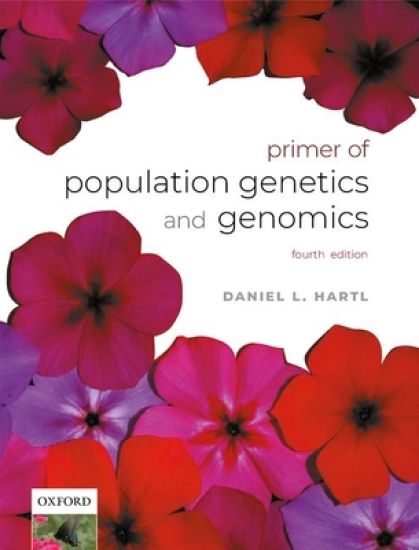
A Primer of Population Genetics and Genomics

A Primer of Population Genetics and Genomics

Daniel L. Hartl

Oxford University Press
2020
sidottu
A Primer of Population Genetics and Genomics has been completely revised and updated to provide a concise but comprehensive introduction to the basic concepts of population genetics and genomics. Recent textbooks have tended to focus on such specialized topics as the coalescent, molecular evolution, human population genetics, or genomics. This primer bucks that trend by encouraging a broader familiarity with, and understanding of, population genetics and genomics as a whole. The overview ranges from mating systems through the causes of evolution, molecular population genetics, and the genomics of complex traits. Interwoven are discussions of ancient DNA, gene drive, landscape genetics, identifying risk factors for complex diseases, the genomics of adaptation and speciation, and other active areas of current research. The principles are illuminated by numerous examples from a wide variety of animals, plants, microbes, and human populations. The approach also emphasizes learning by doing, which in this case means solving numerical or conceptual problems. The rationale behind this is that the use of concepts in problem-solving lead to deeper understanding and longer knowledge retention. This accessible, introductory textbook is aimed principally at students of various levels and abilities (from senior undergraduate to postgraduate) as well as practising scientists in the fields of population genetics, ecology, evolutionary biology, computational biology, bioinformatics, biostatistics, physics, and mathematics.
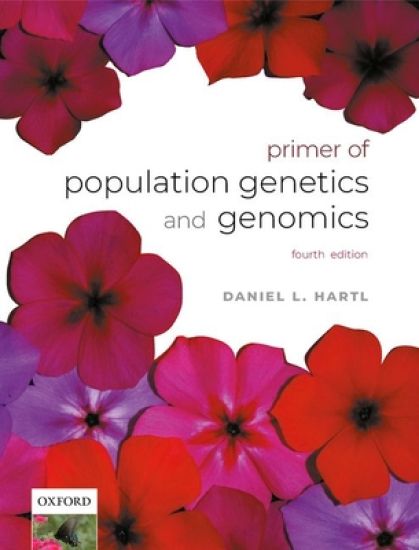
A Primer of Population Genetics and Genomics

A Primer of Population Genetics and Genomics

Daniel L. Hartl

Oxford University Press
2020
nidottu
A Primer of Population Genetics and Genomics has been completely revised and updated to provide a concise but comprehensive introduction to the basic concepts of population genetics and genomics. Recent textbooks have tended to focus on such specialized topics as the coalescent, molecular evolution, human population genetics, or genomics. This primer bucks that trend by encouraging a broader familiarity with, and understanding of, population genetics and genomics as a whole. The overview ranges from mating systems through the causes of evolution, molecular population genetics, and the genomics of complex traits. Interwoven are discussions of ancient DNA, gene drive, landscape genetics, identifying risk factors for complex diseases, the genomics of adaptation and speciation, and other active areas of current research. The principles are illuminated by numerous examples from a wide variety of animals, plants, microbes, and human populations. The approach also emphasizes learning by doing, which in this case means solving numerical or conceptual problems. The rationale behind this is that the use of concepts in problem-solving lead to deeper understanding and longer knowledge retention. This accessible, introductory textbook is aimed principally at students of various levels and abilities (from senior undergraduate to postgraduate) as well as practising scientists in the fields of population genetics, ecology, evolutionary biology, computational biology, bioinformatics, biostatistics, physics, and mathematics.
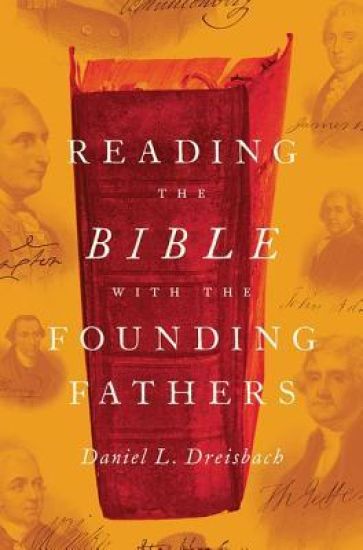
Reading the Bible with the Founding Fathers

Reading the Bible with the Founding Fathers

Daniel L. Dreisbach

Oxford University Press Inc
2016
sidottu
No book from the American founding era was more accessible or familiar than the English Bible, specifically the King James Version, and no book was more frequently alluded to or quoted from in the political discourse of the age. Widely respected and referenced by both pious and skeptical founders, the English Bible shaped significant aspects of public culture, including language, letters, arts, education, and law. It was also among the diverse intellectual and political influences--including English constitutionalism, republicanism, and Enlightenment liberalism--that informed the ideas of the American founding. These facts alone, however, reveal little about how and for what purposes the founding generation used the Bible in their political discourse and, more important, how the Bible influenced their political culture. Drawing on some of the most familiar rhetoric of the founding era, Reading the Bible with the Founding Fathers examines the founders' diverse uses of the Bible in political discourse, ranging from the essentially literary to the profoundly theological. Recognition of these distinct uses is important, says Daniel Dreisbach, as it is misleading to read spiritual meaning into primarily political or rhetorical uses of the Bible or vice versa. The founding generation looked to the Bible not only for its rich literary qualities but also for insights on human nature, civic virtue, political authority, and the rights and duties of citizens, as well as for political and legal models they sought to emulate in their polities. This exploration of the Bible's often neglected place in late-eighteenth-century political culture enriches our understanding of the ideas that contributed to the founding of the American constitutional tradition.
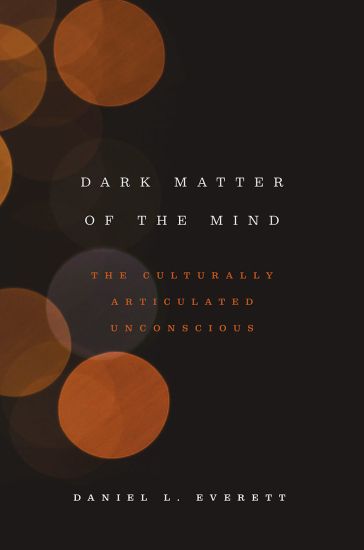
Dark Matter of the Mind

Dark Matter of the Mind

Daniel L. Everett

University of Chicago Press
2017
nidottu
Is it in our nature to be altruistic, or evil, to make art, use tools, or create language? Is it in our nature to think in any particular way? For Daniel L. Everett, the answer is a resounding no: it isn't in our nature to do any of these things because human nature does not exist at least not as we usually think of it. Flying in the face of major trends in Evolutionary Psychology and related fields, he offers a provocative and compelling argument in this book that the only thing humans are hardwired for is freedom: freedom from evolutionary instinct and freedom to adapt to a variety of environmental and cultural contexts. Everett sketches a blank-slate picture of human cognition that focuses not on what is in the mind but, rather, what the mind is in namely, culture. He draws on years of field research among the Amazonian people of the Piraha in order to carefully scrutinize various theories of cognitive instinct, including Noam Chomsky's foundational concept of universal grammar, Freud's notions of unconscious forces, Adolf Bastian's psychic unity of mankind, and works on massive modularity by evolutionary psychologists such as Leda Cosmides, John Tooby, Jerry Fodor, and Steven Pinker. Illuminating unique characteristics of the Piraha language, he demonstrates just how differently various cultures can make us think and how vital culture is to our cognitive flexibility. Outlining the ways culture and individual psychology operate symbiotically, he posits a Buddhist-like conception of the cultural self as a set of experiences united by various apperceptions, episodic memories, ranked values, knowledge structures, and social roles and not, in any shape or form, biological instinct. The result is fascinating portrait of the "dark matter of the mind," one that shows that our greatest evolutionary adaptation is adaptability itself.
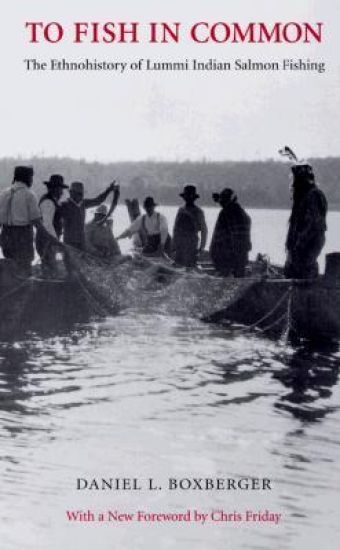
To Fish in Common

To Fish in Common

Daniel L. Boxberger; Chris Friday

University of Washington Press
2000
pokkari
âA study of the Lummi Indians of northwestern Washington and the political and economic forces that have determined their changing fortunes over the past 150 years. Daniel Boxberger has made excellent use of documentary sources, oral history, and his own observations. . . . The book is compelling and well documented; it is also understated, frequently allowing the actions of the myriad contending interest groups to speak for themselves.â--Ethnohistory âBoxberger knows his subject. He displays an impressive understanding of the technical development of fishing, and he repeatedly uses his interviews with Indians to inform and test archival and secondary sources.â--American Indian Quarterly âBy focusing on the history of control over productive resources (in this case salmon, methods of harvest, processing, capital investment, and markets) Boxberger shows how the Lummi slid from independence and self-sufficiency to dependency, underdevelopment, and poverty. . . . Not only is it an excellent, in-depth study of the Lummi case, it can also serve as a metaphor for the larger question of Native American treaty rights and the resource provisions of agreements.â--Pacific Historical Review Daniel L. Boxberger is professor of anthropology at Western Washington University, Bellingham.
Don't Sleep, There Are Snakes: Life and Language in the Amazonian Jungle
Part passionate memoir, part scientific exploration, a life-changing tale set among a small tribe of Amazonian Indians in Brazil that offers a riveting look into the nature of language, thought, and life itself. "Immensely interesting and deeply moving.... One of the best books I have read."--Lucy Dodwell, New Scientist A riveting account of the astonishing experiences and discoveries made by linguist Daniel Everett while he lived with the Pirah , a small tribe of Amazonian Indians in central Brazil. Daniel Everett arrived among the Pirah with his wife and three young children hoping to convert the tribe to Christianity. Everett quickly became obsessed with their language and its cultural and linguistic implications. The Pirah have no counting system, no fixed terms for color, no concept of war, and no personal property. Everett was so impressed with their peaceful way of life that he eventually lost faith in the God he'd hoped to introduce to them, and instead devoted his life to the science of linguistics.
Language: The Cultural Tool

Language: The Cultural Tool

Daniel L. Everett

VINTAGE
2012
nidottu
"The most important--and provocative--anthropological fieldwork ever undertaken." --Tom Wolfe For years, the prevailing opinion among academics has been that language is embedded in our genes, existing as an innate and instinctual part of us. In this bold and provocative study, linguist Daniel Everett argues that, like other tools, language was invented by humans and can be reinvented or lost. He shows how the evolution of different language forms--that is, different grammar--reflects how language is influenced by human societies and experiences, and how it expresses their great variety. Combining anthropology, primatology, computer science, philosophy, linguistics, psychology, and his own pioneering research with the Amazonian Pirah , and using insights from many different languages and cultures, Everett presents an unprecedented elucidation of this society-defined nature of language. In doing so, he also gives us a new understanding of how we think and who we are.
Stress in Health and Disease, An Issue of Psychiatric Clinics of North America
Stress in the DSM is referred to only in the sense of post traumatic stress disorder (PTSD). However, some research studies estimate up to two thirds of illnesses seen by general practitioners are 'stress related'-GI problems, sleep disturbance, mental concentration, headaches, fatigue, shortness of breath, high blood pressure, dermatitis, illnesses from lowered immune system, and vague aches and pains - all can be symptoms and outcomes of the elusive stress factor. This issue of Psychiatric Clinics of North America discusses the scientific medical facets of stress, written by mental health and medical practitioners. It looks at the brain-body connection of stress - what the body does to result in stress and varying results stress has on the body. This fascinating cross-discipline look at stress is intended for psychiatrists, general practitioners, cardiologists, GI specialists, neurologists, sleep medicine specialists, respiratory specialists, and others who diagnose and treat patients with stress suspected as part of the illness equation or with self-reported stress. Topics include: Measurement of stress; Anxiety and stress-how they work together; Relationship between genetics and stress; Role of glia in stress; Sleep and stress; Diet and stress; Supplements and stress; Effect of severe stress on early brain development, attachment, and emotions; Role of stress and fear on the development of psychopathology; Expressions of stress in psychiatric illness; Dermatologic manifestations of stress in normal and psychiatric populations; Humor and the psychological buffers of stress; Stress expression in children and adolescents; Stress in service members; Stress in the geriatric population.