Kirjahaku
Etsi kirjoja tekijän nimen, kirjan nimen tai ISBN:n perusteella.
1000 tulosta hakusanalla Daniel M. Gross
Princess Diana's death was a tragedy that provoked mourning across the globe; the death of a homeless person, more often than not, is met with apathy. How can we account for this uneven distribution of emotion? Can it simply be explained by the prevailing scientific understanding? Uncovering a rich tradition beginning with Aristotle, Daniel M. Gross' "The Secret History of Emotion" offers a counterpoint to the way we generally understand emotions today. Through a radical rereading of Aristotle, Seneca, Thomas Hobbes, Sarah Fielding, and Judith Butler, among others, Gross reveals a persistent intellectual current that considers emotions as psychosocial phenomena. The Roman Stoics, for instance, offer insight into the reasons political passions are distributed to some people but not to others. Contemporary theorists like Judith Butler, meanwhile, explain to us how psyches are shaped by power. To supplement his argument, Gross also provides a history and critique of the dominant modern view of emotions, expressed in Darwinism and neurobiology, in which they are considered organic, personal feelings independent of social circumstances. The result is a convincing work that rescues the study of the passions from science and returns it to the humanities and the art of rhetoric.
Through a radical rereading of Aristotle, Seneca, Thomas Hobbes, Sarah Fielding, and Judith Butler, among others, Daniel Gross' "The Secret History of Emotion" reveals a persistent intellectual current that considers emotions as psychosocial phenomena. The Roman Stoics, for instance, offer insight into the reasons why political passions are distributed to some people but not to others. Contemporary theorists such as Judith Butler, meanwhile, explain to us how psyches are shaped by power. To supplement his argument, Gross also provides a history and critique of the dominant modern view of emotions, expressed in Darwinism and neurobiology, in which they are considered organic, personal feelings independent of social circumstances. The result is a convincing work that rescues the study of the passions from science and returns it to the humanities and the art of rhetoric. "The Secret History of Emotion" offers a counterpoint to the way we generally understand emotions today.
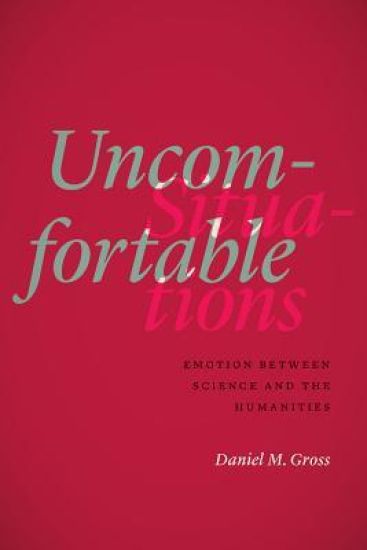
What is a hostile environment? How exactly can feelings be mixed? What on earth might it mean when someone writes that he was "happily situated" as a slave? The answers, of course, depend upon whom you ask. Science and the humanities typically offer two different paradigms for thinking about emotion--the first rooted in brain and biology, the second in a social world. With rhetoric as a field guide, Uncomfortable Situations establishes common ground between these two paradigms, focusing on a theory of situated emotion. Daniel M. Gross anchors the argument in Charles Darwin, whose work on emotion has been misunderstood across the disciplines as it has been shoehorned into the perceived science-humanities divide. Then Gross turns to sentimental literature as the single best domain for studying emotional situations. There's lost composure (Sterne), bearing up (Equiano), environmental hostility (Radcliffe), and feeling mixed (Austen). Rounding out the book, an epilogue written with ecological neuroscientist Stephanie Preston provides a different kind of cross-disciplinary collaboration. Uncomfortable Situations is a conciliatory work across science and the humanities--a groundbreaking model for future studies.
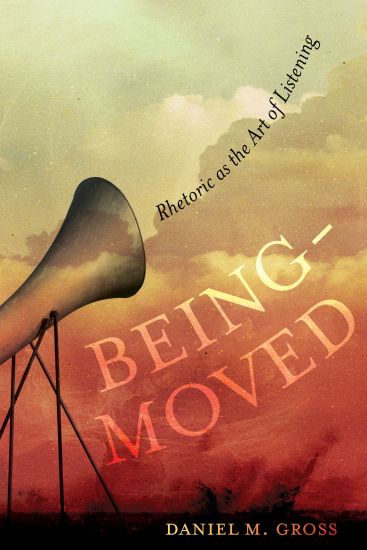
If rhetoric is the art of speaking, who is listening? In Being-Moved, Daniel M. Gross provides an answer, showing when and where the art of speaking parted ways with the art of listening – and what happens when they intersect once again. Much in the history of rhetoric must be rethought along the way. And much of this rethinking pivots around Martin Heidegger’s early lectures on Aristotle’s Rhetoric where his famous topic, Being, gives way to being-moved. The results, Gross goes on to show, are profound. Listening to the gods, listening to the world around us, and even listening to one another in the classroom – all of these experiences become different when rhetoric is reoriented from the voice to the ear.
Present-Centered Group Therapy for PTSD
Melissa S. Wattenberg; Daniel Lee Gross; Barbara L. Niles; William S. Unger; M. Tracie Shea
Routledge
2021
sidottu
Present-Centered Group Therapy for PTSD integrates theory, research, and practical perspectives on the manifestations of trauma, to provide an accessible, evidence-informed group treatment that validates survivors’ experiences while restoring present-day focus. An alternative to exposure-based therapies, present-centered group therapy provides practitioners with a highly implementable modality through which survivors of trauma can begin to reclaim and invest in their ongoing lives. Chapters describe the treatment’s background, utility, relevant research, implementation, applications, and implications. Special attention is given to the intersection of group treatment and PTSD symptoms, including the advantages and challenges of group treatment for traumatized populations, and the importance of member-driven processes and solutions in trauma recovery. Compatible with a broad range of theoretical orientations, this book offers clinicians, supervisors, mentors, and students a way to expand their clinical repertoire for effectively and flexibly addressing the impact of psychological trauma.
Present-Centered Group Therapy for PTSD
Melissa S. Wattenberg; Daniel Lee Gross; Barbara L. Niles; William S. Unger; M. Tracie Shea
Routledge
2021
nidottu
Present-Centered Group Therapy for PTSD integrates theory, research, and practical perspectives on the manifestations of trauma, to provide an accessible, evidence-informed group treatment that validates survivors’ experiences while restoring present-day focus. An alternative to exposure-based therapies, present-centered group therapy provides practitioners with a highly implementable modality through which survivors of trauma can begin to reclaim and invest in their ongoing lives. Chapters describe the treatment’s background, utility, relevant research, implementation, applications, and implications. Special attention is given to the intersection of group treatment and PTSD symptoms, including the advantages and challenges of group treatment for traumatized populations, and the importance of member-driven processes and solutions in trauma recovery. Compatible with a broad range of theoretical orientations, this book offers clinicians, supervisors, mentors, and students a way to expand their clinical repertoire for effectively and flexibly addressing the impact of psychological trauma.
Remains of the Late Rev. Daniel M'Allum, M.D., with a Memoir
Daniel M'Allum; Jonathan Crowther
Antigonos Verlag
2025
nidottu
Nomination of Daniel M. Ashe to be director of the U.S. Fish and Wildlife Service
United States Senate; Committee on Environment and Publ Works; United States Congress
Createspace Independent Publishing Platform
2017
nidottu
Nomination of Daniel M. Ashe to be director of the U.S. Fish and Wildlife Service: hearing before the Committee on Environment and Public Works, United States Senate, One Hundred Twelfth Congress, first session, February 15, 2011.
Remains of the Late Rev. Daniel M'Allum, M.D., with a Memoir
Antigonos Verlag
2025
sidottu
The History, Civil And Commercial, Of The British Colonies In The West Indies. To Which Is Added A General Description Of The Bahama Islands By Daniel M'Kinnen (Volume I)
Bryan Edwards; Daniel McKinnon
Alpha Edition
2021
pokkari
Nominations of Luis A. Aguilar, Daniel M. Gallagher, Jr., Anthony Frank D'Agostino, and Gregory S. Karawan
United States Senate; Committee on Banking; United States Congress
Createspace Independent Publishing Platform
2017
nidottu
Nominations of Luis A. Aguilar, Daniel M. Gallagher, Jr., Anthony Frank D'Agostino, and Gregory S. Karawan: hearing before the Committee on Banking, Housing, and Urban Affairs, United States Senate, One Hundred Twelfth Congress, first session, on nominations of Luis A. Aguilar, of Georgia, to be a member, Securities and Exchange Commission; Daniel M. Gallagher, Jr.,
Davey, J: Medico-legal reflections on the trial of Daniel M'
Antigonos Verlag
2024
nidottu
Davey, J: Medico-legal reflections on the trial of Daniel M'
Antigonos Verlag
2024
sidottu
Can Your Heart Stand the Shocking Facts? by Dr. Brentwood Masterling, M.F.A., D.V.M., Ph. D.
Daniel M Kimmel
Fantastic Books
2023
pokkari
(a parody by Daniel M. Kimmel)Daniel M. Kimmel has made us think about film as the veteran critic who wrote the Hugo finalist Jar Jar Binks Must Die... and other observations about science fiction movies. He's made us laugh as the author of Shh It's a Secret: a novel about aliens, Hollywood, and the Bartender's Guide, Time on My Hands: My Misadventures in Time Travel, and Father of the Bride of Frankenstein. Now, for the first time anywhere, in the guise of his pompous alter ego Dr. Brentwood Masterling, M.F.A., D.V.M., Ph. D., he gets to do both.Can Your Heart Stand the Shocking Facts? is indeed a "deep dive" into the world of director Edward D. Wood, Jr.'s Golden Turkey Award winner for Worst Film, Plan 9 from Outer Space. In it, Dr. Masterling provides an annotated complete transcript of the movie, along with an essay about Wood, and several questions for further discussion. Herein you'll learn how star Bela Lugosi cleverly died before the film was even made, and how Plan 1 had been to bring a gift basket to Earth. Is any of it true? As the Amazing Criswell asks in the film's stirring climax, "Can you prove that it didn't happen?"
Dear Prudence: Liberating Lessons from Slate.Com's Beloved Advice Column
Daniel M. Lavery
HarperOne
2023
sidottu
Based on the long-running Slate advice column, a collection of the most eye-opening, illuminating, and provocative installments during Daniel M. Lavery's tenure as the titular Prudence.Every week, millions of readers visit Slate for the irresistible "Dear Prudence," an advice column that promises a healthy dose of reality and good humor alongside its indispensable suggestions and life lessons. The ever-hilarious and insightful Danny Lavery was one of "Dear Prudence"'s most beloved columnists, and he recounts his time as Prudie in this side-splitting, candid collection--complete with new commentary and exclusive stories--drawing out the broader themes of his informative, unfailingly illuminating guidance. From guilt and blame ("Am I in the Wrong Here?") to downright confusion ("Maybe This Is All a Misunderstanding"), from recently discovered wrenches-in-the-machine ("The Other Shoe Just Dropped") to the travails of parenthood ("My Kids Are Growing Up. Can Someone Please Stop This?"), Dear Prudence isn't afraid to go the extra mile in its search for the much-needed corrective, gentle reminder, or tough love. This is the go-to guide for anyone who's just trying to figure it all out--with a helpful nudge.
National BestsellerONE OF FALL'S MOST ANTICIPATED READS--New York Times, Vulture, BookPage, Kirkus Reviews, and moreFrom the New York Times bestselling author and advice columnist, a poignant and funny debut novel about the residents of a women's hotel in 1960s New York City.The Biedermeier might be several rungs lower on the ladder than the real-life Barbizon, but its residents manage to occupy one another nonetheless. There's Katherine, the first-floor manager, lightly cynical and more than lightly suggestible. There's Lucianne, a workshy party girl caught between the love of comfort and an instinctive bridling at convention, Kitty the sponger, Ruth the failed hairdresser, and Pauline the typesetter. And there's Stephen, the daytime elevator operator and part-time Cooper Union student.The residents give up breakfast, juggle competing jobs at rival presses, abandon their children, get laid off from the telephone company, attempt to retrain as stenographers, all with the shared awareness that their days as an institution are numbered, and they'd better make the most of it while it lasts.As trenchant as the novels of Dawn Powell and Rona Jaffe and as immersive as The Marvelous Mrs. Maisel and Lessons in Chemistry, Women's Hotel is a modern classic--and it is very, very funny.
From the author of the national bestseller Women's Hotel, the irresistible and wildly entertaining story of one woman contending with age and friendship--a narrative that reads like an homage to Nora Ephron's Heartburn. Sixtysomething, twice-divorced Barbara is at a crossroads. In the midst of her emotional uncertainty, she looks back on the dissolution of the nine best friendships of her life, in hopes of figuring out how to optimize finding her tenth, and hopefully last, best friend. Barbara is acerbic, opinionated, and wrong about many things, but she also doesn't shy away when she's at fault. The turning point of her predicament comes from Barbara's choice, in friends, between (too-young) Caitlyn and the (unsuitable) Other Barbara. Will she repeat the exciting mistakes of the past, or will she try a new kind of mistake for a change? She feels like an out-of-season Scrooge who is unexpectedly, and all at once, surprised and entirely transformed by the possibility of joy. For readers who loved Bobby Finger's The Old Place and Elif Bautmann's Either/Or, Meeting New People will feel like a long-lost companion--Lavery at the height of his storytelling powers. It is an unforgettable novel from one of our most inventive and brilliant writers.
New York Times bestselling author Daniel M. Lavery returns to the world of Women's Hotel in this delightful and heartwarming novella about one especially lively Christmastime at the Biedermeier. Christmas at the Biedermeier Hotel means work. For much of the year, employment comes infrequently to Biedermeier residents. But during the Advent season, they're in high demand all over the city: as holiday window dressers, sales-girls at the card stores on Forty-Second Street, Broadway usherettes, assisting the Lincoln Center laundress at the Nutcracker, or working for Pinkerton as off-season security guards at the World's Fair.Katherine explores the possibility of reconnecting with a younger sister moving to New York. Lucianne goes into business for herself, running a telephone-order, strictly Social Register male escort agency out of her room, while Mrs. Mossler attempts to solve the mystery of the Biedermeier's skyrocketing phone bill and frets over Christmas tips for the hotel's few remaining employees.And while the three gem thieves who broke into the American Museum of Natural History have recently been apprehended, not all of the stolen jewels have been recovered--and Patricia and Carol have been behaving very strangely recently. Christmas is a season of wonder and mystery, after all.