Kirjojen hintavertailu. Mukana 11 244 527 kirjaa ja 12 kauppaa.

Kirjahaku

Etsi kirjoja tekijän nimen, kirjan nimen tai ISBN:n perusteella.

1000 tulosta hakusanalla Daniel N. Wiener

Albert Ellis

Albert Ellis

Daniel N. Wiener

Praeger Publishers Inc
1988
sidottu
A psychotherapist and long-time acquaintance of Albert Ellis presents a biography of one of the leading contributors to the theory and practice of modern psychotherapy. Ellis, a prodigious writer, has been a center of controversy for his writings on sex, and for his development and advocacy of rational-emotive therapy. Wiener provides good insights into how ideas are shaped by a scientist's personal characteristics. Choice The volume is fascinating: Ellis is and has been outspoken and intellectually stimulating to listeners on his favorite topic: `how to live well'. Psychological ReportsThis fascinating study portrays Ellis as a living model of his own therapy. The author details how Albert Ellis arrived his theories through his need to find a way of handling his own psychologically neglected childhood and adolescence. Drawing upon the recollections of Ellis' brother, childhood friends, Ellis himself, his associates and companions, former students and patients, and Ellis' autobiographical notes and correspondence, Wiener presents an account of the man who, during the mid-fifties, revolutionized psychotherapy with a more direct, active style of treatment. Ellis maintained that a person gains nothing by considering and treating himself as if he had been victimized. Rather, the person needs immediately to start changing himself by adopting a different, more objective attitude toward his problem. This alternative to psychoanalysis is termed RET, or Rational Emotive Therapy, and is a direct forerunner of the behavioral cognitive therapy approach.
Fixing U.S. International Taxation

Fixing U.S. International Taxation

Daniel N. Shaviro

Oxford University Press Inc
2014
sidottu
International tax rules, which determine how countries tax cross-border investment, are increasingly important with the rise of globalization, but the modern U.S. rules, even more than those in most other countries, are widely recognized as dysfunctional. The existing debate over how to reform the U.S. tax rules is stuck in a sterile dialectic, in which ostensibly the only permissible choices are worldwide or residence-based taxation of U.S. companies with the allowance of foreign tax credits, versus outright exemption of the companies' foreign source income. In Fixing U.S. International Taxation, Daniel N. Shaviro explains why neither of these solutions addresses the fundamental problem at hand, and he proposes a new reformulation of the existing framework from first principles. He shows that existing international tax policy frameworks are misguided insofar as they treat "double taxation" and "double non-taxation" as the key issues, conflate the distinct questions of what tax rate to impose on foreign source income and how to treat foreign taxes, and use simplistic single-bullet global welfare norms in lieu of a comprehensive analysis. Drawing on tools that are familiar from public economics and trade policy, but that have been under-utilized in the international tax realm, Shaviro offers a better analysis that not only reshapes our understanding of the underlying issues, but might point the way to substantially improving the prevailing rules, both in the U.S. and around the world.
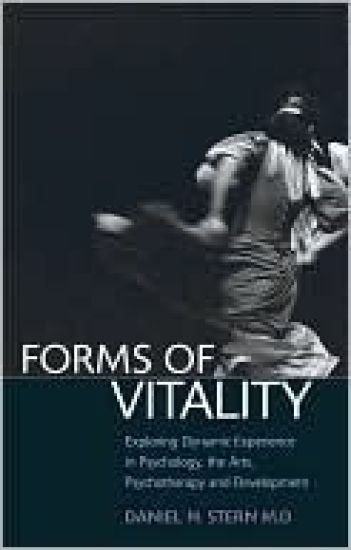
Forms of Vitality

Forms of Vitality

Daniel N. Stern

Oxford University Press
2010
sidottu
In his new book, eminent psychologist - Daniel Stern, author of the classic 'The interpersonal world of the infant', explores the hitherto neglected topic of 'vitality' - that is, the force or power manifested by all living things. Vitality takes on many dynamic forms and permeates daily life, psychology, psychotherapy and the arts, yet what is vitality? We know that it is a manifestation of life, of being alive. We are very alert to its feel in ourselves and its expression in others. Life shows itself in so many different forms of vitality. But just how can we study this phenomenon? Till now, this has been a topic considered impervious to any kind of scientific study, but according to the Stern, it is possible to trace vitality to real physical and mental operations - including movement, time, perception of force - as well as spatial aspects of the movement and its underlying intention. Within this fascinating book he shows how an understanding of vitality can help the psychotherapeutic process (including a look at the developmental origins of forms of vitality) and looks at how these theories of vitality might fit with our current knowledge of the workings of the brain. Truly a tour de force from a brilliant clinician and scientist, Forms of Vitality is a profound and groundbreaking book - one that will be essential reading for psychologists, psychotherapists, and those in the creative arts.
Neuropsychological Aspects of Substance Use Disorders

Neuropsychological Aspects of Substance Use Disorders

Daniel N. Allen; Steven Paul Woods

Oxford University Press Inc
2013
sidottu
In Neuropsychological Aspects of Substance Use Disorders, internationally recognized experts provide clinicians with the most up to date information on the neuropsychology of substance use disorders based on the empirical literature. Substance use disorders continue to be a major health concern in the United States and worldwide, although their causes and effective treatments remain elusive. Research in this area has expanded dramatically over the past two decades and provided insights into psychobiological, behavioral, and genetic factors that contribute to the onset and maintenance of substance use disorders and associated neuropsychological abnormalities. This research has provided a strong empirical foundation that has direct implications for clinical neuropsychological practice and created a need to provide the practitioner with a cogent and up-to-date summary of current developments, which is the goal of this volume. Chapters in this volume are organized into three sections that are designed to provide a translational overview of basic research and treatment findings regarding addictions, neuropsychological and neurological sequalae of the most common substances of abuse, and consideration of special issues that might confound interpretation of neuropsychological test results. Section I provides an overview of addictions, including diagnoses based on the DSM-IV, as well as the most current conceptualizations of addiction from psychobiological, genetic, and behavioral and no economics perspectives, providing the reader with a broad evidence-based conceptual framework. Section II reviews the most common substances of abuse including coverage of structural and functional neuroimaging findings, epidemiological evidence, and neuropsychological sequelae. Substances included in this section represent the most commonly encountered drugs of abuse. Section III includes coverage of the number of special topics, including specific issues related to psychiatric, medical, and neurological comorbidities. Topics included in this section represent areas of common concerns faced by clinical neuropsychologists in the interpretation and application of neuropsychological test results.
Toward a Science of Human Nature

Toward a Science of Human Nature

Daniel N. Robinson

Columbia University Press
1982
sidottu
Robinson unfolds the vision of four influential writers on psychology---J.S. Mill, F. Hegel, Wilhelm Wundt, and William James---who considered the world, its persons and problems, its possibilities and conflicts, its scientific facts and its moral ambiguities, and proceeded to devise a means by which to improve it. Robinson shows how in thinking about psychology, these individuals provided an intellectual context within which the discipline could be refined.
Toward a Science of Human Nature

Toward a Science of Human Nature

Daniel N. Robinson

Columbia University Press
1982
pokkari
Robinson unfolds the vision of four influential writers on psychology---J.S. Mill, F. Hegel, Wilhelm Wundt, and William James---who considered the world, its persons and problems, its possibilities and conflicts, its scientific facts and its moral ambiguities, and proceeded to devise a means by which to improve it. Robinson shows how in thinking about psychology, these individuals provided an intellectual context within which the discipline could be refined.
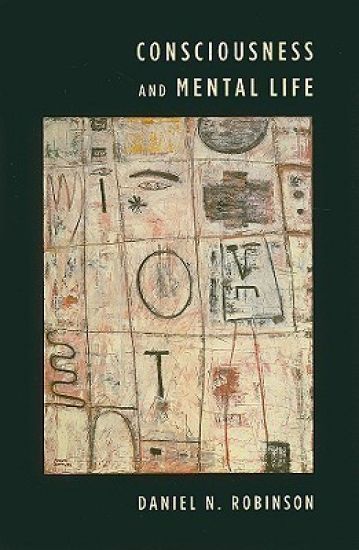
Consciousness and Mental Life

Consciousness and Mental Life

Daniel N. Robinson

Columbia University Press
2007
sidottu
In recent decades, issues that reside at the center of philosophical and psychological inquiry have been absorbed into a scientific framework variously identified as "brain science," "cognitive science," and "cognitive neuroscience." Scholars have heralded this development as revolutionary, but a revolution implies an existing method has been overturned in favor of something new. What long-held theories have been abandoned or significantly modified in light of cognitive neuroscience? Consciousness and Mental Life questions our present approach to the study of consciousness and the way modern discoveries either mirror or contradict understandings reached in the centuries leading up to our own. Daniel N. Robinson does not wage an attack on the emerging discipline of cognitive science. Rather, he provides the necessary historical context to properly evaluate the relationship between issues of consciousness and neuroscience and their evolution over time. Robinson begins with Aristotle and the ancient Greeks and continues through to Rene Descartes, David Hume, William James, Daniel Dennett, John Searle, Richard Rorty, Hilary Putnam, and Derek Parfit. Approaching the issue from both a philosophical and a psychological perspective, Robinson identifies what makes the study of consciousness so problematic and asks whether cognitive neuroscience can truly reveal the origins of mental events, emotions, and preference, or if these occurrences are better understood by studying the whole person, not just the brain. Well-reasoned and thoroughly argued, Consciousness and Mental Life corrects many claims made about the success of brain science and provides a valuable historical context for the study of human consciousness.
Systems That Learn

Systems That Learn

Daniel N. Osherson; Michael Stob; Scott Weinstein

Bradford Books
1990
pokkari
A mathematical framework for the study of learning in a variety of domains.Systems That Learn presents a mathematical framework for the study of learning in a variety of domains. It provides the basic concepts and techniques of learning theory as well as a comprehensive account of what is currently known about a variety of learning paradigms.
An Intellectual History of Psychology

An Intellectual History of Psychology

Daniel N. Robinson

University of Wisconsin Press
1995
nidottu
An Intellectual History of Psychology, already a classic in its field, is now available in a concise third edition. It presents psychological ideas as part of a greater web of thinking throughout history about the essentials of human nature, interwoven with ideas from philosophy, science, religion, art, literature, and politics.Daniel N. Robinson demonstrates that from the dawn of rigorous and self-critical inquiry in ancient Greece, reflections about human nature have been inextricably linked to the cultures from which they arose, and each definable historical age has added its own character and tone to this long tradition. An Intellectual History of Psychology not only explores the most significant ideas about human nature from ancient to modern times, but also examines the broader social and scientific contexts in which these concepts were articulated and defended. Robinson treats each epoch, whether ancient Greece or Renaissance Florence or Enlightenment France, in its own terms, revealing the problems that dominated the age and engaged the energies of leading thinkers.Robinson also explores the abiding tension between humanistic and scientific perspectives, assessing the most convincing positions on each side of the debate. Invaluable as a text for students and as a stimulating and insightful overview for scholars and practicing psychologists, this volume can be read either as a history of psychology in both its philosophical and aspiring scientific periods or as a concise history of Western philosophy's concepts of human nature.
Mosby's Exam Review for Computed Tomography

Mosby's Exam Review for Computed Tomography

Daniel N. DeMaio

Elsevier - Health Sciences Division
2025
nidottu
Make sure you are prepared for the ARRT CT exam! The thoroughly updated Mosby’s Exam Review for Computed Tomography, 4th Edition, serves as both a study guide and in-depth review. An easy-to-follow outline format covers all content areas on the exam - patient care, imaging procedures, and physics/instrumentation. Three 160-question mock exams are included in the book along with an online test bank of 600+ questions that can be taken in quiz mode with immediate feedback, or in exam mode to simulate the actual exam experience. All questions have rationales that can be viewed in the quiz mode. NEW! Technological focus on reducing patient radiation exposure includes the newest dose-related guidelines NEW! Updated content reflects the latest ARRT CT exam specifications NEW! Thoroughly revised and updated information addresses major technological advances in the field of CT Thorough review in outline format covers all topics on the computed tomography advanced certification exam - patient care, imaging procedures, and physics/instrumentation Practice questions in multiple-choice format, similar to the ARRT exam, help you assess your readiness for the exam and identify areas needing additional study 600+ review questions on the companion Evolve website are available in study and exam mode for additional practice and preparation Rationales for correct and incorrect answers provide the information you need to make the most of the Q&A sections Two-color design helps visually define complex content
Alliance Behavior in the Warsaw Pact

Alliance Behavior in the Warsaw Pact

Daniel N. Nelson

Routledge
2019
sidottu
How do alliances, in the aggregate, "behave"? What explains the actions and performance of alliances? Within alliances, how do members' actions and performance vary, and what explains that variance? This book addresses these questions with respect to one of the world's principal alliances of the late twentieth century, the Warsaw Treaty Organization (WTO), also known as the Warsaw Pact. The author argues that though we understand a great deal about the military hardware of the Warsaw Pact, little is known about its reliability, cohesiveness, and the distribution of military burden within it--all key variables, he argues, in influencing change in alliance behavior. In each chapter he offers a new way to measure one of these variables and suggests possible explanations for variance. In addition, he examines the effect East-West relations have on cohesion and how Warsaw Pact allies have distributed the defense effort in the past. A concluding chapter is devoted to an empirical assessment of Warsaw Pact alliance behavior, combining indicators of cohesion, reliability, and burden-sharing in a general portrait of the WTO as a collective actor in international politics.
Balkan Imbroglio

Balkan Imbroglio

Daniel N Nelson

TAYLOR FRANCIS LTD
2021
sidottu
As Europe underwent extraordinary changes in 1989-1990, the continent's south-eastern region - the Balkans - began once again to draw attention for its ethnic rivalries, its political turmoil and its interstate disputes. Continuing tensions and instability have fostered images of a Balkan imbroglio where regional instability could affect all of Europe. This study offers country-specific and comparative assessments of political trends during this transitional era, placing emphasis on matters of international security, socioeconomic policy and political leadership. Also considered are the requisite conditions for democracy in the role of the military in a civil society, and the manner in which security can be achieved without overarching, hegemonic alliances.