Kirjojen hintavertailu. Mukana 11 244 527 kirjaa ja 12 kauppaa.

Kirjahaku

Etsi kirjoja tekijän nimen, kirjan nimen tai ISBN:n perusteella.

1000 tulosta hakusanalla Daniel R. Varin

Jaime Davidovich in Conversation with Daniel R. Quiles
As a fixture on the SoHo-based experimental art scene of the 1970s and 1980s, Argentine-American video/television-art pioneer and conceptual artist Jaime Davidovich (born 1936) has worked in a broad variety of mediums throughout his long career, including video, painting and installation, while also establishing himself as an activist and TV producer. His weekly variety program, The Live! Show (1979–84), featured performances and interviews with artists such as Laurie Anderson, Eric Bogosian, Tony Oursler and Michael Smith, while other video works included appearances by the artist Stuart Sherman. Davidovich embraced a postmodernist’s eclecticism and a humorous aesthetic. In this lively conversation with scholar Daniel R. Quiles, Davidovich recounts his early years in postwar Argentina, the 1963 coup d’état that led to his relocation to New York and his long, influential career.
A Vision of the Days: Studies in Early Jewish History and Historiography: In Honor of Daniel R. Schwartz
This collection of essays treats many aspects of ancient Jewish history and modern historiography in this area, with an emphasis on the history and literature of the Second Temple period and especially on the writings of Josephus. It is dedicated to Daniel R. Schwarz, and reflects his central academic interests. Additional essays deal with historical and ideological aspects of classical rabbinic literature, with archeological finds and with perceptions of the Jews and Judaism on the part of non-Jews in the Second Temple period and later.
Just do it... right

Just do it... right

Daniel R

Books on Demand
2016
pokkari
Sexualit t ist eine geniale Idee Gottes. Deshalb helfen uns christliche Werte, langfristig von diesem himmlischen Geschenk zu profitieren. "Just do it...right" gibt jungen M nnern konkrete Hilfestellung im Umgang mit der eigenen Geschlechtlichkeit. Der Autor schreibt im zweiten Teil des Buches sehr pers nlich, wie Pornographie sein Leben beeintr chtigte, und wie Gott sein zerbrochenes Herz wieder heilte. Nicht zuletzt enth lt dieses Buch seine au ergew hnliche Love-Story.
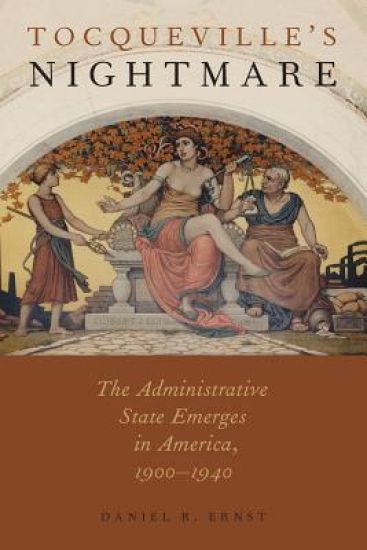
Tocqueville's Nightmare

Tocqueville's Nightmare

Daniel R. Ernst

Oxford University Press Inc
2016
nidottu
Alexis de Tocqueville once warned that "insufferable despotism" would prevail if America ever acquired a national administrative state. Today's Tea Partiers evidently believe that Tocqueville's nightmare came true during the New Deal when radicals created vast bureaucracies that continue to trample on individual freedom. In Tocqueville's Nightmare, Daniel R. Ernst destroys this ahistorical and simplistic narrative. He shows that reformers wanted to purge government of corruption rather than create a socialist utopia. Indeed, they built the principles of individual rights, limited government, and due process into the administrative state. Far from following "un-American" models, they rejected the leading European scheme for constraining government, the Rechtsstaat (a state of rules). They instead equated the rule of law with the rule of courts and counted on judges to review the bases for administrators' decisions. But when leading judges realized that strict judicial review shifted to them decisions best left to experts, even they decided that a "day in court" was unnecessary if individuals had already had a "day in commission" where the fundamentals of due process prevailed. This procedural notion of the rule of law solved the judges' puzzle of reconciling bureaucracy and freedom. The American administrative state is a restrained and elegant solution to a thorny problem and has kept Tocqueville's nightmare at bay.
Humans versus Nature

Humans versus Nature

Daniel R. Headrick

Oxford University Press Inc
2020
sidottu
Since the appearance of Homo sapiens on the planet hundreds of thousands of years ago, human beings have sought to exploit their environments, extracting as many resources as their technological ingenuity has allowed. As technologies have advanced in recent centuries, that impulse has remained largely unchecked, exponentially accelerating the human impact on the environment. Humans versus Nature tells a history of the global environment from the Stone Age to the present, emphasizing the adversarial relationship between the human and natural worlds. Nature is cast as an active protagonist, rather than a mere backdrop or victim of human malfeasance. Daniel R. Headrick shows how environmental changes--epidemics, climate shocks, and volcanic eruptions--have molded human societies and cultures, sometimes overwhelming them. At the same time, he traces the history of anthropogenic changes in the environment--species extinctions, global warming, deforestation, and resource depletion--back to the age of hunters and gatherers and the first farmers and herders. He shows how human interventions such as irrigation systems, over-fishing, and the Industrial Revolution have in turn harmed the very societies that initiated them. Throughout, Headrick examines how human-driven environmental changes are interwoven with larger global systems, dramatically reshaping the complex relationship between people and the natural world. In doing so, he roots the current environmental crisis in the deep past.
Humans versus Nature

Humans versus Nature

Daniel R. Headrick

Oxford University Press Inc
2020
nidottu
Since the appearance of Homo sapiens on the planet hundreds of thousands of years ago, human beings have sought to exploit their environments, extracting as many resources as their technological ingenuity has allowed. As technologies have advanced in recent centuries, that impulse has remained largely unchecked, exponentially accelerating the human impact on the environment. Humans versus Nature tells a history of the global environment from the Stone Age to the present, emphasizing the adversarial relationship between the human and natural worlds. Nature is cast as an active protagonist, rather than a mere backdrop or victim of human malfeasance. Daniel R. Headrick shows how environmental changes--epidemics, climate shocks, and volcanic eruptions--have molded human societies and cultures, sometimes overwhelming them. At the same time, he traces the history of anthropogenic changes in the environment--species extinctions, global warming, deforestation, and resource depletion--back to the age of hunters and gatherers and the first farmers and herders. He shows how human interventions such as irrigation systems, over-fishing, and the Industrial Revolution have in turn harmed the very societies that initiated them. Throughout, Headrick examines how human-driven environmental changes are interwoven with larger global systems, dramatically reshaping the complex relationship between people and the natural world. In doing so, he roots the current environmental crisis in the deep past.
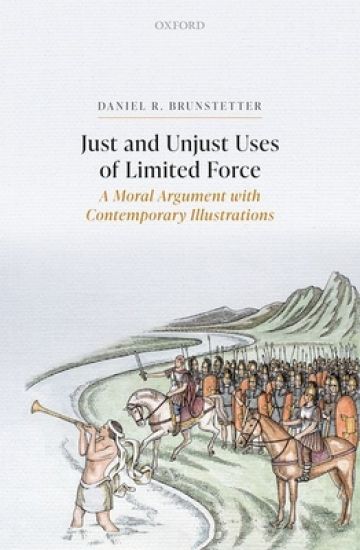
Just and Unjust Uses of Limited Force

Just and Unjust Uses of Limited Force

Daniel R. Brunstetter

Oxford University Press
2021
sidottu
Limited force is different than war: different in scope, strategic purpose, and ethical permissions and restraints. No-fly zones, limited strikes, Special Forces raids, and drone strikes outside 'hot' battlefield have been at the nexus of the moral and strategic debates about just war since the fall of the Berlin Wall but, with the exception of drones, these aspects of the modern arsenal have remained largely undertheorized. Just and Unjust Uses of Limited Force fills that gap by revisiting the major wars animating contemporary just war scholarship (Kosovo, Afghanistan, Iraq, the drone 'wars', and Libya) through the lens of limited force and drawing insights from the just war tradition. Looking at these contemporary examples, the book teases out an ethical account of force-short-of-war. It covers the deliberation about whether to use limited force (jus ad vim), restraints that govern its use (jus in vi), when to stop (jus ex vi), and the after-use context (jus post vim). While these moral categories parallel to some extent their just war counterparts of jus ad bellum, jus in bello, jus post bellum, and jus ex bello, the book illustrates how they can be reimagined and recalibrated in a limited force context, while also introducing new principles specific to the dilemmas associated with escalation and risk. As the argument unfolds, the reader will be presented with a view of limited force as a moral alternative to war, exposed to a series of dilemmas regarding when and how limited force is used, and provided with a more precise and morally enriched vocabulary to talk about limited force and the responsibilities its use entails.
The Tentacles of Progress

The Tentacles of Progress

Daniel R. Headrick

Oxford University Press Inc
1990
nidottu
Daniel Headrick examines why the massive transfer of Western technology to European colonies did not spark an industrial revolution in those countries. Rather than spurring economic progress, he argues, the transfer of stock technology between 1850 and 1940 caused the traditional self-sufficient economies of the colonial regions to be stuck in a state of underdevelopment, a legacy which burdens these countries to this day.
The Invisible Weapon

The Invisible Weapon

Daniel R. Headrick

Oxford University Press Inc
1992
sidottu
Telecommunication is, and always has been, a political technology, as the timely flow of information is a vital instrument of power. This book examines the political history of telecommunications between 1851, the year the first telegraph cable linked France and Britain, and the end of World War II. Headrick argues that telecommunication gives people options, not orders. During periods of peace, cables and radio were, as many had predicted, instruments of peace; in times of tension, they became instruments of politics, tools for rival interests, and weapons of war. the book illuminates the political aspects of information technology: the speed of telegraphy, which could diffuse conflicts in far-flung empires, but which also hastened the deterioration of diplomacy on the brink of the First World War; the broad coverage of radio, which increased public knowledge and public pressure on governments, and consequently the political interest in controlling news; and the security of telecommunications, which made communications strategy, communications intelligence, and cryptography decisive tools during the two World Wars.
An Introduction to Bach Studies

An Introduction to Bach Studies

Daniel R. Melamed

Oxford University Press Inc
1998
sidottu
This volume is a guide to the resources and materials of Bach scholarship, both for the non-specialist wondering where to begin in the enormous literature on J.S. Bach, and for Bach specialists looking for a convenient and up-to-date survey of the field. It describes the tools of Bach research and how to use them, and suggests how to get started in such research by describing the principal areas of research and citing the essential literature on each piece and topic.Subjects covered include bibliographic tools of Bach research and sources of literature; Bach's family: Bach biographies; places Bach lived and worked; Bach's teaching; the liturgy; Bach source studies and the transmission of his music; repertory and editions; genres and individual vocal andinstrumental works; the reception and analysis of Bach's music; and many others.
When Information Came of Age

When Information Came of Age

Daniel R. Headrick

Oxford University Press Inc
2001
sidottu
Although the Information Age is often described as a new era, a cultural leap springing directly from the invention of modern computers, it is simply the latest step in a long cultural process. Its conceptual roots stretch back to the profound changes that occurred during the Age of Reason and Revolution. When Information Came of Age argues that the key to the present era lies in understanding the systems developed in the eighteenth and early nineteenth centuries to gather, store, transform, display, and communicate information. The book provides a concise and readable survey of the many conceptual developments between 1700 and 1850 and draws connections to leading technologies of today. It documents three breakthroughs in information systems that date to the period: the classification and nomenclature of Linneaus, the chemical system devised by Lavoisier, and the metric system. It shows how eighteenth-century political arithmetricians and demographers pioneered statistics and graphs as a means for presenting data succinctly and visually. It describes the transformation of cartography from art to science as it incorporated new methods for determining longitude at sea and new data on the measure the arc of the meridian on land. Finally, it looks at the early steps in codifying and transmitting information, including the development of dictionaries, the invention of semaphore telegraphs and naval flag signaling, and the conceptual changes in the use and purpose of postal services. When Information Came of Age shows that like the roots of democracy and industrialization, the foundations of the Information Age were built in the eighteenth and early nineteenth century.
When Information Came of Age

When Information Came of Age

Daniel R. Headrick

Oxford University Press Inc
2002
nidottu
Although the Information Age is often described as a new era, a cultural leap springing directly from the invention of modern computers, it is simply the latest step in a long cultural process. Its conceptual roots stretch back to the profound changes that occurred during the Age of Reason and Revolution. When Information Came of Age argues that the key to the present era lies in understanding the systems developed in the eighteenth and early nineteenth centuries to gather, store, transform, display, and communicate information. The book provides a concise and readable survey of the many conceptual developments between 1700 and 1850 and draws connections to leading technologies of today. It documents three breakthroughs in information systems that date to the period: the classification and nomenclature of Linneaus, the chemical system devised by Lavoisier, and the metric system. It shows how eighteenth-century political arithmetricians and demographers pioneered statistics and graphs as a means for presenting data succinctly and visually. It describes the transformation of cartography from art to science as it incorporated new methods for determining longitude at sea and new data on the measure the arc of the meridian on land. Finally, it looks at the early steps in codifying and transmitting information, including the development of dictionaries, the invention of semaphore telegraphs and naval flag signaling, and the conceptual changes in the use and purpose of postal services. When Information Came of Age shows that like the roots of democracy and industrialization, the foundations of the Information Age were built in the eighteenth and early nineteenth century.
Technology

Technology

Daniel R. Headrick

Oxford University Press Inc
2009
sidottu
Today technology has created a world of dazzling progress, growing disparities of wealth and poverty, and looming threats to the environment. Technology: A World History offers an illuminating backdrop to our present moment--a brilliant history of invention around the globe. Historian Daniel R. Headrick ranges from the Stone Age and the beginnings of agriculture to the Industrial Revolution and the electronic revolution of the recent past. In tracing the growing power of humans over nature through increasingly powerful innovations, he compares the evolution of technology in different parts of the world, providing a much broader account than is found in other histories of technology. We also discover how small changes sometimes have dramatic results--how, for instance, the stirrup revolutionized war and gave the Mongols a deadly advantage over the Chinese. And how the nailed horseshoe was a pivotal breakthrough for western farmers. Enlivened with many illustrations, Technology offers a fascinating look at the spread of inventions around the world, both as boons for humanity and as weapons of destruction.
Technology

Technology

Daniel R. Headrick

Oxford University Press Inc
2009
nidottu
Today technology has created a world of dazzling progress, growing disparities of wealth and poverty, and looming threats to the environment. Technology: A World History offers an illuminating backdrop to our present moment—a brilliant history of invention around the globe. Historian Daniel R. Headrick ranges from the Stone Age and the beginnings of agriculture to the Industrial Revolution and the electronic revolution of the recent past. In tracing the growing power of humans over nature through increasingly powerful innovations, he compares the evolution of technology in different parts of the world, providing a much broader account than is found in other histories of technology. We also discover how small changes sometimes have dramatic results—how, for instance, the stirrup revolutionized war and gave the Mongols a deadly advantage over the Chinese. And how the nailed horseshoe was a pivotal breakthrough for western farmers. Enlivened with many illustrations, Technology offers a fascinating look at the spread of inventions around the world, both as boons for humanity and as weapons of destruction.
Oxford Handbook of Head and Neck Anatomy

Oxford Handbook of Head and Neck Anatomy

Daniel R. van Gijn; Jonathan Dunne

Oxford University Press
2022
muu
The Oxford Handbook of Head and Neck Anatomy offers a succinct yet comprehensive quick reference guide with over 400 schematic colour and grey-scale illustrations. It tackles the notoriously difficult three-dimensional anatomy of the head and neck and provides essential clinico-anatomical correlates, etymology and background insight to help the reader easily remember complex features. Written and illustrated throughout with an awareness of the difficulties faced in linking the anatomy on the page with real cases seen in day-to-day clinical practice, this handbook is an essential resource for trainees and students at all levels.
The Women of the Moon

The Women of the Moon

Daniel R. Altschuler; Fernando J. Ballesteros

Oxford University Press
2019
sidottu
Philosophers and poets in times past tried to figure out why the stainless moon "smoothly polished, like a diamond" in Dante's words, had stains. The agreed solution was that, like a mirror, it reflected the imperfect Earth. Today we smile, but it was a clever way to understand the Moon in a manner that was consistent with the beliefs of their age. The Moon is no longer the "in" thing. We see it as often as the Sun and give it little thought — we've become indifferent. However, the Moon does reflect more than just sunlight. The Moon, or more precisely the nomenclature of lunar craters, still holds up a mirror to an important aspect of human history. Of the 1586 craters that have been named honoring philosophers and scientists, only 28 honor a woman. These 28 women of the Moon present us with an opportunity to meditate on this gap, but perhaps more significantly, they offer us an opportunity to talk about their lives, mostly unknown today.
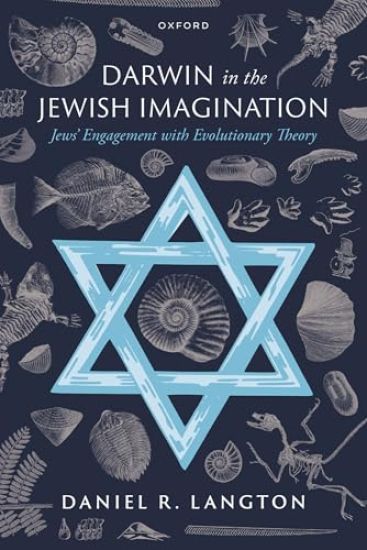
Darwin in the Jewish Imagination

Darwin in the Jewish Imagination

Daniel R. Langton

Oxford University Press
2025
sidottu
Darwin in the Jewish Imagination provides an overview of Jewish responses to Darwinian evolution, one of the most transformative and challenging ideas of the industrial age. Spanning a century of intellectual and cultural history, it examines how Jewish thinkers-traditionalists, reformers, secularists, mystics, and philosophers-grappled with the profound implications of evolutionary theory for their religious beliefs and cultural identities. The book offers close readings of key figures and debates from Europe to the United States, situating them within the broader contexts of the religion-science controversy, Jewish-Christian interfaith relations, and the intellectual challenges of modernity. A central theme is the pan(en)theistic tendency evident in Jewish thought, reflecting a vision of God as intimately connected with the evolving universe and its natural laws. It explores how Jewish thinkers reinterpreted foundational concepts such as creation, divine action, and human morality in light of Darwin's ideas. This interdisciplinary work not only illuminates how Jewish thought adapted to evolutionary theory but also reveals the broader cultural and theological exchanges shaping modern Judaism. By examining these responses, the book sheds light on how science and Jewish religion have engaged in an enriching dialogue, with profound consequences for modern Jewish thought, belief, and identity.