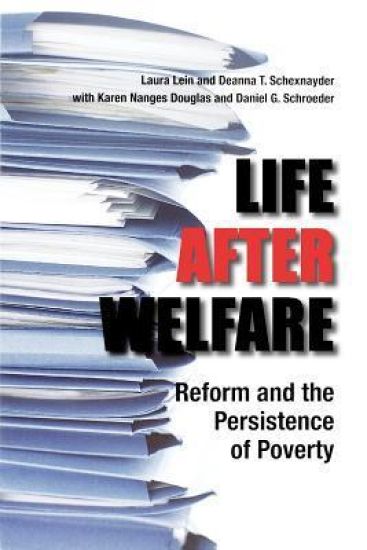
A Choice Outstanding Academic BookIn the decade since President Clinton signed the Personal Responsibility and Work Opportunity Reconciliation Act of 1996 into law-amidst promises that it would "end welfare as we know it"-did the reforms ending entitlements and moving toward time limits and work requirements lift Texas families once living on welfare out of poverty, or merely strike their names from the administrative rolls?Under welfare reform, Texas continued with low monthly payments and demanding eligibility criteria. Many families who could receive welfare in other states do not qualify in Texas, and virtually any part-time job makes a family ineligible. In Texas, most families who leave welfare remain in or near poverty, and many are likely to return to the welfare rolls in the future.This compelling work, which follows 179 families after leaving welfare, is set against a backdrop of multiple types of data and econometric modeling. The authors' multi-method approach draws on administrative data from nine programs serving low-income families and a statewide survey of families who have left welfare. Survey data on health problems, transportation needs, and child-care issues shed light on the patterns of employment and welfare use seen in the administrative data. In their lives after welfare, the families chronicled here experience poverty even when employed; a multiplicity of barriers to employment that work to exacerbate one another; and a failing safety net of basic human services as they attempt to sustain low-wage employment.
The idea for this Common Rule grew out of the realization that many of us have become human doings, and have forgotten that we are actually supposed to be human beings first. The Common Rule helps us examine what it means to be a human being at the most basic levels, build on that knowledge to find our True Self, and then apply it in our own unique ways, serving as models of what life could be - a life of seeing deeply, living deeply, and loving deeply - a life that values relationships more than things, and ensures the dignity and respect of all persons. While this booklet was developed for the members of the Community of the Gospel, it can also be used by anyone seeking a foundation for a loving, spiritually-based life.
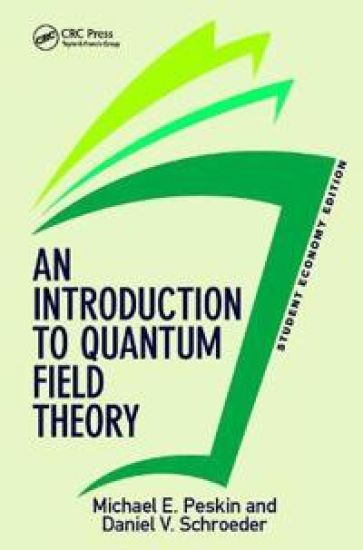
An Introduction to Quantum Field Theory is a textbook intended for the graduate physics course covering relativistic quantum mechanics, quantum electrodynamics, and Feynman diagrams. The authors make these subjects accessible through carefully worked examples illustrating the technical aspects of the subject, and intuitive explanations of what is going on behind the mathematics. After presenting the basics of quantum electrodynamics, the authors discuss the theory of renormalization and its relation to statistical mechanics, and introduce the renormalization group. This discussion sets the stage for a discussion of the physical principles that underlie the fundamental interactions of elementary particle physics and their description by gauge field theories.
Reprint of the original, first published in 1859. The publishing house Anatiposi publishes historical books as reprints. Due to their age, these books may have missing pages or inferior quality. Our aim is to preserve these books and make them available to the public so that they do not get lost.
Reprint of the original, first published in 1859. The publishing house Anatiposi publishes historical books as reprints. Due to their age, these books may have missing pages or inferior quality. Our aim is to preserve these books and make them available to the public so that they do not get lost.