Kirjojen hintavertailu. Mukana 11 244 527 kirjaa ja 12 kauppaa.

Kirjahaku

Etsi kirjoja tekijän nimen, kirjan nimen tai ISBN:n perusteella.

1000 tulosta hakusanalla Daniel W. Whetstone

Frontier Editor

Frontier Editor

Daniel W. Whetstone

Hassell Street Press
2021
sidottu
This work has been selected by scholars as being culturally important and is part of the knowledge base of civilization as we know it.This work is in the public domain in the United States of America, and possibly other nations. Within the United States, you may freely copy and distribute this work, as no entity (individual or corporate) has a copyright on the body of the work.Scholars believe, and we concur, that this work is important enough to be preserved, reproduced, and made generally available to the public. To ensure a quality reading experience, this work has been proofread and republished using a format that seamlessly blends the original graphical elements with text in an easy-to-read typeface.We appreciate your support of the preservation process, and thank you for being an important part of keeping this knowledge alive and relevant.
Daniel Kelly

Daniel Kelly

Daniel W. Kelly

Kodansha International Ltd
2010
sidottu
Daniel Kelly has won worldwide renown for his printmaking and his large paintings. This book catalogues Kelly's work from 1977 onwards in 3 parts: Painting: 44 colour plates of his finest works; Printmaking: 42 colour plates of the best of his prints; and Print Catalogue Raisonne, a catalogue of all his editioned prints from 1977 to 2009. Daniel Kelly has won worldwide renown for his printmaking and his striking, large paintings. His work has been purchased by major art institutions worldwide, from the Metropolitan Museum of Art, to the Los Angeles County Museum of
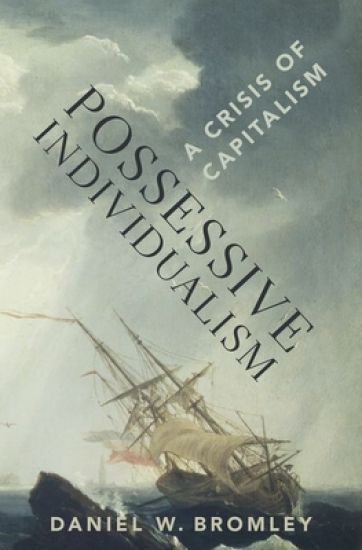
Possessive Individualism

Possessive Individualism

Daniel W. Bromley

Oxford University Press Inc
2019
sidottu
Anxiety and alienation threaten modern democracies. Political anger runs rampant in the United States, Britain voted to leave the European Union, authoritarian governments control several European countries, and millions of desperate migrants are streaming north out of the Middle East, Africa, and Latin America. Many people blame stagnant household incomes and economic inequality. However, Possessive Individualism argues that the origins of world disorder are in the failure of the Enlightenment to anticipate the acquisitive individual as a creature of global capitalism. Daniel Bromley provides a fundamental critique of contemporary capitalism to explain why the world now finds itself in widespread disorder. Capitalism's basic flaw, he argues, is "possessive individualism." Glorification of the rational individual motivated by acquisitiveness prevents the adoption of necessary government programs that would ease the economic burden on beleaguered households. Meanwhile, possessive individualism enables managerial capitalism-controlled by the "one percent"-to suppress wages and salaries, embrace automation, and move jobs overseas. Capitalism is no longer an engine of improved livelihoods and social hope. Drawing on evolutionary institutional economics and political theory this book offers two remedies to the crisis of modern capitalism. Escape from the crisis requires that the isolated acquisitive individual rediscovers a sense of loyalty to others-as neighbors, as colleagues, and as participants in the shared social process of living. Escape also requires that the private firm be reimagined as a public trust in which the economic well-being of employees becomes a central part of its purpose. In the absence of these dual transformations, capitalism as we know it cannot endure.
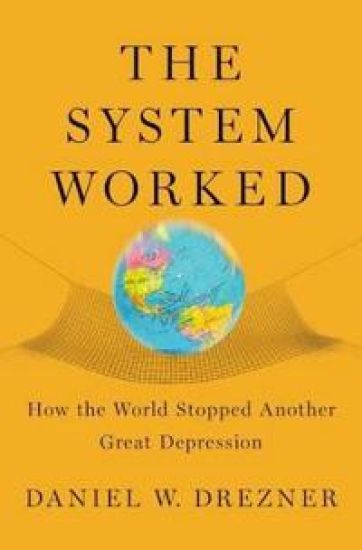
The System Worked

The System Worked

Daniel W. Drezner

Oxford University Press Inc
2016
nidottu
International institutions, from the International Monetary Fund to the International Olympic Committee, are perceived as bastions of sclerotic mediocrity at best and outright corruption at worst, and this perception is generally not far off the mark. In the wake of the 2008 financial crash, Daniel W. Drezner, like so many others, looked at the smoking ruins of the global economy and wondered why global economic governance structure had failed so spectacularly, and what could be done to reform them in the future. But then a funny thing happened. As he surveyed their actions in the wake of the crash, he realized that the evidence pointed to the exact opposite conclusion: global economic governance had succeeded. In The System Worked, Drezner, a renowned political scientist and international relations expert, contends that despite the massive scale and reverberations of this latest crisis (larger, arguably, than those that precipitated the Great Depression), the global economy has bounced back remarkably well. Examining the major resuscitation efforts by the G-20 IMF, WTO, and other institutions, he shows that, thanks to the efforts of central bankers and other policymakers, the international response was sufficiently coordinated to prevent the crisis from becoming a full-fledged depression. Yet the narrative about the failure of multilateral economic institutions persists, both because the Great Recession affected powerful nations whose governments managed their own economies poorly, and because the most influential policy analysts who write the books and articles on the crisis hail from those nations. Nevertheless, Drezner argues, while it's true that the global economy is still fragile, these institutions survived the "stress test" of the financial crisis, and may have even become more resilient and valuable in the process. Bucking the conventional wisdom about the new "G-Zero World," Drezner rehabilitates the image of the much-maligned international institutions and demolishes some of the most dangerous myths about the financial crisis. The System Worked is a vital contribution to our understanding of an area where the stakes could not be higher.
The Ideas Industry

The Ideas Industry

Daniel W. Drezner

Oxford University Press Inc
2019
nidottu
The public intellectual, as a person and ideal, has a long and storied history. Writing in venues like the New Republic and Commentary, such intellectuals were always expected to opine on a broad array of topics, from foreign policy to literature to economics. Yet in recent years a new kind of thinker has supplanted that archetype: the thought leader. Equipped with one big idea, thought leaders focus their energies on TED talks rather than highbrow periodicals. How did this shift happen? In The Ideas Industry, Daniel W. Drezner points to the roles of political polarization, heightened inequality, and eroding trust in authority as ushering in the change. In contrast to public intellectuals, thought leaders gain fame as single-idea merchants. Their ideas are often laudable and highly ambitious: ending global poverty by 2025, for example. But instead of a class composed of university professors and freelance intellectuals debating in highbrow magazines, thought leaders often work through institutions that are closed to the public. They are more immune to criticism--and in this century, the criticism of public intellectuals also counts for less. Three equally important factors that have reshaped the world of ideas have been waning trust in expertise, increasing political polarization and plutocracy. The erosion of trust has lowered the barriers to entry in the marketplace of ideas. Thought leaders don't need doctorates or fellowships to advance their arguments. Polarization is hardly a new phenomenon in the world of ideas, but in contrast to their predecessors, today's intellectuals are more likely to enjoy the support of ideologically friendly private funders and be housed in ideologically-driven think tanks. Increasing inequality as a key driver of this shift: more than ever before, contemporary plutocrats fund intellectuals and idea factories that generate arguments that align with their own. But, while there are certainly some downsides to the contemporary ideas industry, Drezner argues that it is very good at broadcasting ideas widely and reaching large audiences of people hungry for new thinking. Both fair-minded and trenchant, The Ideas Industry will reshape our understanding of contemporary public intellectual life in America and the West.
Rebuilding Zion

Rebuilding Zion

Daniel W. Stowell

Oxford University Press Inc
1998
sidottu
During the American Civil War and its aftermath, Southern evangelicals remained convinced that their cause was both Christian and just. This position became more entrenched as Northern evangelicals entered the South after the war, aiming to save freedmen. Author Daniel Stowell plots the conflict that resulted from these competing visions of the religious reconstruction of the South. By demonstrating how the Southern vision eventually came to predominate, he shows how the Southern Churches became one of the principal bulwarks in the creation of the myth of the "Lost Cause," Southern honour, and curious moral righteousness of the South's treatment of both slave and freedman.
Rebuilding Zion

Rebuilding Zion

Daniel W. Stowell

Oxford University Press Inc
2001
nidottu
Both the North and the South viewed the Civil War in Christian terms. Each side believed that its fight was just, that God favored its cause. Rebuilding Zion is the first study to explore simultaneously the reaction of southern white evangelicals, northern white evangelicals, and Christian freedpeople to Confederate defeat. As white southerners struggled to assure themselves that the collapse of the Confederacy was not an indication of God's stern judgment, white northerners and freedpeople were certain that it was. Author Daniel W. Stowell tells the story of the religious reconstruction of the South following the war, a bitter contest between southern and northern evangelicals, at the heart of which was the fate of the freedpeople's souls and the southern effort to maintain a sense of sectional identity. Central to the southern churches' vision of the Civil War was the idea that God had not abandoned the South; defeat was a Father's stern chastisement. Secession and slavery had not been sinful; rather, it was the radicalism of the northern denominations that threatened the purity of the Gospel. Northern evangelicals, armed with a vastly different vision of the meaning of the war and their call to Christian duty, entered the post-war South intending to save white southerner and ex-slave alike. The freedpeople, however, drew their own providential meaning from the war and its outcome. The goal for blacks in the postwar period was to establish churches for themselves separate from the control of their former masters. Stowell plots the conflicts that resulted from these competing visions of the religious reconstruction of the South. By demonstrating how the southern vision eventually came to predominate over, but not eradicate, the northern and freedpeople's visions for the religious life of the South, he shows how the southern churches became one of the principal bulwarks of the New South, a region marked by intense piety and intense racism throughout the twentieth century.
The System Worked

The System Worked

Daniel W. Drezner

Oxford University Press Inc
2014
sidottu
Global governance institutions, from the International Monetary Fund to the International Olympic Committee, are little loved. They are perceived as bastions of sclerotic mediocrity at best and outright corruption at worst, and this perception is generally not far off the mark. In the wake of the 2008 financial crash, Daniel W. Drezner, like so many others, looked at the smoking ruins of the global economy and wondered why global economic governance institutional had failed so spectacularly, and what could be done to reform them in the future. But then a funny thing happened. As he surveyed their actions in the wake of the crash, he realized that the evidence pointed to the exact opposite conclusion: global economic governance had succeeded. In The System Worked, Drezner, a renowned political scientist and international relations expert, contends that despite the massive scale and reverberations of this latest crisis (larger, arguably, than those that precipitated the Great Depression), the global economy has bounced back remarkably well. Examining the major resuscitation efforts by the G-20 IMF, WTO and other institutions, he shows that, thanks to the efforts of central bankers and other policymakers, the international response was sufficiently coordinated to prevent the crisis from becoming a full-fledged depression. Yet the narrative about the failure of multilateral economic institutions persist, largely because the Great Recession most affected powerful nations whose governments made poor decisions in the management of their own economies. Also, the most influential policy analysts who write the books and articles on the crisis hail from those nations. Nevertheless, Drezner argues, while it's true that the global economy is still fragile, these institutions survived the "stress test" of the financial crisis, and may have even become more resilient and valuable in the process. Bucking the conventional wisdom about the new "G-Zero World," Drezner rehabilitates the image of the much-maligned global economic governance institutions and demolishes some of the most dangerous myths about the financial crisis. The System Worked is a vital contribution to our understanding of an area where the stakes could not be higher.
Aristotle's Two Systems

Aristotle's Two Systems

Daniel W. Graham

Clarendon Press
1990
nidottu
In this study, Daniel W. Graham addresses two major problems in interpreting Aristotle. First, should we reconcile the apparent inconsistencies of the corpus by assuming an underlying unity of doctrine (unitarianism), or by positing a sequence of developing ideas (developmentalism)? Secondly, what is the relation between the so-called logical works on the one hand and the physical-metaphysical treatises on the other? Although the problems appear to be unrelated, Graham finds that the key to the first lies in the second, and in doing so provides the first major alternative to the unitarian approach since Jaeger's pioneering developmental study of 1923.
The Limits of Sovereignty

The Limits of Sovereignty

Daniel W. Hamilton

University of Chicago Press
2007
sidottu
Americans take for granted that government does not have the right to permanently seize private property without just compensation. Yet for much of American history, such a view constituted the weaker side of an ongoing argument about government sovereignty and individual rights. What brought about this drastic shift in legal and political thought? Daniel W. Hamilton locates that change in the crucible of the Civil War. In the early days of the war, Congress passed the First and Second Confiscation Acts, authorizing the Union to seize private property in the rebellious states of the Confederacy, and the Confederate Congress responded with the broader Sequestration Act. The competing acts fueled a fierce, sustained debate among legislators and lawyers about the principles underlying alternative ideas of private property and state power, a debate which by 1870 was increasingly dominated by today’s view of more limited government power. Through its exploration of this little-studied consequence of the debates over confiscation during the Civil War, The Limits of Sovereignty will be essential to an understanding of the place of private property in American law and legal history.
Biology's First Law

Biology's First Law

Daniel W. McShea; Robert N. Brandon

University of Chicago Press
2010
sidottu
Life on earth is characterized by three striking phenomena that demand explanation: adaptation - the marvelous fit between organism and environment; diversity - the great variety of organisms; and complexity - the enormous intricacy of their internal structure. Natural selection explains adaptation. But what explains diversity and complexity? Daniel W. McShea and Robert N. Brandon argue that there exists in evolution a spontaneous tendency toward increased diversity and complexity, one that acts whether natural selection is present or not. They call this tendency a biological law - the Zero-Force Evolutionary Law, or ZFEL. This law unifies the principles and data of biology under a single framework and invites a reconceptualization of the field of the same sort that Newton's First Law brought to physics. "Biology's First Law" shows how the ZFEL can be applied to the study of diversity and complexity and examines its wider implications for biology. Intended for evolutionary biologists, paleontologists, and other scientists studying complex systems, and written in a concise and engaging format that speaks to students and interdisciplinary practitioners alike, this book will also find an appreciative audience in the philosophy of science.
Biology's First Law

Biology's First Law

Daniel W. McShea; Robert N. Brandon

University of Chicago Press
2010
nidottu
Life on earth is characterized by three striking phenomena that demand explanation: adaptation - the marvelous fit between organism and environment; diversity - the great variety of organisms; and complexity - the enormous intricacy of their internal structure. Natural selection explains adaptation. But what explains diversity and complexity? Daniel W. McShea and Robert N. Brandon argue that there exists in evolution a spontaneous tendency toward increased diversity and complexity, one that acts whether natural selection is present or not. They call this tendency a biological law - the Zero-Force Evolutionary Law, or ZFEL. This law unifies the principles and data of biology under a single framework and invites a reconceptualization of the field of the same sort that Newton's First Law brought to physics. "Biology's First Law" shows how the ZFEL can be applied to the study of diversity and complexity and examines its wider implications for biology. Intended for evolutionary biologists, paleontologists, and other scientists studying complex systems, and written in a concise and engaging format that speaks to students and interdisciplinary practitioners alike, this book will also find an appreciative audience in the philosophy of science.
The Toddler-In-Chief

The Toddler-In-Chief

Daniel W Drezner

University of Chicago Press
2020
pokkari
"It may be cold comfort in this chaotic era, but Americans should know that there are adults in the room. . . . And we are trying to do what's right even when Donald Trump won't."--An anonymous senior administrative official in an op-ed published in a New York Times op-ed, September 5, 2018 Every president faces criticism and caricature. Donald Trump, however, is unique in that he is routinely characterized in ways more suitable for a toddler. What's more, it is not just Democrats, pundits, or protestors who compare the president to a child; Trump's staffers, subordinates, and allies on Capitol Hill also describe Trump like a small, badly behaved preschooler. In April 2017, Daniel W. Drezner began curating every example he could find of a Trump ally describing the president like a toddler. So far, he's collected more than one thousand tweets--a rate of more than one a day. In The Toddler-in-Chief, Drezner draws on these examples to take readers through the different dimensions of Trump's infantile behavior, from temper tantrums to poor impulse control to the possibility that the President has had too much screen time. How much damage can really be done by a giant man-baby? Quite a lot, Drezner argues, due to the winnowing away of presidential checks and balances over the past fifty years. In these pages, Drezner follows his theme--the specific ways in which sharing some of the traits of a toddler makes a person ill-suited to the presidency--to show the lasting, deleterious impact the Trump administration will have on American foreign policy and democracy. The "adults in the room" may not be able to rein in Trump's toddler-like behavior, but, with the 2020 election fast approaching, the American people can think about whether they want the most powerful office turned into a poorly run political day care facility. Drezner exhorts us to elect a commander-in-chief, not a toddler-in-chief. And along the way, he shows how we must rethink the terrifying powers we have given the presidency.