Kirjojen hintavertailu. Mukana 11 244 527 kirjaa ja 12 kauppaa.

Kirjahaku

Etsi kirjoja tekijän nimen, kirjan nimen tai ISBN:n perusteella.

790 tulosta hakusanalla Dao Gen Mao

DAO

DAO

PN Books
2023
pokkari
In an era yearning for transparency, accountability, and inclusive decision-making, DAOs powered by ICP technology emerge as a beacon of hope, revolutionizing governance, finance, and society. This groundbreaking book delves into the transformative power of ICP DAOs, empowering you to navigate the decentralized landscape and harness its boundless potential.Uncover the intricacies of ICP DAOs, from their technological foundation rooted in ICP blockchain to their practical implementation. Explore the mechanisms that drive these decentralized organizations, including chain-native governance, the innovative reverse gas model, and the groundbreaking Network Nervous System (NNS). Witness how ICP DAOs are redefining governance models, enabling communities to make informed decisions, shape their own futures, and wield unprecedented control over their collective destinies.Journey through real-world applications of ICP DAOs, from community-driven non-profit organizations fostering social impact initiatives to innovative decentralized finance (DeFi) protocols redefining financial services. Discover how ICP DAOs are unlocking creativity in the arts and entertainment, empowering individuals and communities to collaborate, innovate, and thrive in a truly decentralized ecosystem.Dive into the legal and regulatory considerations surrounding ICP DAOs, gaining insights into intellectual property rights, taxation, and data privacy. Equip yourself with the knowledge to navigate this evolving landscape responsibly and ensure compliance with emerging frameworks.Master the art of implementing and managing ICP DAOs, from designing and deploying canister smart contracts to fostering community engagement, mitigating risks, and optimizing performance. This comprehensive guide empowers you to harness the power of ICP DAOs, contribute to the decentralized revolution, and shape a future of inclusivity, empowerment, and collective prosperity.Embark on a transformative journey with DAO: Empowering Communities with ICP-Powered Decentralization. Empower yourself, your community, and society to embrace a future of decentralized governance, financial freedom, and inclusive decision-making. Together, we can unlock the boundless potential of ICP DAOs and usher in a new era of transparency, accountability, and collective empowerment.
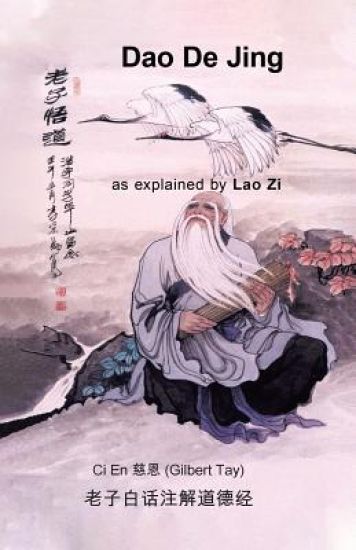
Dao De Jing as explained by Lao Zi

Dao De Jing as explained by Lao Zi

Gilbert Tay

Tellwell Talent
2019
pokkari
At last, the in-depth original meaning of Lao Zi in the Dao De Jing scripture is being studied and translated into English. A number of terminologies used in the original text in Chinese had been analysed, explained and translated into English. Some terms in Chinese without the parallel meaning in English were fully explained and Hanyu Pinyin was used. Examples are 'yin', 'yang', 'hun', 'po', 'jing', 'qi', 'shen' and 'wu-wei'. Lao Zi was the first "Prophet" to explain "Dao" and "Dao cultivation", including nurturing one's moral virtue. Also, the philosophy of governance and military philosophy were also fully explained.
Dao De Jing

Dao De Jing

Laozi

University of California Press
2019
pokkari
The Dao De Jing is one of the richest, most suggestive, and most popular works of philosophy and literature. Composed in China between the sixth and fourth centuries B.C., its enigmatic verses have inspired artists, philosophers, poets, religious thinkers, and general readers past and present. This new translation captures the beauty and nuance of the original work. In addition, the extensive and accessible commentary by Moss Roberts sheds light on the work’s historical and philosophical contexts and shows how the Dao De Jing addresses topics of relevance to our own times, such as politics, statecraft, cosmology, aesthetics, and ethics.
Dao De Jing

Dao De Jing

Laozi; C. C. Tsai; Pico Iyer

Princeton University Press
2020
nidottu
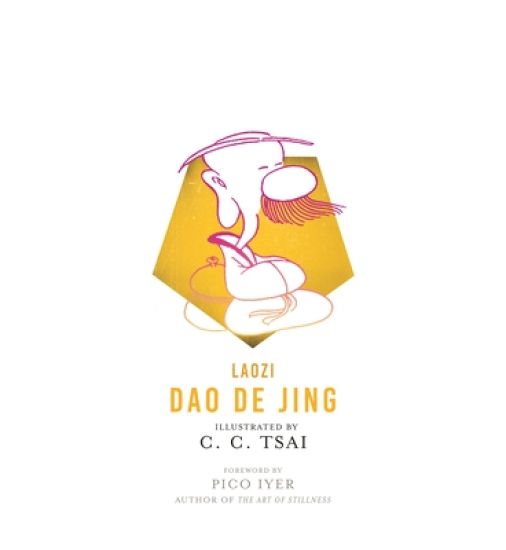
From bestselling cartoonist C. C. Tsai, a delightfully illustrated version of the classic work of Daoist philosophyC. C. Tsai is one of Asia's most popular cartoonists, and his editions of the Chinese classics have sold more than 40 million copies in over twenty languages. Here, he works his magic again with a delightful graphic adaptation of the complete text of Laozi's Dao De Jing, the beloved source of Daoist philosophy. Masterfully transforming Laozi's challenging work into entertaining and enlightening episodes, Tsai offers a uniquely fresh, relevant, and accessible version of one of the world's most influential books.After opening with Laozi's biography from the Shi Ji, Tsai turns the stage over to Laozi, who patiently explains his ideas to his earnest students (and us). Laozi describes the spontaneity of natural processes, the paradoxical effects of ethical precepts, the limits of language, the values of simplicity, and, above all else, how to go with the flow. In brief episodes that tantalize and inspire, he takes us into the subtle complexities of human existence. Ultimately, Laozi, a master visionary, guides us to the mountaintop to reveal an expansive view of life.A marvelous edition of a timeless classic, this book also presents Laozi's original Chinese text in sidebars on each page, enriching the book for readers and students of Chinese without distracting from the English-language cartoons. The text is skillfully translated by Brian Bruya, who also provides an illuminating introduction.
Dao De Jing

Dao De Jing

Gordon Pang

Tai Chi, Qigong Feng Shui Institute
2024
pokkari
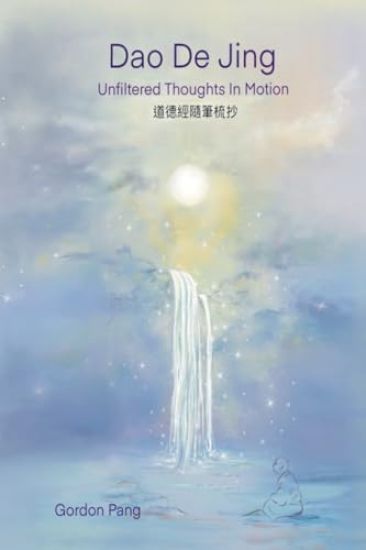
What is Dao De Jing / Tao Te Ching?Dao De Jing or Tao Te Ching, written by the ancient Chinese sage Laozi, is one of the most revered and influential texts in the world. Comprising 81 short chapters, this foundational work of Daoism explores profound concepts of the Dao / Tao (the Way) and De / Te (virtue or moral power), offering timeless wisdom on how to live in harmony with the natural world and the cosmos.It is the second most translated book in the world, after the Bible, and continues to inspire readers with its deep philosophical insights and spiritual guidance. Despite its brevity, the Dao De Jing contains layers of meaning that are often hidden, and its teachings remain central to Daoist thought and practice.Why You'll Love This BookAuthentic Teachings: Based on Master Gordon's direct Daoist lineage and Buddhist background, uncover profound Qi cultivation and spiritual practices.Clear & Engaging: Written in a style that feels like sitting in a discussion with a master.In-depth Commentary: Includes references to seminal works like He Shang Gong, the Xiang'er Commentary, and draws parallels to Buddhist principles.Rare Insights: Reveals esoteric teachings often overlooked in traditional translations.Perfect for Practitioners: Especially resonant for those practicing Tai Chi, Qigong, Neigong, and other spiritual practices.
Dao De Jing

Dao De Jing

WW NORTON CO
2024
sidottu
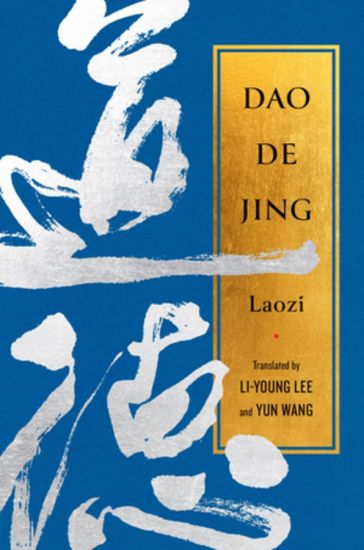
This bold new translation by two brilliant poets offers a contemporary perspective on a timeless masterpiece of Daoist scripture, introducing the Dao De Jing to a new audience while retaining the majesty of the Chinese original. Composed of eighty-one short poems written by the sage Laozi in 400 BC, the Dao De Jing is one of the pillars of Chinese thought, the ultimate “wisdom book” with influence that has spread to the Western world. It can be read as philosophical instructions for living, equally applicable to the recluse and to the aspiring leader of nations. Acclaimed poet Li-Young Lee and poet and scholar Yun Wang illuminate the Dao De Jing as a unified work of art, with a stunning combination of fathomless depths, enlightening insight and vivid beauty. Based on extensive study of ancient Chinese language as well as contemporary scholarship on the Dao De Jing, this revelatory and faithful translation—presented alongside the original Chinese text—reveals its enduring teachings in their profound simplicity, subtlety and balance.
DAO de Jing

DAO de Jing

Laozi

W. W. Norton Company
2026
nidottu
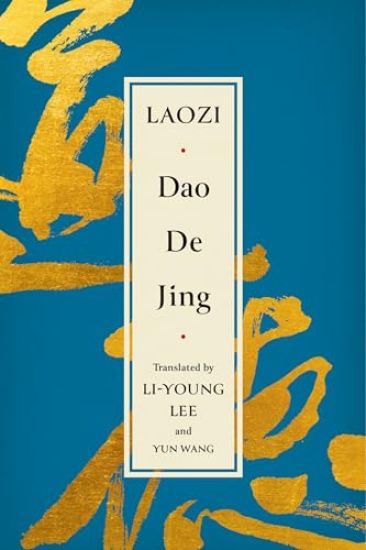
This bold new translation by two brilliant poets offers a contemporary perspective on a timeless masterpiece of Daoist scripture, introducing Dao De Jing to a new audience while retaining the majesty of the Chinese original. Composed of eighty-one short poems written by the sage Laozi in 400 BC, Dao De Jing is one of the pillars of Chinese thought. Acclaimed poet Li-Young Lee and poet and scholar Yun Wang illuminate Dao De Jing as a unified work of art. This revelatory and faithful translation--presented alongside the original Chinese text--reveals its enduring teachings in their profound simplicity, subtlety, and balance.
Dao De Jing

Dao De Jing

Lao Zi

Lulu.com
2017
sidottu
Dao De Jing, or so simply referred to as the Laozi, is a Chinese classic text. The text's true authorship and date of composition or compilation are still debated. The oldest excavated portion dates back to the late 4th century BCE, but modern scholarship dates other parts of the text as having been written, or at least compiled later than the earliest portions of the Zhuangzi. The Tao Te Ching, along with the Zhuangzi, is a fundamental text for both philosophical and religious Taoism, and strongly influenced other schools, such as Legalism, Confucianism, and Chinese Buddhism, which when first introduced into China was largely interpreted through the use of Daoist words and concepts. Many Chinese artists, including poets, painters, calligraphers, and even gardeners, have used the Daodejing as a source of inspiration. Its influence has also spread widely outside East Asia, and it is among the most translated works in world literature.
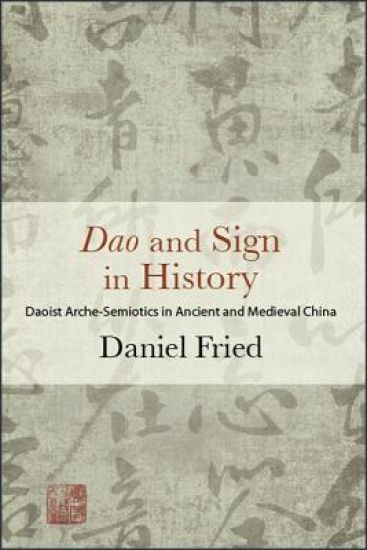
Dao and Sign in History

Dao and Sign in History

Daniel Fried

State University of New York Press
2019
pokkari
Provides a new perspective on important linguistic issues in philosophical and religious Daoism through the comparative lens of twentieth-century European philosophies of language.From its earliest origins in the Dao De Jing, Daoism has been known as a movement that is skeptical of the ability of language to fully express the truth. While many scholars have compared the earliest works of Daoism to language-skeptical movements in twentieth-century European philosophy and have debated to what degree early Daoism does or does not resemble these recent movements, Daniel Fried breaks new ground by examining a much broader array of Daoist materials from ancient and medieval China and showing how these works influenced ideas about language in medieval religion, literature, and politics. Through an extended comparison with a broad sample of European philosophical works, the book explores how ideas about language grow out of a given historical moment and advances a larger argument about how philosophical and religious ideas cannot be divided into "content" and "context."