Kirjojen hintavertailu. Mukana 11 244 527 kirjaa ja 12 kauppaa.

Kirjahaku

Etsi kirjoja tekijän nimen, kirjan nimen tai ISBN:n perusteella.

858 tulosta hakusanalla Dariusz Mitoraj

The New Oxford Handbook of Economic Geography

The New Oxford Handbook of Economic Geography

Dariusz Wojcik

Oxford University Press
2018
sidottu
The first fifteen years of the 21st century have thrown into sharp relief the challenges of growth, equity, stability, and sustainability facing the world economy. In addition, they have exposed the inadequacies of mainstream economics in providing answers to these challenges. This volume gathers over 50 leading scholars from around the world to offer a forward-looking perspective of economic geography to understanding the various building blocks, relationships, and trajectories in the world economy. The perspective is at the same time grounded in theory and in the experiences of particular places. Reviewing state-of-the-art of economic geography, setting agendas, and with illustrations and empirical evidence from all over the world, the book should be an essential reference for students, researchers, as well as strategists and policy makers. Building on the success of the first edition, this volume offers a radically revised, updated, and broader approach to economic geography. With the backdrop of the global financial crisis, finance is investigated in chapters on financial stability, financial innovation, global financial networks, the global map of savings and investments, and financialization. Environmental challenges are addressed in chapters on resource economies, vulnerability of regions to climate change, carbon markets, and energy transitions. Distribution and consumption feature alongside more established topics on the firm, innovation, and work. The handbook also captures the theoretical and conceptual innovations of the last fifteen years, including evolutionary economic geography and the global production networks approach. Addressing the dangers of inequality, instability, and environmental crisis head-on, the volume concludes with strategies for growth and new ways of envisioning the spatiality of economy for the future.
Thick Big Data

Thick Big Data

Dariusz Jemielniak

Oxford University Press
2020
sidottu
The social sciences are becoming datafied. The questions once considered the domain of sociologists are now answered by data scientists operating on large datasets and breaking with methodological tradition, for better or worse. The traditional social sciences, such as sociology or anthropology, are under the double threat of becoming marginalized or even irrelevant, both from new methods of research which require more computational skills and from increasing competition from the corporate world which gains an additional advantage based on data access. However, unlike data scientists, sociologists and anthropologists have a long history of doing qualitative research. The more quantified datasets we have, the more difficult it is to interpret them without adding layers of qualitative interpretation. Big Data therefore needs Thick Data. This book presents the available arsenal of new methods and tools for studying society both quantitatively and qualitatively, opening ground for the social sciences to take the lead in analysing digital behaviour. It shows that Big Data can and should be supplemented and interpreted through thick data as well as cultural analysis. Thick Big Data is critically important for students and researchers in the social sciences to understand the possibilities of digital analysis, both in the quantitative and qualitative area, and to successfully build mixed-methods approaches.
Thick Big Data

Thick Big Data

Dariusz Jemielniak

Oxford University Press
2020
nidottu
The social sciences are becoming datafied. The questions once considered the domain of sociologists are now answered by data scientists operating on large datasets and breaking with methodological tradition, for better or worse. The traditional social sciences, such as sociology or anthropology, are under the double threat of becoming marginalized or even irrelevant, both from new methods of research which require more computational skills and from increasing competition from the corporate world which gains an additional advantage based on data access. However, unlike data scientists, sociologists and anthropologists have a long history of doing qualitative research. The more quantified datasets we have, the more difficult it is to interpret them without adding layers of qualitative interpretation. Big Data therefore needs Thick Data. This book presents the available arsenal of new methods and tools for studying society both quantitatively and qualitatively, opening ground for the social sciences to take the lead in analysing digital behaviour. It shows that Big Data can and should be supplemented and interpreted through thick data as well as cultural analysis. Thick Big Data is critically important for students and researchers in the social sciences to understand the possibilities of digital analysis, both in the quantitative and qualitative area, and to successfully build mixed-methods approaches.
The Global Stock Market

The Global Stock Market

Dariusz Wójcik

Oxford University Press
2011
sidottu
Why do some companies stay out of stock markets? How crucial are stock markets for competition between financial centres? How can local information help investors outperform the market? Whilst mainstream financial economics treats stock markets as consisting of anonymous actors interacting in space, with no consideration of the friction caused by distance or geography, this book offers a comprehensive and up-to-date picture of the global stock market by focusing on the relationships between issuers, investors, and intermediaries, and how these relationships impact on the performance of stock markets and the economy of cities, countries, and the world. The book uses rich data and global case studies to examine the rise of emerging markets, the impact of the global financial crisis, the revolution in the stock exchange business model, and the continued dominance of London and New York as stock market centres. Drawing on economic geography, financial economics, sociology, history, and globalization studies, the book explores the geographical constitution and footprint of stock markets and contributes to the broader debate on the role of stock markets in the global economy. Its conclusions are relevant to investors, companies issuing stocks, exchanges, analysts, investment banks, and policy-makers.
The Global Stock Market

The Global Stock Market

Dariusz Wójcik

Oxford University Press
2012
nidottu
Why do some companies stay out of stock markets? How crucial are stock markets for competition between financial centres? How can local information help investors outperform the market? Whilst mainstream financial economics treats stock markets as consisting of anonymous actors interacting in space, with no consideration of the friction caused by distance or geography, this book offers a comprehensive and up-to-date picture of the global stock market by focusing on the relationships between issuers, investors, and intermediaries, and how these relationships impact on the performance of stock markets and the economy of cities, countries, and the world. The book uses rich data and global case studies to examine the rise of emerging markets, the impact of the global financial crisis, the revolution in the stock exchange business model, and the continued dominance of London and New York as stock market centres. Drawing on economic geography, financial economics, sociology, history, and globalization studies, the book explores the geographical constitution and footprint of stock markets and contributes to the broader debate on the role of stock markets in the global economy. Its conclusions are relevant to investors, companies issuing stocks, exchanges, analysts, investment banks, and policy-makers.
Zygmunt Bauman and the Theory of Culture

Zygmunt Bauman and the Theory of Culture

Dariusz Brzezinski

MCGILL-QUEEN'S UNIVERSITY PRESS
2022
sidottu
One of the most influential intellectuals of the twentieth and twenty-first centuries, sociologist and philosopher Zygmunt Bauman (1925–2017) made reflection on culture a fundamental part of his academic work. He published a substantial number of papers on the topic, and many of his concepts would go on to significantly influence the social sciences and humanities. Bauman began his theoretical studies on culture when working at the University of Warsaw and continued them all his life. Inspired by the many intellectual currents he encountered over his more than six decades of work, Bauman wrote on culture in the contexts of such issues as Marxism and socialism, modernity and the Holocaust, postmodernity and liquid modernity, and contemporary nostalgia. In Zygmunt Bauman and the Theory of Culture Dariusz Brzezinski uses the evolution of Bauman’s theory of culture as a prism through which to offer a comparative analysis, putting Bauman’s work in conversation with the writings of other contemporary intellectuals.In this first comprehensive and critical assessment of Bauman’s lifelong work on culture, Brzezinski includes Bauman’s Polish-language papers and books, as well as his works discovered only posthumously, presenting them to an international audience.
Zygmunt Bauman and the Theory of Culture

Zygmunt Bauman and the Theory of Culture

Dariusz Brzezinski

MCGILL-QUEEN'S UNIVERSITY PRESS
2022
nidottu
One of the most influential intellectuals of the twentieth and twenty-first centuries, sociologist and philosopher Zygmunt Bauman (1925–2017) made reflection on culture a fundamental part of his academic work. He published a substantial number of papers on the topic, and many of his concepts would go on to significantly influence the social sciences and humanities. Bauman began his theoretical studies on culture when working at the University of Warsaw and continued them all his life. Inspired by the many intellectual currents he encountered over his more than six decades of work, Bauman wrote on culture in the contexts of such issues as Marxism and socialism, modernity and the Holocaust, postmodernity and liquid modernity, and contemporary nostalgia. In Zygmunt Bauman and the Theory of Culture Dariusz Brzezinski uses the evolution of Bauman’s theory of culture as a prism through which to offer a comparative analysis, putting Bauman’s work in conversation with the writings of other contemporary intellectuals.In this first comprehensive and critical assessment of Bauman’s lifelong work on culture, Brzezinski includes Bauman’s Polish-language papers and books, as well as his works discovered only posthumously, presenting them to an international audience.
Fathers, Fatherhood and Mental Illness

Fathers, Fatherhood and Mental Illness

Dariusz Galasinski

Palgrave Macmillan
2013
sidottu
Fathers, Fatherhood and Mental Illness provides the first book-length study of fathers' experiences of mental illness, arguing that a discourse analytic focus upon the experience of mental illness is relevant both to social scientists and mental health scholars and practitioners.
Blissful Blindness

Blissful Blindness

Dariusz Tolczyk

INDIANA UNIVERSITY PRESS
2023
sidottu
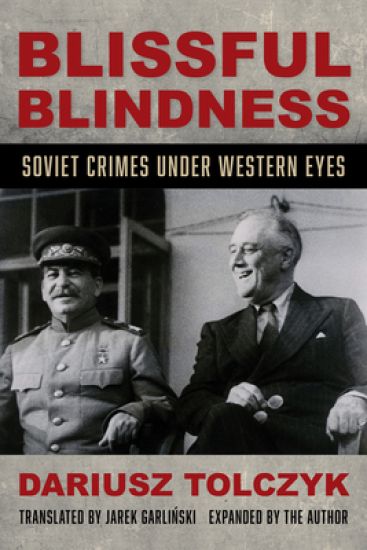
The most heinous Soviet crimes – the Red Terror, brutal collectivization, the Great Famine, the Gulag, Stalin's Great Terror, mass deportations, and other atrocities – were treated in the West as a controversial topic. With the Cold War dichotomy of Western democracy versus Soviet communism deeply imprinted in our minds, we are not always aware that these crimes were very often questioned, dismissed, denied, sometimes rationalized, and even outright glorified in the Western world. Facing a choice of whom to believe –the survivors or Soviet propaganda– many Western opinion leaders chose in favor of Soviet propaganda. Even those who did not believe it behaved sometimes as if they did. Blissful Blindness explores Western reactions (and lack thereof) to Soviet crimes from the Bolshevik revolution to the collapse of Soviet communism in order to understand ideological, political, economic, cultural, personal, and other motivations behind this puzzling phenomenon of willful ignorance. But the significance of Dariusz Tolczyk's book reaches beyond its direct historical focus. Written for audiences not limited to scholars and specialists, this book not only opens one's eyes to rarely examined aspects of the twentieth century but also helps one see how astonishingly relevant this topic is in our contemporary world.
Blissful Blindness

Blissful Blindness

Dariusz Tolczyk

INDIANA UNIVERSITY PRESS
2023
pokkari
The most heinous Soviet crimes – the Red Terror, brutal collectivization, the Great Famine, the Gulag, Stalin's Great Terror, mass deportations, and other atrocities – were treated in the West as a controversial topic. With the Cold War dichotomy of Western democracy versus Soviet communism deeply imprinted in our minds, we are not always aware that these crimes were very often questioned, dismissed, denied, sometimes rationalized, and even outright glorified in the Western world. Facing a choice of whom to believe –the survivors or Soviet propaganda– many Western opinion leaders chose in favor of Soviet propaganda. Even those who did not believe it behaved sometimes as if they did. Blissful Blindness explores Western reactions (and lack thereof) to Soviet crimes from the Bolshevik revolution to the collapse of Soviet communism in order to understand ideological, political, economic, cultural, personal, and other motivations behind this puzzling phenomenon of willful ignorance. But the significance of Dariusz Tolczyk's book reaches beyond its direct historical focus. Written for audiences not limited to scholars and specialists, this book not only opens one's eyes to rarely examined aspects of the twentieth century but also helps one see how astonishingly relevant this topic is in our contemporary world.
Collaborative Society

Collaborative Society

Dariusz Jemielniak; Aleksandra Przegalinska

MIT Press
2020
pokkari
How networked technology enables the emergence of a new collaborative society.Humans are hard-wired for collaboration, and new technologies of communication act as a super-amplifier of our natural collaborative mindset. This volume in the MIT Press Essential Knowledge series examines the emergence of a new kind of social collaboration enabled by networked technologies. This new collaborative society might be characterized as a series of services and startups that enable peer-to-peer exchanges and interactions though technology. Some believe that the economic aspects of the new collaboration have the potential to make society more equitable; others see collaborative communities based on sharing as a cover for social injustice and user exploitation.The book covers the "sharing economy," and the hijacking of the term by corporations; different models of peer production, and motivations to participate; collaborative media production and consumption, the definitions of "amateur" and "professional," and the power of memes; hactivism and social movements, including Anonymous and anti-ACTA protest; collaborative knowledge creation, including citizen science; collaborative self-tracking; and internet-mediated social relations, as seen in the use of Instagram, Snapchat, and Tinder. Finally, the book considers the future of these collaborative tendencies and the disruptions caused by fake news, bots, and other challenges.
See No Evil

See No Evil

Dariusz Tolczyk

Yale University Press
1999
sidottu
Believing that human actions could be controlled by a totalitarian government, Stalin and his followers subjected millions of Soviet citizens to acts of state terrorism and imprisonment in labor camps. But this was not enough. Seeking to control human thought as well, Soviet authorities provided official words and images to legitimize the gulag, distort its moral nature, and even glorify its "necessary" violence. This fascinating book is the first in English to examine official Soviet concentration camp literature from the early 1920s through the mid-1960s. Dariusz Tolczyk probes the evolution of this literature, the totalitarian thinking that inspired it, and the scandalous role played by Russian literary intellectuals who collaborated in its creation.The author considers how Soviet novelists and poets in the 1920s dealt with the Leninist notion that ethics is entirely utilitarian and relative; analyzes the official glorification of the gulag in the early 1930s in such works as White Sea Canal, a composite volume by 36 famous authors praising the use of slave labor; and examines why the subject of the camps became taboo from 1937 to the Khrushchevian thaw of the early 1960s. Tolczyk also provides a masterful account of the problem posed for Soviet censors by Aleksandr Solzhenitsyn’s One Day in the Life of Ivan Denisovich and shows how the failure of the Soviet regime to come to terms with the ethical legacy of the gulag signaled the decline of the totalitarian project.
Atlas of Finance

Atlas of Finance

Dariusz Wojcik; Panagiotis Iliopoulos; Stefanos Ioannou; Liam Keenan; Julien Migozzi; Timothy Monteath; Vladimir Pazitka; Morag Torrance; Michael Urban

YALE UNIVERSITY PRESS
2024
sidottu
A unique illustrated exploration of the development of finance that combines data from every part of the world and covers five thousand years of history “The book is a lot of fun. Data-fixated readers will enjoy unpicking its main content: a series of elegantly produced maps, graphs and other visualisations. These are eclectic in scope and ambitious in intent.”—Jonathan Guthrie, Financial Times From the emergence of money in the ancient world to today’s interconnected landscape of high-frequency trading and cryptocurrency, the story of finance has always taken place on an international stage. Finance is one of the most globalized and networked of human activities, and one of the most important social technologies ever invented. This volume, the first visually based book dedicated to finance, uses graphics and maps to bring the complex and abstract world of finance down to earth, showing how geography is fundamental for understanding finance, and vice versa. It illuminates the people—including Adam Smith, Karl Marx, and John Maynard Keynes—who have shaped our thinking about global finance; brings to life the ways that place-specific histories, laws, regulations, and institutions influence finance; shows how finance relates to innovation, globalization, and environmental change; and details how finance plays a key part in drawing the landscape of uneven development, inequality, and instability. The Atlas of Finance, with word and image, will change the way you view both your money and your world.
Jazz Theory, Second Edition (Textbook and Workbook Package)
Jazz Theory: From Basic to Advanced Study, Second Edition is a comprehensive textbook for those with no previous study in jazz, as well as those in advanced theory courses. Written with the goal to bridge theory and practice, it provides a strong theoretical foundation from music fundamentals to post-tonal theory, while integrating ear training, keyboard skills, and improvisation. It hosts "play-along" audio tracks on a Companion Website, including a workbook, ear-training exercises, and an audio compilation of the musical examples featured in the book.Jazz Theory Workbook accompanies the successful textbook and contains all the written exercises in addition to brand-new keyboard drills. It works in tandem in the same format as the 27-chapter book yet is also designed to be used on its own, providing students and readers with quick access to all relevant exercises without need to download or print pages that inevitably must be written out. This discounted textbook and workbook PACKAGE (978-0-367-32196-3) contains both books in paperback:Jazz Theory: From Basic to Advanced Study, Second Edition (978-1-138-23510-6)Jazz Theory Workbook (978-1-138-33425-0)
Optimal Measurement Methods for Distributed Parameter System Identification
For dynamic distributed systems modeled by partial differential equations, existing methods of sensor location in parameter estimation experiments are either limited to one-dimensional spatial domains or require large investments in software systems. With the expense of scanning and moving sensors, optimal placement presents a critical problem. Optimal Measurement Methods for Distributed Parameter System Identification discusses the characteristic features of the sensor placement problem, analyzes classical and recent approaches, and proposes a wide range of original solutions, culminating in the most comprehensive and timely treatment of the issue available. By presenting a step-by-step guide to theoretical aspects and to practical design methods, this book provides a sound understanding of sensor location techniques. Both researchers and practitioners will find the case studies, the proposed algorithms, and the numerical examples to be invaluable. This text also offers results that translate easily to MATLAB and to Maple. Assuming only a basic familiarity with partial differential equations, vector spaces, and probability and statistics, and avoiding too many technicalities, this is a superb resource for researchers and practitioners in the fields of applied mathematics, electrical, civil, geotechnical, mechanical, chemical, and environmental engineering.
Explorations in Music Theory

Explorations in Music Theory

Dariusz Terefenko; Benjamin Wadsworth

TAYLOR FRANCIS LTD
2024
nidottu
Explorations in Music Theory: Harmony, Musicianship, Improvisation offers an innovative learning approach to music theory, centered on instrumental skills, improvisation, and composition. Providing a comprehensive textbook to support music theory curricula, along with an accompanying workbook, it includes extensive performance-based exercises in each chapter, alongside written theory and analysis. This book teaches harmony as a series of historical practices, each with different advantages and disadvantages. Classes are empowered to critically compare these practices and adopt those that they find most effective. Designed to support multiple learning modalities, and incorporating repertoire from a diverse array of composers, this book offers instructors and students a comprehensive and engaging foundation in music theory.Features of this book include:Modular lessons centered on inquiry-driven pedagogy, offering flexibilityLesson difficulty is marked to allow instructors to easily organize their courseA wide variety of exercises and practice tasks incorporated throughout the chapters Improvisation Labs allow students to practice concepts through improvisation Historical Minutes introduce students to historical theorists and enable them to understand music theory as a living practice Composer Spotlights highlight the stories of composers whose work is featured in the chapter, bringing forward underrepresented composers Explore Online features provide additional exercises and coverage of advanced topics through an accompanying online resourceA flexible, modular organization allows the book to be used in a variety of course structures, accommodating a wide variety of schools. Enhancing improvisation and composition skills, introducing historical perspectives, incorporating diverse repertoire, and enabling students to better connect theory concepts with practical applications, this text provides a new and effective way to teach harmony.
Explorations in Music Theory

Explorations in Music Theory

Dariusz Terefenko; Benjamin Wadsworth

TAYLOR FRANCIS LTD
2024
sidottu
Explorations in Music Theory: Harmony, Musicianship, Improvisation offers an innovative learning approach to music theory, centered on instrumental skills, improvisation, and composition. Providing a comprehensive textbook to support music theory curricula, along with an accompanying workbook, it includes extensive performance-based exercises in each chapter, alongside written theory and analysis. This book teaches harmony as a series of historical practices, each with different advantages and disadvantages. Classes are empowered to critically compare these practices and adopt those that they find most effective. Designed to support multiple learning modalities, and incorporating repertoire from a diverse array of composers, this book offers instructors and students a comprehensive and engaging foundation in music theory.Features of this book include:Modular lessons centered on inquiry-driven pedagogy, offering flexibilityLesson difficulty is marked to allow instructors to easily organize their courseA wide variety of exercises and practice tasks incorporated throughout the chapters Improvisation Labs allow students to practice concepts through improvisation Historical Minutes introduce students to historical theorists and enable them to understand music theory as a living practice Composer Spotlights highlight the stories of composers whose work is featured in the chapter, bringing forward underrepresented composers Explore Online features provide additional exercises and coverage of advanced topics through an accompanying online resourceA flexible, modular organization allows the book to be used in a variety of course structures, accommodating a wide variety of schools. Enhancing improvisation and composition skills, introducing historical perspectives, incorporating diverse repertoire, and enabling students to better connect theory concepts with practical applications, this text provides a new and effective way to teach harmony.
The Social Psychology of Obedience Towards Authority

The Social Psychology of Obedience Towards Authority

Dariusz Dolinski; Tomasz Grzyb

Routledge
2020
nidottu
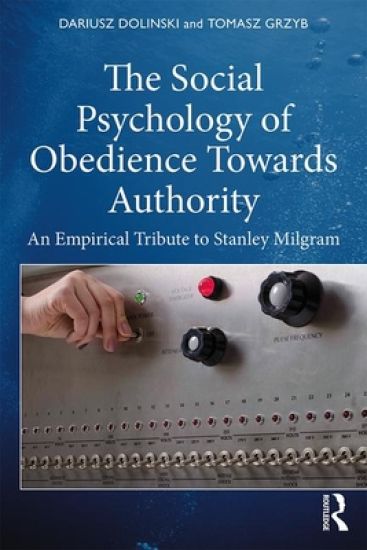
This rich volume explores the complex problem of obedience and conformity, re-examining Stanley Milgram’s famous electric shock study, and presenting the findings of the most extensive empirical study on obedience toward authority since Milgram's era. Dolinski and Grzyb refer to their own series of studies testing various hypotheses from Milgram’s and others’ research, examining underlying obedience mechanisms as well as factors modifying the degree of obedience displayed by individuals in different situations. They offer their theoretical model explaining subjects’ obedience in Milgram’s paradigm and describe numerous examples of the destructive effect of thoughtless obedience both in our daily lives as well as in crucial historical events, stressing the need for critical thinking when issued with a command. Concluding with reflections on how to prevent the danger of destructive obedience to authority, this insightful volume will be fascinating reading for students and academics in social psychology, as well as those in fields concerned with complex social problems.
The Social Psychology of Obedience Towards Authority

The Social Psychology of Obedience Towards Authority

Dariusz Dolinski; Tomasz Grzyb

Routledge
2020
sidottu
This rich volume explores the complex problem of obedience and conformity, re-examining Stanley Milgram’s famous electric shock study, and presenting the findings of the most extensive empirical study on obedience toward authority since Milgram's era. Dolinski and Grzyb refer to their own series of studies testing various hypotheses from Milgram’s and others’ research, examining underlying obedience mechanisms as well as factors modifying the degree of obedience displayed by individuals in different situations. They offer their theoretical model explaining subjects’ obedience in Milgram’s paradigm and describe numerous examples of the destructive effect of thoughtless obedience both in our daily lives as well as in crucial historical events, stressing the need for critical thinking when issued with a command. Concluding with reflections on how to prevent the danger of destructive obedience to authority, this insightful volume will be fascinating reading for students and academics in social psychology, as well as those in fields concerned with complex social problems.