Kirjojen hintavertailu. Mukana 11 244 527 kirjaa ja 12 kauppaa.

Kirjahaku

Etsi kirjoja tekijän nimen, kirjan nimen tai ISBN:n perusteella.

43 tulosta hakusanalla Darl Larsen

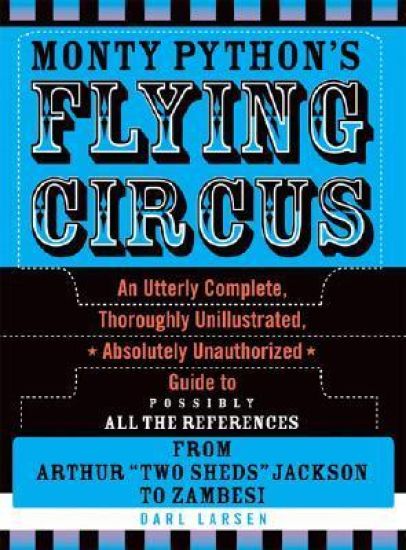
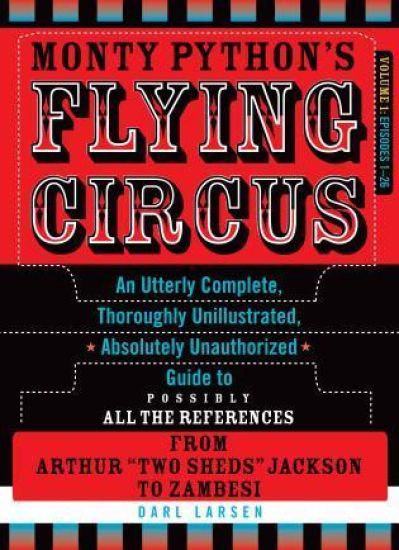
Monty Python's Flying Circus

Monty Python's Flying Circus

Darl Larsen

Scarecrow Press
2008
sidottu
In 1969, the BBC aired the first episode of a new comedy series titled Monty Python's Flying Circus, and the rest, as they say, is history. An instant success, the show ran until 1974, producing a total of 45 episodes. Despite the show's very English humor and allusions to many things British, the series developed a cult following outside the U.K., particularly in the United States. Known for its outrageous humor, occasionally controversial content, and often silly spirit, Monty Python's Flying Circus poked fun at nearly all institutions—domestic or foreign, grand or intimate, sacred or not. Indeed, many of the allusions and references in the program were uniquely British and routinely obscure, and therefore, not always understood or even noticed outside the British Isles. This exhaustive reference identifies and explains the plethora of cultural, historical, and topical allusions of this landmark series. In this resource, virtually every allusion and reference that appeared in an episode—whether stated by a character, depicted in the mise-en-scene, or mentioned in the printed scripts—is identified and explained. Organized chronologically by episode, each entry is listed alphabetically, indicates what sketch it appeared in, and is cross-referenced between episodes. Entries cover literary and metaphoric allusions, symbolisms, names, peoples, and places; as well as the myriad social, cultural, and historical elements (photos, songs, slogans, caricatures) that populate and inform these episodes. Entries Include: ·"Arabella Plunkett" ·Group of famous characters from famous paintings ·Hell's Grannies ·HRH The Dummy Princess Margaret ·"Kandinsky" ·"On the Dad's Liver Bachelors at Large" ·Raymond Baxter type ·Scun ·"Spanish Inquisition" ·"Third Parachute Brigade Amateur Dramatic Society" ·"total cashectomy" ·"Two-Sheds" ·"Umbonga's hostile opening" ·Vicar sitting thin and unhappy in a pot ·"What's all this then?"
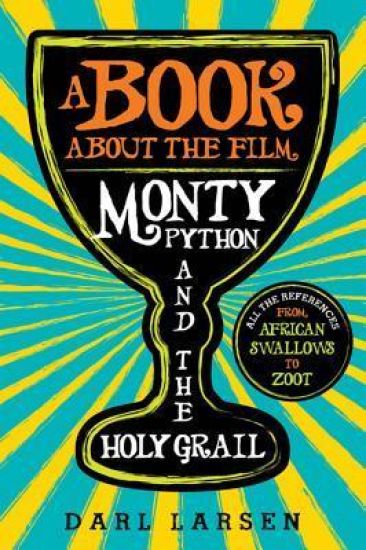
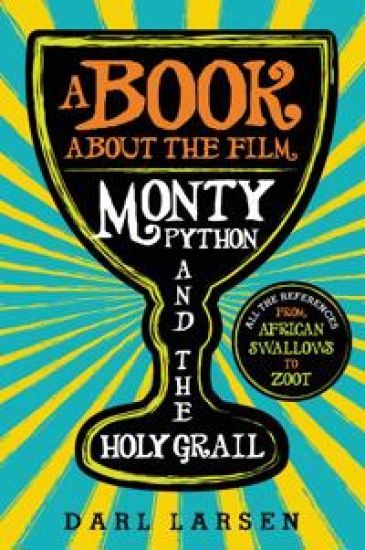
A Book about the Film Monty Python and the Holy Grail
Monty Python’s Flying Circus aired from 1969 until 1974, but the conclusion of the series did not mark the end of the troupe’s creative output. Even before the final original episodes were recorded and broadcast, the six members began work on their first feature-length enterprise of new material. Rather than string together a series of silly skits, they conceived a full-length story line with references to the real and imagined worlds of the mythical King Arthur, the lives of medieval peasants, and the gloomy climate of 1970s Britain. Released in 1975, Monty Python and the Holy Grail was a modest success but has since been hailed as a modern classic. In A Book about the Film Monty Python and the Holy Grail: All the References from African Swallows to Zoot, Darl Larsen identifies and examines the cultural, historical, and topical allusions in the movie. In this entertaining resource, virtually every reference that appears in a scene—whether stated by a character, depicted in the mise-en-scène, or mentioned in the print companion—is identified and explained. Beyond the Arthurian legend, entries cover literary metaphors, symbols, names, peoples, and places—as well as the myriad social, cultural, and historical elements that populate the film. This book employs the film as a window to both reveal and examine “Arthurian” life and literature, the historical Middle Ages, and a Great Britain of labor unrest, power shortages, and the common man. Introducing the reader to dozens of medievalist histories and authors and connecting the film concretely to the “modern” British Empire, A Book about the Film Monty Python and the Holy Grail will appeal to fans of the troupe as well as medieval scholars and academics who can laugh at themselves and their work.
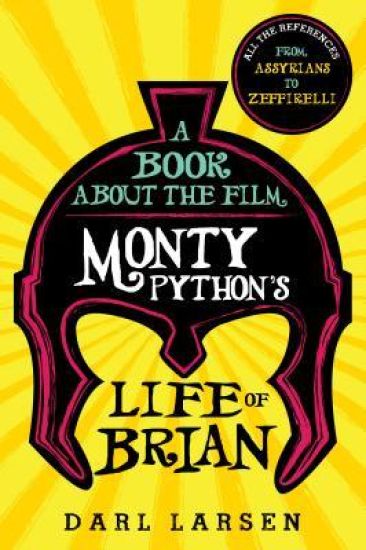
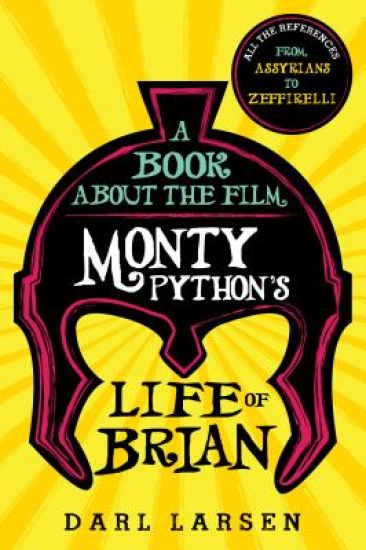
A Book about the Film Monty Python's Life of Brian
As a follow-up to their first true feature film, Monty Python and the Holy Grail, the comic troupe next decided to tackle a “shadow” version of the Christ story. Shot in the Middle East and produced during Margaret Thatcher’s ascendant years, the film satirized—among other matters—authoritarianism and religious zealotry. Upon its release, Monty Python’s Life of Brian was both a critical and commercial success, and has been since hailed as one of the greatest comedies of all time. But the film also faced backlash from religious groups for its blasphemy, perceived or otherwise. In A Book about the Film Monty Python's Life of Brian: All of the References from Assyrians to Zeffirelli, Darl Larsen identifies and examines the plethora of cultural, historical, and topical allusions in the film. In this resource, Larsen delineates virtually every allusion and reference that appears in the film—from first-century Jerusalem through 1970s Great Britain. Organized chronologically by scene, the entries in this cultural history cover literary and metaphoric allusions, symbolisms, names, peoples, and places, as well as the many social, cultural, and historical elements that populate this film. By closely examining each scene, this book explores the Pythons’ comparisons of the Roman and British Empires and of Pilate and Margaret Thatcher. In addition, Larsen helps to situate Life of Brian in the “Jesus” re-examination of the postwar period, while also taking a close look at the terror groups of first-century Judea and the modern world. A Book about the Film Monty Python's Life of Brian will appeal to scholars of history, film, British culture, and pop culture, as well as to the many fans of this iconic group.
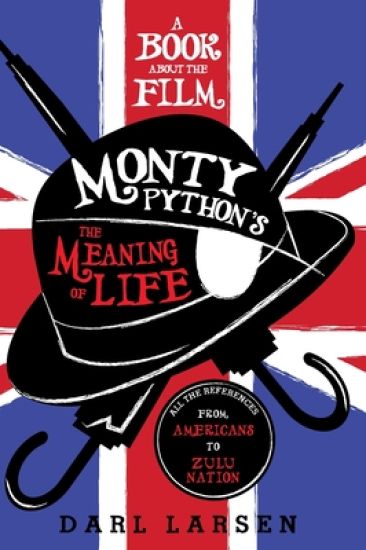
A Book about the Film Monty Python's The Meaning of Life
This reference identifies and explains the cultural, historical, and topical allusions in the film Monty Python’s Meaning of Life, the Pythons’ third and final original feature as a complete group. In this resource, virtually every allusion and reference that appears in the film is identified and explained —from Britain’s waning Empire through the Winter of Discontent to Margaret Thatcher’s second-term mandate, from playing fields to battle fields, and from accountant pirates to sacred sperm. Organized chronologically by scene, the entries cover literary and metaphoric allusions, symbolisms, names, peoples, and places; as well as the many social, cultural, and historical elements that populate this film, and the Pythons’ work in general.
A Book about the Film Monty Python and the Holy Grail
Monty Python’s Flying Circus aired from 1969 until 1974, but the conclusion of the series did not mark the end of the troupe’s creative output. Even before the final original episodes were recorded and broadcast, the six members began work on their first feature-length enterprise of new material. Rather than string together a series of silly skits, they conceived a full-length story line with references to the real and imagined worlds of the mythical King Arthur, the lives of medieval peasants, and the gloomy climate of 1970s Britain. Released in 1975, Monty Python and the Holy Grail was a modest success but has since been hailed as a modern classic. In A Book about the Film Monty Python and the Holy Grail: All the References from African Swallows to Zoot, Darl Larsen identifies and examines the cultural, historical, and topical allusions in the movie. In this entertaining resource, virtually every reference that appears in a scene—whether stated by a character, depicted in the mise-en-scène, or mentioned in the print companion—is identified and explained. Beyond the Arthurian legend, entries cover literary metaphors, symbols, names, peoples, and places—as well as the myriad social, cultural, and historical elements that populate the film. This book employs the film as a window to both reveal and examine “Arthurian” life and literature, the historical Middle Ages, and a Great Britain of labor unrest, power shortages, and the common man. Introducing the reader to dozens of medievalist histories and authors and connecting the film concretely to the “modern” British Empire, A Book about the Film Monty Python and the Holy Grail will appeal to fans of the troupe as well as medieval scholars and academics who can laugh at themselves and their work.
A Book about the Film Monty Python's Life of Brian
As a follow-up to their first true feature film, Monty Python and the Holy Grail, the comic troupe next decided to tackle a “shadow” version of the Christ story. Shot in the Middle East and produced during Margaret Thatcher’s ascendant years, the film satirized—among other matters—authoritarianism and religious zealotry. Upon its release, Monty Python’s Life of Brian was both a critical and commercial success, and has been since hailed as one of the greatest comedies of all time. But the film also faced backlash from religious groups for its blasphemy, perceived or otherwise. In A Book about the Film Monty Python's Life of Brian: All of the References from Assyrians to Zeffirelli, Darl Larsen identifies and examines the plethora of cultural, historical, and topical allusions in the film. In this resource, Larsen delineates virtually every allusion and reference that appears in the film—from first-century Jerusalem through 1970s Great Britain. Organized chronologically by scene, the entries in this cultural history cover literary and metaphoric allusions, symbolisms, names, peoples, and places, as well as the many social, cultural, and historical elements that populate this film. By closely examining each scene, this book explores the Pythons’ comparisons of the Roman and British Empires and of Pilate and Margaret Thatcher. In addition, Larsen helps to situate Life of Brian in the “Jesus” re-examination of the postwar period, while also taking a close look at the terror groups of first-century Judea and the modern world. A Book about the Film Monty Python's Life of Brian will appeal to scholars of history, film, British culture, and pop culture, as well as to the many fans of this iconic group.
Moving Pictures

Moving Pictures

Darl Larsen

ROWMAN LITTLEFIELD
2024
sidottu
A deep dive into the history of cinematic animation in the United States.Animated films started with simple sequential drawings photographed one at a time—little bits of comedic fluff to make amateur title scenes or surreal escapist sequences. Today, animation is a worldwide industry valued at nearly $300 billion and still growing in scope and popularity. In Moving Pictures, Darl Larsen playfully lays out the history of American animation as it transitioned from vaudeville sub-feature to craftsman-like artistry to industrial diversion and, ultimately, to theatrical regulars on par with blockbusters. Larsenidentifies and discusses the major figures, movements, and studios across the nearly 120 years of animation in the United States. Progressing chronologically, the book follows animation from stage performance through to its use as wartime propaganda, its seven-minute heyday (1930s-1950s) and decamp to television, and finally the years of struggle as cartoons became feature films. Covering everything from the early days of Mickey Mouse to recent releases such as Super Mario Bros., Moving Pictures is an essential read for movie fans and a nostalgic revisiting of some of America’s favorite films.
Monty Python's Flying Circus, Episodes 1–26

Monty Python's Flying Circus, Episodes 1–26

Darl Larsen

Taylor Trade Publishing
2013
pokkari
In 1969, the BBC aired the first episode of a new comedy series titled Monty Python's Flying Circus, and the rest, as they say, is history. An instant success, the show ran until 1974, producing a total of 45 episodes. Despite the show's very English humor and allusions to many things British, the series developed a cult following outside the United Kingdom, particularly in the United States. Known for its outrageous humor, occasionally controversial content, and often silly spirit, Monty Python's Flying Circus poked fun at nearly all institutions—domestic or foreign, grand or intimate, sacred or not. Indeed, many of the allusions and references in the program were uniquely British and routinely obscure, and therefore not always understood or even noticed outside the British Isles. This exhaustive reference identifies and explains the plethora of cultural, historical, and topical allusions of this landmark series. In this volume, virtually every allusion and reference that appeared in episodes from the last two seasons—whether stated by a character, depicted in the mise-en-scène, or mentioned in the printed scripts—is identified and explained. Organized chronologically by episode, each entry is listed alphabetically, indicates what sketch it appeared in, and is cross-referenced between episodes. Entries cover literary and metaphoric allusions, symbolisms, names, peoples, and places as well as myriad social, cultural, and historical elements (photos, songs, slogans, caricatures) that populate and inform these episodes. See volume 2 for the third and fourth seasons (episodes 27–45). Volume 1 Entries Include: ·“Arabella Plunkett” ·Group of famous characters from famous paintings ·"Hell's Grannies" · “Kandinsky” · “Spanish Inquisition” · “total cashectomy” ·“Two-Sheds” ·Vicar sitting thin and unhappy in a pot ·“What's all this then?” ·Raymond Baxter type
Monty Python's Flying Circus, Episodes 27–45

Monty Python's Flying Circus, Episodes 27–45

Darl Larsen

Taylor Trade Publishing
2013
pokkari
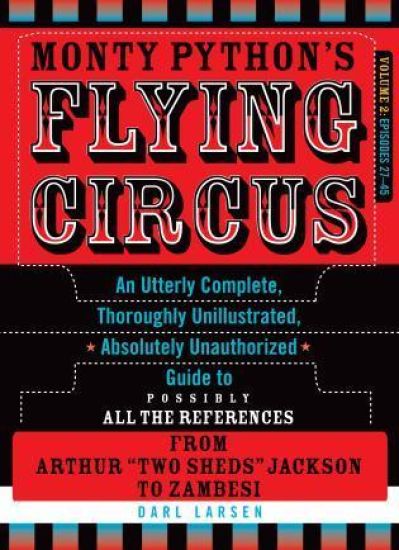
In 1969, the BBC aired the first episode of a new comedy series titled Monty Python's Flying Circus, and the rest, as they say, is history. An instant success, the show ran until 1974, producing a total of 45 episodes. Despite the show's very English humor and allusions to many things British, the series developed a cult following outside the United Kingdom, particularly in the United States. Known for its outrageous humor, occasionally controversial content, and often silly spirit, Monty Python's Flying Circus poked fun at nearly all institutions—domestic or foreign, grand or intimate, sacred or not. Indeed, many of the allusions and references in the program were uniquely British and routinely obscure, and therefore not always understood or even noticed outside the British Isles. This exhaustive reference identifies and explains the plethora of cultural, historical, and topical allusions of this landmark series. In this volume, virtually every allusion and reference that appeared in episodes from the last two seasons—whether stated by a character, depicted in the mise-en-scène, or mentioned in the printed scripts—is identified and explained. Organized chronologically by episode, each entry is listed alphabetically, indicates what sketch it appeared in, and is cross-referenced between episodes. Entries cover literary and metaphoric allusions, symbolisms, names, peoples, and places as well as myriad social, cultural, and historical elements (photos, songs, slogans, caricatures) that populate and inform these episodes. See volume 1 for the first and second seasons (episodes 1–26). Volume 2 Entries Include: ·“Umbonga's hostile opening” ·“Third Parachute Brigade Amateur Dramatic Society” ·Scun ·“On the Dad's Liver Bachelors at Large” ·HRH The Dummy Princess Margaret ·“Trim-Jeans Theatre” ·“Fraud Film Squad” ·Up Your Pavement ·“Buying an Ant” ·"Nude Organist"
Ode to Jesus Christ: Poems by Darl Dinger and Louise Carter

Ode to Jesus Christ: Poems by Darl Dinger and Louise Carter

Louise Carter; Darl Dinger

Tantuple Publishing Inc.
2016
nidottu
Ode to Jesus Christ is a three volume set of poetry books totaling 560 poems in all, authored by Darl Dinger and his friend, Louise Carter, over the past 36 years. Anyone paying attention today can see that many things are not right with our world today. Our world is ruled by lies, greed, endless corruption, wickedness and sin. These two poets make sense out of this unusual era in all of world history known as the great tribulation in end times of Bible prophecy. They offer solace, wisdom and healing solutions for those struggling to make sense out of our world gone mad. This volume, Volume Three, contains a final 193 poems touching on man's sinful nature, our shared and desperate need for a savior from ourselves, and the healing that only comes from genuine confession, repentance and a turning away from the wrongs we have done to others that inevitably result in broken relationships, loneliness and pain in our lives. The path to healing and eternal life only comes through faith (trust) in Jesus Christ, the son of God, who came to earth to testify to the truth and to pay the price we all deserve to pay for our sinful ways so that those of us who can and who do, might live in right relationship with God forever in a new earth free from sin and pain. These poets repeatedly point the way to life's wisdom through reading and obedience to the commandments of God's word, the Bible, in its entirety. Listen to these wise, humble and godly sages whose poems talk to our hearts. Hear Darl's Holy Spirit-inspired warnings of a watchman on the wall that while we still have time to turn to Christ as lord and savior over our wills and our lives, that time is now very short. Time is swiftly running out.
Oracle RMAN Pocket Reference

Oracle RMAN Pocket Reference

Darl Kuhn

O'Reilly Media, Inc, USA
2001
nidottu
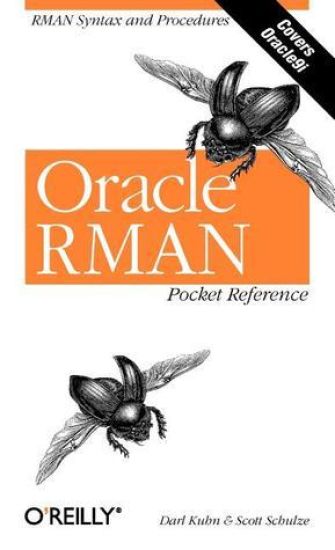
Oracle RMAN Pocket Reference is a handy guide for DBAs who intend to use Oracle Recovery Manager for database backup and recovery. Because Recovery Manager (RMAN) is a relatively new tool, many DBAs are just becoming familiar with it. They will welcome a timely book that explains clearly and concisely how to use RMAN for common backup and recovery tasks that are infrequent, yet extremely vital. The first portion of the book is primarily task-oriented. After a short section on RMAN architecture, the book shows (in checklist style) how to perform common backup and recovery tasks such as: *Implementing a recovery catalog *Creating and running RMAN scripts *Configuring input/output channels *Taking a full database backup *Backing up tablespaces and datafiles *Taking incremental backups *Recovering lost datafiles The second portion of the book consists of a handy syntax reference to the many RMAN commands. Having a quick reference to RMAN commands is a great convenience to DBAs who otherwise, often under the pressure of a recovery situation, would have to wade through Oracle's online documentation.